
e
SECURITIES AND EXCHANGE COMMISSION
WASHINGTON, D.C. 20549
FORM
(Mark One)
REGISTRATION STATEMENT PURSUANT TO SECTION 12(b) OR 12(g) OF THE SECURITIES EXCHANGE ACT OF 1934 |
OR
ANNUAL REPORT PURSUANT TO SECTION 13 OR 15(d) OF THE SECURITIES EXCHANGE ACT OF 1934 |
For the fiscal year ended
OR
TRANSITION REPORT PURSUANT TO SECTION 13 OR 15(D) OF THE SECURITIES EXCHANGE ACT OF 1934 |
OR
SHELL COMPANY REPORT PURSUANT TO SECTION 13 OR 15(d) OF THE SECURITIES EXCHANGE ACT OF 1934 |
Commission File Number:
(Exact name of Registrant as specified in its charter)
Not applicable |
|
|
(Translation of Registrant’s name into English) |
|
(Jurisdiction of incorporation or organization) |
(Address of principal executive offices)
Copy to:
Chief Executive Officer
Telephone: (
(Name, Telephone, Email and/or Facsimile number and Address of Company Contact Person)
Securities registered or to be registered pursuant to Section 12(b) of the Act:
Title of each class |
|
Trading Symbol(s) |
|
Name of each exchange on which registered |
|
|
|||
|
|
Securities registered or to be registered pursuant to Section 12(g) of the Act: None
Securities for which there is a reporting obligation pursuant to Section 15(d) of the Act: None
Indicate the number of outstanding shares of each of the issuer’s classes of capital or common stock as of the close of the period covered by the shell company report:
On April 3, 2025, the issuer had
Indicate by check mark if the registrant is a well-known seasoned issuer, as defined in Rule 405 of the Securities Act. Yes ☐
If this report is an annual or transition report, indicate by check mark if the registrant is not required to file reports pursuant to Section 13 or 15(d) of the Securities Exchange Act of 1934. Yes ☐
Indicate by check mark whether the registrant: (1) has filed all reports required to be filed by Section 13 or 15(d) of the Securities Exchange Act of 1934 during the preceding 12 months (or for such shorter period that the registrant was required to file such reports), and (2) has been subject to such filing requirements for the past 90 days.
Indicate by check mark whether the registrant has submitted electronically every Interactive Data File required to be submitted pursuant to Rule 405 of Regulation S-T(§232.405 of this chapter) during the preceding 12 months (or for such shorter period that the registrant was required to submit and post such files).
Indicate by check mark whether the registrant is a large accelerated filer, an accelerated filer, or a non-accelerated filer, or an emerging growth company. See definition of “accelerated filer,” “large accelerated filer,” and “emerging growth company” in Rule12b-2of the Exchange Act. (Check one):
Large accelerated filer |
|
☐ |
|
Accelerated filer |
|
☐ |
|
|
☒ |
|
|
|
|
|
|
|
|||||
|
|
|
|
|
|
|
|
Emerging growth company |
|
|
If an emerging growth company that prepares its financial statements in accordance with U.S. GAAP, indicate by check mark if the registrant has elected not to use the extended transition period for complying with any new or revised financial accounting standards† provided pursuant to Section 13(a) of the Exchange Act.
† The term “new or revised financial accounting standard” refers to any update issued by the Financial Accounting Standards Board to its Accounting Standards Codification after April 5, 2012.
Indicate by check mark whether the registrant has filed a report on and attestation to its management’s assessment of the effectiveness of its internal control over financial reporting under Section 404(b) of the Sarbanes-Oxley Act (15 U.S.C. 7262(b)) by the registered public accounting firm that prepared or issued its audit report.
If securities are registered pursuant to Section 12(b) of the Act, indicate by check mark whether the financial statements of the registrant included in the filing reflect the correction of an error to previously issued financial statements.
Indicate by check mark whether any of those error corrections are restatements that required a recovery analysis of incentive based compensation received by any of the registrant’s executive officers during the relevant recovery period pursuant to§240.10D-1(b). ☐
Indicate by check mark which basis of accounting the registrant has used to prepare the financial statements included in this filing:
U.S. GAAP ☐ |
|
|
☒ |
|
Other ☐ |
If “Other” has been checked in response to the previous question indicate by check mark which financial statement item the registrant has elected to follow. Item 17 ☐ Item 18 ☐
If this is an annual report, indicate by check mark whether the registrant is a shell company (as defined in Rule12b-2of the Exchange Act). Yes ☐ No
TABLE OF CONTENTS
|
||||
|
||||
|
||||
|
||||
|
4 |
|||
ITEM 1. |
|
|
4 |
|
ITEM 2. |
|
|
4 |
|
ITEM 3. |
|
|
4 |
|
A. |
|
|
4 |
|
B. |
|
|
4 |
|
C. |
|
|
4 |
|
D. |
|
|
4 |
|
ITEM 4. |
|
|
48 |
|
A. |
|
|
48 |
|
B. |
|
|
48 |
|
C. |
|
|
86 |
|
D. |
|
|
86 |
|
ITEM 4A. |
|
|
86 |
|
ITEM 5. |
|
|
86 |
|
A. |
|
|
89 |
|
B. |
|
|
93 |
|
C. |
|
|
95 |
|
D. |
|
|
96 |
|
E. |
|
|
96 |
|
ITEM 6. |
|
|
97 |
|
A. |
|
|
97 |
|
B. |
|
|
98 |
|
C. |
|
|
100 |
|
D. |
|
|
102 |
|
E. |
|
|
102 |
|
ITEM 7. |
|
|
103 |
|
A. |
|
|
103 |
|
B. |
|
|
104 |
|
C. |
|
|
104 |
|
ITEM 8. |
|
|
104 |
|
A. |
|
|
104 |
|
B. |
|
|
105 |
|
ITEM 9. |
|
|
105 |
|
A. |
|
|
105 |
|
B. |
|
|
105 |
|
C. |
|
|
105 |
|
D. |
|
|
105 |
|
E. |
|
|
105 |
|
F. |
|
|
105 |
|
ITEM 10. |
|
|
105 |
|
A. |
|
|
105 |
|
B. |
|
|
105 |
|
C. |
|
|
105 |
|
D. |
|
|
106 |
|
E. |
|
|
106 |
|
F. |
|
|
113 |
|
G. |
|
|
113 |
|
H. |
|
|
113 |
|
I. |
|
|
113 |
|
J |
|
|
113 |
|
ITEM 11. |
|
|
113 |
|
ITEM 12. |
|
|
114 |
|
|
|
|
115 |
|
ITEM 13. |
|
|
115 |
|
ITEM 14. |
|
MATERIAL MODIFICATIONS TO THE RIGHTS OF SECURITY HOLDERS AND USE OF PROCEEDS |
|
115 |
ITEM 15. |
|
|
115 |
|
i
ITEM 16A. |
|
|
116 |
|
ITEM 16B. |
|
|
116 |
|
ITEM 16C. |
|
|
116 |
|
ITEM 16D. |
|
|
117 |
|
ITEM 16E. |
|
PURCHASES OF EQUITY SECURITIES BY THE ISSUER AND AFFILIATED PURCHASERS |
|
117 |
ITEM 16F. |
|
|
117 |
|
ITEM 16G. |
|
|
117 |
|
ITEM 16H. |
|
|
119 |
|
ITEM 16I. |
|
DISCLOSURE REGARDING FOREIGN JURISDICTIONS THAT PREVENT INSPECTIONS |
|
119 |
ITEM 16K. |
|
|
119 |
|
|
|
|
121 |
|
ITEM 17. |
|
|
121 |
|
ITEM 18. |
|
|
121 |
|
ITEM 19. |
|
|
121 |
|
|
123 |
|||
|
F-1 |
|||
ii
ABOUT THIS ANNUAL REPORT
Except where the context otherwise requires or where otherwise indicated in this annual report (this “Annual Report”), the terms “Apollomics,” the “Company,” “we,” “us,” “our,” “our company” and “our business” refer to Apollomics Inc., together with its consolidated subsidiaries as a consolidated entity.
All references in this Annual Report to “Business Combination” refer to the transactions effected under the business combination agreement, dated as of September 14, 2022 (as amended, the “Business Combination Agreement”), by and among Maxpro Capital Acquisition Corp., a Delaware corporation (“Maxpro”), Apollomics and Project Max SPAC Merger Sub, Inc., a Delaware corporation and a wholly-owned subsidiary of Apollomics (“Merger Sub”). Pursuant to the Business Combination Agreement, Merger Sub merged with and into Maxpro, with Maxpro surviving the merger. Upon consummation of the Business Combination and the other transactions contemplated by the Business Combination Agreement on March 29, 2023, Maxpro became a wholly owned subsidiary of Apollomics and Apollomics became a publicly traded company on the Nasdaq Capital Market (“Nasdaq”) under the trading symbols "APLM" and “APLMW”.
INDUSTRY AND MARKET DATA
Unless otherwise indicated, information contained in this Annual Report concerning Apollomics’ industry and the regions in which it operates, including Apollomics’ general expectations and market position, market opportunity, market share and other management estimates, is based on information obtained from various independent publicly available sources and reports provided to us. Apollomics has not independently verified the accuracy or completeness of any third-party information. Similarly, internal surveys, industry forecasts and market research, which Apollomics believes to be reliable based upon its management’s knowledge of the industry, have not been independently verified. While Apollomics believes that the market data, industry forecasts and similar information included in this Annual Report are generally reliable, such information is inherently imprecise. In addition, assumptions and estimates of Apollomics’ future performance and growth objectives and the future performance of its industry and the markets in which it operates are necessarily subject to a high degree of uncertainty and risk due to a variety of factors, including those discussed under the headings “Cautionary Statement Regarding Forward-Looking Statements”, Item 3.D. “Key Information—Risk Factors” and Item 5. “Operating and Financial Review and Prospects” in this Annual Report.
TRADEMARKS, TRADE NAMES AND SERVICE MARKS
This document contains references to trademarks, trade names and service marks belonging to other entities. Solely for convenience, trademarks, trade names and service marks referred to in this Annual Report may appear without the ® or TM symbols, but such references are not intended to indicate, in any way, that the applicable licensor will not assert, to the fullest extent under applicable law, its rights to these trademarks and trade names. We do not intend our use or display of other companies’ trade names, trademarks or service marks to imply a relationship with, or endorsement or sponsorship of us by, any other companies.
1
CAUTIONARY STATEMENT REGARDING FORWARD-LOOKING STATEMENTS
This Annual Report includes forward-looking statements, principally in the sections entitled Item 3.D. “Key Information—Risk Factors,” Item 4. “Information on the Company,” and Item 5. “Operating and Financial Review and Prospects.” In some cases, these forward-looking statements can be identified by words or phrases such as “may,” “might,” “will,” “could,” “would,” “should,” “expect,” “plan,” “anticipate,” “intend,” “seek,” “believe,” “estimate,” “predict,” “potential,” “continue,” “contemplate,” “possible” or similar words. Statements regarding our future results of operations and financial position, growth strategy and plans and objectives of management for future operations, including, among others, expansion in new and existing markets, are forward-looking statements.
Our forward-looking statements are mainly based on our current expectations and estimates of future events and trends which affect or may affect our business, operations and industry. Although we believe that these forward-looking statements are based upon reasonable assumptions, they are subject to numerous risks and uncertainties, including without limitation those described under the sections in this Annual Report entitled Item 3.D. “Key Information—Risk Factors” and Item 5. “Operating and Financial Review and Prospects” and elsewhere in this Annual Report.
Our forward-looking statements may be influenced by factors including:
Many important factors, in addition to the factors described above and in other sections of this Annual Report, could adversely impact our business and financial performance. Moreover, we operate in an evolving environment. New risks and uncertainties emerge from time to time, and it is not possible for our management to predict all risks and uncertainties, nor can we assess the impact of all factors on our business or the extent to which any factor, or combination of factors, may cause actual results to differ materially from forward-looking statements. We qualify all of our forward-looking statements by these cautionary statements.
2
The forward-looking statements contained in this Annual Report speak only as of the date of this Annual Report. Except as required by applicable law, we undertake no obligation to publicly update or revise any forward-looking statements whether as a result of new information, future events or otherwise, or to reflect the occurrence of unanticipated events.
3
PART I
Item 1. Identity of Directors, Senior Management and Advisers
Not applicable.
Item 2. Offer Statistics and Expected Timetable
Not applicable.
Item 3. Key Information
Not applicable.
Not applicable.
Summary of Risk Factors
The following is a summary of certain, but not all, of the risks that could adversely affect our business, operations and financial results. If any of the risks actually occur, our business could be materially impaired, the trading price of our Class A Ordinary Shares and warrants could decline, and you could lose all or part of your investment.
Risks Related to Our Business
Risks Related to our Reliance on Third Parties
4
Risks Related to Government Regulations
Risks Related to Our Operations in China
Risks Related to our Intellectual Property Rights
5
Risks Related to U.S. Federal Income Tax
Risks Related to Ownership of Our Securities
6
RISK FACTORS
In addition to the other information contained in this Annual Report, including the matters addressed under the heading “Cautionary Statement Regarding Forward-Looking Statements,” you should carefully consider the following risk factors before making an investment decision. The risk factors described below are not intended to be exhaustive and are not the only risks facing us. Additional risks not currently known to us or that we currently deem to be immaterial also may materially adversely affect our business, financial condition, results of operations and cash flows in future periods or are not identified because they are generally common to businesses.
The occurrence of one or more of the events or circumstances described in these risk factors, alone or in combination with other events or circumstances, may have a material adverse effect on our business, financial condition, results of operations, cash flows and future prospects, in which event the market price of our securities could decline, and you could lose part or all of your investment.
Risks Related to Our Business
We are a pre-revenue biotechnology company with a history of losses and will need additional capital to meet our operating cash requirements. We anticipate that we will continue to incur net losses and net operating cash outflows for the foreseeable future and may never achieve or maintain profitability. Financing our capital requirements may not be available on terms acceptable to us, or at all. If we are unable to obtain such financing, we may be unable to successfully develop, manufacture and commercialize our product candidates.
We are a pre-revenue biotechnology company and our future profitability is dependent on the development of our pipeline products. Investment in pharmaceutical drug development is highly speculative, as it entails substantial upfront capital expenditures and significant risk that a product candidate will fail to gain regulatory approval or become commercially viable. We continue to incur significant expenses related to our ongoing operations and drug development. We have incurred losses in each period since our inception. Our product candidates will require completion of their clinical development, regulatory review, significant marketing efforts and substantial investment before they can provide us with product sales revenue.
Our operations have consumed substantial amounts of cash since inception. For the year ended December 31, 2024 we had net losses of $53.9 million and we used $28.7 million in net cash for operating activities. Substantially all of our cash expenditures have resulted from costs incurred in connection with our research and development (“R&D”) programs and administrative expenses associated with our operations.
In January 2024, we implemented significant expense reductions, where we prioritized the development of vebreltinib and uproleselan, as well as reduced other operating expenses. In July 2024, we implemented additional expense reductions, including a more narrow development focus for vebreltinib, other pipeline cuts, as well as reductions in executive and non-executive employees. In May 2024, GlycoMimetics, our licensor of uproleselan in China, announced negative results from its pivotal Phase 3 study of uproleselan in relapsed or refractory acute myeloid leukemia. As positive results from the GlycoMimetics global study were likely necessary for approval of uproleselan in China for this indication, the Company has decided to close its own Phase 3 bridging study of uproleselan in China early and unblind after treatment for all patients is completed. As a result of these negative Phase 3 results from GlycoMimetics, the Company determined the recoverable amount was lower than the carrying value of the intangible asset and recorded an impairment loss of $10.0 million to write down the full value of our intangible asset for this program. Based upon our 2025 operating plan, the expected receipt of the $10.0 million upfront payment from LaunXP International, an affiliate of LaunXP Biomedical Co., Ltd. (TWO: 6876) (“LaunXP”) (as described in Item 4.B. “Business Overview—Licensing and Collaboration Arrangements—LaunXP”), and our balance of cash and cash equivalents of $9.8 million as of December 31, 2024, we estimate that we will have sufficient liquidity to continue as a going concern through at least December 31, 2025. In addition, we will require additional capital, from equity, debt or strategic partnerships, to continue as a going concern in the future. It is uncertain whether such capital will be available in amounts or on terms acceptable to us, if at all. If we are not able to obtain additional capital to meet our cash requirements in the future, our business, financial condition, results of operations and prospects could be materially and adversely affected. There can be no assurance that our attempts to raise additional capital will be successful, and could ultimately result in reassessing the Company’s ability to continue as a going concern.
We expect to continue to incur net losses for the foreseeable future, and these losses may increase as we continue the development of, and potentially seek regulatory approvals for, our product candidates; retain current and/or hire additional personnel to support our business; obtain, maintain, expand and protect our intellectual property portfolio; and seek to identify and in-license or otherwise acquire additional product candidates, intellectual property assets and technologies. Typically, it takes many years to develop one new drug from the drug discovery stage to when it is available for treating patients. In addition, we will continue to incur costs associated with operating as a public company and in support of our growth as a development-stage or commercial-stage biotech company. The size of our future net losses will depend, in part, on the number and scope of our drug development programs and the associated costs of those programs, the cost of commercializing any approved products, our ability to generate revenues and the timing and amount of milestone payments we make or receive with or through arrangements with third parties. If any of our product candidates fails in clinical trials or does not gain regulatory approval, or, if approved, fails to achieve market acceptance, we may not become profitable. Even if we achieve profitability in the future, we may not be able to sustain profitability in subsequent periods. Our prior losses and expected future losses have had, and will continue to have, an adverse effect on our working capital and shareholders’ equity.
7
We are substantially dependent on the success of vebreltinib, our most advanced product candidate.
We are substantially dependent on the success of vebreltinib, our most advanced product candidate. We believe that additional clinical data will be required for regulatory approval for vebreltinib from the FDA and our business currently depends heavily on its successful development. Vebreltinib will require additional clinical development, evaluation of clinical, preclinical and manufacturing activities, marketing approval in one or more territories, and substantial commercial investment and significant marketing efforts before we generate any revenues from product sales. If we are unable to obtain approval for and commercialize vebreltinib, or experience significant delays in doing so, our business will be materially harmed. Our business depends on the successful development and commercialization of our product candidates. We currently have no drugs approved for sale and generate no revenues from sales of any products, and we may never be able to develop a marketable product.
Should we determine that there is not a viable path for us to pursue regulatory approval of vebreltinib, we may choose to outlicense development and commercial rights in some or all of our territory. For example, we recently entered into a collaboration agreement with LaunXP for the development and commercialization of vebreltinib in Asia (excluding mainland China, Hong Kong and Macau), as described in Item 4.B. “Business Overview—Licensing and Collaboration Arrangements—LaunXP”. If LaunXP is not successful in developing additional clinical data demonstrating the benefit of the combination of vebreltinib with an EGFR inhibitor, the development of vebreltinib may be delayed. In addition, if LaunXP does not achieve future milestones which would result in additional payments to us, we would not receive the benefit of such payments, and our business would be harmed.
There is no guarantee that any future outlicensing transaction will be available on attractive terms, or at all. If we are not successful in developing vebreltinib through regulatory approval, or achieving an out-licensing transaction on attractive terms, our business will be materially harmed.
We have a limited operating history, which may make it difficult to evaluate our current business and predict our future performance.
We are a development-stage biotechnology company founded in May 2015. Our operations to date have focused on business planning, raising capital, establishing our intellectual property portfolio, drug discovery and conducting preclinical studies and clinical trials of our product candidates. We do not have any developed products approved for commercial sale and have not generated any revenue from developed product sales. Our limited operating history, particularly in light of the rapidly evolving pharmaceutical industry, may make it difficult to evaluate our current business and reliably predict our future performance. We may encounter unforeseen expenses, difficulties, complications, delays and other known and unknown factors. If we do not address these risks and difficulties successfully, they could materially adversely affect our business, financial condition, results of operations and prospects.
We have no track record in launching and marketing any commercial products. If we are unable to develop marketing and sales capabilities or enter into agreements with third parties to market and sell our product candidates, we may not be able to generate product sales revenue.
We have collaboration relationships with several biotechnology companies, and it is our plan to launch and market product candidates with our partners. However, we have yet to demonstrate our capability to launch and commercialize any of our product candidates on our own. As a result, our ability to successfully commercialize our product candidates may depend on our collaboration relationships with partners. If we are to launch and commercialize any of our product candidates on our own, it may take longer and cost more than it would if we were to launch it with our partnering company, who has experience launching and marketing product candidates.
We may either develop internal sales, marketing and commercial distribution capabilities for any or all of our product candidates or pursue collaboration or partnership arrangements regarding the sales and marketing of our product candidates. However, there can be no assurance that we will be able to establish or maintain such collaboration or partnership arrangements, or if we are able to do so, that they will have effective sales forces. If we pursue our own sales, marketing and distribution capabilities, we will have to compete with other pharmaceutical and biopharmaceutical companies to recruit, hire, train and retain marketing and sales personnel. In addition, if we commercialize our product candidates, if approved, via such collaboration or partnership arrangements, revenue we receive from the sale of our products will depend upon the efforts of such third parties. We may have little or no control over the marketing and sales efforts of such third parties, and our revenue from product sales may be lower than if we had commercialized our product candidates ourselves. We also face competition in our search for third parties to assist us with the sales and marketing efforts for our product candidates.
There can be no assurance that we will be able to further develop and successfully maintain in-house sales and commercial distribution capabilities or establish or maintain relationships with third-party collaboration partners to successfully commercialize any product, and as a result, we may not be able to generate product sales revenue, which would materially adversely affect our business, financial condition, results of operations and prospects.
8
The amount of our future losses is uncertain and our operating results may fluctuate significantly or may fall below the expectations of investors or securities analysts, each of which may cause our share price to fluctuate or decline.
Our operating results may fluctuate significantly in the future due to a variety of factors, many of which are outside of our control and may be difficult to predict, including the following:
The cumulative effects of these factors could result in large fluctuations and unpredictability in our operating results. As a result, comparing our operating results on a period-to-period basis may not be meaningful. This variability and unpredictability could also result in our failing to meet the expectations of securities analysts or investors for any period. If our revenue or operating results fall below the expectations of analysts or investors or below any forecasts we may provide to the market, or if the forecasts we provide to the market are below the expectations of analysts or investors, the price of our Class A Ordinary Shares could decline substantially. Such a decline in the price of our Class A Ordinary Shares could occur even when we have met any previously publicly stated guidance we may provide.
Raising additional capital may cause dilution to our shareholders and restrict our operations, and you may incur immediate and significant dilution and may experience further dilution if we issue additional Class A Ordinary Shares or other equity securities in the future.
We may need to raise additional capital to fund our operations, including through the sale of our securities. We may issue additional Class A Ordinary Shares or other equity or equity-linked securities of equal or senior rank in the future in connection with, among other things, financings, future acquisitions, repayment of outstanding indebtedness, employee benefit plans and exercises of outstanding options, warrants and other convertible securities, in a number of circumstances. On May 24, 2024, we entered into a Sales Agreement with Cantor Fitzgerald & Co., as sales agent, under which we may offer and sell from time to time up to $19 million of the Company’s Class A Ordinary Shares, through or to the sales agent.
Our issuance of additional Class A Ordinary Shares or other equity or equity-linked securities of equal or senior rank could have the following effects:
In addition, the terms of any securities may include liquidation or other preferences that adversely affect your rights as a holder of our Class A Ordinary Shares. The incurrence of additional indebtedness or the issuance of certain equity securities could give rise to increased fixed payment obligations and could also result in certain additional restrictive covenants, such as limitations on our ability to incur additional debt or issue additional equity, limitations on our ability to acquire or license intellectual property rights and other operating restrictions that could adversely impact our ability to conduct our business. In addition, the issuance of additional equity securities, or the possibility of such issuance, may cause the market price of our Class A Ordinary Shares to decline.
In the event that we enter into collaborations or licensing arrangements in order to raise capital, we may be required to accept less favorable terms, including relinquishing or licensing to a third party on less favorable terms our rights to technologies or product candidates that we otherwise would seek to develop or commercialize ourselves or potentially reserve for future potential arrangements when we might be able to achieve more favorable terms.
9
If we engage in acquisitions or strategic partnerships, this may increase our capital requirements, dilute our shareholders, cause us to incur debt or assume contingent liabilities, and subject us to other risks.
We may evaluate various acquisitions and strategic partnerships, including licensing or acquiring complementary products, intellectual property rights, technologies or businesses, from time to time. Any potential acquisition or strategic partnership may entail numerous risks, including:
These transactions can also entail numerous operational and financial risks, including exposure to unknown liabilities, disruption of our business and diversion of our management’s time and attention in order to manage a collaboration or develop acquired products, product candidates or technologies, incurrence of substantial debt or dilutive issuances of equity securities to pay transaction consideration or costs, higher than expected collaboration, acquisition or integration costs, write-downs of assets or goodwill or impairment charges, increased amortization expenses, difficulty and cost in facilitating the collaboration or combining the operations and personnel of any acquired business, impairment of relationships with key suppliers, manufacturers or customers of any acquired business due to changes in management and ownership and the inability to retain key employees of any acquired business. As a result, if we enter into acquisition or in-license agreements or strategic partnerships, we may not be able to realize the benefit of such transactions if we are unable to successfully integrate them with our existing operations and company culture, which could delay our timelines or otherwise adversely affect our business. We also cannot be certain that, following a strategic transaction or license, we will achieve the revenue or specific net income that justifies such transaction or such other benefits that led us to enter into the arrangement.
Our clinical trials and those conducted by our partners may fail to adequately demonstrate the safety, efficacy and risk/benefit of any of our product candidates, including our lead product candidate, vebreltinib, which would prevent or delay development, regulatory approval and commercialization.
Before obtaining regulatory approvals for the commercial sale of our product candidates, we must demonstrate through lengthy, complex and expensive preclinical studies and clinical trials that our product candidates are both safe and effective for use in each target indication. Clinical testing is expensive and can take many years to complete and its outcome is inherently uncertain. Failure can occur at any time during the preclinical study, investigational new drug applications and/or clinical trial processes, and, because our product candidates are in early stages of development, there is a high risk of failure and we may never succeed in developing marketable products. We cannot be certain of the timely completion or outcome of our preclinical testing and studies and cannot predict if the U.S. Food and Drug Administration (the “FDA”) or other relevant regulatory authorities will accept our proposed clinical programs or if the outcome of our preclinical testing and studies ultimately will support the further development of our programs. Even if we start clinical trials, we are unable to predict when or if any of our product candidates will prove effective or safe in humans or will receive marketing approval. Before obtaining marketing approval from regulatory authorities for the commercialization of any product candidate, we must conduct extensive clinical trials to demonstrate the safety and efficacy of our product candidates in humans.
We may experience numerous unforeseen events during, or as a result of, clinical trials, that could delay or prevent our ability to receive marketing approval or commercialize our product candidates, including:
10
For example, in May 2024, GlycoMimetics, our licensor of uproleselan in China announced negative results from its pivotal Phase 3 study of uproleselan in relapsed or refractory acute myeloid leukemia. As positive results from the GlycoMimetics global study were likely necessary for approval of uproleselan in China for this indication, the Company decided to close its own Phase 3 study of uproleselan early and unblind after treatment for all patients is completed.
Our clinical trials have primarily been conducted in the United States, Europe, China and Australia. The FDA’s acceptance of data from clinical trials outside of the United States and not under a U.S. IND is subject to certain regulatory conditions, including that the clinical trial must be well designed and well controlled, as well as conducted in accordance with GCP. The FDA must also be able to validate the data from any foreign study through an on-site inspection if the agency deems it necessary. An application based solely on foreign clinical data may be approved by the FDA if: (1) the foreign data are applicable to the U.S. population and U.S. medical practice; (2) the studies have been performed by clinical investigators of recognized competence; and (3) the data may be considered valid without the need for an on-site inspection by the FDA or, if the FDA considers such an inspection to be necessary, the FDA is able to validate the data through an on-site inspection or other appropriate means. Failure of an application to meet any of these criteria will result in the application not being approvable by the FDA based on the foreign data alone. The FDA applies this policy in a flexible manner according to the nature of the drug and the data being considered. For example, in 2022, the FDA declined to approve sintilimab for non-small cell lung cancer (“NSCLC”), in part, because pivotal data were exclusively collected in China. The FDA expressed concerns with clinical data collected from a single country outside of the United States due to lack of diversity, differences in standard of care between the United States and China and a perceived higher incidence of data integrity issues identified in clinical studies in China. If the FDA or comparable regulatory authorities do not accept earlier preclinical or clinical data, we may need to conduct additional preclinical studies or clinical trials.
If we are required to conduct additional clinical trials or testing of our product candidates beyond those that we currently contemplate, if we are unable to successfully complete clinical trials of our product candidates or other testing, if the results of these trials or testing are not positive or are only modestly positive or if there are safety, potency or efficacy concerns, we may:
Our product development costs also will increase if we experience delays in preclinical studies or clinical trials or in obtaining institutional review board or marketing approvals. We do not know whether any of our preclinical studies or clinical trials will begin as planned, will need to be restructured or will be completed on schedule, or at all. Significant preclinical study or clinical trial delays also could shorten any periods during which we may have the exclusive right to commercialize our product candidates, or could allow our competitors to bring products to market before we do and impair our ability to successfully commercialize our product candidates, which may harm our business, results of operations, financial condition and prospects.
Any clinical trials that we or our development partner(s) may conduct may not demonstrate the safety, potency and efficacy necessary to obtain regulatory approval to market our product candidates. If the results of our ongoing or future preclinical studies and clinical trials are inconclusive or inconsistent with respect to the safety, bioavailability, potency and efficacy of our product candidates, if we do not meet the clinical endpoints with statistical and clinically meaningful significance, if the drugs manufactured for clinical testing or for commercialization do not meet the approval requirements of the development program of our product candidates, or if there are safety, potency or efficacy concerns associated with our product candidates, we may be prevented from or delayed in obtaining marketing
11
approval for such product candidates. In some instances, there can be significant variability in safety, bioavailability, potency or efficacy results between different preclinical studies and clinical trials of the same product candidate due to numerous factors, including changes in manufacturing, trial procedures set forth in protocols, differences in the size and type of the patient populations, changes in and adherence to the clinical trial protocols, and the rate of enrollment and/or dropout among clinical trial participants. If unacceptable side effects arise in the development of our product candidates, we, the FDA or comparable regulatory authorities, the Institutional Review Boards (the “IRBs”), data and safety monitory boards or independent ethics committees at the institutions in which the trials on our product candidates are conducted could suspend or terminate our preclinical studies or clinical trials or the FDA or comparable regulatory authorities could order us to cease preclinical studies or clinical trials or deny approval of our product candidates for any or all indications we are pursuing.
As is the case with all oncology drugs, it is likely that there will be side effects associated with their use. For example, both capmatinib and tepotinib, products that have been approved for the treatment of adult patients with NSCLC harboring Met Exon 14 skipping alterations, have warnings for hepatotoxicity based on liver enzyme elevations. In our clinical trials to date of vebreltinib, we have also seen elevated liver enzymes and expect that our product would carry such a warning, if approved. Results of the trials on our product candidate(s) could reveal unacceptable side effects. In such an event of risk identification of safety risks, our trials could be revised, suspended or terminated by the health authorities, and the FDA or comparable regulatory authorities could order us to cease further development of or deny approval of our product candidates for any or all targeted indications. We will need to manage the prevalence, duration and severity of potential side effects or other safety issues experienced with our product candidates.
Treatment-emergent side effects that are deemed to be drug-related could also affect subject recruitment or the ability of enrolled subjects to complete the trial or result in potential product liability claims. Undesirable side effects in one of our clinical trials for our product candidates in one indication could adversely affect enrollment in clinical trials, regulatory approval and commercialization of our product candidates in other indications. In addition, these side effects may not be appropriately recognized or managed by the treating medical staff. Any of these occurrences may harm our business, financial condition and prospects significantly.
Moreover, clinical trials of our product candidates are conducted in carefully defined sets of patients who have agreed to enter into clinical trials. Consequently, it is possible that the results of clinical trials of our product candidates may indicate an apparent positive effect of a product candidate to be greater than the actual positive effect, if any, or alternatively fail to identify undesirable side effects. For example, open-label clinical trials are subject to various limitations; among others, they may not be able to identify undesirable side effects. In addition, with a limited number of patients, there may be variabilities in results, and we may fail to identify rare and severe side effects of our product candidates that may only be uncovered with a significantly larger number of patients. If such undesirable side effects caused by such product candidates (or any other similar products) are identified at a late stage of development or after marketing approval, a number of potentially significant negative consequences could result, including:
Any of these events could prevent us from achieving or maintaining regulatory approval or market acceptance of the affected product candidates and could substantially increase the costs of commercializing our product candidates, if approved, and significantly impact our ability to successfully commercialize our product candidates and generate revenues.
If we experience delays or difficulties in the enrollment of patients in clinical trials, our clinical development activities could be delayed or otherwise adversely affected.
The timely completion of clinical trials in accordance with their protocols depends on, among other things, our ability to enroll a sufficient number of patients who remain in the trial until its conclusion. We may experience difficulties in patient enrollment in our clinical trials for a variety of reasons, including the size and nature of the patient population, the patient eligibility criteria defined in the protocol, including any diagnostic or genetic testing required, the size of the study population required for analysis of the trial’s primary endpoints, the proximity of patients to trial sites and our ability to obtain and maintain patient consents. For example, in July 2024, we announced a focus for future vebreltinib clinical development on NSCLC patients with Met amplification, which is confirmed by a
12
genetic test which is not part of the standard genetic testing done for this patient population. In part due to the requirements for non-standard testing, we have enrolled only six patients in this cohort in the last nine months.
Our clinical trials may compete with other clinical trials for product candidates that are in the same therapeutic areas as our product candidates, and this competition will reduce the number and types of patients available to us. Even if we are able to enroll a sufficient number of patients in our clinical trials, delays in patient enrollment may result in increased costs or may affect the timing or outcome of the planned clinical trials, which could prevent completion of these trials and materially adversely affect our ability to advance the development of our product candidates, which in turn could materially adversely affect our business, financial condition, results of operations and prospects.
We may expend our limited resources to pursue a particular product candidate or indication and fail to capitalize on product candidates or indications that may be more profitable or for which there is a greater likelihood of success.
Because we have limited financial and managerial resources, we focus on research programs and product candidates that we identify for specific indications. As a result, we may forego or delay pursuit of opportunities with other product candidates or for other indications that later prove to have greater commercial potential. Our resource allocation decisions may cause us to fail to capitalize on viable commercial products or profitable market opportunities.
If we are unable to successfully validate, develop and obtain regulatory approval for companion diagnostic tests for our product candidates that are required or experience significant delays in doing so, we may not realize the full commercial potential of these product candidates.
As one of the key elements of our clinical development strategy, we seek to identify patient subsets within a disease category who may derive selective and meaningful benefit from the product candidates we are developing.
For example, in connection with the clinical development of vebreltinib, we entered into a collaboration with Caris to develop an in vitro companion diagnostic test to detect MET alterations. Such companion diagnostics would be used during our clinical trials as well as in connection with the regulatory approval of vebreltinib. To be successful, we or our collaborator will need to address a number of scientific, technical, regulatory and logistical challenges. The FDA and comparable regulatory authorities regulate in vitro companion diagnostics as medical devices and, under that regulatory framework, will require the test to be analytically and clinically validated and used for patient selection in the clinical trial, which will require separate regulatory clearance, authorization or approval prior to commercialization if not already cleared, authorized or approved.
We intend to rely on third parties for the design, development and manufacture of companion diagnostic tests for vebreltinib and other product candidates that may require such tests. We will be dependent on the sustained cooperation and effort of our future collaborators in developing and obtaining approval for these companion diagnostics and in ensuring the post-market compliance of these companion diagnostics after their regulatory clearance, authorization or approval. Post-market obligations include, among others, ongoing product quality assurance, recordkeeping, complaint handling, adverse event reporting and product promotion. It may be necessary to resolve issues such as sensitivity/specificity, analytical validation, reproducibility, or clinical validation of companion diagnostics during the development and regulatory approval processes. Moreover, even if data from preclinical studies and early clinical trials appear to support development of a companion diagnostic for a product candidate, data generated in later clinical trials may fail to support the analytical and clinical validation of the companion diagnostic. We and our current and future collaborators may encounter difficulties in developing, obtaining regulatory approval for, manufacturing and commercializing companion diagnostics similar to those we face with respect to our product candidates themselves, including issues with achieving regulatory clearance, authorization or approval, production of sufficient quantities at commercial scale and with appropriate quality standards, and in gaining market acceptance. If we are unable to successfully develop companion diagnostics for these product candidates, or experience delays in doing so, the development of these therapeutic product candidates may be adversely affected, these therapeutic product candidates may not obtain marketing approval, and we may not realize the full commercial potential of any of these therapeutics that obtain marketing approval. As a result, our business, results of operations and financial condition could be materially harmed. In addition, a diagnostic company with whom we contract may decide to discontinue selling or manufacturing the companion diagnostic test that we anticipate using in connection with development and commercialization of our product candidates or our relationship with such diagnostic company may otherwise terminate. We may not be able to enter into arrangements with another diagnostic company to obtain supplies of an alternative diagnostic test for use in connection with the development and commercialization of our product candidates or do so on commercially reasonable terms, which could adversely affect and/or delay the development or commercialization of our product candidates.
If safety, efficacy, or other issues arise with any medical product that is used in combination with our product candidates, we may be unable to market such product candidate or may experience significant regulatory delays.
Our strategy to develop combination therapies depends on the safety and efficacy of each component drug within each combination therapy. If the FDA or comparable regulatory authority revokes its approval of another therapeutic product we use in combination with our product candidates, we will not be able to market our product candidates in combination with such revoked therapeutic product. In addition, it can be difficult to attribute a safety issue in a clinical trial or commercial product to any single component of a combination
13
therapy. If safety or efficacy issues arise with these or other therapeutics that we seek to combine with our product candidates in the future, we may experience significant development or regulatory delays, and we may be required to redesign or terminate the applicable clinical trials, or withdraw a drug from the market. Also, if manufacturing or other issues result in a supply shortage of any component of our combination product candidates or if we cannot secure supply of any component of our product candidates at commercially reasonable or acceptable prices, we may not be able to complete clinical development of our product candidates on our current timeline or within our current budget, or at all.
We are developing some of our product candidates for use in combination with standard-of-care, as well as emerging or experimental cancer therapies, which exposes us to several risks beyond our control.
We are developing some of our product candidates for use in combination with current standard of care or other emerging or experimental cancer therapies. This exposes us to supply risk to the extent there is not an adequate supply of these therapies for use in combination with our product candidates, either in clinical trials or after any approval, as well as pricing risk if these combination therapies are expensive and the addition of our product candidates would be too costly to support reimbursement or payor coverage. In addition, if the standard of care were to evolve or change, the clinical utility of our product candidates could be diminished or eliminated. If any of these were to occur, our business could be materially harmed.
Adverse drug reactions and negative results from off-label use of our products could materially harm our business reputation, product brand name, financial condition and expose us to liability.
Products distributed or sold in the pharmaceutical market may be subject to off-label drug use. Off-label drug use is prescribing a product for an indication, population, dosage or in a dosage form that is not in accordance with regulatory approved usage and labeling. Even though the FDA and other comparable regulatory authorities actively enforce the laws and regulations prohibiting the promotion of off-label use, there remains the risk that our product is subject to off-label drug use and is prescribed in a patient population, dosage or dosage form that has not been approved by competent authorities. This occurrence may render our products less effective or entirely ineffective and may cause adverse drug reactions. Any of these occurrences can create negative publicity and significantly harm our business reputation, product brand name, commercial operations and financial condition. These occurrences may also expose us to liability and cause, or lead to, a delay in the progress of our clinical trials and may also ultimately result in failure to obtain regulatory approval for our product candidates.
Summary or preliminary data from our clinical trials that we announce or publish may change as new, incremental or updated patient data becomes available, and is subject to source verification and validation procedures that could result in material changes in the final data.
As more patient data becomes available, we may publicly disclose new or updated data from our clinical trials, which may differ from earlier disclosed preliminary data. These updates are based on analyses of then-available data, and the results and related findings and conclusions are subject to change following a more comprehensive review of the data related to the particular study or trial. We may also present only certain endpoints rather than all endpoints and make assumptions, estimations, calculations and conclusions as part of our analyses of data, and we may not have received or had the opportunity to fully and carefully evaluate all data. As a result, the summary or preliminary results that we report may differ from future results of the same studies, or different conclusions or considerations may qualify such results, once additional data have been received and fully evaluated. Summary or preliminary data also remain subject to source verification procedures that may result in the final data being materially different from the summary or preliminary data we previously disclosed or published. As a result, summary or preliminary data should be viewed with caution until the final data are available. In addition, we may report prespecified interim analyses of our data, and the results of more patients in the same studies may differ from those of the initial study participants early in the studies. Preliminary data from clinical trials that we conduct may not be indicative of the final results of the trials and are subject to the risk that one or more of the clinical outcomes may materially change as patient enrollment continues and more patient data become available. Adverse changes between preliminary data and final data could significantly harm our business and prospects. Further, additional disclosure of preliminary data by us or by our competitors in the future could result in volatility in the price of our Class A Ordinary Shares.
Further, others, including regulatory agencies, may not accept or agree with our assumptions, estimates, calculations, conclusions or analyses or may interpret or weigh the importance of data differently, which could impact the value of the particular program, the approvability or commercialization of the particular product candidate, and our company in general. In addition, the information we choose to publicly disclose regarding a particular study or clinical trial is typically selected from a more extensive amount of available information. Interested parties may not agree with what we determine is the material or otherwise appropriate information to include in our disclosure, and any information we determine not to disclose may ultimately be deemed significant with respect to future decisions, conclusions, views, activities, or otherwise regarding a particular product candidate or our business. If the preliminary or summary data that we report differ from late, final or actual results, or if others, including regulatory authorities, disagree with the conclusions reached, our ability to obtain approval for, and commercialize, our product candidates may be harmed, which could harm our business, financial condition, results of operations, and prospects.
14
In some instances, there can be significant variability in safety and efficacy results between different clinical trials of the same product candidate due to numerous factors, including changes in trial protocols, differences in size and type of the patient populations, differences in and adherence to the dosing regimen and other trial protocols, use in combination with other therapies, and the rate of discontinuations by clinical trial participants. In addition, we may use patient-reported outcome assessments in some of our clinical trials, which involve patients’ subjective assessments of efficacy of the treatments they receive in the trial. Such assessments can vary widely from day to day for a particular patient, and from patient to patient and site to site within a clinical trial. This subjectivity can increase the uncertainty of, and adversely impact, our clinical trial outcomes.
We have limited experience in submission of marketing applications for regulatory approval to the regulatory authorities.
Before obtaining regulatory approvals for the commercial sale of any product candidate for a target indication, we must demonstrate in preclinical studies and well-controlled clinical trials, and, with respect to approval in the United States, to the satisfaction of the FDA, that the product candidate is safe and effective for use for that target indication and that the manufacturing facilities, processes and controls are adequate. In addition to preclinical and clinical data, the marketing application must include significant information regarding the chemistry, manufacturing and controls for the product candidate. Obtaining approval of a marketing application is a lengthy, expensive and uncertain process, and approval may not be obtained. If we submit a marketing application to the FDA, the FDA decides whether to accept or reject the submission for filing. We cannot be certain that any submissions will be accepted for filing and review by the FDA.
We have limited experience in submission of marketing applications for regulatory approval for our product candidates, and we have not yet demonstrated ability to receive regulatory approval for our product candidates. So far, we have not independently submitted a marketing application. As a result, our ability to successfully submit any marketing application and obtain regulatory approval for our product candidates may involve more inherent risk, take longer, and cost more than it would if we were a company with experience in obtaining regulatory approvals.
The process to develop, obtain regulatory approval for and commercialize product candidates is long, complex and costly both inside and outside the United States and China, and approval is never guaranteed. Following any approval for commercial sale of our product candidates, certain changes to the drug, such as changes in manufacturing processes and additional labeling claims, may be subject to additional review and approval by the FDA and comparable regulatory authorities. Also, regulatory approval for any of our product candidates may be withdrawn. If we are unable to obtain regulatory approval for our product candidates in one or more jurisdictions, or any approval contains significant limitations, our target market will be reduced and our ability to realize the full market potential of our product candidates will be harmed.
Our product candidates, once approved, may fail to achieve the degree of market acceptance by physicians, patients, third-party payors and others in the medical community necessary for commercial success.
Even if we receive regulatory approvals for our product candidates, they may fail to gain sufficient market acceptance by physicians, patients, third-party payors and others in the medical community. For example, current cancer treatments like chemotherapy and radiation therapy are well established in the medical community, and doctors may continue to rely on these treatments to the exclusion of our product candidates that are in clinical trials for the same or similar cancer indications. In addition, physicians, patients and third-party payors may prefer other products to ours. If our product candidates do not achieve an adequate level of acceptance, we may not generate significant product sales revenues and we may not become profitable. The degree of market acceptance of our product candidates, even if approved for commercial sale, will depend on a number of factors, including, but not limited to:
If our product candidates are approved but fail to achieve market acceptance among physicians, patients, hospitals, cancer treatment centers or others in the medical community, we will not be able to generate significant revenue. Even if our future approved product
15
candidates achieve market acceptance, we may not be able to maintain such market acceptance over time if novel products or technologies are introduced that are more favorably received than our product candidates, are more cost-effective or render our product candidates obsolete. Our failure to achieve or maintain market acceptance for our future approved product candidates would materially adversely affect our business, financial condition, results of operations and prospects.
The market opportunities for any current or future product candidate we develop, if and when approved, may be limited to those patients who are ineligible for established therapies or for whom prior therapies have failed, and may be small.
Cancer therapies are sometimes characterized as first-line, second-line or third-line, and many new therapies are initially approved only for third-line use. Second-and third-line therapies are administered to patients when prior therapy is not effective. We expect to initially seek approval of our oncology product candidates as a therapy for patients who have received one or more prior treatments. Subsequently, for those products that prove to be sufficiently beneficial, if any, we would expect to seek approval potentially as a first-line therapy, but there is no guarantee that product candidates we develop, even if approved, would be approved for first-line therapy, and, prior to any such approvals, we may have to conduct additional clinical trials.
The number of patients who have the cancers we are targeting may turn out to be lower than expected. Additionally, the potentially addressable patient population for our current programs or future product candidates may be limited, if and when approved. Even if we obtain significant market share for any product candidate, if and when approved, if the potential target populations are small, we may never achieve profitability without obtaining marketing approval for additional indications, including to be used as first-or second-line therapy.
Even if we obtain FDA approval of any of our product candidates, we may never obtain approval or commercialize such products outside of the United States, which would limit our ability to realize their full market potential.
In order to market any product outside of the United States, we must establish and comply with numerous and varying regulatory requirements of other countries regarding safety and efficacy. Clinical trials conducted in one country may not be accepted by regulatory authorities in other countries, and regulatory approval in one country does not mean that regulatory approval will be obtained in any other country. Approval procedures vary among countries and can involve additional product testing and validation and additional administrative review periods. Seeking foreign regulatory approvals could result in significant delays, difficulties and costs for us and may require additional preclinical studies or clinical trials, which would be costly and time consuming. Regulatory requirements can vary widely from country to country and could delay or prevent the introduction of our products in those countries. Satisfying these and other regulatory requirements is costly, time consuming, uncertain and subject to unanticipated delays. In addition, our failure to obtain regulatory approval in any country may delay or have negative effects on the process for regulatory approval in other countries. We do not have any product candidates approved for sale in any jurisdiction, including international markets, and we do not have experience in obtaining regulatory approval in international markets. If we fail to comply with regulatory requirements in international markets or fail to obtain and maintain required approvals, our ability to realize the full market potential of our products will be harmed.
Material modifications and variabilities in the methods of product candidate manufacturing may result in additional costs or delay.
As product candidates progress from preclinical studies to late-stage clinical trials to marketing approval and commercialization, it is common that various aspects of the development program, such as manufacturing methods, materials and processes, are altered along the way in an effort to optimize yield, manufacturing batch size, minimize costs and achieve consistent purity, identity, bioavailability, potency, quality and results. Such changes and/or variabilities over time and those between manufacturers carry the risk that they will not achieve these intended objectives. Any of the changes and variabilities in manufacturing of our product candidates, either by our contract providers or by our partners/collaborators, could cause our product candidates to perform differently than expected and could affect planned or other clinical trials conducted with product candidates produced using the various manufacturing methods, materials, and processes. This could delay completion of requisite clinical trials for NDA and/or commercialization, and could require additional CMC, non-clinical or clinical studies, which could increase costs, delay approval of our product candidates and jeopardize our ability to commercialize our product candidates, if approved.
We face substantial competition and our competitors may discover, develop or commercialize competing drugs faster or more successfully than we do.
The development and commercialization of new drugs is highly competitive and subject to rapid and significant technological change. We may face competition with respect to any product candidates that we seek to develop or commercialize in the future, from major pharmaceutical companies, specialty pharmaceutical companies and biotechnology companies, universities and other research institutions worldwide. There are a number of pharmaceutical and biotechnology companies that currently market and sell drugs or are pursuing the development of drugs for the treatment of indications for which we are developing our product candidates. Some of these competitive drugs and therapies are based on scientific approaches that are the same as or similar to our approach, and others are based on entirely different approaches. For example, our product candidates face competition in the United States, China and Europe from a significant number of advanced drug products (either marketed or under development) involving molecular targets (such as immune checkpoint
16
inhibitors), disease indications (such as cancer) and mechanism of actions (such as bi-specific antibodies, combination therapies, etc.) that are similar or identical to those of our product candidates.
Many of the companies against which we are competing or against which we may compete in the future have significantly greater financial resources and expertise in R&D, manufacturing, preclinical testing, conducting clinical trials, obtaining regulatory approvals and marketing approved drugs than we do. Our competitors may succeed in developing competing drugs and obtaining regulatory approvals before us or gain better acceptance for the same target markets as ours, which will undermine our competitive position. In addition, any new product that competes with an approved product must demonstrate compelling advantages in efficacy, convenience, tolerability and/or safety in order to overcome price competition and to be commercially successful. Disruptive technologies and medical breakthroughs may further intensify the competition and render our product candidates obsolete or non-competitive.
Mergers and acquisitions may result in even more resources being concentrated among a smaller number of our competitors. Smaller and other early-stage companies may also prove to be significant competitors, particularly through collaborative arrangements with large and established companies. These third parties compete with us in recruiting and retaining qualified scientific and management personnel, establishing clinical trial sites and patient enrollment for clinical trials, as well as in acquiring technologies complementary to, or necessary for, our programs.
Any failure on our part to successfully compete in the pharmaceutical market with respect to our products could materially adversely affect our business, financial condition, results of operations and prospects.
We could be adversely affected by generic drugs and alternative cancer treatments.
We may face competition with respect to the introduction of generic alternatives to our product candidates. Market acceptance and sales of any of our future approved product candidates will depend significantly on the availability of adequate coverage and reimbursement from physicians, patients or third-party payors for drugs and may be affected by existing and future health care reform measures. Generic alternatives are generally not expected to have meaningful differences in efficacy or safety compared to each other. Consequently, if there are generic alternatives to our product candidates available, we would have to compete with on pricing or product quality and reliability (perceived or otherwise), which we may not be able to achieve successfully. As of the date of this Annual Report, we were not aware of any generic versions of our product candidates being marketed or under clinical trials. However, we cannot assure you that there will not be any such generic alternatives in future. As a result, assuming that we are able to obtain regulatory approvals for vebreltinib, APL-102 or other existing or any future product candidate that we may develop in the future, we cannot assure you that they will be able to achieve commercial success, whether due to established first-entrants or otherwise. This in turn could have a material adverse effect on our business, financial condition and results of operations.
Furthermore, we may face competition with respect to the existence or introduction of alternative cancer treatments. There may be significant advances in other oncology treatment methods, such as chemotherapy, surgery, interventional radiology, or cancer prevention techniques, which could reduce the demand for oncology monotherapies and combination therapies. Any shifts in physicians’ or patients’ preferences for other oncology therapies over oncology monotherapies and combination therapies may materially and adversely affect our business, financial condition and results of operations.
Our future success depends on our ability to retain key executives and to attract, train, retain and motivate senior management and qualified scientific employees.
We are highly dependent on our management team and their experience with our business and operations. We currently do not have “key-man” insurance for any of our executive officers or other key personnel. The loss of the services of any of these persons could impede the achievement of our R&D and commercialization objectives.
Recruiting, retaining and motivating qualified management, scientific, clinical, manufacturing and sales and marketing personnel will also be critical to our success. The loss of the services of our executive officers or other key employees could impede the achievement of our research, development, manufacturing and commercialization objectives and seriously harm our ability to successfully implement our business strategy. Furthermore, replacing executive officers and key employees may be difficult and may take an extended period of time because of the limited number of individuals in our industry with the breadth of skills and experience required to successfully develop, gain regulatory approval of and commercialize drugs. Hiring from this limited pool is competitive and intense, and we may be unable to hire, train, retain or motivate these key personnel on acceptable terms given the competition among numerous biopharmaceutical companies for similar personnel. We also experience competition for the hiring of scientific and clinical personnel from universities and research institutions. In addition, our management will be required to devote significant time to new compliance initiatives from our status as a public company, which may require us to recruit more management personnel. Moreover, there is no assurance that we will be able to retain or motivate these key personnel on acceptable terms due to a number of reasons, including the competitiveness of our compensation.
Any unanticipated departure of members of the management team without appropriate replacements being found in a timely manner may have a material adverse effect on our business operations and profitability.
17
Our reputation is key to our business success. Negative publicity may adversely affect our reputation, business and growth prospects.
Any negative publicity concerning us or our affiliates, even if untrue, could adversely affect our reputation and business prospects. We cannot assure you that negative publicity about us or any of our affiliates would not damage our brand image or have a material adverse effect on our business, results of operations and financial condition. Furthermore, referrals and word-of-mouth have significantly contributed to our ability to establishing new partnerships. As a result, any negative publicity about us or any of our affiliates could adversely affect our ability to maintain our existing collaboration arrangements or attract new partners.
We have recently decreased the size and capabilities of our organization, and we may experience difficulties in managing our operations.
In July 2024, as part of our cost we reduction measures, we decreased our overall headcount, including at the executive level, and as of December 31, 2024 had 13 full-time employees. We may experience further changes in the number of our employees and consultants and the scope of our operations in the future, particularly in the areas of finance, clinical development and regulatory affairs. To manage our operations in the future, we must continue to implement and improve our managerial, operational and financial systems, and continue to retain qualified personnel. As we have limited financial resources, we may not be able to effectively manage our operations or retain qualified personnel, which may lead to significant costs and may divert our management and business development resources. Any inability to manage our operations could delay the execution of our business plans, and have a material adverse effect on our business. In addition, our future financial performance will depend, in part, on our ability to effectively manage our operations, and our management may also have to divert a disproportionate amount of its attention away from such operating activities.
If we are not able to effectively manage our operations and retain employees and engage consultants and contractors as needed, we may not be able to successfully implement the tasks necessary to further develop and commercialize our product candidates and maintain compliance with public company requirements and, accordingly, may not achieve our research, development and commercialization goals. Our failure to do so could materially adversely affect our business, financial condition, results of operations and prospects.
We may be involved in claims, disputes, litigation, arbitration or other legal proceedings in the ordinary course of business, and any claims or proceedings against us could be costly and time-consuming to defend.
From time to time, we may be involved in claims, disputes and legal proceedings in our ordinary course of business. These may concern issues relating to, among others, product liability, employment or labor disputes, breach of contract, infringement, misappropriation, violation or ownership of intellectual property rights and environmental matters. Any claims, disputes or legal proceedings initiated by us or brought against us, with or without merit, may result in substantial costs and diversion of resources, and could materially harm our reputation. Furthermore, claims, disputes or legal proceedings against us may be due to defective supplies sold to us by our suppliers, who may not be able to indemnify us in a timely manner, or at all, for any costs that we incur as a result of such claims, disputes and legal proceedings. For example, as further described in Item 4.B. under “Business Overview—Legal Proceedings,” we are currently defending a Writ and Statement of Claim issued in the Grand Court of the Cayman Islands by one investment manager for two minority investors in the Company.
Product liability claims or lawsuits could cause us to incur substantial liabilities.
We face an inherent risk of product liability exposure related to the use of our product candidates and the testing of our product candidates in human clinical trials. If we cannot successfully defend ourselves against product liability claims, we may be subject to civil liability for physical injury, death or other losses caused by our products and to administrative liability, criminal liability and the revocation of our business licenses if our products are found to be defective. Regardless of the merits or eventual outcome, product liability claims may also lead to the following adverse consequences, including:
We currently obtain liability insurance covering our clinical trials. Although we maintain such insurance, any claim that may be brought against us could result in a court judgment or settlement in an amount that is not covered, in whole or in part, by our insurance or which is in excess of the limits of our insurance coverage. Our insurance policies also contain various exclusions, and we may be subject to
18
particular liability claims for which we have no coverage. We will have to pay any amount awarded by a court or negotiated in a settlement that exceed our coverage limitations or that are not covered by our insurance, and we may not have, or be able to obtain, sufficient capital to pay such amounts. In addition, if we cannot successfully defend ourselves against such claims, we may incur substantial liabilities and be required to suspend or delay our ongoing clinical trials. Even a successful defense would require significant financial and management resources.
Regardless of the merits or eventual outcome, liability claims may result in significant negative consequences to our business and prospects, including, but not limited to, harm to our reputation, withdrawal of other clinical trial participants, the incurrence of costs to defend the related litigation, the diversion of our management’s time and resources, the requirement to pay substantial monetary awards to trial participants or patients, our inability to commercialize our product candidates, the loss of revenue and the decline of the price of our securities.
Security breaches, loss of data and other disruptions could compromise sensitive information related to our business or prevent us from accessing critical information and expose us to liability, which could adversely affect our business and our reputation.
In the ordinary course of our business, we generate and store sensitive data, including research data, intellectual property and confidential and/or proprietary business information owned or controlled by ourselves or our employees, partners and other parties. We manage and maintain our applications and data utilizing a combination of on-site systems and cloud-based data centers. We utilize external security and infrastructure vendors to manage parts of our data centers. These applications and data encompass a wide variety of business-critical information, including R&D information, commercial information and business and financial information. We face a number of risks relative to protecting this critical information, including loss of access risk, inappropriate use or disclosure, accidental exposure, unauthorized access, inappropriate modification and the risk of our being unable to adequately monitor and audit and modify our controls over our critical information. This risk extends to the third party vendors and subcontractors we use to manage this sensitive data or otherwise process it on our behalf. Furthermore, because the techniques used to obtain unauthorized access to, or to sabotage, systems change frequently and often are not recognized until launched against a target, we may be unable to anticipate these techniques or implement adequate preventative measures. We may experience security breaches that may remain undetected for an extended period. Our third-party service providers and partners are also subject to these heightened risks. The secure processing, storage, maintenance and transmission of this critical information are vital to our operations and business strategy, and we devote significant resources to protecting such information. Although we take reasonable measures to protect sensitive data from unauthorized access, use or disclosure, our information technology and infrastructure may be vulnerable to attacks by hackers or infections by viruses or other malware or breached due to erroneous actions or inactions by our employees or contractors, malfeasance or other malicious or inadvertent disruptions. Any such breach or interruption could compromise our networks and the information stored there could be accessed by unauthorized parties, publicly disclosed, lost or stolen. Any such access, breach, or other loss of information could result in costly legal claims or proceedings, regulatory investigations, or require us to incur expenditures in connection with remediation. If such an event were to occur and cause interruptions in our operations, it could result in a material disruption of our drug development programs. For example, the loss of clinical trial data from ongoing or future clinical trials for any of our product candidates could result in delays in regulatory approvals efforts and significantly increase costs to recover or reproduce the data. Unauthorized access, loss or dissemination could also disrupt our operations and damage our reputation, any of which could adversely affect our business.
Additionally, although we maintain cybersecurity insurance coverage, we cannot be certain that such coverage will be adequate for data security liabilities actually incurred, will cover any indemnification claims against us relating to any incident, will continue to be available to us on economically reasonable terms, or at all, or that any insurer will not deny coverage as to any future claim. The successful assertion of one or more large claims against us that exceed available insurance coverage, or the occurrence of changes in our insurance policies, including premium increases or the imposition of large deductible or co-insurance requirements, could adversely affect our reputation, business, financial condition and results of operations.
If our operating facilities become damaged or inoperable or if we move or are otherwise required to vacate our facilities, our ability to conduct and pursue our R&D efforts may be jeopardized.
Some of our R&D is conducted at our facilities located in Hangzhou, China. Our facilities and equipment could be harmed or rendered inoperable or inaccessible by natural or man-made disasters or other circumstances beyond our control, including fire, earthquake, power loss, communications failure, war or terrorism, or another catastrophic event, such as a pandemic or similar outbreak or public health crisis, which may render it difficult or impossible for us to support our partners and develop updates, upgrades and other improvements to our platform, advanced automation systems, and advanced application and workflow software for some period of time. The inability to address system issues could develop if our facilities are inoperable or suffer a loss of utilization for even a short period of time, may result in the loss of partners or harm to our reputation, and we may be unable to regain those partners or repair our reputation in the future. Furthermore, our facilities and the equipment we use to perform our R&D work could be unavailable or costly and time-consuming to repair or replace. It would be difficult, time-consuming and expensive to rebuild our facilities, to locate and qualify a new facility or license or transfer our proprietary technology to a third party. Even in the event we are able to find a third party to assist in R&D efforts, we may be unable to negotiate commercially reasonable terms to engage with the third party.
19
We carry insurance for damage to our property and the disruption of our business, but this insurance may not cover all of the risks associated with damage or disruption to our business, may not provide coverage in amounts sufficient to cover our potential losses and may not continue to be available to us on acceptable terms, if at all.
Business disruptions could seriously harm our future revenue and financial condition and increase our costs and expenses.
Our operations, and those of our third-party research institution and pharmaceutical company collaborators, manufacturers, and other contractors and consultants, could be subject to earthquakes, power shortages, telecommunications failures, water shortages, floods, hurricanes, typhoons, fires, extreme weather conditions, medical or public health crises and other natural or man-made disasters or business interruptions, including terrorism and war. In addition, for some of our clinical trials, we rely on third-party research institution collaborators for conducting R&D of our product candidates, and they may be affected by government shutdowns or withdrawn funding. The occurrence of any of these business disruptions could seriously harm our operations and financial condition and increase our costs and expenses. We rely on third-party manufacturers to produce and process our product candidates. Our ability to obtain clinical supplies of our product candidates could be disrupted if the operations of these suppliers are affected by a man-made or natural disaster or other business interruption.
Damage or extended periods of interruption to our corporate, development or research facilities due to fire, natural disaster, power loss, communications failure, unauthorized entry or other events could cause us to cease or delay development of some or all of our product candidates. Although we maintain customary insurance coverage, our insurance might not cover all losses under such circumstances and our business may be seriously harmed by such delays and interruption.
Fluctuations in exchange rates may expose us to exchange rate volatility, and may have a material and adverse effect on our results of operations and the value of your investment.
We incur portions of our expenses in currencies other than the U.S. dollar, in particular, the Renminbi and Australian dollar. As a result, we are exposed to foreign currency exchange risk as our results of operations and cash flows are subject to fluctuations in foreign currency exchange rates, and we have not entered into any agreements to hedge our exchange rate exposure. A decline in the value of the U.S. dollar against currencies in countries in which we conduct clinical trials could have a negative impact on our R&D costs. We cannot predict the impact of foreign currency fluctuations, and foreign currency fluctuations in the future may adversely affect our financial condition, results of operations and cash flows.
As we engage in other forms of collaboration worldwide, including conducting clinical trials abroad, we may be exposed to specific risks of conducting our business and operations in international markets.
Markets outside of the United States and China form an important component of our growth strategy as we out-license some of our commercialization rights to third parties outside the United States and the PRC and plan to conduct certain of our clinical trials abroad. If we fail to obtain applicable licenses or fail to enter into strategic collaboration arrangements with third parties in these markets, or if these collaboration arrangements turn out unsuccessful, our revenue-generating growth potential will be adversely affected.
Moreover, international business relationships subject us to additional risks that may materially adversely affect our ability to attain or sustain profitable operations, including:
20
These and other risks may materially adversely affect our ability to attain or sustain revenue from international markets.
Risks Related to our Reliance on Third Parties
We rely on third parties to manufacture or import our clinical and commercial drug supplies. Our business could be harmed if those third parties fail to provide us with sufficient quantities of product or fail to do so at acceptable quality levels, prices or in time.
We currently use third party CMOs, including single source suppliers, for our manufacturing process and/or for the clinical supply of our product candidates. We do not own manufacturing facilities for producing any clinical trial product supplies. We may be unable to identify manufacturers on acceptable terms or at all because the number of potential manufacturers is limited and the FDA, NMPA or other comparable regulatory authorities must evaluate and/or approve any manufacturers as part of their regulatory oversight of our product candidates. This evaluation would require new testing and cGMP-compliance inspections by the FDA, NMPA or other comparable regulatory authorities.
We currently rely on CMOs outside the United States. Such CMOs may be subject to U.S. legislation, including the proposed BIOSECURE bill, which legislation, if passed and enacted into law, would have the potential to restrict the ability of U.S. biopharmaceutical companies like us to purchase services or products from, or otherwise collaborate with, certain Chinese biotechnology companies “of concern”, including a third-party manufacturer we use for certain product candidates, without losing the ability to contract with, or otherwise receive funding from, the U.S. government. We may also be subject to new U.S. laws or trade restrictions and new foreign regulatory requirements which could increase the cost or reduce the supply of material available to us, delay the procurement or supply of such material or have an adverse effect on our ability to secure significant commitments from governments to purchase our potential therapies.
Furthermore, we have limited control over our third-party manufacturers’ production process, and the risks of product candidates or approved drugs not being produced in the necessary volumes or at the appropriate quality levels are higher than if we manufacture in-house. In particular, manufacturers are subject to ongoing periodic inspection by the FDA and to ensure strict compliance with cGMP and other government regulations and by other comparable regulatory authorities for corresponding non-United States requirements. If the FDA or a comparable foreign regulatory authority determines that our CMOs are not in compliance with FDA laws and regulations, including those governing cGMPs, the FDA may not approve an NDA or BLA until the deficiencies are corrected or we replace the manufacturer in our application with a manufacturer that is in compliance. We do not have immediate control over third-party manufacturers’ compliance with manufacturing regulations and requirements and the manufacturers may fail to maintain the necessary licenses, permits and certificates to carry out the manufacture of our product candidates or approved drugs, breach their obligations to produce our product candidates or approved drugs on a timely basis, otherwise cease to conduct contract manufacturing business or fail to abide by our quality control requirements.
If any CMO with whom we contract fails to perform its obligations, we may be forced to manufacture the materials ourselves, for which we may not have the capabilities or resources, or enter into an agreement with a different CMO, which we may not be able to do on reasonable terms, if at all. In either scenario, our clinical trials or commercial distribution could be delayed significantly as we establish alternative supply sources. In some cases, the technical skills required to manufacture our product candidates may be unique or proprietary to the original CMO and we may have difficulty, or there may be contractual restrictions prohibiting us from, transferring such skills to a back-up or alternate supplier, or we may be unable to transfer such skills at all. In addition, if we are required to change CMOs for any reason, we will be required to verify that the new CMO maintains facilities and procedures that comply with quality standards and with all applicable regulations. We will also need to verify, such as through a manufacturing comparability study or potentially through a clinical bridging study, that any new manufacturing process will produce our product according to the specifications previously submitted to or approved by the FDA or other regulatory authorities. The delays associated with the verification of a new CMO could negatively affect our ability to develop product candidates or commercialize our products in a timely manner or within budget. Furthermore, a CMO may possess technology related to the manufacture of our product candidate that such CMO owns independently. This would increase our reliance on such CMO or require us to obtain a license from such CMO in order to have another CMO manufacture our product candidates. In addition, in the case of the CMOs that supply our product candidates, changes in manufacturers often involve changes in manufacturing procedures and processes, which could require that we conduct bridging studies between our prior clinical supply used in our clinical trials and that of any new manufacturer. We may be unsuccessful in demonstrating the comparability of clinical supplies which could require the conduct of additional clinical trials.
Quality issues related to product candidates or drugs our manufacturers produce for third parties may also be imputed to the products they manufacture for us and adversely affect our reputation. We are also exposed to the risks of increased pricing for our contract manufacturing and that we may be unable to contract with manufacturers at commercially acceptable prices. If the manufacturers we contract with do not produce pharmaceutical products meeting our specifications in sufficient volumes at commercially acceptable prices,
21
or we are unable to contract with manufacturers to do so, we may have insufficient quantities of our product candidates to meet demand for our clinical trials and we may be delayed in obtaining regulatory approvals and commercializing the relevant product candidates.
Each of these risks could delay or prevent the completion of our clinical trials or the approval of any of our product candidates, result in higher costs or adversely impact commercialization of our future approved product candidates. In addition, we will rely on third parties to perform certain specification tests on our product candidates prior to delivery to patients. If these tests are not appropriately done and test data are not reliable, patients could be put at risk of serious harm and regulatory authorities could place significant restrictions on us until deficiencies are remedied.
We rely on third parties and our collaborators/partners to conduct our preclinical studies and clinical trials and we must work effectively with collaborators to develop our product candidates. If these third parties do not successfully carry out their contractual duties or meet expected deadlines, we may not be able to obtain regulatory approval for or commercialize our product candidates and our business could be substantially harmed.
We depend, or may depend in the future, upon third parties and/or collaborators and partners to conduct certain aspects of the preclinical studies and clinical trials on our product candidates, under agreements with universities, medical institutions, contract research organizations (“CROs”), strategic collaborators and others. We expect to have to negotiate budgets and contracts with such third parties (and such negotiations may vary significantly among the various third parties) which may result in delays to our development timelines and increased costs.
We have worked with and plan to continue to work with third-party CROs to monitor and manage data for our ongoing preclinical and clinical programs. We work with these CROs to execute our preclinical studies and clinical trials, control only certain aspects of their activities, and have limited visibility into their day-to-day activities. Nevertheless, we are responsible for ensuring that each of our studies is conducted in accordance with the applicable protocol, legal and regulatory requirements and scientific standards, and our collaboration with the CROs does not relieve us of our regulatory responsibilities. We, our CROs and our development partners for our preclinical and clinical programs and our clinical investigators are required to comply with the good laboratory practice (“GLP”) and good clinical practice (“GCP”), which are regulations and guidelines enforced by the FDA, NMPA and other comparable regulatory authorities for all of our drugs in preclinical and clinical development. If we or any of our CROs, collaborators or clinical investigators fail to comply with applicable GLPs and GCPs, the data generated in the preclinical studies and clinical trials may be deemed unreliable and the FDA, NMPA or comparable regulatory authorities may require us to suspend or terminate these trials or perform additional preclinical studies or clinical trials before approving our marketing applications. We cannot be certain that, upon inspection, such regulatory authorities will determine that any of our clinical trials comply with the GCP requirements.
If any of our relationships with these third-party CROs terminate, we may not be able to enter into arrangements with alternative CROs or to do so on commercially reasonable terms. In addition, our CROs are not our employees, and except for remedies available to us under our agreements with such CROs, we cannot control whether or not they devote sufficient time and resources to our ongoing clinical and nonclinical programs. If CROs do not successfully carry out their contractual duties or obligations or meet expected deadlines, if they need to be replaced or if the quality or accuracy of the clinical data they or our clinical investigators obtain is compromised due to failure to adhere to our clinical protocols, regulatory requirements or for other reasons, our clinical trials may be extended, delayed or terminated and we may not be able to obtain regulatory approval for or successfully commercialize our product candidates. As a result, our results of operations and the commercial prospects for our product candidates would be harmed, our costs could increase and our ability to generate revenues could be delayed.
For example, we recently entered into a collaboration agreement with LaunXP, as described in “Item 4.B. “Business Overview—Licensing and Collaboration Arrangements—LaunXP.” If LaunXP fails to comply with applicable GLPs and GCPs as described above, any clinical data generated through LaunXP’s clinical trials may have limited utility outside of Asia and make it more difficult and expensive to obtain regulatory approval in the United States or elsewhere. If LaunXP is not successful in developing additional clinical data demonstrating the benefit of the combination of vebreltinib with an EGFR inhibitor, the development of vebreltinib may be delayed. In addition, if LaunXP does not complete its upfront payment to us, or achieve future milestones which would result in additional payments to us, we would not receive the benefit of such payments, and our business would be harmed.
In addition, we recently changed the primary CRO responsible for the vebreltinib SPARTA clinical trial. Switching or adding additional CROs may involve additional cost and delays (including identifying and training suitable additional/replacement clinical investigators and obtaining required IRB approval for any additional/new clinical trial site), which can materially influence our ability to meet our desired clinical development timelines. There can be no assurance that we will not encounter similar challenges or delays in the future or that these delays or challenges will not have a material adverse effect on our business, financial condition, results of operations and prospects.
Cooperation of our R&D collaborators and partners working on our product candidates are required for the success of our projects. Our R&D collaborators may not be our employees, but collaborate with us under agreements. The delivery and the timeliness of their work, as well as quality of their work, may impact the development of our product candidates and the probability of success. For example, if our collaborator(s) did not provide CMC, preclinical, or clinical data to us on a timely basis or if such data were inadequate for meeting
22
regulatory purposes, the application for marketing approval of our product candidates could be delayed, denied, withheld, or withdrawn from health authorities like the FDA, NMPA, or other comparable health authorities.
If we or our CROs, CMOs or other contractors or consultants fail to comply with environmental, health and safety laws and regulations, we could become subject to fines or penalties or incur costs that could have a material adverse effect on our business, financial condition and results of operations.
Our R&D activities involve the controlled use of potentially hazardous substances, including chemical and biological materials, by our third-party manufacturers. We and our CROs, CMOs, other contractors or consultants are subject to environmental, health and safety laws and regulations, including those governing laboratory procedures and the handling, use, storage, treatment and disposal of hazardous materials and wastes. Our and our CROs, CMOs and other partners’ operations may involve the use of hazardous waste products. We may contract with third parties for the disposal of these materials and wastes. We cannot eliminate the risk of contamination or injury from these materials or in disposing those materials. In the event of contamination or injury resulting from the use of hazardous materials or disposal of hazardous materials, we could be held liable for any resulting damages, and any liability could exceed our resources. As a result of any such contamination or injury, we may incur liability or local, city, state or federal authorities may curtail the use of these materials and interrupt our business operations. In the event of an accident, we could be held liable for damages or penalized with fines, and the liability could exceed our resources. We also could incur significant costs associated with civil, administrative, or criminal fines and penalties. We may incur substantial costs in order to comply with current or future environmental, health and safety laws and regulations. In particular, we expect that our cost of compliance with applicable environmental rules and regulations will increase notably if we commence production of drugs using our own manufacturing facilities. These current or future laws and regulations may impair our research, development or production efforts. Failure to comply with these laws and regulations also may result in substantial fines, penalties or other sanctions. We do not maintain insurance for environmental liability or toxic tort claims that may be asserted against us in connection with our storage or disposal of hazardous materials. If we face allegations of non-compliance with laws and encounter sanctions, our reputation, revenues and liquidity may suffer, and our product candidates and future drugs could be subject to restrictions or withdrawal from the market.
Any government investigation of alleged violations of laws could require us to expend significant time and resources in response, and could generate negative publicity. Any failure to comply with ongoing regulatory requirements may significantly and adversely affect our ability to commercialize and generate revenues from our drugs. If regulatory sanctions are applied or if regulatory approval is withdrawn, our value and our operating results will be adversely affected. Additionally, if we are unable to generate revenues from our product sales, our potential for achieving profitability will be diminished and the capital necessary to fund our operations will be increased.
We have entered into collaborations and may form or seek collaborations or strategic alliances or enter into additional licensing arrangements in the future, and we may not realize the benefits of such alliances or licensing arrangements.
We have formed, and in the future may form, strategic alliances, joint ventures or other collaborations, and licensing arrangements with third parties that we believe will complement or augment our development and commercialization efforts with respect to our product candidates and any future product candidates that we may develop. Any of these relationships may require us to incur non-recurring and other charges, increase our near and long-term expenditures, issue securities that dilute our existing shareholders or disrupt our management and business.
Our strategic collaboration with partners involves numerous risks. We may not achieve the revenue and cost synergies expected from the transaction. These synergies are inherently uncertain, and are subject to significant business, economic and competitive uncertainties and contingencies, many of which are difficult to predict and are beyond our control. If we achieve the expected benefits, they may not be achieved within the anticipated time frame. Also, the synergies from our collaboration with partners may be offset by other costs incurred in the collaboration, increases in other expenses, operating losses or problems in the business unrelated to our collaboration. As a result, there can be no assurance that these synergies will be achieved.
In addition, we face significant competition in seeking appropriate strategic partners and the negotiation process is time-consuming and complex. Moreover, we may not be successful in our efforts to establish a strategic partnership or other alternative arrangements for our product candidates because they may be deemed to be at too early of a stage of development for collaborative effort and third parties may not view our product candidates as having the requisite potential to demonstrate safety and efficacy or commercial viability. If and when we collaborate with a third party for development and commercialization of a product candidate, we can expect to relinquish some or all of the control over the future success of that product candidate to the third party. For any product candidates that we may seek to in-license from third parties, we may face significant competition from other pharmaceutical or biotechnology companies with greater resources or capabilities than us, and any agreement that we do enter into may not result in the anticipated benefits.
Furthermore, collaborations involving our product candidates are subject to the following risks:
23
As a result, we may not be able to realize the benefit of current or future collaborations, strategic partnerships or the license of our product candidates if we are unable to successfully integrate such collaborations with our existing operations and company culture, which could delay our timelines or otherwise adversely affect our business. We also cannot be certain that, following a strategic transaction or license, we will achieve the revenue or specific net income that justifies such a transaction. If we are unable to reach agreements with suitable collaboration partners on a timely basis, on acceptable terms, or at all, we may have to curtail the development of a product candidate, reduce or delay its development program or one or more of our other development programs, delay its potential commercialization or reduce the scope of any sales or marketing activities, or increase our expenditures and undertake development or commercialization activities at our own expense. If we elect to fund and undertake development or commercialization activities on our own, we may need to obtain additional expertise and additional capital, which may not be available to us on acceptable terms or at all. If we fail to enter into collaborations and do not have sufficient funds or expertise to undertake the necessary development and commercialization activities, we may not be able to further develop our product candidates or bring them to market and generate product sales revenue. Any of the foregoing could materially adversely affect our business, financial condition, results of operations and prospects.
We may need to enter into license agreements with third parties to market and sell our product candidates.
Certain third parties may contend that we need to license from them certain intellectual property rights before we launch. For example, we are aware of a family of third-party issued patents in the United States and Europe claiming genus compounds that may be relevant to the structure of vebreltinib (the “Structure Patents”). If we are not able to obtain a license under the Structure Patents in time or on commercially acceptable terms, we may need to delay our launch in the relevant markets until the Structure Patents expire in December 2026, or if we plan to commercialize vebreltinib before their expiration, we face the risk that the third party may initiate legal proceedings against us. While the outcomes of such legal proceedings are uncertain, if the court’s judgment is in favor of the third party, we may be subject to remedies or injunctive relief, wherein the injunctive relief would delay our commercial launch until the expiry of the Structure Patents in December 2026. If we experience significant delays in commercializing vebreltinib, if approved, our business could be materially harmed.
We may not be able to obtain licenses to promising oncology programs for the American, European and/or Chinese markets on desirable terms or at all.
We seek to form partnerships with global and domestic pharmaceutical and biotechnology companies for the discovery and development of additional product candidates for the American, Chinese and/or European markets. The growth of our business may depend in part on our ability to obtain licenses from third parties. We have in-licensed from our partners global (excluding China, Hong Kong and Taiwan) rights to an IND-ready product candidate, APL-122, which is currently in a Phase 1 clinical trial. Such assets are important for our
24
portfolio and in-licensing will remain important for our portfolio strategy. We cannot guarantee that we will be able to continue to successfully identify and in-license new product candidates with high potential to enrich our pipeline.
The licensing of third-party intellectual property rights, especially in the oncology field, is competitive and a number of more established companies are also pursuing strategies to in-license third-party intellectual property rights that we may consider attractive or necessary. These established companies may have a competitive advantage over us due to their size, cash resources and greater clinical development and commercialization capabilities. In addition, companies that perceive us to be a competitor may be unwilling to license their intellectual property rights to us. Further, if disagreements or disputes arise between us and our current licensing partners, our existing collaborations and our reputation may be harmed, and we may not be able to in-license new product candidates from our current licensing partners or other third parties. If we are unable to successfully obtain licenses to promising oncology programs for the American, Chinese and/or European markets on desirable terms, it could have a material adverse effect on our further growth and prospects.
We may not identify relevant third-party patents or may incorrectly interpret the relevance, scope or expiration of a third-party patent, which might adversely affect our ability to develop and market our products.
We cannot guarantee that any of our patent searches or analyses, including the identification of relevant patents, the scope of patent claims or the expiration of relevant patents, are complete or thorough, nor can we be certain that we have identified each and every third-party patent and pending application in the United States and abroad that is relevant to or necessary for the commercialization of our product candidates in any jurisdiction.
The scope of a patent claim is determined by an interpretation of the law, the written disclosure in a patent and the patent’s prosecution history. Our interpretation of the relevance or the scope of a patent or a pending application may be incorrect, which may negatively impact our ability to market our products. We may incorrectly determine that our products are not covered by a third-party patent or may incorrectly predict whether a third-party’s pending application will issue with claims of relevant scope. Our determination of the expiration date of any patent in the United States or abroad that we consider relevant may be incorrect, which may negatively impact our ability to develop and market our product candidates. Our failure to identify and correctly interpret relevant patents may negatively impact our ability to develop and market our products.
Risks Related to Government Regulations
All material aspects of the R&D and commercialization of pharmaceutical products are heavily regulated. Any failure to comply with applicable laws and regulations and industry standards or obtain various licenses and permits or any change to the applicable laws and regulations could harm our reputation and business, results of operations and prospects.
All jurisdictions in which we intend to conduct our pharmaceutical-industry activities regulate these activities in great depth and detail. We intend to focus our activities in the major markets of the United States, Australia and China. These jurisdictions strictly regulate the pharmaceutical industry, and in doing so they employ broadly similar regulatory strategies, including regulation of product development and approval, manufacturing, and marketing, sales and distribution of products. However, there are differences in the regulatory regimes that make for a more complex and costly regulatory compliance burden for a company like us that plans to operate in these regions.
The process of obtaining regulatory approvals and compliance with appropriate laws and regulations requires the expenditure of substantial time and financial resources. Failure to comply with the applicable requirements at any time during the product development process or approval process, or after approval, may subject an applicant to administrative or judicial sanctions. These sanctions could include a regulator’s refusal or withdrawal of product approval, license revocation, a clinical hold, voluntary or mandatory product recalls, product seizures, total or partial suspension of production or distribution, injunctions, fines, refusals of government contracts, restitution, disgorgement or civil, administrative, or criminal penalties. Failure to comply with these regulations could have a material adverse effect on our business, financial condition, results of operations and prospects.
In many countries or regions where a drug is intended to be ultimately sold, such as the United States, China and Europe, the relevant government authorities and industry regulatory bodies impose high standards on the safety and efficacy of such drug, as well as strict rules, regulations and industry standards on how we develop such drug. For example, we may need to obtain authorization from the FDA or other regulatory authorities as part of an IND application to begin clinical trials, including clinical trials that may be filed as part of an NDA, BLA or other filings to seek marketing approval at a later stage. These regulatory authorities may conduct scheduled or unscheduled periodic inspections of our facilities to monitor our regulatory compliance. We cannot assure you that we will be able to pass all the inspections and obtain clearance in relation to discovery, development and manufacturing, if applicable, from the regulatory authorities. Any failure to comply with existing regulations and industry standards, could result in fines or other punitive actions against us and the disqualification of data for submission to regulatory authorities, each of which could have a material adverse impact on our reputation, business, financial condition, results of operations and prospects. In addition, any action against us for violation of the relevant regulations or industry standards, even if we successfully defend against it, could cause us to incur significant legal expenses, divert our management’s attention from the operation of our business and adversely affect our reputation and financial results.
25
The regulatory approval processes of the FDA and other comparable regulatory authorities are lengthy, time-consuming and inherently unpredictable. If we are ultimately unable to obtain regulatory approval for our product candidates, our business will be substantially harmed.
The time required to obtain approval by the FDA and other comparable regulatory authorities is unpredictable but typically takes 10–15 years following the commencement of preclinical studies and clinical trials and depends on numerous factors, including the substantial discretion of the regulatory authorities.
Our product candidates could fail to receive regulatory approval for many reasons, including:
The FDA or a comparable regulatory authority may require more information, including additional preclinical or clinical data, to support approval, which may delay or prevent approval and our commercialization plans, or we may decide to abandon the development program.
Changes in regulatory requirements and guidance may also occur, and we may need to amend clinical trial protocols submitted to applicable regulatory authorities to reflect these changes. Resubmission may impact the costs, timing or successful completion of a clinical trial.
If we experience delays in the completion of, or the termination of, a clinical trial of any of our product candidates, the commercial prospects of that product candidate will be impaired, and our ability to generate product sales revenues from any of those product candidates will be delayed or may not materialize at all. In addition, any delays in completing our clinical trials will increase our costs, slow down our product candidate development and approval process, and jeopardize our ability to commence product sales and generate related revenues for that candidate. Any of these occurrences may harm our business, financial condition and prospects significantly. In addition, many of the factors that cause, or lead to, a delay in the commencement or completion of clinical trials may also ultimately lead to the denial of regulatory approval of our product candidates.
We depend substantially on the success of our product candidates, all of which are in preclinical or clinical development, and our ability to identify additional product candidates. If we are unable to successfully identify new product candidates, complete clinical development, obtain regulatory approval and commercialize our product candidates, or experience significant delays in doing so, our business will be materially impaired.
Our business will depend on the successful development, regulatory approval and commercialization of our product candidates for the treatment of patients with our targeted indications, all of which are still in preclinical or clinical development, and other new product candidates that we may identify and develop. We cannot guarantee that we are able to obtain regulatory approvals for our product candidates in a timely manner, or at all. In addition, none of our product candidates has been approved for marketing in the United States, China or any other jurisdiction. Each of our product candidates will require additional preclinical and/or clinical development, regulatory approvals in multiple jurisdictions, development of manufacturing and supply capacity, substantial investment and significant marketing efforts before we generate any revenue from product sales.
The success of our product candidates will depend on several factors, including but not limited to the successful completion of preclinical and/or clinical trials or studies, receipt of regulatory approvals from applicable regulatory authorities for planned clinical trials, future clinical trials or drug registrations, maintaining adequate manufacturing capabilities and capacities, commercialization of our existing product candidates, hiring sufficient technical experts to oversee all development and regulatory activities and license renewal and meeting of the safety requirements.
26
If we do not achieve one or more of these in a timely manner or at all, we could experience significant delays in our ability to obtain approval for our product candidates, which would materially harm our business and we may not be able to generate sufficient revenues and cash flows to continue our operations, and therefore have a materially adversely effect on our business, financial condition, results of operations and prospect.
For any current and future clinical trials for our product candidates outside the home jurisdiction, the FDA, EMA, and applicable foreign regulatory authorities may not accept data from such trials.
We conduct clinical trials outside the United States, including in China, Australia and Europe, and we may choose to conduct future clinical trials outside the United States. The acceptance of study data from clinical trials conducted outside the United States or another jurisdiction by the FDA, EMA, or applicable foreign regulatory authority may be subject to certain conditions. In cases where data from foreign clinical trials are intended to serve as the basis for marketing approval in the United States, the FDA will generally not approve the application on the basis of foreign data alone unless the data are applicable to the United States population and United States medical practice, and the trials were performed by clinical investigators of recognized competence and pursuant to GCP regulations. Foreign data may be considered valid without the need for an on-site inspection by the FDA or, if the FDA considers such an inspection to be necessary, the FDA must be able to validate the data through an on-site inspection or other appropriate means. Additionally, the FDA’s clinical trial requirements, including sufficient size of patient populations and statistical powering, must be met. Many foreign regulatory bodies have comparable approval requirements, including appropriate examination of the product in the country-specific population. In addition, such foreign trials would be subject to the applicable local laws of the foreign jurisdictions where the trials are conducted. There can be no assurance that the FDA, EMA, or any applicable foreign regulatory authority will accept data from trials conducted outside of the United States or the applicable jurisdiction. If the FDA, EMA, or any applicable foreign regulatory authority does not accept such data, it may result in the need for additional trials, which would be costly and time-consuming and delay aspects of our business plan, and may result in our product candidates not receiving approval or clearance for commercialization in the applicable jurisdiction.
Changes in government regulations or in practices relating to the pharmaceutical and biopharmaceutical industries, including healthcare reform in China, and compliance with new regulations may result in additional costs.
The drug market is heavily regulated globally, including in the United States and China. Changes in government regulations or in practices relating to the pharmaceutical and biopharmaceutical industries, such as a relaxation in regulatory requirements, or the introduction of simplified approval procedures which will lower the entry barrier for potential competitors, or an increase in regulatory requirements which may increase the difficulty for us to satisfy such requirements, may have a material adverse impact on our business, financial condition, results of operations and prospects. In particular, there have been recent regulatory initiatives in China that declared the Chinese government’s intention to encourage the transformation and upgrade of the pharmaceutical industry and to accelerate the approval process for clinical trials. However, the regulatory process in China is evolving and subject to change. Any future policies, or changes to current polices, that the NMPA approves might require us to change our planned clinical trial design or otherwise spend additional resources and effort to obtain approvals of our product candidates. In addition, the Oncology Center of Excellence within the FDA has recently advanced Project Optimus, which is an initiative to reform the dose optimization and dose selection paradigm in oncology drug development to emphasize selection of an optimal dose, which is a dose or doses that maximizes not only the efficacy of a drug but the safety and tolerability as well. This shift from the prior approach, which generally determined the maximum tolerated dose, may require sponsors to spend additional time and resources to further explore a product candidate’s dose-response relationship to facilitate optimum dose selection in a target population. Other recent Oncology Center of Excellence initiatives have included Project FrontRunner, an initiative with a goal of developing a framework for identifying candidate drugs for initial clinical development in the earlier advanced setting rather than for treatment of patients who have received numerous prior lines of therapies or have exhausted available treatment options. We are considering these and other policy changes as they relate to our product candidates.
In addition, policy changes may contain significant limitations related to use restrictions for certain age groups, warnings, precautions or contraindications, or may be subject to burdensome post-approval study or risk management requirements.
If we are unable to obtain regulatory approvals for our product candidates in one or more jurisdictions, or any approval contains significant limitations, we may not be able to obtain sufficient funding or generate sufficient revenue to continue the development of our product candidates or any other product candidate that we may develop in the future.
If we participate in compassionate use programs, current regulatory discrepancies among competent authorities of different countries may lead to increased risk of adverse drug reaction and serious adverse events being produced from the use of our products.
Compassionate use programs are regulatory programs that facilitate access to investigational drugs for the treatment of patients with serious or immediately life-threatening diseases or conditions that lack therapeutic alternatives. Currently, there is no unified approach or standard practice to regulate compassionate use programs amongst competent authorities in different countries for access to investigational drugs. In the United States, the compassionate use, or expanded access, program is limited to patients outside clinical trials that have a serious or immediately life-threatening disease or condition where there is no comparable or satisfactory alternative therapy to treat the disease or condition and where the potential patient benefit justifies the potential risks.
27
The regulatory discrepancy for the compassionate use program among competent authorities in different countries may lead to uneven patient entry criteria and protocols for compassionate use programs. This may create increased risk for serious adverse events because of enrolled patients’ advanced disease or comorbidities. In addition, because the products in compassionate use programs are investigational drugs, many of which are still in early experimental stages and have not received marketing approval, patients in compassionate use program may exhibit adverse drug reactions from using these products. If we participate in compassionate use programs, we may be subject to the risk of enrolled patients exhibiting adverse drug reactions or serious adverse events being produced from the use of our products, including unexpected and potentially treatment-related serious adverse events. These occurrences can potentially lead to inquiries from regulators, clinical holds of our ongoing clinical trials or complicate the determination of the safety profile of a product candidate under regulatory review for commercial marketing.
We may in the future seek orphan drug designation for our product candidates, but we may be unable to obtain orphan drug designation and, even if we obtain such designation, as we have done with vebreltinib, we may not be able to realize or maintain the benefits of such designation, including potential marketing exclusivity of our product candidates, if approved.
Regulatory authorities in some jurisdictions, including the United States and other major markets, may designate products intended to treat conditions or diseases affecting relatively small patient populations as orphan drugs. Under the Orphan Drug Act of 1983, the FDA may designate a drug or biologic product candidate as an orphan drug if it is intended to treat a rare disease or condition, which is generally defined as having a patient population of fewer than 200,000 individuals in the United States, or a patient population greater than 200,000 in the United States where there is no reasonable expectation that the cost of developing the product will be recovered from sales in the United States. Orphan drug designation must be requested before submitting a marketing application. In the United States, orphan drug designation entitles a party to financial incentives such as tax advantages and user fee waivers. After the FDA grants orphan drug designation, the generic identity of the drug or biologic and its potential orphan use are disclosed publicly by the FDA.
Generally, if a product candidate with an orphan drug designation receives the first marketing approval for the indication for which it has such designation, the product is entitled to a period of marketing exclusivity, which precludes the FDA or foreign regulatory authorities from approving another marketing application for a product that constitutes the same drug treating the same indication for a period of seven (7) years, except in limited circumstances, such as a showing of clinical superiority to the product with orphan drug exclusivity or where the manufacturer is unable to assure sufficient product quantity. Orphan drug exclusivity may be revoked if any regulatory agency determines that the request for designation was materially defective or if the manufacturer is unable to assure sufficient quantity of the product to meet the needs of patients with the rare disease or condition.
We have obtained FDA orphan drug designation for vebreltinib for the “treatment of non-small cell lung cancer with MET genomic tumor aberrations,” and we may seek orphan drug designation for some of our other product candidates in the future in additional orphan indications in which there is a medically plausible basis for the use of these products. We may be unable to obtain and maintain orphan drug designation and, even if we obtain such designation, as we have done with vebreltinib, we may not be able to realize the benefits of such designation, including potential marketing exclusivity of our product candidates, if approved.
Even where we obtain orphan drug exclusivity for a product candidate, that exclusivity may not effectively protect the product candidate from competition because different drugs can be approved for the same condition in the United States. Even after an orphan drug is approved, the FDA may subsequently approve another drug for the same condition if the FDA concludes that the latter drug is not the same drug or is clinically superior in that it is shown to be safer, more effective or makes a major contribution to patient care.
If we decide to pursue accelerated approval for any of our product candidates, it may not lead to a faster development or regulatory review or approval process and does not increase the likelihood that our product candidates will receive marketing approval.
We may consider pursuing accelerated approval for one or more of our product candidates. Under the FDA’s accelerated approval program, the FDA may approve a drug or biologic for a serious or life-threatening disease or condition that provides a meaningful advantage over available therapies based upon a surrogate endpoint that is reasonably likely to predict clinical benefit, or on a clinical endpoint that can be measured earlier than irreversible morbidity or mortality that is reasonably likely to predict an effect on irreversible morbidity or mortality or other clinical benefit. For drugs or biologics granted accelerated approval, post-marketing confirmatory trials are required to verify and describe the anticipated effect on irreversible morbidity or mortality or other clinical benefit. These confirmatory trials must be completed with due diligence, and the FDA may require that the trial be designed, initiated, and/or fully enrolled prior to approval. If we were to pursue accelerated approval for a product candidate for a disease or condition, we would do so on the basis that there is no available therapy for that disease or condition or that our product candidate provides a benefit over available therapy. If standard of care were to evolve or if any of our competitors were to receive full approval on the basis of a confirmatory trial for a drug or biologic for a disease or condition for which we are seeking accelerated approval before we receive accelerated approval, the disease or condition would no longer qualify as one for which there is no available therapy, and accelerated approval of our product candidate would not occur without a showing of benefit over available therapy. For example, capmatinib and tepotinib have received full approval for treatment of NSCLC with MET Exon-14 skipping. In order to support accelerated approval for vebreltinib, we will need to demonstrate that vebreltinib provides a meaningful therapeutic benefit over treatments that have received full approval at the time of consideration for accelerated approval. Many cancer therapies rely on accelerated approval, and the treatment landscape can change quickly as the FDA converts accelerated approvals to full approvals on the basis of successful confirmatory trials.
28
Moreover, the FDA may withdraw approval of any product candidate approved under the accelerated approval pathway if, for example:
In addition, the FDA may terminate the accelerated approval program or change the standards under which accelerated approvals are considered and granted in response to public pressure or other concerns regarding the accelerated approval program. Changes to or termination of the accelerated approval program could prevent or limit our ability to obtain accelerated approval of any of our clinical development programs. Recently, the accelerated approval pathway has come under scrutiny within the FDA and by Congress. The FDA has put increased focus on ensuring that confirmatory studies are conducted with diligence and, ultimately, that such studies confirm the benefit. For example, the FDA has convened its Oncologic Drugs Advisory Committee to review what the FDA has called “dangling” or delinquent accelerated approvals, where confirmatory studies have not been completed or where results did not confirm benefit, but for which marketing approval continues in effect, and some companies have subsequently voluntarily requested withdrawal of approval of their products. In addition, the Oncology Center of Excellence has recently announced Project Confirm, which is an initiative to promote the transparency of outcomes related to accelerated approvals for oncology indications and provide a framework to foster discussion, research and innovation in approval and post-marketing processes, with the goal to enhance the balance of access and verification of benefit for therapies available to patients with cancer and hematologic malignancies. In addition, Congress is considering various proposals to potentially make changes to the accelerated approval pathway, including proposals to increase the likelihood of withdrawal of approval in such circumstances.
Even if we apply for and obtain breakthrough therapy, fast track or other designation intended to expedite, facilitate or reduce the cost of pursuing development or regulatory review or approval with the FDA or other regulatory authorities for any of our product candidates, there is no guarantee that such designation would lead to faster development, regulatory review or approval, nor would it increase the likelihood that any such product candidate will receive marketing approval.
If a product candidate is intended for the treatment of a serious condition and nonclinical or preliminary clinical data demonstrate the potential to address an unmet medical need for such condition or a substantial improvement over available therapy on a clinically significant endpoint(s) for such condition, a product candidate sponsor may apply for FDA fast track or breakthrough therapy designation, and there may be other similar designations available under various regulatory authorities. Even though we may apply for and receive a fast track, breakthrough therapy or other priority designations, such priority designation does not ensure that we will receive marketing approval or that approval will be granted within any particular timeframe. We may not experience a faster development or regulatory review or approval process with the priority designation compared to conventional FDA procedures or comparable procedures available under other regulatory authorities. In addition, the FDA or other regulatory authorities may withdraw fast track or breakthrough therapy designation if it believes that the designation is no longer supported by data from our clinical development program. Fast track or breakthrough therapy designation alone does not guarantee qualification for the FDA or other regulatory authorities’ priority review procedures. Further, even if any of our products obtain fast track or breakthrough therapy designation, this may not lead to earlier regulatory approval or commercialization of our products due to the extensive and time-consuming steps necessary to obtain approval from the FDA or other regulatory authorities and commercialize a product candidate. For example, uproleselan had received fast track designation from the FDA and breakthrough therapy designation from the NMPA, but after the GlycoMimetics-sponsored Phase 3 global trial in r/r AML did not achieve its primary endpoint of a statistically significant improvement in overall survival, and terminated our exclusive collaboration and license agreement with GlycoMimetics for the development and commercialization rights of uproleselan in Greater China.
We are subject to stringent privacy laws, information security policies and contractual obligations governing the use, processing, and cross-border transfer of personal information and governing our data privacy and security practices.
We routinely receive, collect, generate, store, process, transmit and maintain medical data treatment records and other personal details of subjects enrolled in our clinical trials, along with other personal or sensitive information. As such, we are subject to the relevant local, state, national and international data protection and privacy laws, directives regulations and standards that apply to the collection, use, retention, protection, disclosure, transfer and other processing of personal data in the various jurisdictions in which we operate and conduct our clinical trials, as well as contractual obligations. These data protection and privacy law regimes continue to evolve and may result in ever-increasing public scrutiny and escalating levels of enforcement and sanctions and increased costs of compliance. Failure to comply with any of these laws could result in enforcement action against us, including fines, imprisonment of company officials and public censure, claims for damages by customers and other affected individuals, damage to our reputation and loss of goodwill, any of which a material adverse effect on our financial position, results of operations, cash flows and prospects.
Such data protection and privacy laws and regulations generally require clinical trial sponsors and operators and their personnel to protect the privacy of their enrolled subjects and prohibit unauthorized disclosure of personal information. If such institutions or personnel divulge the subjects’ private or medical records without their consent, they will be held liable for damage caused thereby. Although we
29
have adopted various measures to ensure our employees would adhere to our internal control measures to maintain confidentiality of our information, these measures may not be always effective, for example, our information technology systems could be breached through hacking activities, and personal information could be leaked due to theft or misuse of personal information arising from misconduct or negligence. In addition, our clinical trials frequently also involve professionals from third party institutions working on-site with our staff and enrolled subjects. We cannot ensure that such persons will always comply with our data privacy measures. Any change in such laws and regulations could affect our ability to use medical data and subject us to liability for the use of such data for previously permitted purposes.
Although we take measures to protect sensitive data from unauthorized access, use or disclosure, our information technology and infrastructure may be vulnerable to attacks by hackers or viruses or breached due to employee error, malfeasance or other malicious or inadvertent disruptions. Any non-compliance of all applicable laws, regulations, standards and obligations could result in proceedings against us by data protection authorities, governmental entities or others, including class action privacy litigation in certain jurisdictions, which would subject us to significant awards, fines, penalties, judgments and negative publicity, and may otherwise materially and adversely affect our business, financial condition and results of operations.
We are subject to changing law and regulations regarding regulatory matters, corporate governance and public disclosure that have increased both our costs and the risk of non-compliance.
We are or will be subject to rules and regulations by various governing bodies, including, for example, Nasdaq and the SEC, which are charged with the protection of investors and the oversight of companies whose securities are publicly traded, and the various regulatory authorities in the United States, China and the Cayman Islands, and to new and evolving regulatory measures under applicable laws. Our efforts to comply with new and changing laws and regulations have resulted in and are likely to continue to result in, increased general and administrative expenses and a diversion of management time and attention from revenue-generating activities to compliance activities.
Moreover, because these laws, regulations and standards are subject to varying interpretations, their application in practice may evolve over time as new guidance becomes available. This evolution may result in continuing uncertainty regarding compliance matters and additional costs necessitated by ongoing revisions to our disclosure and governance practices. If we fail to address and comply with these regulations and any subsequent changes, we may be subject to penalties and our business may be harmed.
If we fail to comply with applicable anti-bribery laws, our reputation may be harmed and we could be subject to penalties and significant expenses that have a material adverse effect on our business, financial condition and results of operations.
We are subject to anti-bribery laws of various jurisdictions, particularly in the United States and China. As our business has expanded, the applicability of the applicable anti-bribery laws to our operations has increased. In particular, we are subject to the United States Foreign Corrupt Practices Act (the “Foreign Corrupt Practices Act”). The Foreign Corrupt Practices Act generally prohibits us from making improper payments to non-U.S. officials for the purpose of obtaining or retaining business. Although we have policies and procedures designed to ensure that we, our employees and our agents comply with anti-bribery laws, there is no assurance that such policies or procedures will prevent our agents, employees and intermediaries from engaging in bribery activities. If we, due to either our own deliberate or inadvertent acts or those of others, fail to comply with applicable anti-bribery laws, our reputation could be harmed and we could incur criminal, administrative or civil penalties, other sanctions and/or significant expenses, which could have a material adverse effect on our business, including our financial condition, results of operations, cash flows and prospects.
Risks Related to Our Operations in China
Government control of currency conversion of and regulations on investment in PRC entities by offshore holding companies may delay us from making transfers to us from our PRC subsidiaries, or additional contributions to our PRC subsidiaries, which could restrict our ability to fund and expand our business.
We are a Cayman Islands holding company and we may rely to a significant extent on cash transfers from our PRC subsidiaries. The PRC government imposes controls on the convertibility of foreign currencies into Renminbi. Under China’s existing foreign-exchange regulations, foreign-exchange transactions under capital accounts continue to be subject to significant foreign-exchange controls and require the registration with, and approval of, PRC governmental authorities. Cash transfers from our PRC subsidiaries to entities outside of China are subject to PRC government controls on currency conversion. To the extent cash in our business is in the PRC or a PRC entity, such cash may not be available to fund operations or for other use outside of the PRC due to restrictions and limitations imposed by the governmental authorities on currency conversion, cross-border transactions and cross-border capital flows. This may delay the ability of our PRC subsidiaries to make transfers or other payments to us, or otherwise satisfy foreign currency denominated obligations.
The PRC government may continue to strengthen its capital controls, and more restrictions and substantial vetting process may be put forward by the State Administration of Foreign Exchange (“SAFE”) for cross-border transactions falling under both the current account and the capital account. Violations of SAFE circulars could result in severe monetary or other penalties. Any limitation on the ability of
30
our PRC subsidiaries to make transfers or other kinds of payments to us could materially and adversely limit our ability to fund our ongoing operations, resulting in material harm to our business.
Because some of our operations are conducted in China, our business is subject to a certain degree of complex and rapidly evolving laws and regulations there. The Chinese government may exercise significant oversight and discretion over the conduct of our business in the PRC and may intervene in or influence our operations in China at any time, which could result in a material change in our operations and/or the value of our securities, and may restrict or hinder our ability to offer securities and raise capital outside the PRC.
As a company having certain business operations in China, we are subject to PRC laws and regulations, which can be complex and evolve rapidly. The Chinese government has the power to exercise significant oversight and discretion over the conduct of our business in China, and the regulations to which our business in the PRC is subject may change rapidly and with little advance notice to us or our shareholders. Our ability to operate in China may be harmed by changes in its laws and regulations, including those relating to taxation, environmental regulations, land use rights, property and other matters. The central data security, anti-monopoly policies or local PRC governments may impose new, stricter regulations or interpretations of existing regulations that would require additional expenditures and efforts on our part to ensure its compliance with such regulations or interpretations. Accordingly, government actions in the future, including any decision not to continue to support recent economic reforms and to return to a more centrally planned economy or regional or local variations in the implementation of economic policies, could have a significant effect on economic conditions in the PRC or particular regions thereof, and could require us to divest ourselves of any interest we then hold in Chinese properties. As a result, the application, interpretation, and enforcement of new and existing laws and regulations in the PRC are often uncertain. In addition, these laws and regulations may be interpreted and applied inconsistently by different agencies or authorities, and inconsistently with our current policies and practices. New laws, regulations, and other government directives in the PRC may also be costly to comply with, and such compliance or any associated inquiries or investigations or any other government actions may delay or impede our operations and development in the PRC and subject us to remedies, administrative penalties and even criminal liabilities that may harm its business, including fines assessed for its current or historical operations, or demands or orders that it modify or even cease its business practices in the PRC.
The promulgation of new laws or regulations, or the new interpretation of existing laws and regulations, in each case that restrict or otherwise unfavorably impact the ability or manner in which we conduct our business in the PRC and could require us to change certain aspects of its business to ensure compliance, could reduce our PRC Subsidiaries’ revenues, increase costs and expenses, require our PRC Subsidiaries to obtain more licenses, permits, approvals or certificates, or subject us to additional liabilities. To the extent any new or more stringent measures are required to be implemented, our business, financial condition and results of operations could be adversely affected and the value of our securities could significantly decline.
For example, the PRC government has been seeking to exert more control over and impose more restrictions on companies based in mainland China raising capital offshore and such efforts may continue or intensify in the future. To our knowledge, we are not required to obtain permission or approval from the China Securities Regulatory Commission (the “CSRC”) nor any other regulatory authority in China with respect to offerings of or the listing of our securities. However, as uncertainties remain regarding the interpretation and implementation of PRC laws and regulations, it is uncertain when and whether we will be required to obtain permission from the PRC government to list on U.S. exchanges in the future, and even when such permission is obtained, whether it will be denied or rescinded.
The PRC government’s exertion of more control over offerings conducted overseas and/or foreign investment in issuers based in mainland China could result in a material change in the operations of our PRC Subsidiaries, significantly limit or completely hinder our ability to offer or continue to offer securities to investors, and cause the value of our securities to significantly decline or be worthless. In the event that we are required to obtain permission or approval from the CSRC or any other authority in the PRC in the future, any failure to do so could result in the delisting of our securities on exchanges outside China and a decrease in the value of our securities.
We and our PRC Subsidiaries may become subject to a variety of laws and regulations regarding cybersecurity and data protection in the PRC, and any failure to comply with applicable laws and regulations could have a material adverse effect on our business, financial condition and results of operations.
PRC regulators, including the Cyberspace Administration of China (the “CAC”), the Ministry of Industry and Information Technology, and the Ministry of Public Security, have been increasingly focused on regulation in areas of data security and data protection. The PRC regulatory requirements regarding cybersecurity are constantly evolving. For instance, various PRC regulatory bodies, including the CAC, the Ministry of Public Security and the SAMR, have enforced data privacy and protection laws and regulations with varying and evolving standards and interpretations.
We believe that neither we nor any of our PRC Subsidiaries is subject to cybersecurity review, reporting or other permission requirements by the CAC under applicable PRC cybersecurity laws and regulations with respect to the offering of our securities or the business operations of our PRC Subsidiaries, because neither we or any of our PRC Subsidiaries qualifies as a critical information infrastructure operator or has conducted any data processing activities that affect or may affect national security or holds personal information of more than one million users. Additionally, neither we nor any of our PRC Subsidiaries has been required by any PRC governmental authority to
31
apply for cybersecurity review, nor have we or any of our PRC Subsidiaries received any inquiry, notice, warning, sanction in such respect or been denied permission from any PRC regulatory authority to list on U.S. exchanges. However, as PRC governmental authorities have significant discretion in interpreting and implementing statutory provisions and there remains significant uncertainty in the interpretation and enforcement of relevant PRC cybersecurity laws and regulations if the PRC regulatory authorities take a position contrary to ours, we cannot assure you that we or any of our PRC Subsidiaries will not be deemed to be subject to PRC cybersecurity review requirements, nor can we assure you that we or our PRC Subsidiaries would be able to pass such review. If we or any of our PRC Subsidiaries fails to receive any requisite permission or approval from the CAC for future offerings or the business operations of our PRC Subsidiaries, or the waiver for such permission or approval, in a timely manner, or at all, or inadvertently concludes that such permission or approval is not required, or if applicable laws, regulations or interpretations change and obligate us to obtain such permission or approvals in the future, we or our PRC Subsidiaries may be subject to fines, suspension of business, website closure, revocation of business licenses or other penalties, as well as reputational damage or legal proceedings or actions against us, which may have a material adverse effect on our business, financial condition or results of operations. In addition, we could become subject to enhanced cybersecurity review or investigations launched by PRC regulators in the future pursuant to new laws, regulations or policies.
If we are to be found in violation of PRC data security and private laws, including the Personal Information Protection Law, when conducting our business in China, we could be subject to administrative penalties and civil liabilities, such as warnings, fines, or service suspension or even revocation of licenses, which could materially and adversely affect our business, financial condition, and results of operations.
Further, the cross-border transfer of data falling under statutory categories is subject to security assessment under PRC law. While, given the nature of our business, we do not believe that we or any of our PRC Subsidiaries is engaged in any activity that is subject to security assessment, like the aforementioned PRC laws which are subject to change, and uncertain interpretation and implementation, we cannot assure you that our cross-border transfer of data will not be subject to security assessments under PRC law.
Our partners in China may be restricted from transferring their scientific data or drug products for us to use abroad.
On March 17, 2018, the General Office of the State Council promulgated the Measures for the Management of Scientific Data (the “Scientific Data Measures”), which provides a broad definition of scientific data and relevant rules for the management of scientific data. According to the Scientific Data Measures, enterprises in China must seek governmental approval before any scientific data involving a state secret may be transferred abroad or to foreign parties. Further, any researcher conducting research funded at least in part by the Chinese government is required to submit relevant scientific data for management by the entity to which such researcher is affiliated before such data may be published in any foreign academic journal. Given the term “state secret” is not clearly defined, if and to the extent our R&D of product candidates will be subject to the Scientific Data Measures and any subsequent laws as required by the relevant government authorities, we cannot assure you that our partners in China can always obtain relevant approvals for sending scientific data (such as the results of our preclinical studies or clinical trials conducted within China) to us. Besides, regulatory authorities in China have also implemented and are considering a number of legislative and regulatory proposals concerning the collection and transfer of the HGR (defined below) in China. The Regulation of the PRC on the Administration of Human Genetic Resources (“HGR Regulations”) and the implementation guidelines require approval from or filing with the Human Genetic Resources Administration of China (“HGR”) for any international collaborative project where HGR are involved, additional approval for any export or cross-border transfer of the HGR materials and filing for cross-border transfer of the HGR related data. Given the interpretation and application of the regulations in China could be uncertain and in flux, if and to the extent that our partners are considered conducting international collaborative projects and exporting or transferring HGR or related data materials abroad, they may need to obtain approval from or filing with the Human Genetic Resources Administration of China. In addition, if and to the extent that preclinical studies or clinical trials involves collection and cross-border transfer of personal data that is not anonymized, the newly promulgated Personal Information Protection Law, effective from November 1, 2021, imposes stringent requirements on cross-border transfer of personal data, including passing the security assessment organized by the CAC, or being certified by a professional institution in respect of the protection of personal information, or concluding a contract with the foreign recipient specifying rights and obligations of both parties based on a prescribed template. The Measures for the Security Assessment of Cross-border Data Transfer, effective from September 1, 2022, provide that the cross-border transfer of data falling under statutory categories shall be subject to security assessment.
If our partners are unable to obtain necessary approvals or filings in a timely manner, or at all, our R&D of product candidates may be hindered, which may materially and adversely affect our business, results of operations, financial conditions and prospects. If the relevant government authorities consider the transmission of our scientific data to be in violation of the requirements under relevant regulations mentioned above, we may be subject to fines and other administrative penalties imposed by those government authorities, which could materially adversely affect our business, financial condition, results of operations and prospects.
We could be adversely affected by a deterioration of trade relations between the United States and China.
The United States government has indicated its intent to alter its approach to international trade policy and, among other things, has imposed tariffs on the import of certain foreign goods into the United States, including certain goods imported from China. In response, certain governments, including China, have imposed tariffs on the import of certain U.S. goods. Although innovative drugs have not been the subject of the United States or Chinese tariffs, it remains unclear what the United States, China or other governments will or will not
32
do with respect to tariffs or other international trade policies. A further deterioration of trade relationship between the United States and China, whether as a result of any future imposition of tariffs on the import of Chinese-origin innovative drugs into the United States, or on the import of U.S.-origin innovative drugs into China, or otherwise, could adversely affect our ability to commercialize successfully in the United States and China any drugs for which we may receive marketing approval from the FDA or NMPA. Additionally, a further deterioration of the trade relationship between the United States and China, the imposition of tariffs on Chinese-origin innovative drugs, or U.S.-origin innovative drugs, or the perception that such tariffs may be imposed may adversely impact our ability to collaborate with U.S. or Chinese and other pharmaceutical companies, including our ability to procure license-in agreements to develop and market drugs for the U.S. and China markets.
The political relationships among Greater China and other countries may affect our business operations.
We have formed partnerships with entities in Greater China and establishing new collaboration partnerships is key to our future growth. Our business is therefore subject to constantly changing international economic, regulatory, social and political conditions, and local conditions in those foreign countries and regions. As a result, Greater China’s political relationships with those foreign countries and regions, in particular the United States, may affect the prospects of maintaining existing or establishing new collaboration partnerships. There can be no assurance that potential collaboration partners will not alter their perception of us or their preferences as a result of adverse changes to the state of political relationships among Greater China and the relevant foreign countries or regions. Any tensions and political concerns among Greater China and the relevant foreign countries or regions may adversely affect our business, financial condition, results of operations, cash flows and prospects.
The implementation of labor laws and regulations in China may adversely affect our business and results of operations.
Pursuant to the PRC law, employers are subject to strict requirements regarding signing labor contracts, minimum wages, paying remuneration, determining the term of employees’ probation and unilaterally terminating labor contracts. Compliance with such law, its implementation rules and the applicable local labor laws, including provincial and municipal labor law may increase our operating expenses, in particular our personnel expenses. In the event that we decide to terminate some of our employees or otherwise change our employment or labor practices, the PRC labor contract law and its implementation rules may also limit our ability to effect those changes in a desirable or cost-effective manner, which could adversely affect our business and results of operations. Under applicable PRC law, employees must participate in pension insurance, work-related injury insurance, medical insurance, unemployment insurance and maternity insurance and housing funds, and the employers must, together with their employees or separately, pay the social insurance premiums and housing funds for such employees.
As the interpretation and implementation of these laws and regulations are still evolving, we cannot assure you that our employment practice will at all times be deemed in full compliance with labor-related laws and regulations in China, which may subject us to labor disputes or government investigations. If we are deemed to have violated relevant labor laws and regulations, we could be required to provide additional compensation to our employees and our business, financial condition and results of operations could be materially and adversely affected.
Risks Related to our Intellectual Property Rights
If we are unable to obtain and maintain patent protection for our product candidates through intellectual property rights, or if the scope of such intellectual property rights obtained is not sufficiently broad, or if any patent rights that we own or in-licensed is challenged by third parties, third parties could develop and commercialize products and technologies similar or identical to ours and compete directly against us, and our ability to successfully commercialize any product or technology may be adversely affected.
Our success depends in large part on our ability to protect our proprietary technology and product candidates from competition by obtaining, maintaining, defending and enforcing our intellectual property rights, including patent rights. We have sought patents in the United States, China, Europe and other countries or regions for our product candidates, and have also in-licensed the exclusive rights relating to issued patents and pending patent applications in the United States, China and other jurisdictions. We seek to protect the product candidates and their use, components, formulations and methods of treatment, and technology that we consider commercially important by filing patent applications in the United States, China, Europe and other countries or regions, relying on trade secrets or pharmaceutical regulatory protection or employing a combination of these methods. This process is expensive and time-consuming, and we or our licensors may not be able to file and prosecute all necessary or desirable patent applications in all jurisdictions at a reasonable cost or in a timely manner. It is also possible that we or our licensors will fail to identify patentable aspects of our R&D output in time to obtain patent protection.
The patent position of biotechnology and pharmaceutical companies generally is highly uncertain, involves complex legal and factual questions and has in recent years been the subject of much litigation. As a result, the issuance, scope, validity, enforceability and commercial value of our patent rights are highly uncertain. Any patents that we own or in-licensed may be challenged, narrowed, circumvented or invalidated by third parties. Our pending and future patent applications may not result in patents being issued which protect our technology or product candidates or which effectively prevent others from commercializing competitive technologies and product candidates.
33
The patent examination process may require us or our licensors to narrow the scope of the claims of our or our licensors’ pending and future patent applications, which may limit the scope of patent protection that may be obtained. We cannot assure that all of the potentially relevant prior art relating to our patents and patent applications has been found. If such prior art exists, it can invalidate a patent or prevent a patent application from being issued as a patent.
Even if patents do issue on any of these applications, there can be no assurance that a third party will not challenge their validity, enforceability, or scope, which may result in the patent claims being narrowed or invalidated, or there can be no assurance that we will obtain sufficient claim scope in those patents to prevent a third party from competing successfully with our product candidates. We may become involved in interference, inter partes review, post grant review, ex parte reexamination, derivation, opposition or similar other proceedings challenging our patent rights or the patent rights of others. An adverse determination in any such proceeding could reduce the scope of, or invalidate, our patent rights, allow third parties to commercialize our technology or product candidates and compete directly with us, or result in our inability to manufacture or commercialize product candidates without infringing third-party patent rights. Thus, even if our patent applications issue as patents, they may not issue in a form that will provide us with any meaningful protection, prevent competitors from competing with us or otherwise provide us with any competitive advantage.
Our competitors may be able to circumvent our patents by developing similar or alternative technologies or product candidates in a non-infringing manner. The issuance of a patent is not conclusive as to its scope, validity or enforceability, and our owned and licensed patents may be challenged in the courts or patent offices in the United States, China, Europe and other countries. Such challenges may result in patent claims being narrowed, invalidated or held unenforceable, which could limit our ability to stop or prevent us from stopping others from using or commercializing similar or identical technology and product candidates, or limit the duration of the patent protection of our technology and product candidates. Given the amount of time required for the development, testing and regulatory review of new product candidates, patents protecting such assets might expire before or shortly after such assets are commercialized. As a result, our patent portfolio may not provide us with sufficient rights to exclude others from commercializing product candidates similar or identical to ours. Publications of discoveries in the scientific literature often lag behind the actual discoveries, and patent applications in the United States and other jurisdictions are typically not published until 18 months after filing, or in some cases not at all. Therefore, we cannot be certain that we were the first to make the inventions claimed in our patents or pending patent applications, or that we were the first to file for patent protection of such inventions.
Changes in either the patent laws or interpretation of the patent laws in the United States and other countries may diminish the value of our patents or narrow the scope of our patent protection. China and, in March 2013, the United States have adopted the “first-to-file” system under which whoever first files a patent application will be awarded the patent if all other patentability requirements are met. Under the first-to-file system, third parties may be granted a patent relating to a technology which we invented. In addition, under the PRC patent law, any organization or individual that applies for a patent in a foreign country for an invention or utility model accomplished or developed in China is required to report to the China National Intellectual Property Administration (the “CNIPA”) for confidentiality examination. Otherwise, if an application is later filed in China, the patent right will not be granted.
Obtaining and maintaining our patent protection depends on compliance with various procedural, document submission, fee payment, and other requirements imposed by governmental patent agencies, and our patent protection could be reduced or eliminated for non-compliance with these requirements.
Periodic maintenance fees, renewal fees and annuity fees on any issued patent are due to be paid to the United States Patent and Trademark Office (the “USPTO”) and foreign patent agencies over the lifetime of a patent. In addition, the USPTO and other foreign patent agencies require compliance with a number of procedural, documentary, fee payment, and other similar provisions during the patent application process. While an inadvertent failure to make payment of such fees or to comply with such provisions can in many cases be cured by payment of a late fee or by other means in accordance with the applicable rules, there are situations in which such non-compliance will result in the abandonment or lapse of the patent or patent application, and the partial or complete loss of patent rights in the relevant jurisdiction. Non-compliance events that could result in abandonment or lapse of a patent or patent application include failure to respond to official actions within prescribed time limits, and non-payment of fees and failure to properly legalize and submit formal documents within prescribed time limits. If we or our licensors fail to maintain the patents and patent applications covering our product candidates or if we or our licensors otherwise allow our patents or patent applications to be abandoned or lapse, our competitors might be able to enter the market, which would have a material adverse effect on our business, financial condition, results of operations and prospects.
We enjoy only limited geographical protection with respect to certain patents and may not be able to protect our intellectual property rights throughout the world.
Filing, prosecuting, maintaining and defending patents on product candidates in all countries throughout the world could be prohibitively expensive for us, and our intellectual property rights in some non-United States countries can have a different scope and strength than do those in the United States. In addition, the laws of certain countries do not protect intellectual property rights to the same extent as the laws of the United States, or do not favor enforcement or protection of patents or other intellectual property. Consequently, we may not be able to prevent third parties from practicing our inventions in all countries outside the United States, or from selling or importing drugs made using our inventions in and into the United States or non-United States jurisdictions. Competitors may use our technologies in
34
jurisdictions where we have not obtained patent protection to develop their own drugs and further, may export otherwise infringing drugs to non-United States jurisdictions where we have patent protection, but where enforcement rights are not as strong as those in the United States. These drugs may compete with our product candidates and our patent rights or other intellectual property rights may not be effective or adequate to prevent them from competing.
We currently have trademark applications pending, any of which may be the subject of a governmental or third-party objection, which could prevent the registration of the same. If we are unsuccessful in obtaining trademark protection for our primary brands, we may be required to change our brand names, which could materially adversely affect our business. Moreover, as our products mature, our reliance on our trademarks to differentiate us from our competitors will increase, and as a result, if we are unable to prevent third parties from adopting, registering or using trademarks and trade dress that infringe, dilute or otherwise violate our trademark rights, or engaging in conduct that constitutes unfair competition, defamation or other violation of our rights, our business could be materially adversely affected.
The laws of some jurisdictions do not protect intellectual property rights to the same extent as the laws or rules and regulations in the United States, China and Europe, and many companies have encountered significant difficulties in protecting and defending such rights in such jurisdictions. The legal systems of certain countries, particularly certain developing countries, do not favor the enforcement of patents, trade secrets and other intellectual property protection, which could make it difficult for us to stop the infringement of our patents or marketing of competing product candidates in violation of our proprietary rights generally. Proceedings to enforce our patent rights in other jurisdictions, whether or not successful, could result in substantial costs and divert our efforts and attention from other aspects of our business, could put our patents at risk of being invalidated or interpreted narrowly and our patent applications at risk of not issuing as patents, and could provoke third parties to assert claims against us. We may not prevail in any lawsuits that we initiate and the damages or other remedies awarded, if any, may not be commercially meaningful. Accordingly, our efforts to enforce our intellectual property rights around the world may be inadequate to obtain a significant commercial advantage from the intellectual property that we develop or license. Furthermore, while we intend to protect our intellectual property rights in our expected significant markets, we cannot ensure that we will be able to initiate or maintain similar efforts in all jurisdictions in which we may wish to market our product candidates. Accordingly, our efforts to protect our intellectual property rights in such countries may be inadequate, which may have an adverse effect on our ability to successfully commercialize our product candidates in all of our expected significant foreign markets. If we or our licensors encounter difficulties in protecting, or are otherwise precluded from effectively protecting, the intellectual property rights important for our business in such jurisdictions, the value of these rights may be diminished and we may face additional competition from others in those jurisdictions.
Many countries have compulsory licensing laws under which a patent owner may be compelled to grant licenses to third parties. In addition, many countries limit the enforceability of patents against government agencies or government contractors. In these countries, the patent owner may have limited remedies, which could materially diminish the value of such patent. If we or any of our licensors is forced to grant a license to third parties with respect to any patents relevant to our business, our competitive position may be impaired and may have an adversely effect on our business, financial condition, results of operations and prospects.
Intellectual property rights do not necessarily protect all aspects of our intellectual property, and if we are unable to maintain the confidentiality of our trade secrets, our business and future prospect will be harmed. We also may be subject to claims that our employees, consultants, or advisers have wrongfully used or disclosed alleged trade secrets of their former employers or claims asserting ownership of what we regard as our own intellectual property.
In addition to the protection afforded by registered patents, we rely upon unpatented trade secret protection, unpatented know-how and continuing technological innovation to protect our R&D results. However, trade secrets and know-how can be difficult to protect. Although we enter into non-disclosure and confidentiality agreements with parties who have access to confidential or patentable aspects of our R&D output, such as our employees, corporate collaboration partners, outside scientific collaborators, contract manufacturers, consultants, advisers and other third parties, any of these parties may breach such agreements and disclose such output before a patent application is filed, thereby jeopardizing our ability to obtain patent protection, in addition, we cannot guarantee that we have entered into such agreements with each party that may have or have had access to our trade secrets or proprietary technology and processes. We may not be able to prevent the unauthorized disclosure or use of our technical know-how or other trade secrets by the parties to these agreements, however, despite the existence generally of confidentiality agreements and other contractual restrictions. If any of our employees, collaborators, and other third parties who are parties to these agreements breaches or violates the terms of any of these agreements or otherwise discloses our proprietary information, we may not have adequate remedies for any such breach or violation, and we could lose our trade secrets as a result. Enforcing a claim that a third party illegally disclosed or misappropriated our trade secrets, including through intellectual property litigation or other proceedings, is difficult, expensive and time consuming, and the outcome is unpredictable. In addition, courts in China and other jurisdictions inside and outside the United States may be less prepared, less willing or unwilling to protect trade secrets. Our trade secrets could otherwise become known or be independently discovered by our competitors or other third parties. For example, competitors could attempt to replicate some or all of the advantages we derive from our development efforts, willfully infringe, misappropriate or otherwise violate our intellectual property rights, design around our intellectual property protecting such compound or develop their own compound that fall outside of our intellectual property rights. If any of our trade secrets were to be disclosed or independently developed by a competitor, we may have no right to prevent them, or others to whom they
35
communicate it, from using that technology or information to compete against us, which may have a material adverse effect on our business, financial condition, results of operations and prospects.
Changes in patent law could diminish the value of patents in general, thereby impairing our ability to protect our product candidates.
As is the case with other biotechnology and pharmaceutical companies, our success is heavily dependent on obtaining, maintaining, enforcing and defending intellectual property, particularly patents. Obtaining and enforcing patents in the biotechnology industry involves technological and legal complexity, and obtaining and enforcing biotechnology patents is costly, time-consuming and inherently uncertain.
Recently enacted United States laws have changed the procedures through which patents may be obtained and by which the validity of patents may be challenged. These changes include allowing third-party submission of prior art to the USPTO during patent prosecution and additional procedures to attack the validity of a patent by USPTO-administered post-grant proceedings, including post-grant review and inter partes review. The America Invents Act and its implementation could increase the uncertainties and costs surrounding the prosecution of our patent applications in the United States and the enforcement or defense of our issued patents, each of which could have a material adverse effect on our business, financial condition, results of operations and prospects.
Recent United States Supreme Court rulings have also changed the law surrounding patent eligibility and narrowed the scope of patent protection available in certain circumstances and weakened the rights of patent owners in certain situations. In addition to increasing uncertainty with regard to our ability to obtain patents in the future, this combination of events has created uncertainty with respect to the value of patents once obtained, if any. Depending on decisions by the United States Congress, the federal courts and the USPTO, the laws and regulations governing patents could change in unpredictable ways that would weaken our ability to obtain new patents or to enforce our existing patents and patents that we might obtain in the future. There could be similar changes in the laws of foreign jurisdictions that may impact the value of our patent rights or our other intellectual property rights.
In China, intellectual property laws are constantly evolving, with efforts being made to improve intellectual property protection in China. For example, an Amendment to the PRC Patent Law (the “2020 Patent Law Amendment”), which was approved in the 22nd Session of the Standing Committee of the Thirteenth National People’s Congress in October 2020 and came into effect on June 1, 2021, provides a patent term extension and patent term adjustment. Patent term extension of up to five (5) years is available to invention patents claiming new drugs, to compensate for the time spent during regulatory process. Patent term adjustment is available to all invention patents, to compensate unreasonable delays caused by patent office during the patent examination procedures. However, the implementing rules for the drug patent extension system have not yet been finalized or adopted, and therefore the implementation, interpretation and enforcement of laws and regulations regarding the patent extension system remain uncertain. After the aforesaid amendment comes into effect, the patents owned by third parties may be extended or adjusted, which may in turn affect our ability to commercialize our products (if approved) without facing infringement risks. If we are required to delay commercialization for an extended or adjusted period of time, technological advances may develop and new products may be launched, which may render our product non-competitive. We also cannot guarantee that other changes to the PRC intellectual property laws would not have a negative impact on our intellectual property protection.
We may become involved in lawsuits to protect or enforce our intellectual property, which could be expensive, time-consuming and unsuccessful. Our patent rights relating to our product candidates could be found invalid or unenforceable if challenged in court or before the relevant patent authority.
Competitors may infringe our patent rights or infringe, misappropriate or otherwise violate our other intellectual property rights. To counter infringement, misappropriation or any other unauthorized use, litigation may be necessary in the future to enforce or defend our intellectual property rights, to protect our trade secrets or to determine the validity and scope of our own intellectual property rights or the proprietary rights of others. This can be expensive and time-consuming. We may not prevail in any lawsuits that we initiate, and the damages or other remedies awarded, if any, may not be commercially meaningful. Any claims that we assert against perceived infringers and other violators could also provoke these parties to assert counterclaims against us alleging that we infringe, misappropriate or otherwise violate their intellectual property rights. Many of our current and potential competitors have the ability to dedicate substantially greater resources to enforce and/or defend their intellectual property rights than we can. Accordingly, despite our efforts, we may not be able to prevent third parties from infringing, misappropriating or otherwise violating our intellectual property rights. An adverse result in any litigation proceeding could put our patents as well as any patents that may issue in the future from our pending patent applications, at risk of being invalidated, held unenforceable or interpreted narrowly. Furthermore, because of the substantial amount of discovery required in connection with intellectual property litigation, there is a risk that some of our confidential information could be compromised by disclosure during this type of litigation. Thus, even if we were to ultimately prevail, or to settle at an early stage, such litigation could burden us with substantial unanticipated costs.
Moreover, we may not be able to detect infringement of our patents. Even if we detect infringement by a third party of any of our patents, we may choose not to pursue litigation against or settlement with such third party. If we later sue such third party for patent infringement, the third party may have certain legal defenses available to it, which otherwise would not be available except for the delay between when
36
the infringement was first detected and when the suit was brought. Such legal defenses may make it impossible for us to enforce our patents against such third party.
We may not be able to prevent misappropriation of our trade secrets or confidential information, particularly in countries where the laws may not protect those rights as fully as in the United States. Furthermore, because of the substantial amount of discovery required in connection with intellectual property litigation, there is a risk that some of our trade secrets or other confidential information could be compromised by disclosure during this type of litigation. Any failure by us to prevent the misappropriation or disclosure of our proprietary information could materially adversely affect our business, financial condition, results of operations and prospects.
Intellectual property litigation may lead to unfavorable publicity which may harm our reputation and cause the market price of our Class A Ordinary Shares to decline, and any unfavorable outcome from such litigation could limit our R&D activities and/or our ability to commercialize our product candidates.
During the course of any intellectual property litigation, there could be public announcements of the results of hearings, rulings on motions, and other interim proceedings in the litigation. If securities analysts or investors regard these announcements as negative, the perceived value of our product candidates, future drugs, programs or intellectual property could be diminished. Accordingly, the market price of our Class A Ordinary Shares may decline. Such announcements could also harm our reputation or the market for our product candidates, which could have a material adverse effect on our business.
In the event of intellectual property litigation, there can be no assurance that we would prevail, even if the case against us is weak or flawed. If third parties successfully assert their intellectual property rights against us, prohibitions against using certain technologies, or prohibitions against commercializing our product candidates, could be imposed by a court or under a settlement agreement between us and a plaintiff. In addition, if we are unsuccessful in defending against allegations that we have infringed, misappropriated or otherwise violated the patent or other intellectual property rights of others, we may be forced to pay substantial damage awards to the plaintiff. Additionally, we may be required to obtain a license from the intellectual property owner in order to continue our R&D programs or to commercialize any resulting product. It is possible that the necessary license will not be available to us on commercially acceptable terms, or at all. This may not be technically or commercially feasible, may render our products less competitive, or may delay or prevent the launch of our products to the market. Any of the foregoing could limit our R&D activities, our ability to commercialize one or more product candidates, or both.
In addition, any future intellectual property litigation, interference or other administrative proceedings will result in additional expense and distraction of our personnel. An adverse outcome in such litigation or proceedings may expose us or any future strategic partners to loss of our proprietary position, expose us to significant liabilities, or require us to seek licenses that may not be available on commercially acceptable terms, if at all, each of which could have a material adverse effect on our business.
We may not be successful in obtaining or maintaining necessary rights for our development pipeline through acquisitions and in-licenses.
Our programs may involve additional product candidates that may require the use of proprietary rights held by third parties, the growth of our business may depend in part on our ability to acquire and maintain licenses or other rights to use these proprietary rights. We may be unable to acquire or in-license any compositions, methods of use, or other intellectual property rights from third parties that we identify, on commercially reasonable terms or at all. Even if we are able to obtain such a license, it may be non-exclusive and the applicable licensor could license such intellectual property to third parties that compete with us. If a third party does not offer us a necessary license or offers a license only on terms that are unattractive or unacceptable to us, we might be unable to develop and commercialize one or more of our product candidates, which would have a material adverse effect on our business, financial condition, results of operations and prospects. Moreover, even if we obtain licenses to such intellectual property, but subsequently fail to meet our obligations under our license agreements, or such license agreements are terminated for any other reasons, we may lose our rights to in-licensed technologies.
Moreover, some of our patents and patent applications are, and may in the future be, co-owned with third parties. If we are unable to obtain an exclusive license to any such third-party co-owners’ interest in such patents or patent applications, such co-owners, particularly in the United States, may be able to license their rights to other third parties, including our competitors, and our competitors could market competing products and technology. In addition, we may need the cooperation of any such co-owners of our patents in order to enforce such patents against third parties, and such cooperation may not be provided to us. Any of the foregoing could materially adversely affect our business, financial condition, results of operations and prospects.
The licensing and acquisition of third-party intellectual property rights is a competitive area, and a number of more established companies are also pursuing strategies to license or acquire third-party intellectual property rights that we may consider attractive or necessary. These established companies may have a competitive advantage over us due to their size, cash resources and greater clinical development and commercialization capabilities. In addition, companies that perceive us to be a competitor may be unwilling to assign or license rights to us. We also may be unable to license or acquire third-party intellectual property rights on terms that would allow us to make an appropriate return on our investment or at all. If we are unable to successfully obtain rights to required third-party intellectual property
37
rights or maintain the existing intellectual property rights we have, we may have to abandon development of the relevant program or product candidate, which could materially adversely affect our business, financial condition, results of operations and prospects.
If we do not obtain protection under the Federal Food, Drug and Cosmetic Act, as amended by the Drug Price Competition and Patent Term Restoration Act of 1984 (the “Hatch-Waxman Amendments”) and similar legislation in other countries extending the terms of our patents, if issued, relating to our product candidates, our business, financial condition, results of operations, and prospect may be materially harmed.
In the United States, the Hatch-Waxman Amendments provide the opportunity for patent-term restoration, i.e., a patent term extension of up to five years to reflect patent term lost during certain portions of product development and the FDA regulatory review process. Patent term extensions, however, cannot extend the remaining term of a patent beyond a total of 14 years from the date of drug approval by the FDA, and only one (1) patent can be extended for a particular drug.
Depending upon the timing, duration and specifics of FDA regulatory approval for our product candidates, one or more of our United States patents, if issued, may be eligible for limited patent term restoration under the Hatch-Waxman Amendments. The application for patent term extension is subject to approval by the USPTO, in conjunction with the FDA. We may not be granted an extension because of, for example, failing to apply within applicable deadlines, failing to apply prior to expiration of relevant patents or otherwise failing to satisfy applicable requirements. Moreover, the applicable time period or the scope of patent protection afforded could be less than we request. If we are unable to obtain a patent term extension for a given patent or the term of any such extension is less than we request, the period during which we will have the right to exclusively market our drug will be shortened and our competitors may obtain earlier approval of competing drugs, and our ability to generate revenues could be materially adversely affected. In China, there has been a long time during which no effective law or regulation providing patent term extension, patent linkage, or data exclusivity (referred to as regulatory data protection) exist. Therefore, a lower-cost generic drug can emerge onto the market much more quickly.
Chinese regulators have set forth a framework for integrating patent linkage and data exclusivity into the Chinese regulatory regime. The 2020 Patent Law Amendment also provided patent term extension. However, the provisions are principle-oriented and lack details. For instance, it does not specify the criteria and procedures for the competent authority to grant such patent term extension. To be implemented, it will require adoption of more detailed regulations and rules. To date, no specific implementing regulations or rules have been issued. There can be no assurance that we will obtain such patent term extension in the future. If we are unable to obtain patent term extension or the term of any such extension is less than we request, our competitors may obtain approval of competing products following our patent expiration, and our business, financial condition, results of operations and prospects could be materially harmed.
If we are sued for infringing, misappropriating, or otherwise violating intellectual property rights of third parties or engaging in unfair competition, such litigation could be costly and time-consuming and could prevent or delay us from developing or commercializing our product candidates.
There is a substantial amount of litigation and other claims and proceedings involving patent and other intellectual property rights in the biopharmaceutical and pharmaceutical industries generally. As the biopharmaceutical and pharmaceutical industries expand and more patents are issued, the risk increases that our product candidates may give rise to claims of infringement of the patent rights of others. As such, our commercial success depends in part on our and our collaborators’ avoiding infringement, misappropriation, and other violations of the patent and other intellectual property rights of third parties. We are aware of numerous issued patents and pending patent applications belonging to third parties that exist in fields in which we are developing our product candidates. In particular, we are aware of the Structure Patents which will expire in December 2026 and may be alleged to cover the structure of vebreltinib. If we were to commercialize before the expiration of the Structure Patents, the third party may contend that we need to obtain a license before the commercialization of vebreltinib in relevant jurisdictions and to pay license fees. However, we cannot assure you that we will be able to obtain the license in time or on commercially acceptable terms, and if we fail to do so, we may need to delay our launch in the relevant markets until the Structure Patents expire, or if we plan to commercialize vebreltinib as scheduled, we face the risk that the third party may initiate legal proceedings against us. Even if we were able to obtain a license, the substantial licensing and royalty fees may have material impact on our financial performance. We are also aware of the General Method Patent which will expire in 2026 and may potentially cover the use of vebreltinib in certain indications. As advised by our IP Legal Adviser, the relevant claims of the General Method Patent would either not cover vebreltinib or, if broadly interpreted to cover vebreltinib, might be held invalid as claims are overly broad. However, there is no assurance that a court or an administrative agency would agree with our assessment. In addition, we are aware of the Withdrawn Method Patent Application which is currently deemed to be withdrawn. We believe, based on the results of the freedom to operate analysis we have obtained, that the indications for which vebreltinib is being developed will not literally fall within the scope of the claims presently on file. However, the applicant could file a request for re-establishment of the Withdrawn Method Patent Application before September 2021, and if the applicant does so and successfully re-establishes the application, and the patent is subsequently granted based on the current claims, the expiry of such patent will fall in March 2035. In such case, if for whatever reason vebreltinib is provided to patients other than those that vebreltinib is intended for, there may be a risk that we are considered infringing such patent indirectly by the court in certain jurisdictions including the U.K. Moreover, there may also be third-party patents or patent applications of which we are currently unaware, and given the dynamic area in which we operate, additional patents that relate to our business are likely to be issued.
38
If third parties, including the ones above, bring claims against us for infringement, misappropriation or other violations of their intellectual property rights, we may be subject to injunctive or other equitable relief, which could prevent us from developing and commercializing vebreltinib. In the event of a successful claim against us of infringement, misappropriation or other violation of intellectual property rights, or a settlement by us of any such claims, we may have to pay substantial damages, including treble damages and attorneys’ fees in the case of willful infringement, pay royalties and other payments or redesign our infringing product candidate, which may be impossible or require substantial time and cost. In addition, regardless of whether such claims against us are unsuccessful, defense of these claims, regardless of their merit, would involve substantial litigation expense and would be a substantial diversion of employee resources from our business. In the event of an adverse result in any such litigation, we may need to obtain licenses from third parties to advance our research or allow commercialization of our product candidate. Any such license might not be available on reasonable terms or at all. If we cannot reach agreement with such third parties before the planned commercialization, we may need to delay the commercialization of vebreltinib until the expiration of the relevant intellectual property rights. Even if we were able to obtain a license, the substantial licensing and royalty fees may have material impact on our financial performance.
Even if litigation or other proceedings are resolved in our favor, there could be public announcements of the results of hearings, motions or other interim proceedings or developments, and if securities analysts or investors perceive these results to be negative, it could have a substantial adverse effect on the market price of our Class A Ordinary Shares. Such litigations or proceedings could substantially increase our operating losses and reduce the resources available for R&D activities or any future sales, marketing or distribution activities.
Our rights to develop and commercialize our product candidates are subject, in part, to the terms and conditions of licenses granted to us by others. If we fail to comply with our obligations in the agreements under which we license intellectual property rights from third parties or otherwise experience disruptions to our business relationships with our licensors, we could be required to pay monetary damages or could lose license rights that are important to our business.
Our business relies on our ability to develop and commercialize product candidates we have licensed from third parties, and we have entered into license agreements with third parties providing us with rights to various third-party intellectual property, including rights in patents and patent applications. These and other licenses may not provide exclusive rights to use such intellectual property in all relevant fields of use and in all territories in which we may wish to develop or commercialize our drug products. As a result, we may not be able to prevent competitors from developing and commercializing competitive drug products in territories included in all of our licenses. Our licenses may not encumber all intellectual property rights owned or controlled by the affiliates of our licensors and relevant to our product candidates, and we may need to obtain additional licenses from our existing licensors and others to advance our research or allow commercialization of product candidates we may develop. In such case, we may need to obtain additional licenses which may not be available on an exclusive basis, on commercially reasonable terms or at a reasonable cost, if at all. In that event, we may be required to expend significant time and resources to redesign our product candidates or the methods for manufacturing them or to develop or license replacement technology, all of which may not be feasible on a technical or commercial basis. If we are unable to do so, we may be unable to develop or commercialize the affected product candidates, which could have a material adverse effect on our competitive position, business, financial conditions, results of operations, and prospects.
In addition, we may not have the right to control the preparation, filing, prosecution, maintenance, enforcement, and defense of patents and patent applications covering the product candidates that we license from third parties. Therefore, we cannot be certain that these patents and patent applications will be prepared, filed, prosecuted, maintained, enforced, and defended in a manner consistent with the best interests of our business. If our licensors fail to prosecute, maintain, enforce and defend such patents, or lose rights to those patents or patent applications, the rights we have licensed may be reduced or eliminated, and our right to develop and commercialize any of our drugs that are subject of such licensed rights could be adversely affected.
Our licensors may have relied on third party consultants or collaborators or on funds from third parties such that our licensors may not be the sole and exclusive owners of the patents we in-license. This could have a material adverse effect on our competitive position, business, financial conditions, results of operations, and prospects. We may seek to obtain additional licenses from our licensors in a manner that may be more favorable to the licensors, including by agreeing to terms that could enable third parties (potentially including our competitors) to receive licenses to a portion of the intellectual property that is subject to our existing licenses. Any of these events could have a material adverse effect on our competitive position, business, financial conditions, results of operations, and prospects.
Furthermore, if our licensors breach the license agreements, we may not be able to enforce such agreements against our licensors’ parent entity or affiliates. Under each of our license and intellectual property-related agreements, in exchange for licensing or sub-licensing us the right to develop and commercialize the applicable product candidates, our licensors will be eligible to receive from us milestone payments, tiered royalties from commercial sales of such product candidates, assuming relevant approvals from government authorities are obtained, or other payments. Our license and intellectual property-related agreements also require us to comply with other obligations including development and diligence obligations, providing certain information regarding our activities with respect to such product candidates and/or maintaining the confidentiality of information we receive from our licensors.
If we fail to comply with our obligations under our current or future license agreements, our counterparties may have the right to terminate these agreements and, upon the effective date of such termination, have the right to re-obtain the licensed and sub-licensed technology and intellectual property. If any of our licensors terminate any of our licenses, we might not be able to develop, manufacture
39
or market any drug or product candidate that is covered by the licenses provided for under these agreements and other third parties or our competitors may have freedom to market product candidates similar or identical to ours. In such case, we may have to negotiate new or reinstated agreements with less favorable terms, and may be required to provide a grant back license to the licensors under our own intellectual property with respect to the terminated products. We may also face claims for monetary damages or other penalties under these agreements. While we would expect to exercise all rights and remedies available to us, including seeking to cure any breach by us, and otherwise seek to preserve our rights under the intellectual property rights licensed and sublicensed to us, we may not be able to do so in a timely manner, at an acceptable cost or at all. In particular, some of the milestone payments are payable upon our product candidates reaching development milestones before we have commercialized, or received any revenue from, sales of such product candidate, and we cannot guarantee that we will have sufficient resources to make such milestone payments. Any uncured, material breach under the license agreements could result in our loss of exclusive rights and may lead to a complete termination of our rights to the applicable product candidate. Any of the foregoing could have a material adverse effect on our competitive position, business, financial conditions, results of operations and prospects.
It is possible that we may be unable to obtain any additional licenses at a reasonable cost or on reasonable terms, if at all. Certain of our license agreements also require us to meet development thresholds to maintain the license, including establishing a set timeline for developing and commercializing products. Disputes may arise regarding intellectual property subject to a license agreement, including:
In addition, the agreements under which we license intellectual property or technology from third parties are complex, and certain provisions in such agreements may be susceptible to multiple interpretations. The resolution of any contract interpretation disagreement that may arise could narrow what we believe to be the scope of our rights to the relevant intellectual property or technology, or increase what we believe to be our financial or other obligations under the relevant agreement, either of which could have a material adverse effect on our business, financial condition, results of operations, and prospects. Moreover, if disputes over intellectual property that we have licensed prevent or impair our ability to maintain our current licensing arrangements on commercially acceptable terms, we may be unable to successfully develop and commercialize the affected product candidates, which could have a material adverse effect on our business, financial condition, results of operations and prospects.
If our efforts to protect the proprietary nature of the intellectual property related to our technologies are not adequate, we may not be able to compete effectively in our market.
We rely upon a combination of patents, confidentiality agreements, trade secret protection and intellectual property and confidentiality agreements to protect the intellectual property related to our technologies. Any disclosure to or misappropriation by third parties of our confidential proprietary information could enable competitors to quickly duplicate or surpass our technological achievements, thus eroding our competitive position in our market.
We have pending United States and foreign patent applications in our portfolio; however, we cannot predict:
We cannot be certain that the claims in our pending patent applications directed to our product candidates and/or technologies will be considered patentable by the USPTO or by patent offices in foreign countries. There can be no assurance that any such patent applications will issue as granted patents. One aspect of the determination of patentability of our inventions depends on the scope and content of the “prior art,” information that was or is deemed available to a person of skill in the relevant art prior to the priority date of the claimed invention. There may be prior art of which we are not aware that may affect the patentability of our patent claims or, if issued, affect the
40
validity or enforceability of a patent claim. Even if the patents do issue based on our patent applications, third parties may challenge the validity, enforceability or scope thereof, which may result in such patents being narrowed, invalidated or held unenforceable. Furthermore, even if they are unchallenged, patents in our portfolio may not adequately exclude third parties from practicing relevant technology or prevent others from designing around our claims. If the breadth or strength of our intellectual property position with respect to our product candidates is threatened, it could dissuade companies from collaborating with us to develop and threaten our ability to commercialize our product candidates. In the event of litigation or administrative proceedings, we cannot be certain that the claims in any of our issued patents will be considered valid by courts or administrative tribunals in the United States or foreign countries.
The strength of patents in the biotechnology and cell therapy fields involve complex legal and scientific questions and can be uncertain. The patent applications that we own or may in-license may fail to result in issued patents with claims that cover our product candidates or uses thereof in the United States or in other foreign countries. Even if the patents do successfully issue, third parties may challenge the validity, enforceability or scope thereof, which may result in such patents being narrowed, invalidated or held unenforceable. Furthermore, even if they are unchallenged, our patents and patent applications may not adequately protect our intellectual property or prevent others from designing around our claims. If the breadth or strength of protection provided by the patent applications we hold with respect to our product candidates is threatened, it could dissuade companies from collaborating with us to develop, and threaten our ability to commercialize, our product candidates. Further, if we encounter delays in our clinical trials, the period of time during which we could market our product candidates under patent protection would be reduced. Since patent applications in the United States and most other countries are confidential for a period of time after filing, we cannot be certain that we were the first to file any patent application related to our product candidates. Furthermore, for United States applications in which all claims are entitled to a priority date before March 16, 2013, an interference proceeding can be provoked by a third party or instituted by the USPTO, to determine who was the first to invent any of the subject matter covered by the patent claims of our applications. Various post grant review proceedings, such as inter partes review and post grant review, are available for any interested third party to challenge the patentability of claims issued in patents to us. While these post grant review proceedings have been used less frequently to invalidate biotech patents, they have been successful regarding other technologies, and these relatively new procedures are still changing, and those changes might affect future results.
In addition to the protection afforded by patents, we seek to rely on trade secret protection, confidentiality agreements, and other agreements to protect proprietary know-how that is not patentable, processes for which patents are difficult to enforce and any other elements of our product discovery and development processes that involve proprietary know-how, information, or technology that is not covered by patents. Although we require all of our employees to assign their inventions to us, and require all of our employees, manufacturers, consultants, advisors and any third parties who have access to our proprietary know-how, information, or technology to enter into confidentiality agreements, we cannot be certain that our trade secrets and other confidential proprietary information will not be disclosed or that competitors will not otherwise gain access to our trade secrets or independently develop substantially equivalent information and techniques. Furthermore, the laws of some foreign countries do not protect proprietary rights to the same extent or in the same manner as the laws of the United States. As a result, we may encounter significant problems in protecting and defending our intellectual property both in the United States and abroad. If we are unable to prevent unauthorized material disclosure of our intellectual property to third parties, we will not be able to establish or maintain a competitive advantage in our market, which could materially adversely affect our business, operating results and financial condition.
Numerous factors may limit any potential competitive advantage provided by our intellectual property rights.
The degree of future protection afforded by our intellectual property rights, whether owned or in-licensed, is uncertain because intellectual property rights have limitations, and may not adequately protect our business, provide a barrier to entry against our competitors or potential competitors, or permit us to maintain our competitive advantage. Moreover, if a third party has intellectual property rights that cover the practice of our technology, we may not be able to fully exercise or extract value from our intellectual property rights. The following examples are illustrative:
41
Should any of these events occur, they could significantly harm our business and results of operations.
Patent terms may be inadequate to protect our competitive position on our product candidates for an adequate amount of time.
Patent rights are of limited duration. In the United States, if all maintenance fees are paid timely, the natural expiration of a patent is generally 20 years after its first effective filing date. Given the amount of time required for the development, testing and regulatory review of new product candidates, patents protecting such candidates might expire before or shortly after such product candidates are commercialized. Even if patents covering our product candidates are obtained, once the patent life has expired for a product, we may be open to competition from biosimilar or generic products. As a result, our patent portfolio may not provide us with sufficient rights to exclude others from commercializing product candidates similar or identical to ours. Upon issuance in the United States, a patent’s life can be increased based on certain delays caused by the USPTO, but this increase can be reduced or eliminated based on certain delays caused by the patent applicant during patent prosecution. A patent term extension based on regulatory delay may be available in the United States. However, only a single patent can be extended for each marketing approval, and any patent can be extended only once, for a single product. Moreover, the scope of protection during the period of the patent term extension does not extend to the full scope of the claim, but instead only to the scope of the product as approved. Laws governing analogous patent term extensions in foreign jurisdictions vary widely, as do laws governing the ability to obtain multiple patents from a single patent family. Additionally, we may not receive an extension if we fail to exercise due diligence during the testing phase or regulatory review process, apply within applicable deadlines, fail to apply prior to expiration of relevant patents or otherwise fail to satisfy applicable requirements. If we are unable to obtain patent term extension or restoration, or the term of any such extension is less than we request, the period during which we will have the right to exclusively market our product will be shortened and our competitors may obtain approval of competing products following our patent expiration to launch their product earlier than might otherwise be the case, and our revenue could be reduced, possibly materially.
If our trademarks and trade names are not adequately protected, we may not be able to build name recognition in our markets of interest and our competitive position may be adversely affected.
We own registered trademarks and are currently registering trademarks. We may not be able to obtain trademark protection in territories that we consider of significant importance to us. In addition, any of our trademarks or trade names, whether registered or unregistered, may be challenged, opposed, infringed, canceled, circumvented or declared generic, or determined to be infringing on other marks, as applicable. We may not be able to protect our rights to these trademarks and trade names, which we will need to build name recognition by potential collaborators or customers in our markets of interest. Over the long term, if we are unable to establish name recognition based on our trademarks and trade names, we may not be able to compete effectively and our business may be adversely affected.
Risks Related to U.S. Federal Income Tax
The IRS may not agree that we should be treated as a non-U.S. corporation for U.S. federal income tax purposes.
A corporation is generally considered for U.S. federal income tax purposes to be a tax resident in the jurisdiction of its organization and incorporation. Accordingly, under generally applicable U.S. federal income tax rules, as we are incorporated under the laws of the Cayman Islands, we would be classified as a non-U.S. corporation (and, therefore, not a U.S. tax resident) for U.S. federal income tax purposes. Section 7874 of the U.S. Internal Revenue Code of 1986, as amended (the “Code”) provides an exception to this general rule, under which a non-U.S. incorporated entity may, in certain circumstances, be treated as a U.S. corporation for U.S. federal income tax purposes.
We do not currently expect to be treated as a U.S. corporation for U.S. federal income tax purposes under Section 7874 of the Code as a result of the Business Combination. However, the application of Section 7874 of the Code is complex, is subject to detailed rules and regulations (the application of which is uncertain in various respects, and could be impacted by changes in such rules and regulations, with possible retroactive effect). Accordingly, there can be no assurance that the IRS will not challenge our status as a foreign corporation under Section 7874 of the Code or that such challenge would not be sustained by a court.
If the IRS were to successfully challenge our status as a foreign corporation for U.S. federal income tax purposes under Section 7874 of the Code, we and certain of our shareholders would be subject to significant adverse tax consequences, including a higher effective corporate income tax rate on us and future withholding taxes on certain of our shareholders, depending on the application of any income tax treaty that might apply to reduce such withholding taxes.
Investors should consult their own tax advisors regarding the potential application of Section 7874 of the Code to us.
42
If we were characterized as a passive foreign investment company, or “PFIC,” U.S. investors may suffer adverse U.S. federal income tax consequences.
If we become a PFIC for any taxable year (or portion thereof) that is included in the holding period of a U.S. Holder (as defined in the section of this Annual Report captioned Item 10.E. “Taxation—Certain U.S. Federal Income Tax Considerations”) of our securities, the U.S. Holder may be subject to adverse U.S. federal income tax consequences and may be subject to additional reporting requirements.
We do not believe that we were a PFIC for U.S. federal income tax purposes for our most recently ended taxable year and we do not expect to become a PFIC in the foreseeable future. Nevertheless, whether we are treated as a PFIC for U.S. federal income tax purposes for any taxable year is a factual determination that can only be made after the close of such taxable year and, thus, is subject to significant uncertainty and change. Accordingly, there can be no assurances with respect to our status as a PFIC for our current taxable year or any subsequent taxable year. In addition, our U.S. counsel expresses no opinion with respect to our PFIC status for any taxable year. U.S. investors are urged to consult their own tax advisors regarding the possible application of the PFIC rules to their investment in us.
Risks Related to Ownership of Our Securities
There can be no assurance that we will be able to comply with the continued listing standards of Nasdaq or any other exchange.
Our Class A Ordinary Shares and Public Warrants are listed on Nasdaq under the symbols “APLM” and “APLMW,” respectively. If Nasdaq delists our Class A Ordinary Shares from trading on its exchange for failure to meet the continued listing standards, we and our shareholders could face significant material adverse consequences including:
For example, on January 16, 2024, we received a notification from Nasdaq stating that the Company was not in compliance with the requirement to maintain a minimum closing bid price of $1.00 per share, as set forth in Nasdaq Listing Rule 5550(a)(2) (the “Bid Price Requirement”), because the closing bid price of the our Class A Ordinary Shares was below $1.00 per share for 30 consecutive business days. On July 16, 2024, the Company received from Nasdaq an additional 180 calendar day period to regain compliance. On November 25, 2024, following shareholder approval, the Company completed a 100 to 1 reverse split of its Class A Ordinary Shares. On December 10, 2024, the Company received a notification from Nasdaq stating that the Company has regained compliance with the Bid Price Requirement, and Nasdaq has determined to continue the listing of the Company’s Class A Ordinary Shares. However, there can be no assurance that the Company will be able to maintain compliance with the Bid Price Requirement or with any of the other Nasdaq continued listing requirements.
The trading price of our securities has been and is likely to continue to be volatile, which could result in substantial losses to holders of our securities.
The market values of our securities may vary significantly from their prices on the date of this Annual Report, and fluctuations in the price of our securities could contribute to the loss of all or part of your investment. The trading price of our securities could be volatile and subject to wide fluctuations in response to various factors, some of which are beyond our control. Any of the factors listed below could have a material adverse effect on your investment in our securities and our securities may trade at prices significantly below the price you paid for them. In such circumstances, the trading price of our securities may not recover and may experience a further decline.
Factors affecting the trading price of our securities may include:
43
Broad market and industry factors may materially harm the market price of our securities irrespective of our operating performance. The stock market in general, and Nasdaq in particular, have experienced price and volume fluctuations that have often been unrelated or disproportionate to the operating performance of the particular companies affected. The trading prices and valuations of these stocks, and of our securities, may not be predictable. A loss of investor confidence in the market for retail stocks or the stocks of other companies which investors perceive to be similar to us could depress our share price regardless of our business, prospects, financial conditions or results of operations. A decline in the market price of our securities also could adversely affect our ability to issue additional securities and our ability to obtain additional financing in the future.
We are now incurring significant expenses and administrative burdens as a public company, which could have an adverse effect on our business, financial condition and results of operations.
We face legal, accounting, administrative and other costs and expenses as a public company. The Sarbanes-Oxley Act, including the requirements of Section 404 thereof, as well as rules and regulations subsequently implemented by the SEC, the Dodd-Frank Wall Street Reform and Consumer Protection Act of 2010 and the rules and regulations promulgated and to be promulgated thereunder, the PCAOB and the securities exchanges, impose additional reporting and other obligations on public companies. Compliance with public company requirements will increase costs and make certain activities time-consuming. A number of these requirements require us to carry out activities we did not previously conduct as a private company. In addition, expenses associated with SEC reporting requirements are being incurred. Furthermore, if any issues in complying with those requirements are identified (for example, we identified a material weakness in our internal control over financial reporting in connection with the preparation of our 2023 financial statements, which was remediated as of December 31, 2024), we could incur additional costs rectifying those issues, and the existence of those issues could adversely affect our reputation or investor perceptions of it. It may also be more expensive to obtain director and officer liability insurance. Risks associated with our status as a public company may make it more difficult to attract and retain qualified persons to serve on our Board or as executive officers. The reporting and other obligations imposed by these rules and regulations incur legal and financial compliance costs and the costs of related legal, accounting and administrative activities. These costs will require us to divert a significant amount of money that could otherwise be used to expand the business and achieve strategic objectives. Advocacy efforts by stockholders and third parties may also prompt additional changes in governance and reporting requirements, which could further increase costs.
We in the past had identified a material weakness and significant deficiencies in our internal control over financial reporting and cannot assure you that additional material weaknesses and significant deficiencies will not be identified in the future. If we are unable to remediate an identified material weakness, we may not be able to accurately or timely report our financial condition or results of operations. The failure to implement and maintain effective internal control over financial reporting could result in material misstatements in our financial statements in the future, which could require us to restate financial statements, cause investors to lose confidence in the reported financial information and have a negative effect on the price of our Class A Ordinary Shares.
As a public company, we are required to report, among other things, control deficiencies that constitute a “material weakness” or changes in internal controls that, or that are reasonably likely to, materially affect our internal control over financial reporting. A “material weakness” is a deficiency, or a combination of deficiencies, in internal control over financial reporting, such that there is a reasonable possibility that a material misstatement of our annual or interim financial statements will not be prevented or detected on a timely basis. A “significant deficiency” is a deficiency, or a combination of deficiencies, in internal control over financial reporting that is less severe than a material weakness, yet important enough to merit attention by those responsible for oversight of our financial reporting.
During the preparation of our financial statements at and as of December 31, 2023, we identified a material weakness and three significant deficiencies in our internal control over financial reporting, in accordance with the standards established by the PCAOB. During 2024, we remediated the material weakness, two of the significant deficiencies, and took additional steps to further improve our internal control environment. The remaining significant deficiency related to the segregation of duties with our financial reporting software. Remediation
44
of this significant deficiency will involve the segregation of such duties and implementation of monitoring controls for our financial reporting software.
There is no assurance that the remediation plan will result in sufficient improvements to our internal controls or remediate the significant deficiency identified. Our continued failure to implement and maintain effective internal control over financial reporting could result in material misstatements in our financial statements in the future, which could require us to restate our financial statements, cause investors to lose confidence in the reported financial information and have a negative effect on the price of our Class A Ordinary Shares.
We cannot assure you that additional material weaknesses or significant deficiencies in our internal control over financial reporting will not be identified in the future. Any failure to maintain or implement required new or improved controls, or any difficulties we encounter in the implementation of new or improved controls, could result in additional significant deficiencies or material weaknesses, cause us to fail to meet periodic reporting obligations or result in material misstatements in the financial statements. Any such failure could also adversely affect the results of periodic management evaluations regarding the effectiveness of internal control over financial reporting. We are required, pursuant to Section 404 of the Sarbanes-Oxley Act, to furnish a report by management in this Annual Report on, among other things, the effectiveness of our internal control over financial reporting as of the end of the covered fiscal year. However, for as long as we are an “emerging growth company” under the JOBS Act, our independent registered public accounting firm will not be required to attest to the effectiveness of internal control over financial reporting pursuant to Section 404. We could be an emerging growth company for up to five years. An independent assessment of the effectiveness of our internal control over financial reporting could detect problems that we may not be able to detect or that management’s assessment of internal control over financial reporting might not be able to identify through its processes, which could delay our identification and remediation of any additional material weaknesses in the future.
As an exempted company incorporated in the Cayman Islands, we are permitted to adopt certain home country practices in relation to corporate governance matters that differ significantly from the Nasdaq listing standards; these practices may afford less protection to shareholders than they would enjoy if we comply fully with the Nasdaq listing standards.
As a Cayman Islands exempted company with its securities listed on Nasdaq, we are subject to the Nasdaq corporate governance listing standards. However, the Nasdaq rules permit a foreign private issuer like us to follow the corporate governance practices of our home country. Certain corporate governance practices in the Cayman Islands, which is our home country, may differ significantly from the Nasdaq corporate governance listing standards. For instance, we are not required to:
We currently follow home country practices with respect to corporate governance. As a result of our reliance on the “foreign private issuer” exemptions, our shareholders may be afforded less protection than they otherwise would enjoy under the Nasdaq corporate governance listing standards applicable to U.S. domestic issuers.
We qualify as an “emerging growth company” and a foreign private issuer within the meaning of the Securities Act, and we take advantage of certain exemptions from disclosure requirements available to emerging growth companies and foreign private issuers that could make our securities less attractive to investors and may make it more difficult to compare our performance to the performance of other public companies.
We qualify as an “emerging growth company” as defined in Section 2(a)(19) of the Securities Act, as modified by the JOBS Act. As such, we are eligible for and intend to take advantage of certain exemptions from various reporting requirements applicable to other public companies that are not emerging growth companies for as long as we continue to be an emerging growth company, including the exemption from the auditor attestation requirements with respect to internal control over financial reporting under Section 404(b) of the Sarbanes-Oxley Act. We will remain an emerging growth company until the earliest of (i) the last day of the fiscal year in which the market value of our Class A Ordinary Shares that are held by non-affiliates is equal to or exceeds $700 million as of the end of that year’s second fiscal quarter, (ii) the last day of the fiscal year in which we have total annual gross revenue of $1.235 billion or more during such fiscal year (as indexed for inflation), (iii) the date on which we have issued more than $1 billion in non-convertible debt in the prior three-year period or (iv) the last day of the fiscal year following the fifth anniversary of the date of the first sale of Class A Ordinary Shares following the consummation of the Business Combination.
45
We qualify as a foreign private issuer within the meaning of the rules under the Exchange Act, and, as such, we are exempt from certain provisions applicable to United States domestic public companies. We may lose its status as a foreign private issuer in the future, causing us to incur substantial costs, time and resources.
Because we qualify as a foreign private issuer under the Exchange Act, we are exempt from certain provisions of the securities rules and regulations in the United States that are applicable to U.S. domestic issuers, including: (i) the rules under the Exchange Act requiring the filing of quarterly reports on Form 10-Q or current reports on Form 8-K with the SEC; (ii) the sections of the Exchange Act regulating the solicitation of proxies, consents, or authorizations in respect of a security registered under the Exchange Act; (iii) the sections of the Exchange Act requiring insiders to file public reports of their share ownership and trading activities and liability for insiders who profit from trades made in a short period of time; and (iv) the selective disclosure rules by issuers of material nonpublic information under Regulation FD.
We are required to file an annual report on Form 20-F within four months of the end of each fiscal year and as a foreign private issuer, we are not required to file quarterly reports on Form 10-Q. Accordingly, the information we are required to file with or furnish to the SEC is less extensive to that required to be filed with the SEC by U.S. domestic issuers, and, if you hold our securities, you may receive less or different information about us than you would receive about a U.S. domestic public company.
We could lose our status as a foreign private issuer under current SEC rules and regulations if more than 50% of our outstanding voting securities become directly or indirectly held of record by U.S. holders and any one of the following is true: (i) the majority of our directors or executive officers are U.S. citizens or residents; (ii) more than 50% of our assets are located in the United States; or (iii) our business is administered principally in the United States. If we lose our status as a foreign private issuer in the future, we will no longer be exempt from the rules described above and, among other things, will be required to file periodic reports and annual and quarterly financial statements as if we were a company incorporated in the United States. If this were to happen, we would likely incur substantial costs in fulfilling these additional regulatory requirements and members of our management would likely have to divert time and resources from other responsibilities to ensuring these additional regulatory requirements are fulfilled.
If securities or industry analysts do not publish or cease publishing research or reports about us, our business, or our market, or if they change their recommendations regarding our securities adversely, the price and trading volume of our securities could decline.
The trading market for our securities will be influenced by the research and reports that industry or securities analysts may publish about us, our business, market or competitors. We do not currently have regular research coverage from any securities analysts. If no securities or industry analysts commence coverage of us, our Class A Ordinary Share price and trading volume would likely be negatively impacted. If any of the analysts who may cover us change their recommendation regarding our Class A Ordinary Shares adversely, or provide more favorable relative recommendations about our competitors, the price of our Class A Ordinary Shares would likely decline. If any analyst who may cover us were to cease coverage of us or fails to regularly publish reports on us, we could lose visibility in the financial markets, which in turn could cause our share price or trading volume to decline.
Because we have no current plans to pay cash dividends on our Class A Ordinary Shares for the foreseeable future, you may not receive any return on investment unless you sell Class A Ordinary Shares for a price greater than that which you paid.
We may retain future earnings, if any, for future operations, expansion and debt repayment and have no current plans to pay any cash dividends for the foreseeable future. Any decision to declare and pay dividends as a public company in the future will be made at the discretion of our board of directors and will depend on, among other things, our results of operations, financial condition, cash requirements, contractual restrictions and other factors that our board of directors may deem relevant. In addition, our ability to pay dividends may be limited by covenants of any existing and future outstanding indebtedness we or our subsidiaries incur. As a result, you may not receive any return on your investment unless you may sell your Apollomics securities for a price greater than that which you paid for it.
It may be difficult to enforce U.S. judgments against us.
We are a holding company incorporated under the laws of the Cayman Islands, and a substantial portion of our assets are outside of the United States. Most of our directors and all of our senior management reside in the United States. However, two directors are based outside the United States, and all or a substantial portion of our respective assets are located outside the United States. As a result, it may be difficult for U.S. investors to effect service of process within the United States upon these persons. It may also be difficult for U.S. investors to enforce within the United States judgments predicated upon the civil liability provisions of the securities laws of the United States or any state thereof. In addition, there is uncertainty as to whether the courts outside the United States would recognize or enforce judgments of U.S. courts obtained against us or our directors and officers predicated upon the civil liability provisions of the securities laws of the United States or any state thereof. Therefore, it may be difficult to enforce U.S. judgments against us, our directors and officers and independent auditors.
Additionally, part of our assets are based in mainland China. We believe that it is uncertain (i) whether and on what basis a PRC court would enforce judgment rendered by a court in the United States based upon the civil liability provisions of U.S. federal securities laws;
46
and (ii) whether an investor will be able to bring an original action in a PRC court based on U.S. federal securities laws. As such, you may not be able to or may experience difficulties or incur additional costs in order to enforce judgments obtained in U.S. courts based upon the civil liability provisions of U.S. federal securities laws in mainland China or bring original actions in mainland China based on U.S. federal securities laws.
We may be subject to securities litigation, which is expensive and could divert management attention.
Our share price may be volatile and, in the past, companies that have experienced volatility in the market price of their stock have been subject to securities litigation, including class action litigation. We may be the target of this type of litigation in the future. Litigation of this type could result in substantial costs and diversion of management’s attention and resources, which could have a material adverse effect on our business, financial condition, and results of operations. Any adverse determination in litigation could also subject us to significant liabilities.
Provisions in the our sixth amended and restated memorandum and articles of association (the “MAA”) may have the effect of increasing costs to investors to bring lawsuits or discouraging lawsuits against our directors and officers.
Our MAA requires that, unless we consent in writing to the selection of an alternative forum, the courts of the Cayman Islands shall have exclusive jurisdiction over any claim arising under the MAA, including, but not limited to: (i) any derivative action or proceeding brought on behalf of us, (ii) any action asserting a claim of breach of a fiduciary duty owed by any current or former director, officer or other employee to us or our shareholders, (iii) any action asserting a claim against us, our directors, officers or employees arising pursuant to any provision of the Cayman Islands Companies Act or the MAA, or (iv) any action asserting a claim against us which, if brought in the United States, would be a claim arising under the internal affairs doctrine.
The MAA provides further that unless we consent in writing to the selection of an alternative forum, the federal district courts of the United States shall, to the fullest extent permitted by law, be the sole and exclusive forum for the resolution of any complaint asserting a cause of action arising under the Securities Act. This provision would not apply to claims brought to enforce a duty or liability created by the Exchange Act or any other claim for which the U.S. federal courts have exclusive jurisdiction.
The MAA provides that any person or entity purchasing or otherwise acquiring or holding any interest in shares of capital stock of us shall be deemed to have notice of and consented to the foregoing choice of forum provision.
These choice of forum provisions may limit a shareholder’s ability to bring a claim in a judicial forum that it finds favorable for disputes with us or our directors, officers, or other employees and may discourage these types of lawsuits. Furthermore, the enforceability of similar choice of forum provisions in other companies’ organizational documents has been challenged in legal proceedings, and it is possible that, in connection with any applicable action brought against us, a court could find the choice of forum provisions contained in our MAA to be inapplicable or unenforceable in such action. While courts have determined that such choice of forum provisions are facially valid, a shareholder may nevertheless seek to bring a claim in a venue other than those designated in the exclusive forum provisions, and there can be no assurance that such provisions will be enforced by a court in those other jurisdictions.
In addition, although we believe this provision benefits us by providing increased consistency in the application of Cayman Islands law in the types of lawsuits to which it applies, this choice of forum provision may have the effect of increasing costs for investors to bring a claim against us and our directors and officers.
There is no guarantee that the Warrants will be in the money and they may expire worthless.
The exercise price for the Warrants, other than the Penny Warrants, is $11.50 per Warrant, which upon exercise converts to 0.01 share of the Company’s Class A Ordinary Shares. We believe the likelihood that Warrant holders will exercise their warrants, and therefore the amount of cash proceeds that we would receive, is dependent upon the trading price of our Class A Ordinary Shares, the closing price for which was $9.75 per share on December 31, 2024. Notably, the exercise price of the Penny Warrants ($0.01 per 0.01 share) is significantly lower than the current trading price of our Class A Ordinary Shares (as discussed below), whereas the exercise price of the Public Warrants and Private Warrants (each at $11.50 per 0.01 share) is significantly higher on a per-share basis than the current trading price of our Class A Ordinary Shares. If the trading price of our Class A Ordinary Shares continues to be less than $1,150 per share, we believe holders of Warrants will be unlikely to exercise their Warrants. There is no guarantee that the Warrants will be in the money prior to their expiration, and as such, the Warrants may expire worthless and we may receive no proceeds from the exercise of the Warrants. Therefore, we do not expect to receive cash proceeds from any such exercise so long as the Warrants remain out of the money.
We may amend the terms of the Public Warrants and Private Warrants in a manner that may be adverse to holders with the approval by the holders of at least a majority of the then outstanding Public Warrants.
The Public Warrants and Private Warrants were issued in registered form under the warrant agreement between Continental Stock Transfer & Trust Company, as warrant agent, and Maxpro, that was assigned to and assumed by us in connection with the Business Combination. The agreement provides that the terms of the Public Warrants and Private Warrants may be amended without the consent of
47
any holder to cure any ambiguity or correct any defective provision but requires the approval by the holders of at least a majority of the then outstanding Public Warrants to make any change that adversely affects the interests of the registered holders. Accordingly, we may amend the terms of the Public Warrants and Private Warrants in a manner adverse to a holder if holders of at least a majority of the then outstanding Public Warrants approve of such amendment. Although our ability to amend the terms of the Public Warrants and Private Warrants with the consent of a majority of the then outstanding Public Warrants is unlimited, examples of such amendments could be amendments to, among other things, increase the exercise price of the warrants, convert the warrants into stock or cash, shorten the exercise period or decrease the number of warrant shares issuable upon exercise of a warrant.
Item 4. Information on the Company.
Apollomics is a clinical-stage biopharmaceutical company focused on the discovery and development of oncology therapies with the potential to be combined with other treatment options to harness the immune system and target specific molecular pathways to inhibit cancer. Our strategic focus is the development of novel therapies targeting difficult to treat cancers. We use both targeted, immuno-oncology, and other innovative approaches to address a range of cancer indications, such as acute myeloid leukemia, lung cancer, brain cancer, and other solid tumors. Our pipeline includes a variety of cancer treatment programs that utilize tumor inhibitors, cell adhesion inhibitors, immune checkpoint inhibitors, a cancer vaccine, monotherapies, combination therapies or a multi-functional protein with the goals to improve response rates and reduce chemo-resistance and toxicity compared to the current treatment standards. We have adopted a biomarker-driven diagnostic approach for patient screening to increase precision in identifying patients that can potentially benefit from target therapy.
We were originally formed as CB Therapeutics Inc. as a result of a spin-off of Crown Bioscience International, which was completed on December 31, 2015. As a result, we became the owner of certain patent and intellectual property rights relating to some of our product candidates. Since our founding, we have built a pipeline focused on oncology, of which three product candidates remain in active clinical stage development. For more information relating to the series of transactions resulting in our acquisition of these patent rights, please see “—Intellectual Property Assignment”, below.
On March 29, 2023, Apollomics consummated the Business Combination with Maxpro pursuant to the Business Combination Agreement. In connection with the closing of the Business Combination, Apollomics became a publicly traded company on Nasdaq.
On November 25, 2024, following shareholder approval, the Company completed a 100 to 1 reverse split of its Class A Ordinary Shares.
Apollomics is a holding company incorporated in the Cayman Islands. Our primary business is conducted at our U.S. headquarters with our global drug development team located in the San Francisco Bay Area. We also operate in China with our discovery and development team located in Hangzhou. We also have subsidiaries in Australia (Apollomics (Australia) Pty Ltd, formed in November 2016), Hong Kong (Apollomics (Hong Kong) Limited, formed in June 2019) and China (Zhejiang Crownmab (“Zhejiang Crownmab”) Biotech Co. Ltd. and Zhejiang Crown Bochuang Biopharma Co. Ltd., formed in May 2018 and May 2020, respectively). Investments in Apollomics’ securities are not purchases of equity securities of these operating subsidiaries in the United States or PRC but instead are purchases of equity securities of a Cayman Islands holding company with no material operations of its own.
Our executive offices are located at 989 E. Hillsdale Boulevard, Suite 220, Foster City, California 94404, and its telephone number is +1 650 209 4055.
We are required to make certain filings with the SEC. The SEC maintains an internet website that contains reports, proxy statements and other information about issuers, like us, that file electronically with the SEC. The address of that site is www.sec.gov.
Company Overview
We are a clinical-stage biotechnology company focused on discovering and developing oncology therapies to address unmet medical needs, especially for difficult-to-treat and treatment-resistant cancers. Since our founding in 2015, we have built a pipeline focused on oncology, of which three product candidates remain in active clinical stage development. Our leading product candidate, vebreltinib, has shown initial promising clinical results.
Our strategic focus is the development of novel therapies targeting difficult to treat cancers. We use both targeted, immuno-oncology, and other innovative approaches to address a range of cancer indications, such as lung cancer, brain cancer, and other solid tumors. Our pipeline includes a variety of cancer treatment programs that utilize tumor inhibitors, cell adhesion inhibitors, immune checkpoint inhibitors, a cancer vaccine, monotherapies, combination therapies or a multi-functional protein with the goals to improve
48
response rates and reduce chemo-resistance and toxicity compared to the current treatment standards. We have adopted a biomarker-driven diagnostic approach for patient screening to increase precision in identifying patients that can potentially benefit from target therapy.
Our Product Candidates
The product candidates in our pipeline can be categorized into two groups based on their mechanisms of action, each of which contains product candidates at different stages of development: (i) tumor inhibitors and (ii) immuno-oncology drugs. We believe that having two groups of product candidates with different mechanisms of action will enable us to develop potential synergistic therapies that address unmet needs in cancer treatment.
Active Development Programs: Tumor Inhibitors
Our tumor inhibitor product candidates consist of three small molecule inhibitors against different uncontrolled growth signaling pathways in cancer cells: vebreltinib, APL-102 and APL-122. We are developing therapies that may target alternative pathways to overcome cancer treatment resistance, including chemo-resistance and targeted therapy resistance.
Vebreltinib (APL-101). Our most advanced product candidate is vebreltinib, a potent, oral active, highly selective c-Met inhibitor. Cancer cells often use c-Met activation to escape therapies targeting other signaling pathways. Capmatinib and tepotinib, two c-Met inhibitors, were approved by the FDA for the treatment of metastatic NSCLC with Met Exon 14 skipping in 2020 and 2021 under accelerated approval, respectively, followed by traditional approvals in 2022 and 2024, rendering Met Exon 14 skipping a clinically validated target. Avistone, our partner in China, received conditional approval from the NMPA for vebreltinib in November 2023 for the same indication. In addition, in April 2024, Avistone received conditional approval from the NMPA for vebreltinib for the treatment of gliomas with a PTPRZ1-MET fusion (ZM fusion) gene after failure of previous treatments. We believe that the potential of vebreltinib in cancers with genetic mutations, amplification or fusion of the c-Met gene presents a significant opportunity for us. We are investigating vebreltinib in clinical trials as a single agent for the potential treatment of NSCLC and other advanced tumors with c-Met alterations, and also as a combination therapy with epidermal growth factor receptor (“EGFR”) inhibitors. We have obtained orphan drug designation for vebreltinib for the “treatment of non-small cell lung cancer with MET genomic tumor aberrations,” which includes Met Exon 14 skipping and c-Met amplification. Our primary focus for the future development of vebreltinib will be for the treatment of NSCLC with c-Met Amplification. We intend to continue to explore the opportunity for combining vebreltinib with other approved drugs or product candidates.
APL-102. APL-102 is an oral active, small molecule Multiple Tyrosine Kinase Inhibitor (“MTKi”). Data regarding anti-tumor activity in multiple preclinical studies is included in the section of this Annual Report entitled “Our Other Tumor Inhibitor Programs—APL-102 (MTKi)”, such as models of liver cancer, breast cancer and esophageal cancer, both as a single agent and in combination with an anti-PD-1 antibody. Given that APL-102 inhibits several kinases that are aberrantly activated in cancer cells, we believe that APL-102 has the potential to overcome cancer treatment resistance. APL-102 is in a Phase 1 dose escalation clinical trial in China and is at the seventh dose level. As of the date of this Annual Report, dose-limiting toxicity has not been observed in human subjects.
APL-122. APL-122 is a tumor inhibitor candidate, targeting ErbB1/2/4 signaling pathways. APL-122 reaches the brain tissue in preclinical studies, and has the potential to treat cancers within the brain. APL-122 is currently in Phase 1 dose escalation in Australia.
Other Development Programs: Immuno-Oncology Product Candidates
Our three immuno-oncology product candidates consist of: APL-501, APL-502 and APL-801. These product candidates are designed to take advantage of the body’s immune system to fight cancer and include mono-specific and bi-specific antibodies that could release the natural brakes of immune response against cancer cells, as well as a novel cancer vaccine. Our current strategy is to identify development and commercialization partners for these product candidates to enable the most capital-efficient development programs in this highly competitive area.
APL-501. APL-501 is an anti-PD-1 antibody product candidate.
APL-502. APL-502 is an anti-PD-L1 antibody product candidate and is being developed by Chia Tai Tian Qing (“CTTQ”), our partner in China. APL-502 is being evaluated for treatment of at least six different cancers in Phase 3 studies in China.
Having our own anti-PD-1 and anti-PD-L1 antibody candidates allows us to develop single-agent and combination therapies based on PD-(L)1 inhibition and also enables us to, using these antibodies as backbones, design and generate novel molecules, such as multi-specific antibodies, which may have improved activity compared with currently marketed immune checkpoint inhibitor products.
Our pipeline also includes an anti-PD-L1/anti-CD40 bi-specific antibody, APL-801.
49
Our Product Candidate Pipeline
The following chart summarizes the development status of our product candidates from clinical stage to discovery stage. Third parties also have ongoing clinical trials in their respective territories.
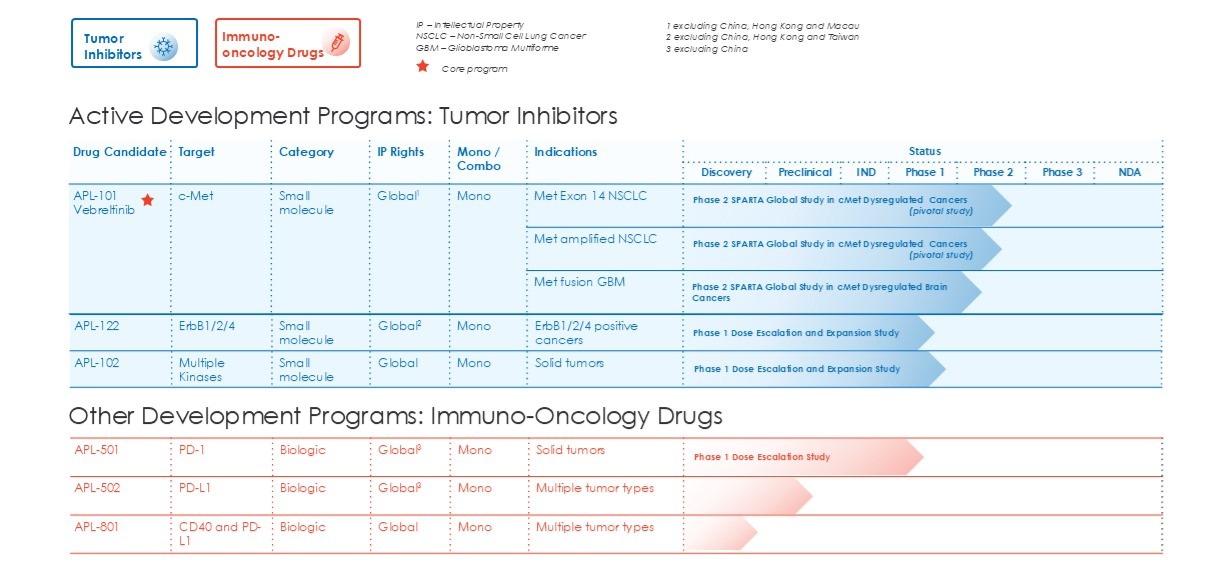
Key highlights of clinical trials conducted by third parties on our product candidates include:
Apollomics is not responsible for, and does not have control over, clinical trials conducted by such third parties and does not have any direct financial interest in the development of our product candidates by such third parties. However, the development of our product candidates by such third parties has the potential to benefit the regulatory status and development costs of such product candidates in the geographies and trials for which we are responsible and have control over, due to our ability to access the developmental and clinical data from such third parties and to benefit from the feedback of such trials as information regarding such trials is made available. For more information regarding our arrangements with third parties, please see the section below entitled “—Licensing and Collaboration Arrangements.”
Our Strategy
Our strategic focus is the development of novel therapies targeting difficult to treat cancers and drug resistant patients. To address the needs of cancer patients for safer and more effective cancer treatment solutions, we strive to unlock the synergy between treatments and address drug resistance. The key elements of our business strategy to achieve these goals include:
50
Our Key Competitive Strengths
We believe the following capabilities and competitive strengths will enable us to achieve our business strategy:
Vebreltinib, our orally-available c-Met Inhibitor
As of the date of this Annual Report, throughout the world, NSCLC with Met Exon 14 skipping is the only indication for which some of these c-Met TKIs are approved despite the potential application of c-Met inhibitors towards treatment of tumors with other c-Met mutations/dysregulations, such as c-Met amplifications and Met fusions. Capmatinib and tepotinib are both approved as first and second line treatment in patients with NSCLC Met Exon 14 skipping mutation in the United States and Japan, and as second-line treatment in the European Union. Capmatinib and tepotinib were initially approved in the United States by the FDA under accelerated approval in 2020 and 2021, followed by full approval in 2022 and 2024, respectively. In China, two other c-Met inhibitors, savolitinib and gumarontinib, in addition to vebreltinib (being developed and commercialized by our partner Avistone in China), are also approved for treatment of NSCLC with Met Exon 14 skipping, under conditional approval.
Vebreltinib is a selective and potent inhibitor of the c-Met receptor kinase, which is overexpressed and/or mutated in several tumor types. Vebreltinib has demonstrated preclinical tumor inhibitory effect in a variety of human primary c-Met amplified gastric, hepatic, pancreatic and lung cancer xenograft models. Vebreltinib is an oral agent being evaluated in two ongoing Phase 2 multi-cohort pivotal studies (SPARTA, being conducted by Apollomics, and KUNPENG, being conducted by Avistone) primarily for evaluation of these indications: (i) NSCLC with Met Exon 14 skipping, (ii) NSCLC with c-Met amplification and (iii) other solid tumors with c-Met alterations, such as c-Met fusion or c-Met amplifications. We are actively enrolling new patients only for NSCLC with c-Met amplification, and continue to follow previously-enrolled patients in other SPARTA cohorts. Vebreltinib has also been evaluated in a randomized Phase 2/3 study in subjects with r/r glioblastoma multiforme (“GBM”) with PTRPZ1-MET fusions in China, which was reported to show a 48% reduction in the risk of death in vebreltinib treated patients relative to those on active comparator arm. Met Exon 14 skipping occurs in 3% to 4% of NSCLC, and has been reported to be associated with worse outcomes than in NSCLC without this c-Met alteration. NCCN currently recommends c-Met inhibitor TKI monotherapy as first line treatment of choice for NSCLC with Met Exon 14 skipping. Vebreltinib is also being evaluated in an investigator-initiated Phase 1 study in combination with osimertinib in NSCLC subjects with EGFR mutations.
51
c-Met Pathway & c-Met mutations/alterations in cancers
c-Met is a transmembrane, receptor tyrosine kinase. The extracellular portion of c-Met is composed of three domain types: (i) a ligand binding domain, the semaphorin (“Sema”) domain; (ii) a plexin-semaphorin-integrin (“PSI”) domain which follows the Sema domain; and (iii) four immunoglobulin-plexin-transcription domains, which connect the PSI domain to the transmembrane helix. Intracellularly, c-Met contains: (i) a juxtamembrane domain that negatively regulates c-Met; (ii) a tyrosine receptor kinase catalytic domain; and (iii) a docking site that recruits several transducers and adaptors when c-Met is active. c-Met is activated by the binding of its ligand, HGF.
c-Met, after binding with HGF, activates a variety of intracellular signaling pathways within the cell, including those involved in proliferation, motility, survival, morphogenesis and angiogenesis. In cancer cells, c-Met has been found to be aberrantly activated via mutation, amplification, gene fusion/rearrangement or protein overexpression. Aberrant c-Met signaling has been reported in a wide variety of human malignancies, including gastric, lung, colorectal, breast, bladder, head and neck, ovarian, prostate, thyroid and pancreatic tumors as well as sarcomas, hematologic malignancies and CNS tumors. Because of its pleotropic role in cellular processes important in oncogenesis and cancer progression, c-Met is an important target in anticancer therapy. Several molecules targeting c-Met have been evaluated in clinical trials, and two are approved for use in the United States.
The finding that cancer cells often use c-Met activation to escape therapies targeting other pathways strengthens the rationale for c-Met-targeted therapeutics. In addition to the primary tumors with c-Met alterations that is associated with treatment resistance and worse treatment outcomes than those without c-Met alterations, c-Met amplification may also develop as part of treatment resistance following targeted TKI treatments against EGFR, ALK, and ROS.
c-Met signaling pathway
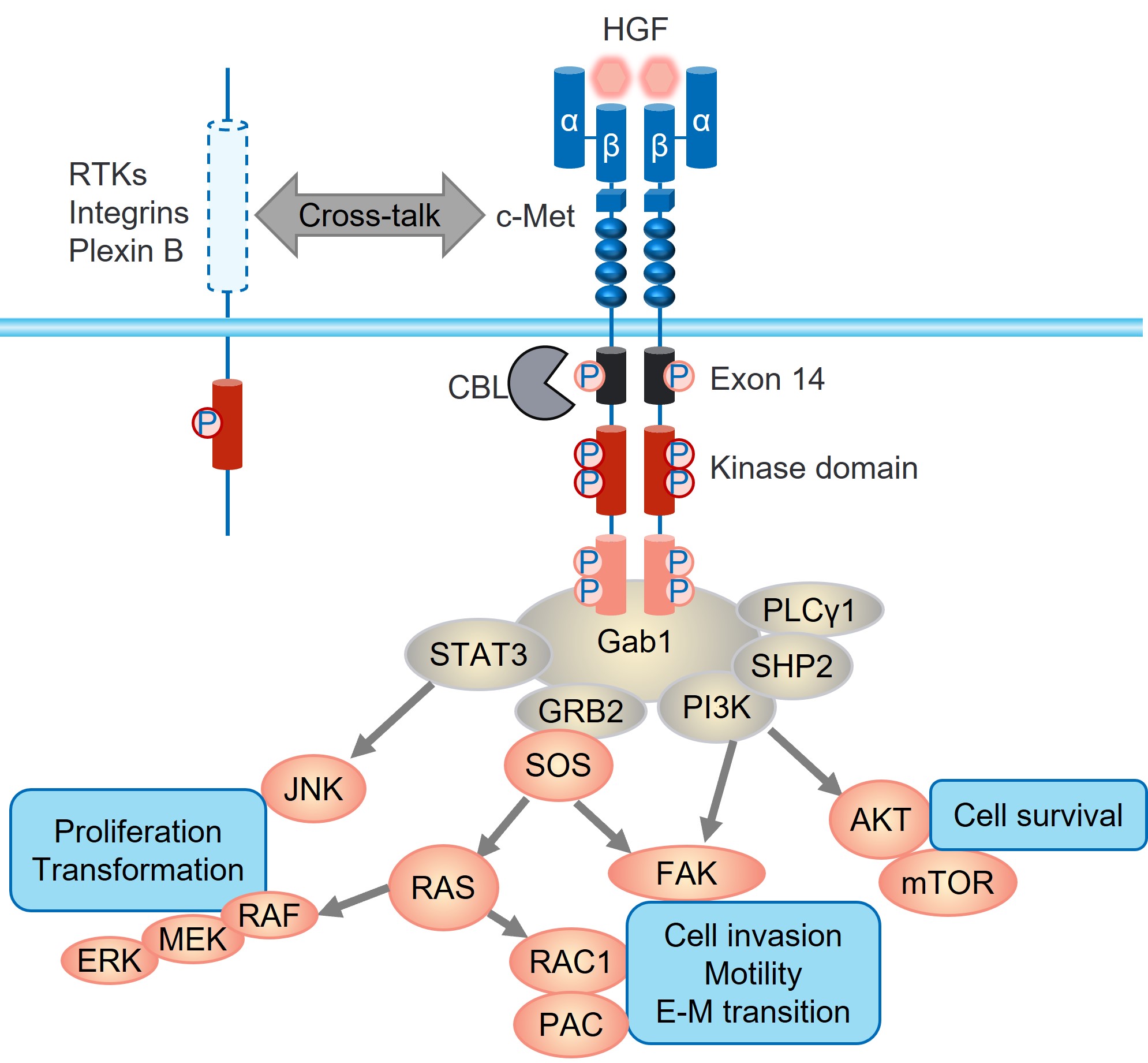
Source: Company
Activation of c-Met induces biological responses via activation of various intracellular signaling pathways. Aberrant c-Met signaling in cancer cells can occur through a number of mechanisms, including c-Met protein overexpression, MET gene amplification, MET gene or fusion/rearrangement.
Met Exon 14 Skipping Mutation
Met Exon 14 gene mutations with functional impact have been found in various domains. Mutations in the Sema domain, which upregulate kinase activity or affect ligand binding of c-Met, have been found in cancers of unknown primary origin. Mutations in the catalytic region are observed in several tumor types, including papillary renal carcinoma, childhood hepatocellular carcinoma and lymph node metastases of head and neck squamous-cell carcinomas. Mutations in the splicing sites of Met Exon 14, the exon which encodes the juxtamembrane domain of c-Met, cause exon skipping and deletion of the entire juxtamembrane domain. Mutations in the splicing sites of Met Exon 14 have been found in various solid tumors, including lung cancers, and have recently been shown to occur in 3% to 4% of NSCLC adenocarcinomas, 2% of squamous cell carcinomas, and 1% to 8% of other subtypes of lung cancer. NSCLC with Met Exon 14 skipping is the only indication for which three other selective c-Met inhibitors have received regulatory approval: capmatinib received full approval from the FDA in August 2022 following original accelerated approval in 2020, tepotinib received full approval from the FDA in February 2024 following original accelerated approval from the FDA in 2021 and savolitinib received approval by the NMPA in 2021. Vebreltinib received approval from the NMPA in November 2023.
52
c-Met amplification
c-Met amplification has been found to occur in many solid tumors. In NSCLC, amplification of MET typically occurs in about 2% to 5% of newly diagnosed adenocarcinomas. Furthermore, fluorescence in situ hybridization (“FISH”)-positive MET status predicts worse survival in subjects with advanced NSCLC. c-Met amplification is associated with worse outcomes. A retrospective study of 447 NSCLC patients with available tumor tissue from primary lung tumor and OS data demonstrated that increase in gene copy number (measuring the extent of amplification) is an independent negative prognostic factor in surgically resected NSCLC with an OS of 25.8 months for subjects with MET > five copies/cell compared with 47.5 months for subjects with MET < five copies/cell (p=0.0045). There is currently no approved treatment of tumors with c-MET amplification.
MET amplification may be occurring as part of the resistance mechanism in NSCLC patients treated with TKIs targeting other mutations such as EGFR, ALK and ROS. For example, up to 20% of NSCLC subjects with EGFR mutation developed c-Met amplification following treatment with EGFR TKI inhibitor like erlotinib, gefitinib, or osimertinib. Amplification of MET (and overexpression of the c-Met protein) is also a common event in brain metastases of NSCLC.
c-Met Fusion
A recent study reported that gene fusions drive the development of 16.5% of cancer cases, and function as the sole driver in more than 1% of them. Gene fusions have served as specific targets for treatment, resulting in dramatically improved patient outcomes with multiple other gene fusion targets under investigation. Activation of c-Met signaling may also be driven by oncogenic fusion proteins, including translocated promoter region (“TPR”)-MET, CAP-Gly domain-containing linker protein 2 (“CLIP2”)-MET and TRK-fused gene (“TFG”)-MET, each of which contains the entire sequence downstream of the juxtamembrane domain of c-Met. MET fusions have been more frequently observed in high-grade gliomas and in gliomas treated with radiation or temozolomide. In one study reported by Bao et al. in 2014, out of 272 glioma samples that were analyzed, 67 in-frame fusion transcripts were identified, including three recurrent fusion transcripts: FGFR3-TACC3, RNF213-SLC26A11 and PTPRZ1-MET (i.e., ZM fusion). Clinically, patients afflicted with ZM fusion-harboring secondary glioblastoma multiforme (“GBM”) had poor survival relative to those with non-ZM-harboring secondary GBMs (P < 0.001). The mutational landscape of 188 secondary GBMs was studied to find significant enrichment of TP53 mutations, somatic hypermutation, exon 14 skipping mutations, ZM fusions, and MET amplification. It was found that exon 14 skipping mutation frequently co-occurs with ZM fusion and is present in about 14% of cases with significantly worse prognosis. There is currently no approved treatment for tumors with c-MET fusion.
Overview of vebreltinib c-Met Tyrosine Kinase Inhibitor (“TKI”)
Vebreltinib is a small molecule, orally bioavailable ATP-competitive, type 1b inhibitor of the c-Met tyrosine kinase. In biochemical kinase screening assays, vebreltinib inhibited wild type c-Met and some of its mutants at subnanomolar concentrations. In an intracellular c-Met in vitro assay IC50 was 0.52 nM, which is relatively potent compared with other c-Met inhibitors. In addition to its potency and to extend its kinase selectivity profiling, the affinity of vebreltinib to different kinases was measured in a set of ~442 kinases and disease relevant variant using the KINOMEscan selectivity screening platform. At a screening concentration of 10 µM, only three kinases scored hits with the predefined cutoff of ≥65% reduction in binding to the capture matrix compared with vehicle control. These hits included c-Met and two mutant variants consequently confirming the high selectivity of vebreltinib for c-Met kinase.
Inhibition of c-Met kinase activity by vebreltinib was demonstrated by the attenuation of its autophosphorylation state as well as the phosphorylation of downstream signaling proteins in a dose-and time-dependent manner in various tumorigenic cell lines that highly express c-Met, including gastric, lung, hepatic and pancreatic cancer cells. Vebreltinib also inhibited the proliferation and survival of c-Met-dependent cancer cells, including cancer cell growth driven by specific c-Met mutations or amplification. Lastly, vebreltinib demonstrated anti-tumor activity against patient-derived human lung cancer xenografts with either Met Exon 14 skipping mutations, c-Met amplifications, or c-Met fusion implanted into nude mice. These studies support the proposed mechanism of action of vebreltinib and its activity in the proposed patient population.
53
MET alterations and oncogenic addiction
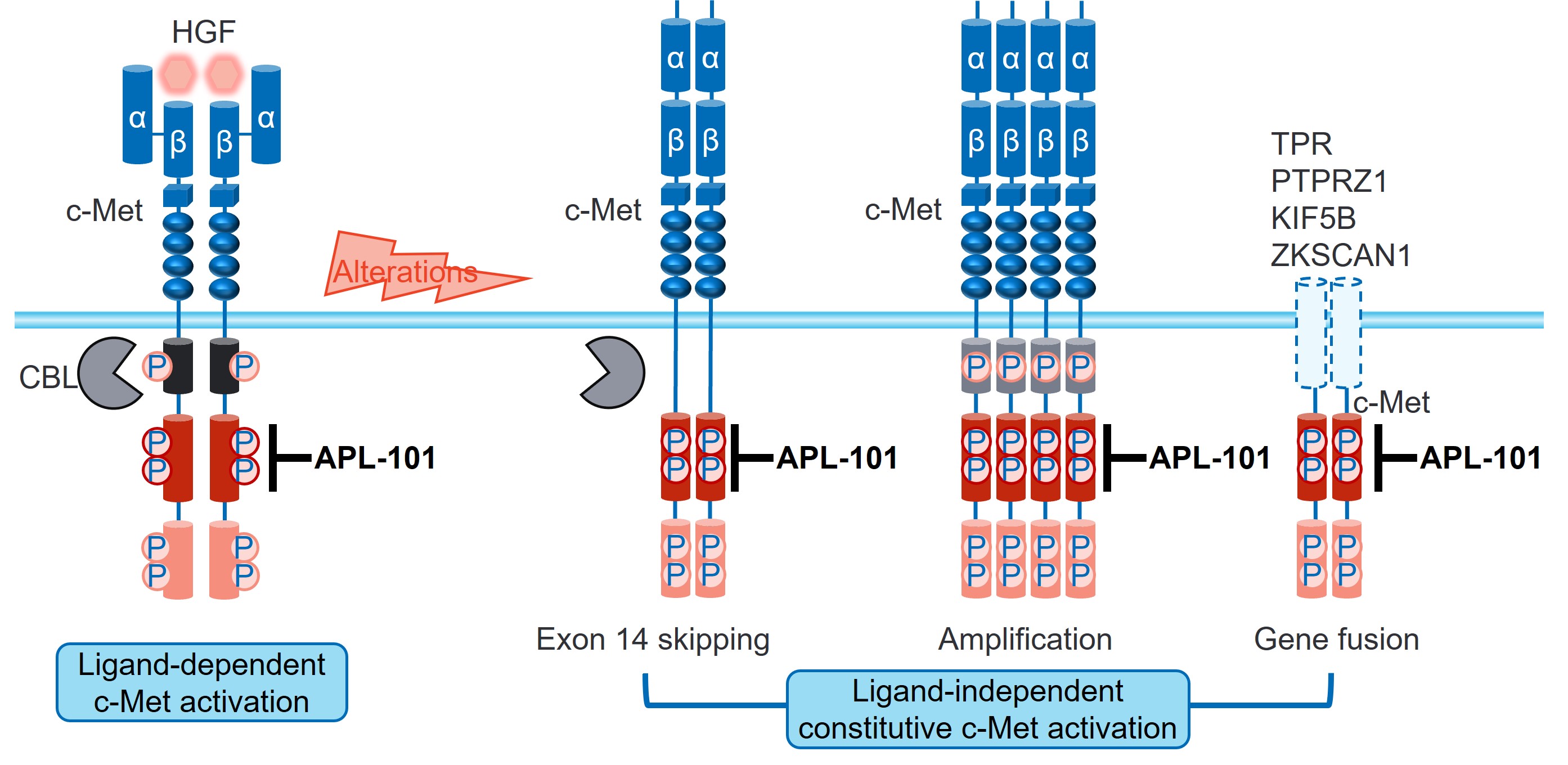
Source: Company.
Vebreltinib Clinical Development
We were formerly known as Crown Biotherapeutics (“CBT”), which was a subsidiary of Crown Bioscience International. Crown Bioscience International discovered vebreltinib and out-licensed the commercial rights for China (inclusive of Mainland China, Hong Kong, and Macau) to Beijing Pearl Biotechnology (“Pearl”) on November 7, 2012, now called Beijing Avistone Pharmaceuticals Biotechnology Co., Ltd (“Avistone”). Both Apollomics and Avistone have been advancing the development (CMC, preclinical, and clinical) of vebreltinib for the treatment of solid tumors with c-Met alterations.
To date, more than 600 patients and 170 healthy volunteers have been dosed with vebreltinib in clinical trials. The safety profile is generally acceptable.
Phase 1 Studies
The Phase 1 NSCLC study HMO-PLB1001-2013012-01 (N=37) was an open-label dose escalation (N=19) and expansion (N=18) study in which vebreltinib doses ranging from 50 mg twice daily (“BID”) to 275 mg BID and 300 mg once daily (“QD”) were evaluated in 37 Chinese subjects with NSCLC with c-Met dysregulation.
HMO-PLB1001-2013012-01 Phase 1 Dose Escalation and Expansion Schema |
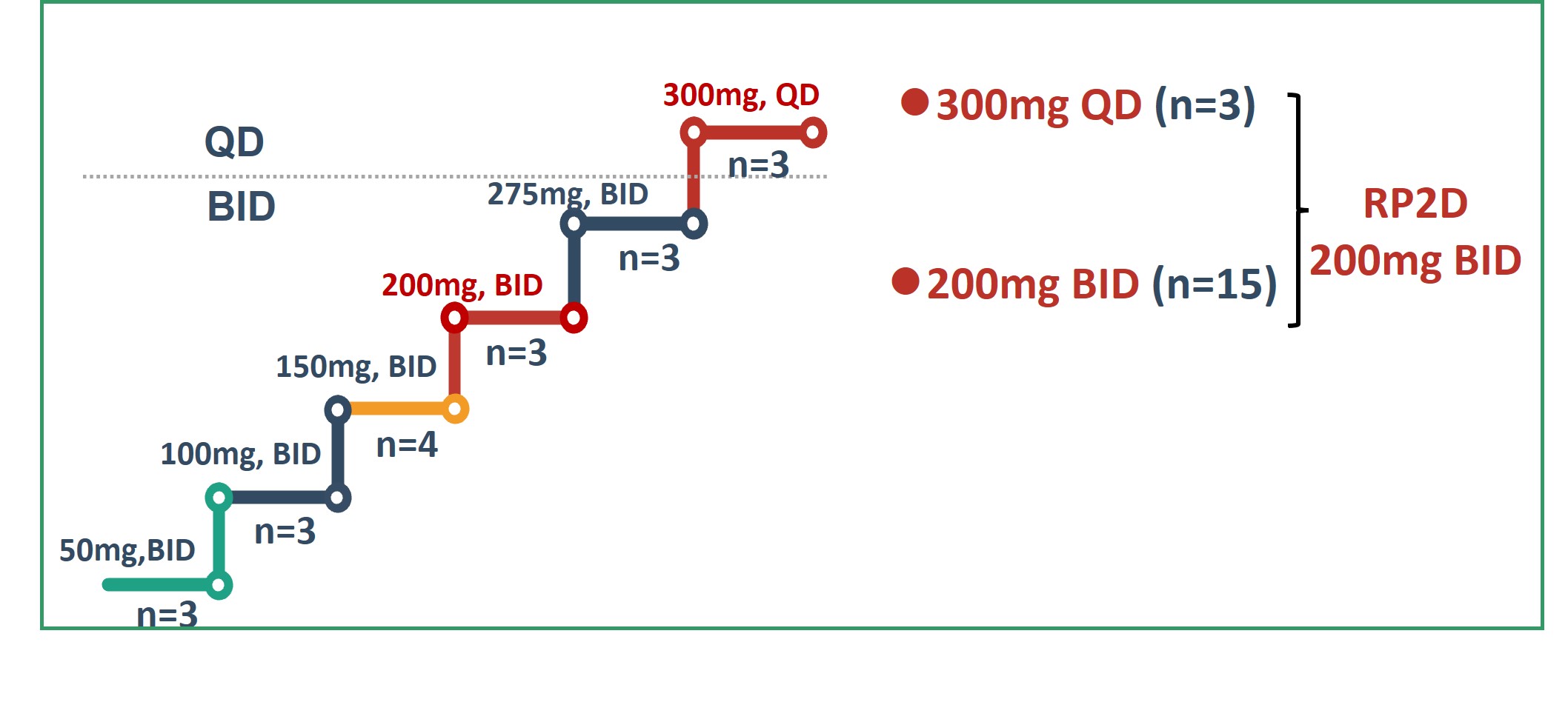
Overall Finding: The preliminary efficacy data for vebreltinib from the Phase 1 trial for treatment of NSCLC with Met Exon 14 skipping is shown in the table below with selection of 200 mg BID as recommended Phase 2 dose (“RP2D”). The maximum tolerated dose (“MTD”) was not reached (Yang et al. 2020).
54
Efficacy Summary of Study HMO-PLB1001-2013012-01
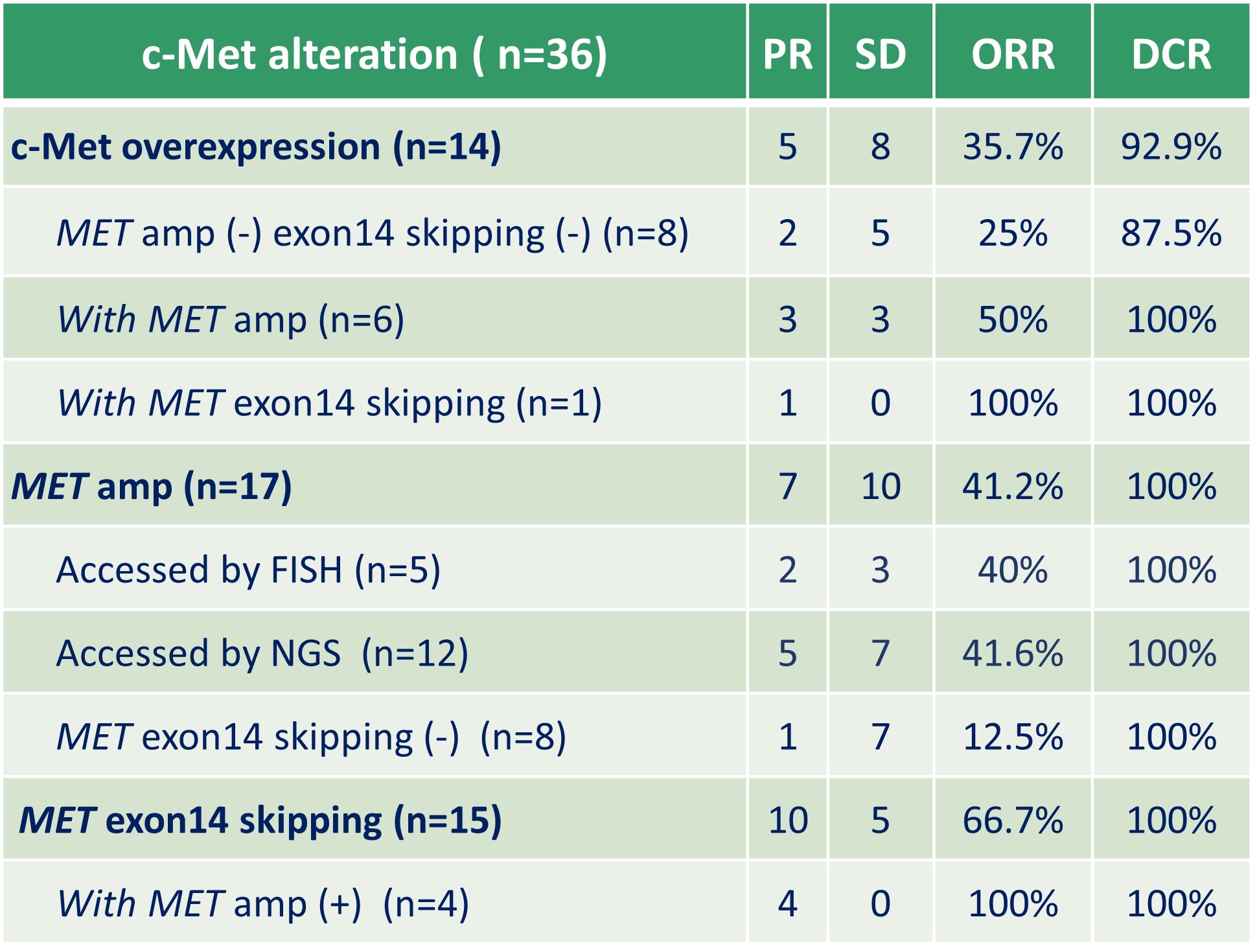
PR – partial response; SD – stable disease; ORR – objective response rate (complete response (CR) + PR); DCR – disease control rate (CR + PR + SD). Note that the FDA does not consider SD as a response or DCR for regulatory purposes.
Among the 37 subjects in the dose escalation phase and dose expansion phase of the Phase 1 vebreltinib clinical trial, no occurrence of dose-limiting toxicity and maximum tolerated dose (“MTD”) were observed, and the drug-related adverse events (“AE”) were mainly Common Terminology for Adverse Events grade 1-2. Most AEs were common adverse events of small-molecule targeted therapy tyrosine kinase inhibitor drugs and similar c-Met inhibitors, such as increased transaminases, peripheral edema, increased lipase and increased amylase. Of the 15 serious adverse events (“SAEs”) reported in ten subjects, five SAEs in four subjects were considered related to study drug: three events of abnormal liver function in two subjects (one treated with 200 mg BID and the other with 300 mg QD); one event of bilirubin elevation in a subject treated with 275 mg BID; and one event of peripheral edema in a subject treated with 200 mg BID. The abnormal liver enzyme abnormality SAEs and bilirubin elevation SAEs improved to baseline or Grade 1 AE upon study drug discontinuation.
55
Safety summary of Study HMO-PLB1001-2013012-01
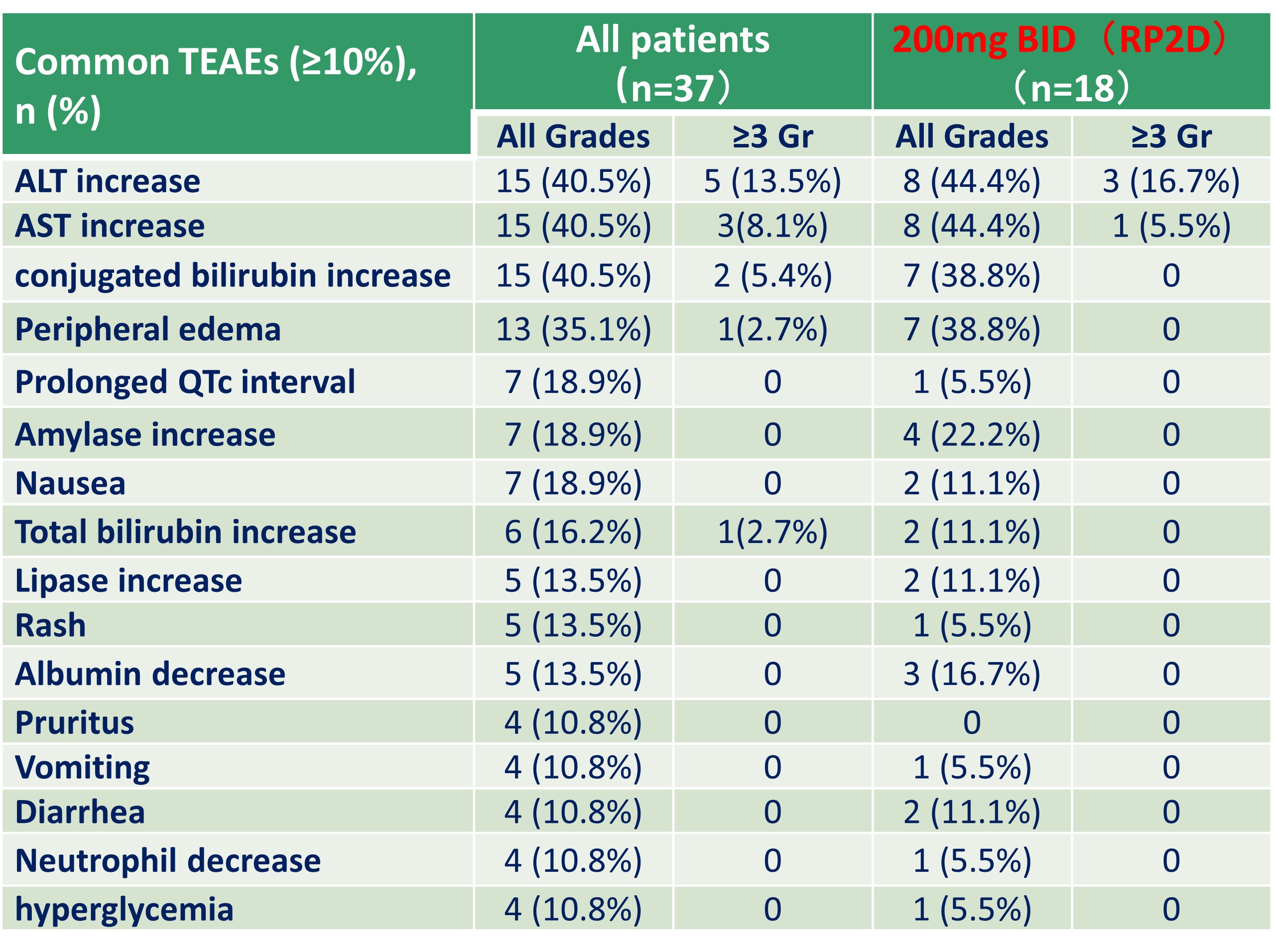
The drug exposure increased with the increase in dose during the dose escalation phase in the Phase 1 vebreltinib clinical trial for NSCLC indications. After the drug reached a steady state drug concentration, the drug concentration in different dose groups showed dose correlation.
Steady-State Drug Concentration of Vebreltinib in Phase I Study in NSCLC subjects (HMO-PLB1001-2013012-01)
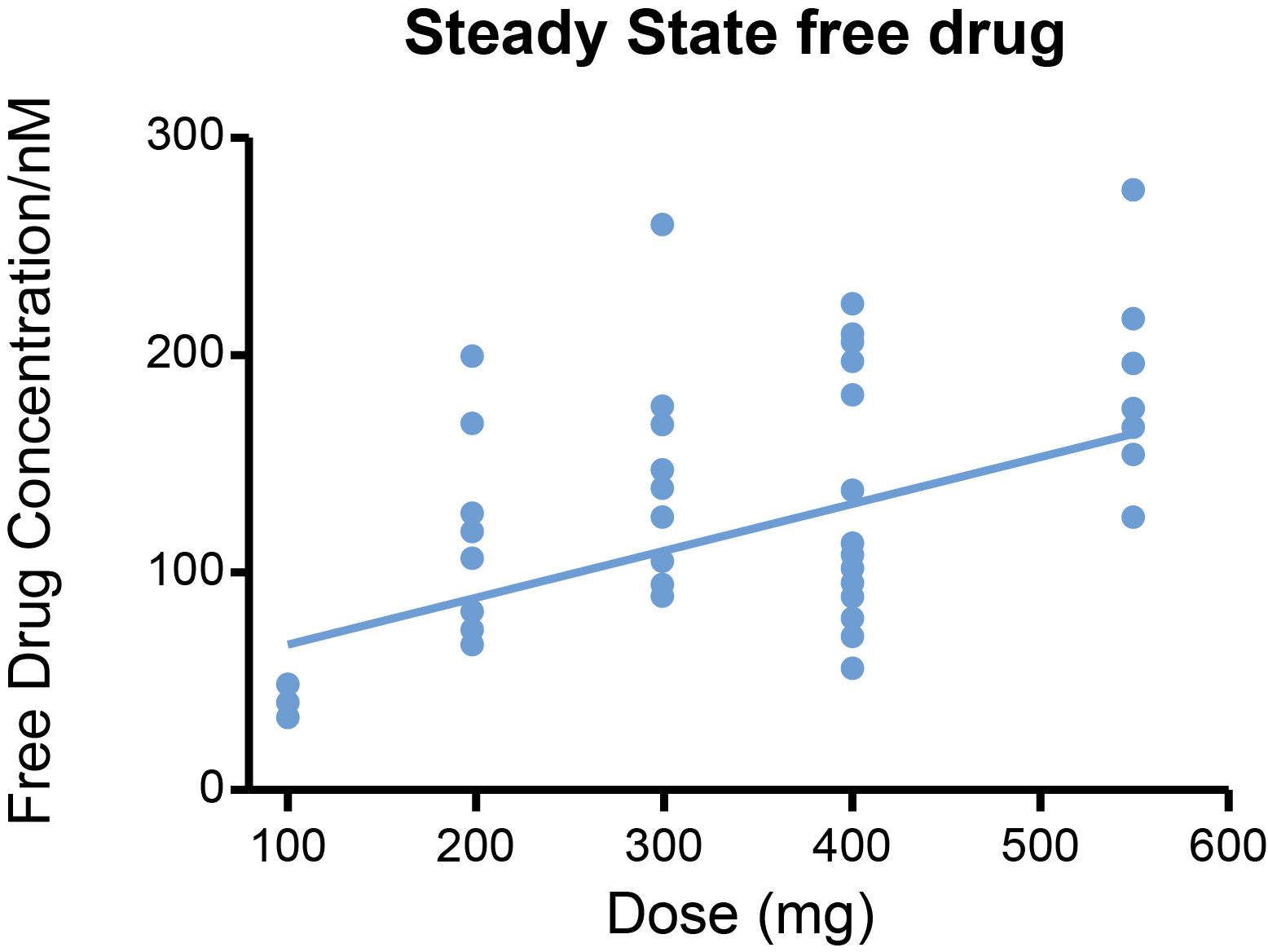
Avistone (China) Phase 1 Glioblastoma Multiforme Trial- Study HMO-PLB1001-I-GBM-01
Study HMO-PLB1001-I-GBM-01 (sponsored by Avistone) was a Phase 1, open-label dose-escalation and expansion study of vebreltinib to assess safety and tolerability, and to determine the RP2D of vebreltinib in subjects with PTPRZ1-MET fusion-gene (ZM fusion) positive recurrent high-grade gliomas. Treatment in this study has been completed. A total of 18 subjects were enrolled in four dose cohorts: four at 100 mg/day (50 mg BID), four at 200 mg/day (100 mg BID), three at 400 mg/day (200 mg BID) and seven at 600 mg/day (300 mg BID). The RP2D has been determined to be 300 mg BID.
Treatment-emergent AEs were reported by 17 subjects. Grade ≥ 3 events were reported for five subjects. Vebreltinib related Grade ≥ 3 were reported for three subjects. Three subjects experienced three serious adverse events, one of which (cerebrovascular accident) was considered possibly related to the study drug.
Efficacy data in the six evaluable subjects with secondary GBM is as follows: two (33%) achieved PR, two (33%) achieved SD; the ORR (CR+PR) was 33%; the DCR (CR+PR+SD) was 67%; the 6-month survival was > 67% (4/6); median overall survival was > 9 months. Furthermore, the concentration of vebreltinib in the CSF increased with increasing dose, consistent with plasma exposure. The concentration in CSF was about 5% of the steady-state plasma.
56
APL-101-01 Phase 1/2 Study in Subjects with solid tumors with c-Met dysregulation — Phase 1 Component (U.S.) – by Apollomics
APL-101-01 (SPARTA) is an open-label Phase 1/2 clinical study (conducted by Apollomics), which has two key components. The Phase 1 component with n=17, which has been completed, was a dose escalation study to evaluate tolerability and pharmacokinetics of vebreltinib 50 mg BID to 200 mg BID in U.S. subjects with solid tumors with c-Met alterations. Vebreltinib was well tolerated without reaching MTD, and the PK results further support the selection of 200 mg BID as RP2D for NSCLC. Signals of potential durable (> 2 years) efficacy (by achieving partial response) was first observed in a subject with recurrent metastatic Schwannoma with c-Met expression as well as in a subject with recurrent GBM with c-Met amplification previously treated with Temodar, Avastin and Nivolumab. Of the three SAEs reported in three subjects, one SAE of hyponatremia was considered related to the study drug.
Other Clinical Trials
In the APOLLO Phase 1/2 study in Australia, 20 subjects with locally advanced or metastatic hepatocellular carcinoma (“HCC”) or renal cell carcinoma (“RCC”) were treated with vebreltinib in combination with a PD-1 antibody (APL-501 in HCC, nivolumab in RCC). Treatment in this study was completed in the first half of 2022. We are currently completing data analysis for this trial.
In an ongoing investigator-sponsored trial of vebreltinib in combination with osimertinib at Washington University School of Medicine, clinicians are exploring the safety and efficacy of combining vebreltinib with frontline osimertinib in subjects with EGFR-mutated metastatic NSCLC. Based on our discussions with the clinical investigators, no safety concerns have been observed in this trial to date.
Phase 1 studies in Healthy Volunteers
A number of vebreltinib clinical pharmacology studies in healthy volunteers are summarized as follows:
PLB1001-1c-01 (N=16) — food effect
PLB1001-1d-01 (N=6) — mass balance
PLB1001-1e-01 (N=36) — drug-drug interaction
R01220097 (N=39) — bioequivalence
Phase 2 SPARTA Study of Vebreltinib in Subjects with NSCLC with Met Exon 14 Skipping Mutations and c-Met Dysregulation Advanced Solid Tumors
The Phase 2 component of our SPARTA clinical study, APL-101-01 is an ongoing open-label multi-cohort study for evaluation of efficacy and safety of vebreltinib for the treatment of a number of solid tumors, including NSCLC with Met Exon 14 skipping, NSCLC with c-Met amplification, brain tumors with MET fusion or MET amplification and other solid tumors with MET amplification or MET fusion. The table below summarizes the cohorts in the Phase 2 portion of the SPARTA study.
Cohort A1 EXON 14 Skipping NSCLC (MET inhibitor naïve) 1L (N up to 80) |
Cohort A2 EXON 14 Skipping NSCLC (MET inhibitor naïve) 2L/3L (N up to 90) |
Cohort B EXON 14 Skipping NSCLC (MET inhibitor experienced) - completed (Stage 1=10, Stage 2=19) |
Cohort C Basket of tumor types except primary CNS tumors, MET amplification (MET inhibitor naïve) (N up to 80) |
Cohort C-1 NSCLC harboring MET amplification and wild-type EGFR (MET inhibitor naïve) (N up to 46) |
Cohort C-2 EGFR mutated NSCLC with acquired MET amplification (add APLL-101 to EGFR inhibitor) (N up to 46) |
57
Cohort D Basket of tumor types except primary CNS tumors, harboring MET gene fusions (MET inhibitor naïve) (Stage 1=10, Stage 2 up to 36) |
Cohort E Primary CNS tumors with MET alterations (MET inhibitor naïve) (Stage 1=14, Stage 2 up to 26) |
Cohort F Basket of tumor types with over expression of HGF & Over-expression of MET; MET WT (Stage 1=10, Stage 2 up to 30) |
Apollomics is currently conducting the ongoing Phase 2 portion of the global SPARTA study at approximately 40 study sites in over 10 countries in North America, Europe and Asia-Pacific. Cohort C-1 remains open to additional enrollment, and approximately 30 patients in other cohorts continue to receive vebreltinib. As of the date of this Annual Report, over 250 subjects have enrolled in the SPARTA study, including subjects with NSCLC with Met Exon 14 skipping or with MET amplification, brain tumors with PTPRZ1-MET fusion, and subjects with other solid tumors with MET alterations like MET amplification or MET fusion.
The primary endpoint of the ongoing Phase 2 portion of the SPARTA study is objective response rate (“ORR”) per blinded independent review committee by RECIST v.1.1 for NSCLC and other solid tumors and by Response Assessment in Neuro-Oncology for brain tumors, with median duration of response (“DOR”) as a secondary endpoint. Additional secondary endpoints include ORR per investigator assessment based on RECIST v1.1, antitumor activity by clinical benefit rate (CR + PR + SD ≥ 4 cycles) based on RECIST v1.1 (or relevant criteria per tumor type), median time to progression, and progression free survival (“PFS”) and overall survival (“OS”) at 6, 12, 18 and 24 months.
Phase 2 KUNPENG Study of vebreltinib in Chinese NSCLC subjects with Met Exon 14 skipping or MET amplification (conducted by Avistone)
PLB1001-II-NSCLC-01 Study Design
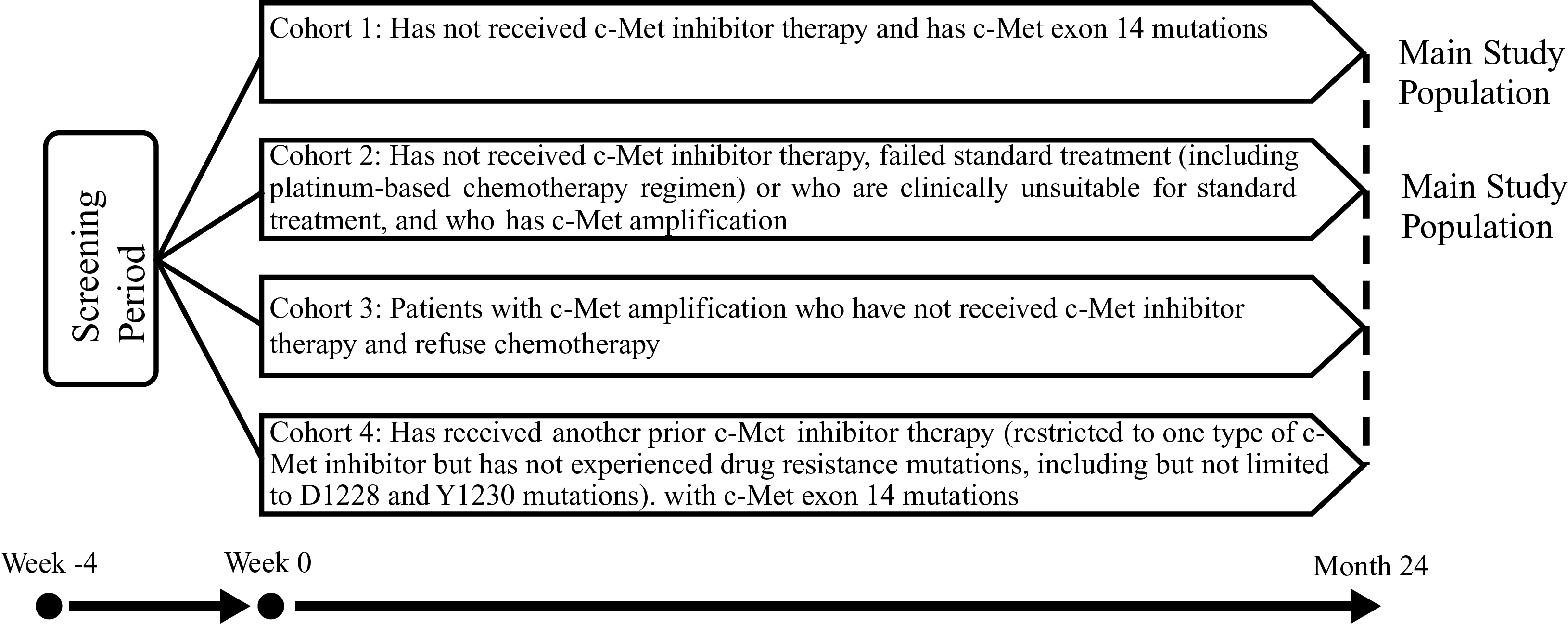
The Phase 2 PLB1001-II-NSCLC-01 (KUNPENG Study) in Chinese NSCLC subjects with Met Exon 14 skipping or MET amplification was conducted by Avistone. Enrollment of locally advanced or metastatic NSCLC subjects with Met Exon 14 skipping was completed in 2021. An NDA was submitted to NMPA in September 2022. The enrollment of NSCLC with MET amplification is ongoing. The primary efficacy endpoint is objective ORR per RECIST v 1.1. The secondary efficacy endpoints include PFS, OS, disease control rate (“DCR”), TTR and DOR.
Efficacy and safety data from the Met Exon 14 skipping NSCLC cohort from KUNPENG Study were presented at the European Society of Medical Oncology Congress 2023. Of the 52 patients, 39 achieved complete or partial response, an ORR of 75% (95% CI, 61.1–86.0), median duration of response (DOR) of 15.9 months (95% CI, 9.2–17.8), a high disease control rate (DCR) of 96.2% (95% CI, 86.8–99.5). and a notably rapid onset of response with a median time to response of 1 month (95% CI, 1–2.8). In the 35 treatment-naïve patients, ORR was 77.1% (95% CI, 59.9–89.6), with median DOR of 16.5 months (95% CI, 9.2–NE). In the 17 patients who received prior systemic treatment, ORR was 70.6% (95% CI, 44.0–89.7), with median DOR of 15.3 months (95% CI, 3.7–17.8). Vebreltinib showed efficacy in patients with locally advanced or metastatic NSCLC harboring Exon-14 skipping mutations, with an ORR of 75%. Among other notable findings in the KUNPENG study, ORR and disease control rate (DCR) were 100% in patients with brain metastases (n=5) and ORR was 66.7% in patients with liver metastases (n=6).
Interim efficacy and safety data from the global multi-cohort Phase 2 SPARTA trial (NCT03175224) and from the multi-cohort Phase 2 KUNPENG trial (NCT04258033) were presented at the 2023 IASLC North America Conference on Lung Cancer (“NACLC”) that was held December 1–3, 2023, in Chicago, Illinois. Vebreltinib appears efficacious in non-small cell lung cancer (“NSCLC”) patients
58
with MetExon14 skipping mutation with or without co-occurring MET amplification. Of the first 83 NSCLC patients with MetExon14 skipping mutation with available gene copy number (“GCN”) data from the Phase 2 KUNPENG and SPARTA trials, 91.6% did not have co-occurring MET amplifications, reflecting the real-world distribution of the NSCLC patients with MetExon14 skipping mutation from two large public databases (83.6% and 91.9%). NSCLC patients with MetExon14 skipping mutation without co-occurring MET amplification (gene copy number or GCN < 4) from the KUNPENG and SPARTA trials showed an overall response rate (ORR) of 64.5% and a median duration of response (DOR) of 15.9 months, and those with overlapping MET amplification (GCN ≥ 4) achieved ORR of 85.7%.
This presentation may represent the first publicly available analysis on a c-Met inhibitor in treatment of NSCLC with MET exon14 skipping mutation, in which the GCN distribution in the study population resembles the real world (large public database) and the treatment can achieve sufficient efficacy (with ORR of 64.5%) in those without overlapping c-Met amplification, a subgroup representing over 83% of NSCLC with Met Exon 14 skipping, an important patient population previously reported in other c-Met inhibitor pivotal trials that supported U.S. or China approvals with substantially lower ORR.
Vebreltinib Development and Regulatory Status in China
Our partner, Avistone (which wholly owns Beijing Pearl) conducts all vebreltinib development, regulatory, manufacturing, and commercialization activities in China. Vebreltinib was conditionally approved by the China NMPA in November 2023 for the treatment of locally advanced or metastatic NSCLC with Met Exon 14 skipping mutation, and Avistone has launched commercial sales. In 2023, Avistone submitted a supplemental NDA (“sNDA”) for the treatment of PTPRZ1-MET fusion-positive secondary glioblastoma, which was approved by the China NMPA in April 2024.
Vebreltinib Global Clinical Development Strategy & Plans (including the U.S., EU, and Rest of World)
We are pursuing the three initial indications below while exploring the treatment of other solid tumors with c-Met alterations like c-Met amplification or c-Met fusion with vebreltinib:
NSCLC with c-Met dysregulation indications: Met Exon 14 skipping and those with c-Met amplification
Lung cancer is a leading cause of cancer death, and NSCLC comprises 85% of lung cancers. Among subjects with NSCLC, 3% to 4% have Met Exon 14 skipping mutation, and 3% to 5% have c-Met amplification on initial presentation while 20% EGFR+ NSCLC subjects manifest with c-Met over-expression or c-Met amplification when they develop resistance following treatment with targeted therapy using an EGFR inhibitor (TKI). NSCLC with c-Met genomic alteration such as Met Exon 14 skipping, c-Met amplification/over- expression are less responsive to systemic non-targeted therapy typically used for treating NSCLC such as checkpoint inhibitor antibodies, and have worse outcome than NSCLC with c-Met genomic alterations (Sabari et al., Coactivator Condensation at Super-Enhancers Links Phase Separation and Gene Control, 2018). Since the accelerated approval of c-Met inhibitors in the United States (capmatinib in 2020 and tepotinib in 2021) for treatment of NSCLC harboring Met Exon 14 skipping mutation, the National Comprehensive Cancer Network (“NCCN”) recommends the use of c-Met inhibitor TKI for first line treatment of NSCLC with Met Exon 14 skipping. However, there has not been any approved targeted therapy for NSCLC with c-Met amplification, with wild type or resistance following EGFR TKI.
An indication of potential vebreltinib efficacy in NSCLC with c-Met dysregulation was first observed in the completed Phase 1 Study HMO-PLB1001-2013012-01. In this study, 36 evaluable Chinese subjects with NSCLC and c-Met dysregulations (Met Exon 14 skipping, c-Met amplification, or c-Met protein over-expression) were treated with single-agent vebreltinib. An ORR of 66.7% (median DOR 9.3 months) was achieved in the 15 subjects with NSCLC harboring Met Exon 14 skipping mutations, with an ORR of 72.7% (median DOR 8.3 months) in the subset of subjects treated at the RP2D of 200 mg BID (n=11) with disease control rate (“DCR”) of 100% (DCR=CR+PR+SD). Duration of response was up to three years.
Vebreltinib in NSCLC with Met Exon 14 skipping is being evaluated in two ongoing Phase 2 studies, the U.S./global study APL-101-01 and the China study PLB1001-II-NSCLC-01.
At an End-of-Phase 1 meeting in November 2021, we sought FDA input on our development plan for two indications: NSCLC with Met Exon 14 skipping and NSCLC with c-Met amplification. We discussed potential accelerated approval for the treatment of NSCLC with Met Exon 14 skipping based on the “totality of data” from the Pearl and SPARTA studies. The FDA explained that in order to support accelerated approval we must demonstrate that vebreltinib provides a meaningful therapeutic benefit over treatments that have received full approval at the time of consideration for accelerated approval. Additionally, the FDA recommended that we request an additional meeting when more data is available to discuss: 1) the data package needed to support a marketing application seeking accelerated approval, and 2) plans for confirming the clinical benefit of vebreltinib. The FDA also provided guidance on sample size
59
requirements and study endpoints. The FDA also requested additional information for the FDA to determine if the proposed 200 mg BID dosage is optimized for efficacy and safety. The FDA recommended that we request a meeting when more data is available to discuss the development programs for the other vebreltinib indications.
In August 2022, the FDA granted us Orphan Drug Designation of vebreltinib for treatment of non-small cell lung cancer with c-Met genomic tumor aberrations which includes Met Exon 14 skipping and c-Met amplification.
With more clinical data on vebreltinib in NSCLC harboring Met Exon 14 skipping mutation, we had a follow-on (end of Phase 2) meeting with the FDA in July 2023. Instead of accelerated approval, “traditional approval” or “full approval” may potentially be feasible based on data from our ongoing global SPARTA study and China study by our partner Avistone. The FDA recommended that we propose an additional meeting to discuss our development plan and data package required to support a marketing application for vebreltinib for “traditional approval.”
We sought feedback from the FDA in a Type C meeting held in February 2024. The objectives of the meeting were to review our development plan and discuss the registration pathway of vebreltinib for the treatment of 3 conditions: (1) NSCLC with Met Exon 14 skipping, (2) NSCLC with c-Met amplification (EGFR WT, absence of other driver mutations) and (3) GBM with PTPRZ1 c-Met fusion (ZM fusion). For NSCLC with Met Exon 14 skipping, the FDA suggested primary efficacy analyses be conducted on patients with central NGS confirmation, even though SPARTA study enrollment was based on local NGS results and retrospective central confirmation was conducted whenever possible. For example, of the 43 treatment naïve NSCLC patients with Met Exon 14 skipping in SPARTA-II (enrolled in April 2023 or earlier), 36 were confirmed with next-generation sequencing (“NGS”) performed by a central, standardized laboratory, and were included in the primary efficacy analysis. Preliminary efficacy results of NSCLC with Met Exon 14 skipping patients from the SPARTA (enrolled in April 2023 or earlier) and the KUNPENG study, were presented in individual study and pooled result as “Combined”, inclusive of data available as of October 26, 2023, in table below. In the 71 treatment naïve NSCLC with Met Exon 14 skipping mutation (36 from SPARTA-II and 35 from KUNPENG), ORR was 66.2% (95% CI 54.0, 77.0), supported by median duration of response (“mDOR”) of 16.5 months (95% CI 9.2, 23.0) and a disease control rate of 94.4% (95% CI 86.2, 98.4). In the 36 previously treated patients, all with no prior c-Met inhibitor therapy, 19 of which from SPARTA-II (none with immunocheckpoint inhibitor 90 days or less prior to vebreltinib) and 17 of which from KUNPENG (XX with immunocheckpoint inhibitor 90 days prior to vebreltinib), ORR was 61.1% (95% CI 43.5, 76.9) with mDOR of 16.7 months and a disease control rate of 83.3% (95% CI 67.2, 93.6).
Comparison of Design, Baseline Characteristics and Top-Line Efficacy Between SPARTA and KUNPENG
Multicohort Open-Label Phase II study |
SPARTA |
KUNPENG (Pearl II) |
Primary endpoint ORR based on RECIST 1.1, supported by DOR |
✓ |
✓ |
Regions |
U.S., Canada, EU, APAC (ex-China) |
China |
Sponsor |
Apollomics |
Avistone |
MET exon 14 skipping NSCLC: include 1L & 2L+ patients identified by NGS, unresectable or metastatic disease |
✓ |
✓ |
Treatment: vebreltinib 200 mg BID |
✓ |
✓ |
1L patients (efficacy set for potential U.S. NDA) GCN<4: Median age, years (range) Female (%) Non-smokers ECOG 0 ECOG 1 Histology at diagnosis: % Adenoma |
N=36 n=28; ORR 64.3% 75.0 (53, 86) 58.3% 52.8% 33.3% 66.7% 88.9% |
N=35 n=28; ORR 71.4% 71.0 (53, 90) 48.6% 65.7% 14.3% 85.7% 88.6% |
Integrated Efficacy Results in Treatment Naïve and Previously Treated Patients with Vebreltinib Treatment in Comparison to Capmatinib (CCAS*)
NSCLC with Met Exon 14 skipping# CCAS |
|
Treatment Naïve NSCLC Patients |
Previously Treated NSCLC Patients |
||||
|
SPARTA-II (N=36) |
KUNPENG (N=35) |
Combined (N=71) |
SPARTA-II* (N=19) |
KUNPENG (N=17) |
Combined (N=36) |
|
Confirmed ORR |
|
55.6% |
77.1% |
66.2% |
52.6% |
70.6% |
61.1% |
95% CI |
|
(38.1, 72.1) |
(59.9, 89.6) |
(54.0, 77.0) |
(28.9, 75.6) |
(44.0, 89.7) |
(43.5, 76.9) |
mDOR (Months) |
|
11.2 |
17.1 |
16.5 |
10.6 |
16.7 |
16.7 |
95% CI |
|
6.0, NE |
9.2, NE |
9.2, 23.0 |
1.1, NE |
3.7, NE |
5.4, NE |
DOR >= 6 Months |
|
75.1% |
81.5% |
79.1% |
61.7% |
61.4% |
61.5% |
DOR >= 9 Months |
|
53.8% |
81.5% |
71.5% |
61.7% |
61.4% |
61.5% |
DOR >= 12 Months |
|
35.8% |
60.5% |
52.2% |
30.9% |
61.4% |
53.8% |
DCR (%) 95% CI |
|
91.7% (77.5,98.2) |
97.1% (85.1, 99.9) |
94.4% (86.2, 98.4) |
73.7% (48.8, 90.9) |
94.1% (71.3, 99.9) |
83.3% (67.2, 93.6) |
60
CCAS: Centrally confirmed analysis set that was confirmed by the central or an FDA approved NGS test in tissues; ORR: overall response rate, mDOR: median duration of response, CI: confidence interval; NE: not estimable, 95% CI is estimated by using the Clopper-Pearson method.
*Patients with last IO use < 90 days in SPARTA-II are excluded
# Data cut: October 26, 2023.
An updated efficacy analysis by GCN subgroup, based on data as of October 26, 2023, with larger number of patients with available GCN information included (N=91) than previously reported in NACLC 2023 presentation continued to show a similar trend of vebreltinib being efficacious in the treatment of Met Exon 14 skipping in the absence of overlapping c-Met amplification (GCN < 4) with ORR of 67% (n=86) or ORR 69% in those with GCN < 6 (n=90), and 100% (1 /1) in GCN < 6% in combined analysis of patients from SPARTA and KUNPENG. In treatment naïve patients with GCN < 4, ORR was 64.3% (n=28) in SPARTA and ORR was 71.4% (n=28) in KUNPENG.
In the February 2024 meeting with the FDA, we discussed the number of treatment naïve patients with Met Exon 14 skipping confirmed by central NGS testing that would be required to be treated with vebreltinib for an NDA package in this patient population. The FDA indicated that a 12-month follow up for patients in the primary efficacy analysis is needed to support traditional approval and that we would need to adequately explain the differences between the SPARTA and KUNPENG data. While we believe vebreltinib may represent a valuable new treatment option to patients with NSCLC with Met Exon 14 skipping mutation in the U.S, an option differentiated from the ones available today, we have closed the SPARTA cohorts for NSCLC with Met Exon 14 skipping mutations to new enrollment, and believe that a large, randomized, controlled clinical trial may be necessary for FDA approval in this indication.
We plan to pursue seeking marketing authorizations in the United States for NSCLC with Met Exon 14 skipping indication and the NSCLC with c-Met amplification indication with clinical results from the relevant patient subgroup from our APL-101-01 (SPARTA) study and patients from Avistone’s Phase 2 study in NSCLC patients, following the pre-NDA meeting with the FDA upon data maturation for each of these two indications. Furthermore, vebreltinib has the potential to become the first c-Met inhibitor targeting NSCLC with c-Met amplification as there are no approved treatments for this serious condition anywhere in the world, including the U.S.
We intend to take a similar approach towards seeking regulatory approval for NSCLC with c-Met alterations like Met Exon 14 skipping and c-Met amplification in other jurisdictions such as the E.U. and other non-U.S. countries.
NSCLC with Met Amplification
For NSCLC with c-Met amplification, at the February 2024 meeting, the FDA acknowledged that pretreated patients in this setting remain an unmet medical need, and indicated that the preliminary data presented could represent an improvement over available therapy. The FDA recommended we continue enrollment in this SPARTA cohort to increase the precision around the point estimate for ORR and provide geographic diversity for the purpose of an accelerated approval NDA package to potentially support a marketing authorization based on the single arm trial results from KUNPENG and SPARTA for this indication. Enrollment of these incremental patients in SPARTA is ongoing and we expect will continue into 2025. With positive data, we could potentially submit an NDA in 2026 to seek accelerated approval of vebreltinib as a second-line treatment for NSCLC patients with c-MET amplification.
In August 2024, we announced that we had recently completed an analysis of 38 patients in the SPARTA MET amplification cohorts. Testing method discordance (determination of MET amplification by status sequencing of blood, sequencing of tumor biopsies, and/or fluorescent in-situ hybridization (FISH), as well as the use of local versus central laboratory testing), has complicated the analysis. Of the patients with the highest MET gene copy number (GCN ≥10) as determined by central sequencing, an ORR of 30% (3/10) was achieved, as compared to 13% (5/38) in the overall dataset. We believe that MET GCN ≥10 by sequencing may be comparable to GCN ≥6 by central FISH testing, which is the criteria to define MET amplification used in previous clinical trials of other MET inhibitors.
In July 2024, we announced that SPARTA enrollment will focus only on NSCLC patients with MET amplification, to be confirmed by central FISH testing. We have enrolled six patients that meet these criteria in the last nine months. As of February 2025, five are evaluable for response, with one patient early in the treatment cycle. An ORR of 40% (2/5) was observed. However, the FISH testing is not part of the standard genetic testing done for this patient population. We believe that the challenges associated with this diagnostic test limit the enrollment rate as well as the commercial opportunity for this patient population. We are evaluating alternatives for development of vebreltinib in this indication.
Pan-tumor Met Fusions (non-CNS)
In August 2024, we announced data from the SPARTA Phase 2 clinical trial for 14 patients with non-CNS MET fusion solid tumors, where a 43% objective response rate (ORR) was achieved by RECIST v1.1 criteria. This includes six confirmed responses out of 14 evaluable patients: one complete response in second-line metastatic NSCLC and five partial responses (three patients with NSCLC, one patient with pancreatic cancer, and one patient with intrahepatic bile duct cancer). Alongside the Avistone data for vebreltinib in the treatment of glioblastoma with PTPRZ1 MET fusions described below, vebreltinib has now demonstrated activity in a variety of tumors with MET fusions.
61
GBM with c-Met dysregulation
Glioblastoma multiforme (“GBM”) has a grave prognosis. Patients with recurrent disease typically have short survival of only a few months. The current standard of care treatment for GBM is temozolomide with radiation following tumor resection. GBMs with c-Met dysregulation like PTPRZ1-MET mutation are reported to have worse outcome than those without. There is no approved targeted therapy for treatment of GMB with c-Met dysregulation. New treatments are urgently needed.
In the vebreltinib program, early evidence of brain penetration of vebreltinib came from the response in brain metastases of subjects with NSCLC with Met Exon 14 skipping as well as those from GBM subjects with PTPRZ1-MET fusion or with c-Met amplification in Phase 1 studies. Subjects with brain tumors (inclusive of high grade gliomas and GBM) with PTPRZ1-MET fusion or with c-Met amplification have been evaluated in two clinical trials: the global Phase 1/2 SPARTA trial conducted by Apollomics and the Phase 2/3 randomized active-controlled trial in secondary GBM with PTPRZ1-MET fusion by Avistone.
The Avistone trial was a multicenter, double-blind, randomized trial to compare vebreltinib to an active comparator (either temozolomide or cisplatin combined with etoposide regimen) in subjects with recurrent secondary glioblastoma (progression from lower grade glioma to glioblastoma) or IDH mutant glioblastoma with PTPRZ1-MET Fusion. This study enrolled 84 subjects who were randomized 1:1 for vebreltinib vs. the active comparator. The primary efficacy endpoint was OS. Key secondary endpoints are progression-free survival (“PFS”), ORR (PR+CR), KPS score and EORTC quality of life measurement scale (QLQ-C30, QLQ-BN20).
Avistone reported a 48% reduction of death in this study and submitted a supplemental NDA (“sNDA”) for use of vebreltinib in GBM with PTPRZ1-MET fusion, which was approved in May 2024 by China NMPA. In our February 2024 meeting with the FDA, for GBM with PTPRZ1-Met fusion, the FDA acknowledged PTPRZ1-MET fusion-positive high-grade glioma is a serious illness with an unmet medical need where effective agents that prolong OS in the context of an adequately powered randomized trial could be considered for traditional approval. However, additional epidemiologic information on high grade glioma with PTPRZ1-MET fusion and more detailed information on the Phase 2/3 study completed by Avistone are needed to be provided to the FDA to determine if this study, supported by data from the SPARTA study, could be sufficient to support a marketing authorization for this indication in the United States, or if additional clinical trial data would be required. In 2025, we intend to discuss with EMA the approvability of vebreltinib in this indication.
Vebreltinib combination therapy with an EGFR inhibitor
To explore the potential for addressing the issue of treatment resistance to EGFR TKIs, which are a mainstay of targeted therapy for the treatment of NSCLC, vebreltinib in combination with osimertinib is being studied as part of first line treatment in an ongoing investigator sponsored study (“IST”) in metastatic NSCLC subjects with EGFR mutation at Washington University School of Medicine: “Phase I/II study exploring the safety and efficacy of combining APL-101 (vebreltinib) with frontline osimertinib in subjects with EGFR-mutated metastatic NSCLC.” Over 20 patients have been enrolled in this IST. An increase in duration of response as compared to that expected with osimertinib monotherapy would represent a significant improvement over the current standard of care. Our collaboration with LaunXP for the development of vebreltinib in combination with an EGFR inhibitor reflects our strategy to expand the clinical data for vebreltinib through strategic collaborations.
Safety Profile of Vebreltinib
The safety profile of vebreltinib is supported by a database of over 500 patients dosed with vebreltinib over multiple clinical trials and is consistent with previously reported data for small molecule c-Met inhibitors in the intended patient population. Vebreltinib is well tolerated in this patient population. The incidence of treatment-related TEAEs based on the data from SPARTA-II and KUNPENG that was presented at the NACLC meeting December 2023 was generally similar between two studies; treatment-related TEAEs of grade 3 or higher were reported in 42.2% of patients, with the most common being edema (13.3%) and ALT increase (7.2%).
62
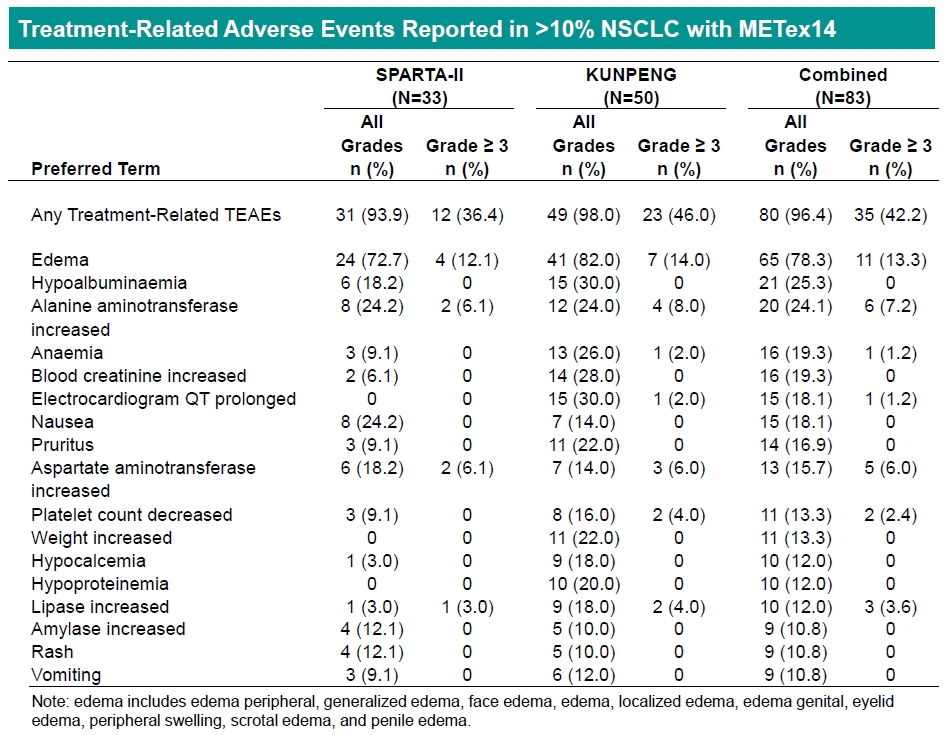
Market Opportunity and Competition
NSCLC. According to the CIC Report, global (excluding China) incidence of NSCLC was 1.0 million cases in 2019 and is expected to increase to 1.3 million by 2030. In the United States, the incidence of NSCLC was approximately 178,300 cases in 2019 and is expected to reach approximately 221,200 in 2030. In the United States, the incidence of NSCLC with Met Exon 14 skipping mutation was approximately 5,700 cases in 2019 and is expected to reach approximately 7,100 in 2030. The combination therapy of c-Met inhibitors and MEK inhibitors or immune checkpoint inhibitors has the potential to exert synergistic effects in NSCLC patients. In addition, since c-Met amplification accounts for approximately 20% of the acquired resistance to EGFR-TKIs in NSCLC patients with EGFR mutation, c-Met inhibitors have the potential to overcome such resistance in these patients. According to the CIC Report, the global (excluding China) market size of single-targeted c-Met inhibitors for the treatment of NSCLC is expected to grow to $1.5 billion in 2025 and further to $3.1 billion by 2030, representing a compound annual growth rate (“CAGR”) of 14.8% from 2025. In the United States, the market size is projected to grow to $584.3 million in 2025 and further to $1.2 billion in 2030, representing a CAGR of 15.3% from 2025, according to the CIC Report.
Capmatinib, a single-targeted c-Met inhibitor, was originally granted accelerated approval by the FDA in 2020 and has been adopted for the treatment of NSCLC patients with Met Exon 14 skipping mutation in the first-line and subsequent treatments in the United States. The FDA granted traditional approval to capmatinib in August 2022. Another single-targeted c-Met inhibitor, tepotinib, was also granted accelerated approval by the FDA for the treatment of metastatic NSCLC patients with Met Exon 14 skipping mutation in February 2021 followed by traditional approval February 2024. As of the date of this Annual Report, there were a number of clinical trials in which single-targeted and multi-targeted c-Met inhibitors are being used alone or in combination with other drugs for the treatment of NSCLC patients.
GBM. According to the CIC Report, global (excluding China) incidence of GBM expanded from approximately 80,200 cases in 2015 to approximately 85,100 cases in 2019, and is expected to reach to approximately 98,500 cases by 2030. In the United States, incidence of GBM increased from approximately 10,200 in 2015 to approximately 10,500 in 2019, and is expected to reach approximately 11,200 in 2030. A number of studies have demonstrated that c-Met and HGF play a critical role in the proliferation, survival, migration, invasion, angiogenesis, stem cell characteristics, and therapeutic resistance and recurrence of GBMs. According to the CIC Report, about 34% of GBM patients have c-Met dysregulation, including c-Met overexpression, amplification, mutation and fusion. According to the CIC Report, the global (excluding China) market size of single-targeted c-Met inhibitors for the treatment of GBM with c-Met
63
dysregulation is projected to grow from $8.0 million in 2024 to $638.0 million in 2030. In the United States, the market size is expected to grow from $3.1 million in 2024 to $255.3 million in 2030, according to the CIC Report.
According to the CIC Report, as of the date of this Annual Report, no c-Met inhibitors had been approved for the treatment of GBM in the United States. There are a number of small molecule c-Met inhibitors in various stages of clinical development for the treatment of GBM as of the date of this Annual Report, according to the CIC Report.
The tables below show our estimates of the total addressable patient market (annual incidence) in the United States for the various potential commercial opportunities for vebreltinib.
Monotherapy Indications |
# Patients |
Met Exon 14 skipping (3-4% of 1L NSCLC) |
6,800 |
c-Met amplification (1-5% of 2L NSCLC) |
5,800 |
GBM w/ cMet fusion |
1,500 |
c-Met amplification (multiple tumors) |
20,000 |
c-Met fusion (pan tumor) |
5,000 |
HGF+ c-Met gene WT (pan tumor) |
15,000 |
Combination Indications |
# Patients |
EGFR+, c-Met amp+ (EGFRi+METi) NSCLC acquired resistance |
5,800 |
EGFR+, 1L NSCLC (EGFRi+METi) POC provided by MARIPOSA |
11,600 |
Combo w/ ALK, ROS, KRAS, etc. Other target+, c-Met amp+, NSCLC acquired resistance |
2,600 |
Licenses, Rights and Obligations
Avistone has the exclusive rights to vebreltinib in China, Hong Kong and Macau, and we have the exclusive rights to vebreltinib in the rest of the world. Please refer to “Licensing and Collaboration Arrangements—Agreements with Crown Bioscience (Taicang) Related to Vebreltinib” below for further details.
Our Other Tumor Inhibitor Programs
APL-102 (MTKI)
APL-102 is an oral, small molecule MTKi targeting the VEGFR, MAPK pathway via B-RAF and C-RAF, and colony stimulating factor 1 receptor (“CSF1R”). APL-102 may inhibit tumor angiogenesis and tumor cell growth by inhibiting VEGFR pathway and B-RAF/C-RAF/MAPK pathway. In addition, it may also inhibit CSF1R, thereby regulating tumor-related macrophages and promoting the immune response to tumor cells.
Crown Bioscience International discovered APL-102. APL-102 has demonstrated potential efficacy for multiple tumor types in preclinical studies.
Preclinical
APL-102 has shown anti-tumor activity as a single agent and in combination with an anti-PD-1 antibody. It has been shown to inhibit several kinases which are aberrantly activated in cancer cells, including VEGFR, MAP4K5, c-RAF and DDR1. VEGFR-2, one of the receptor tyrosine kinases targeted by APL-102, plays a key role in tumor angiogenesis and is an important potential therapeutic target for many types of tumors.
Kinase IC50 values of APL-102
Kinase |
|
APL-102 IC50 (nM) |
Flt4(h)(VEGFR-3) |
|
8 |
Flt1(h)(VEGFR-1) |
|
21 |
MAP4K5(h) |
|
24 |
KDR(h)(VEGFR-2) |
|
25 |
ZAK(h) |
|
26 |
PDGFRa(V561D)(h) |
|
28 |
64
c-RAF(h) |
|
31 |
DDR1(h) |
|
34 |
CDKL2(h) |
|
37 |
cKit(V560G)(h) |
|
38 |
Fms(h) (CSF1R) |
|
43 |
APL-102 showed strong inhibition of cell growth on cancer cell lines, including kidney, liver, colorectal, stomach, esophageal, and lung cell lines and syngeneic cell lines, with IC50 ranging from 0.94 pM to 21.35 pM. APL-102 also demonstrated significant anti-tumor activity in multiple tumor-bearing models, including colon, liver, breast, kidney, esophageal and lung cancers. APL-102 in combination with anti-PD-1 antibody demonstrated improved anti-tumor activity compared to the APL-102 or anti-PD-1 antibody alone.
Anti-tumor activity of APL-102 in cancer models
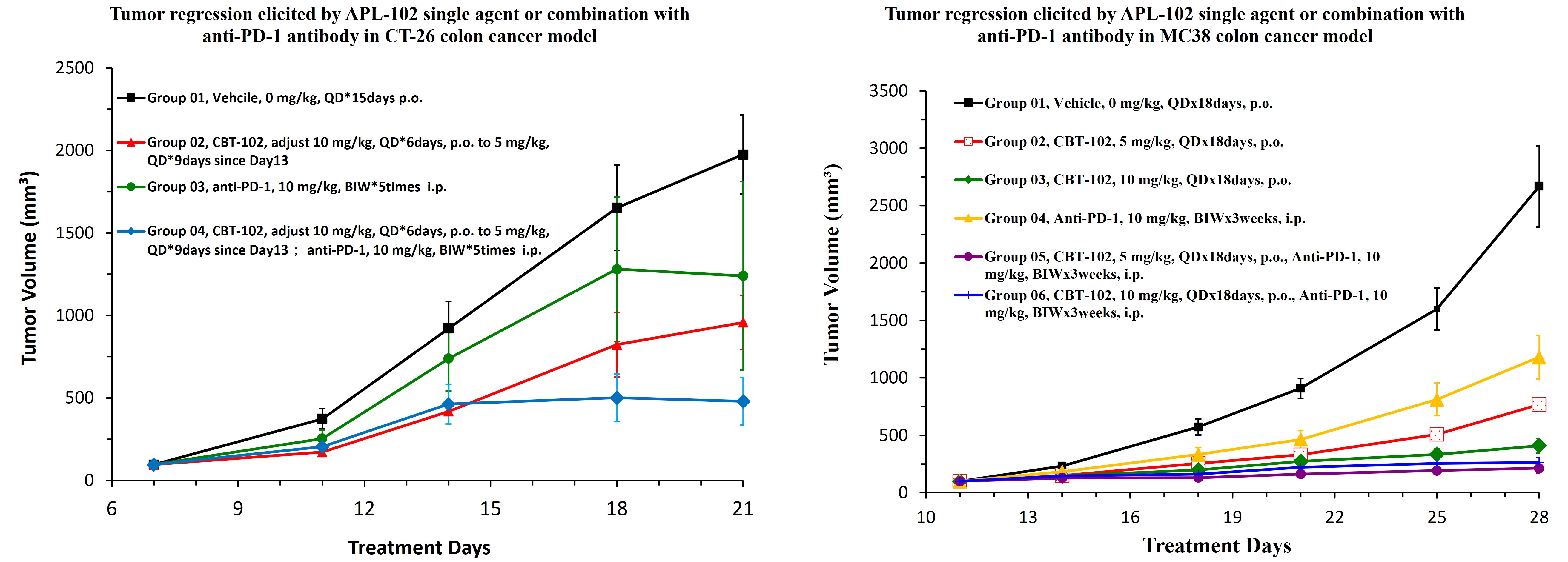
A full genotoxicity battery, two four-week toxicity studies (rat and dog, with toxicokinetics), and a core safety pharmacology battery (CVS, CNS and respiratory) have been conducted to characterize the PK and safety of APL-102. Results indicated that APL-102 is well-absorbed and widely distributed after oral administration, has anti-tumor activity in several tumor models both in vitro and in vivo, and demonstrates relatively positive preliminary safety data at pharmacologically active doses with a potential margin of safety. There was no serious off-target activity.
Clinical Development of APL-102
We received IND approval from the NMPA in November 2020, and subsequently initiated the Phase 1 study of APL-102-01 in subjects with solid tumors in China in 2021. The Phase 1 clinical trial has been closed and Apollomics expects to provide topline results in 2025.
Licenses, Rights and Obligations
We have the global rights for APL-102.
APL-122 (ErbB1/2/4 Inhibitor)
APL-122, also known as EO1001, is a novel, oral, brain-penetrating, irreversible pan-ErbB inhibitor targeting EGFR (ErbB1), HER2 (ErbB2) and HER4 (ErbB4). ErbB family cross-talk is implicated in the development of resistance and metastasis, including CNS metastases. Inhibition of multiple ErbB receptors may result in improved patient outcomes.
Preclinical studies showed that APL-122 has a potential safety and PK profile amenable for use as a single agent and in combination with other agents for the treatment of cancer. APL-122 demonstrates high specificity for the ErbB family of receptors with activity against EGFR, HER2 and HER4 (0.4 to 7.4 nM). APL-122 inhibits signaling downstream of wild type EGFR, mutant EGFR (T790M, L858R and d746-750) and HER2.
APL-122 was studied following oral administration in several ErbB-positive mouse xenograft models including N87 (Her2+), H1975 (EGFR/T790M), GBM12 (EGFR+), GBM39 (EGVRvIII+). Following oral administration, treatment with APL-122 resulted in a statistically significant improvement in outcomes compared to positive and negative controls in both CNS and systemic tumor models. APL-122 was well-tolerated with no gastrointestinal side effects observed at efficacious doses in these models. In rodent studies in vivo,
65
APL-122 exhibited a half-life of 16–20 hours. APL-122 rapidly enters the CNS and penetrates tumor tissue at higher concentrations relative to plasma.
Clinical Development Plan
Our partner, Edison Oncology Holding Corporation, or Edison, and its clinical trial partner, Senz Oncology Pty Ltd., or Senz, commenced a Phase 1/2a trial of APL-122 in Australia in 2021 and is currently ongoing. This Phase 1/2a trial is an open label, multi-center dose escalation and expansion trial in subjects with metastatic or advanced stage ErbB-1, ErbB-2 and/or ErbB-4 positive cancer who have relapsed after treatment with approved therapies and are unsuitable for further treatment with approved therapies or declined further treatment with approved therapies.
Licenses, Rights and Obligations
We in-licensed from Edison exclusive rights to APL-122 outside China, Hong Kong and Taiwan in January 2021 pursuant to the Edison Agreement (as defined below).
Immuno-Oncology Product Candidates
Our three immuno-oncology product candidates consist of APL-501, APL-502 and APL-801. These product candidates are designed to take advantage of the body’s immune system to fight cancer and include mono-specific and bi-specific antibodies that could release the natural brakes of immune response against cancer cells, as well as a novel cancer vaccine. Our current strategy is to identify development and commercialization partners for these product candidates to enable the most capital-efficient development programs in this highly competitive area.
APL-501 (Anti-PD-1 Antibody)
APL-501 is an investigational, humanized, IgG4 monoclonal antibody that selectively binds to PD-1 on T lymphocytes and other immune cells. APL-501 was internally discovered at Crown Bioscience, the former parent company of Apollomics. After we out-licensed the Chinese rights on APL-501to Genor, Genor has been developing APL-501 (also known as GB226) for the potential treatment of multiple tumor types in China. Genor announced in June 2023 that the Biologics License Application (“BLA”) approval for PTCL in China was not granted by the NMPA. We retain the global rights to APL-501 outside of China. We have completed a Phase 1 study in select advanced or r/r solid tumors in Australia and are currently analyzing the clinical data.
APL-502 (anti-PD-Ll antibody)
APL-502 is a novel IgG1 humanized monoclonal antibody against PD-L1. APL-502 was discovered at Crown Bioscience, the former parent company of Apollomics. The China rights of APL-502 was out-licensed to our partner, Chia Tai-Tianqing Pharmaceutical Holdings Co., Ltd. (“CTTQ”), while we retain the global (ex-China) rights to APL-502. CTTQ is pursuing the development of APL-502, also known as TQB-2450, in China for the potential treatment of multiple cancer types. Ongoing Phase 3 trials include the following tumor types: cholangiocarcinoma, cervical cancer, ovarian cancer, uterine cancer, renal cancer, breast cancer, and lung cancer as monotherapy or in combination treatments. CTTQ NDAs under review by the NMPA for its combination treatment with anlotinib (multi-kinase inhibitor) include the following indications: recurrent or metastatic endometrial cancer and first line NSCLC.
APL-801
Recent success in cancer immunotherapy has reinvigorated the hypothesis that the immune system can control many cancers, in some cases producing durable responses in a way not seen with many small molecule drugs. Agonistic CD40 mAbs offer a new therapeutic option which has the potential to generate anti-cancer immunity by various mechanisms. CD40 is a tumor necrosis factor receptor superfamily member expressed broadly on antigen-presenting cells, such as dendritic cells, B-cells and monocytes, as well as many non-immune cells and a range of tumors. Agonistic CD40 mAbs have been shown to activate antigen-presenting cells and promote anti-tumor T-cell responses and to foster cytotoxic myeloid cells with the potential to control cancer in the absence of T-cell immunity. Thus, agonistic CD40 mAbs are fundamentally different from mAbs which block negative immune checkpoint such as anti-CTLA-4 or anti-PD-1 antibodies. Initial clinical trials of agonistic CD40 mAbs have shown promising results in the absence of disabling toxicity, both in single-agent studies and in combination with chemotherapy. In order to reduce systematic toxicity, we made anti-PD-L1/anti-CD40 bi-specific antibodies using specific selected CD40 agonist clones. The bi-specific antibodies only activate CD40 when engaged with high level of PD-L1 expression. We believe this special property may (a) enrich CD40 agonist in the tumor area by delivering CD40 to cells with high level of PD-L1 expression which include dendritic cells, macrophages and certain tumor cells, and (b) reduce systematic liver toxicity and cytokine release by avoiding peripheral B-cells and platelet activation.
66
Former Development Programs
Uproleselan (E-Selectin Antagonist)
In January 2020, we entered into an exclusive collaboration and license agreement with GlycoMimetics (the “GlycoMimetics Agreement”) on the development and commercialization rights of uproleselan in Greater China. This agreement included two clinical stage assets, uproleselan (APL-106 or GMI-1271) and APL-108 (GMI-1687), and a pipeline of novel glycomimetic drugs, all designed to address unmet medical needs resulting from diseases in which carbohydrate biology plays a key role.
Uproleselan was evaluated in a GlycoMimetics-sponsored Phase 3 global trial in r/r AML, which did not achieve its primary endpoint of a statistically significant improvement in overall survival. As a result of these negative Phase 3 results from GlycoMimetics, we determined the recoverable amount was lower than the carrying value of the intangible asset and recorded an impairment loss of $10.0 million to write down the full value of our intangible asset for this program. We have also evaluated uproleselan in a Phase 3 bridging clinical trial in r/r AML in China, which did not demonstrate favorable benefit for uproleselan. The NCI has also conducted a Phase 2/3 study to evaluate uproleselan in combination with chemotherapy vs. chemotherapy alone for first line treatment of AML in older adults in the United States, which did not achieve its Phase 2 primary endpoint of a statistically significant improvement in EFS. Due to these clinical results, in February 2025, we notified GlycoMimetics of the termination of the GlycoMimetics Agreement, which becomes effective in May 2025.
APL-810 (G17-Targeted ACCI)
APL-810, also known as TYG100, is a novel, rationally designed, ACCI recombinant vaccine that was derived from the S-TIRTM technology platform and targets the gastrin immunogen. We in-licensed APL-810 from TYG and Nuance for development and commercialization in Greater China, Taiwan, and South Africa, and in the United States. In November 2024, as part of pipeline prioritization, we notified TYG of the termination of the license for APL-810, which would have become effective in January 2025.
Intellectual Property Assignment
Prior to December 2015, Crown Bioscience International, through its subsidiaries, was the owner of certain patent rights related to vebreltinib, APL-501, APL-502 and APL-102. In order to focus on its core business, namely providing preclinical CRO services, and allow the drug discovery and development related business to be operated and financed separately, Crown Bioscience International spun off its Taiwan subsidiary, namely Crown Bioscience (Taiwan), and injected it into our Company which was formed to facilitate the spin-off. As a result of a series of transactions described below, we became the owner of certain patent rights related to vebreltinib, APL-501, APL-502 and APL-102.
In October 2014, Crown Bioscience (Taiwan) entered into a patent assignment agreement with Crown Bioscience (Taicang) concerning the sale, assignment and transfer of certain ex-China patent rights, including patent applications and all patents granted therefrom, as well as rights to claim priority rights deriving therefrom, related to (a) highly selective c-Met inhibitors as anti-cancer agents; (b) cyclopropanecarboxamido-substituted aromatic compounds as anti-tumor agents; (c) anti-PD-1 antibodies; and (d) anti-PD-L1 antibodies for PD-L1 blockage and enhancement of T-cell activation (collectively, the “Crown Products”) from Crown Bioscience (Taicang), as assignor, to Crown Bioscience (Taiwan), as assignee. In December 2015, Crown Bioscience International entered into a contribution agreement with us (then known as CB Therapeutics, Inc.), pursuant to which Crown Bioscience International transferred to us all of the then outstanding equity interest of Crown Bioscience (Taiwan) which, as a result, became our wholly-owned subsidiary. No personnel was transferred from Crown Bioscience International to our Company at the time of spin-off and none of our existing employees currently holds any interest in Crown Bioscience International.
In March 2016, we and Crown Bioscience (Taiwan) entered into a patent assignment agreement which was subsequently amended in December 2018, under which Crown Bioscience (Taiwan) assigned to us the China patent rights related to cyclopropanecarboxamido-substituted aromatic compounds as anti-tumor agents. As a result of the foregoing transactions and the pre-existing exclusive license agreements between Crown Bioscience (Taicang) and certain third parties (please refer to “—Licensing and Collaboration Arrangements” below for further details), we have obtained the development and commercialization rights of (a) vebreltinib outside China, Hong Kong and Macau, (b) APL-501 outside China, (c) APL-502 outside China and (d) APL-102 worldwide. Vebreltinib, APL-501, APL-502 and APL-102 are the key product candidates in our pipeline currently qualified as the Crown Products.
Based on the databases of the relevant patent offices, the ownership of patent rights covering vebreltinib outside China, Hong Kong and Macau, the ownership of patent rights covering APL-501 outside China, the ownership of patent rights covering the molecule of APL-502 outside China, and the ownership of patent rights covering the molecule of APL-102 have been fully transferred to our Company, and there are no circumstances where third party assertions of inventorship may affect our entitlement to these intellectual property rights. With respect to the development of vebreltinib, many of the IND enabling studies and clinical development activities relating to vebreltinib are conducted by us in-house or through our CROs. Crown Bioscience International was involved in the discovery and early preclinical studies of vebreltinib before the relevant patent rights were transferred to us in 2015.
67
Licensing and Collaboration Arrangements
Below are the summaries of our key licensing and collaboration arrangements with third parties.
Agreements with Crown Bioscience (Taicang) Related to Vebreltinib
Avistone has the exclusive rights to vebreltinib in China, Hong Kong and Macau, while we have the exclusive rights to vebreltinib in the rest of the world (please refer to “—Intellectual Property Assignment” above for further details). With respect to the rights for vebreltinib in China, Hong Kong and Macau, Crown Bioscience (Taicang) and Pearl entered into an exclusive license agreement on November 7, 2012 (the “Pearl Agreement”), pursuant to which Crown Bioscience (Taicang) granted to Pearl an exclusive license under certain intellectual property rights to develop and commercialize vebreltinib in China, Hong Kong and Macau (the “Pearl Territory”), and Pearl granted to Crown Bioscience (Taicang) the right to use the intellectual property related to vebreltinib and generated by or on behalf of Pearl in the Pearl Territory for patent applications, clinical development and commercialization of vebreltinib outside the Pearl Territory. Pursuant to the Pearl Agreement, Pearl shall pay Crown Bioscience (Taicang) royalties, subject to the achievement of certain milestones. Unless earlier terminated by either party due to the other party’s material breach (subject to specified conditions) or by both parties upon mutual agreement, the Pearl Agreement remains effective until the earlier of (i) the expiration of the patents covering the intellectual property licensed thereunder and (ii) the date on which it is clearly known that the patent applications related to the licensed intellectual property has ultimately been rejected by the relevant governmental authorities or patent office in China. On May 17, 2016, Pearl and Crown Bioscience (Taicang) entered into a patent assignment agreement, pursuant to which Pearl acquired all right, title and interest in a China Patent (No. ZL201210322359.1) titled “highly selective c-Met inhibitors as anticancer agents” by way of an assignment by Crown Bioscience (Taicang).
On July 28, 2016, we (then known as CB Therapeutics, Inc.) entered into a data sublicense agreement with Crown Bioscience (Taicang) (the “Pearl Sublicense Agreement”), under which Crown Bioscience (Taicang) granted to us an exclusive, royalty-free sublicense under certain intellectual property rights and materials made by or on behalf of Pearl for the research, development and commercialization of vebreltinib and the application of patents outside China. We have no obligations to make any payment to Crown Bioscience (Taicang), Pearl or any other third party under the Pearl Sublicense Agreement. The Pearl Sublicense Agreement remains effective with respect to vebreltinib until the expiration or termination of the Pearl Agreement. In the event of termination of the Pearl Agreement, Crown Bioscience (Taicang) will use its best efforts to have Pearl enter into an agreement with us pursuant to which Pearl shall grant us the same right, title and interest as it has granted to Crown Bioscience (Taicang) under the terminated Pearl Agreement, to the extent not already granted to us according to the Pearl Sublicense Agreement. Subject to specified notice period, we may terminate the Pearl Sublicense Agreement by written notice for convenience. Either party may, subject to specified cure periods, terminate the Pearl Sublicense Agreement in the event of the other party’s uncured material breach.
On December 15, 2022, we entered into a collaboration agreement with Pearl (the “Pearl Collaboration Agreement”). Under the Pearl Collaboration Agreement, we have agreed to work collaboratively to further the development, regulatory approval and commercialization of vebreltinib in our respective territories, including the sharing of data regarding vebreltinib and exploration of potential commercial arrangements with one or more third-party major, global pharmaceutical companies. We will take the lead on identifying a partner for the out-licensing of global rights to commercialize vebreltinib for all human uses (including cancer) on commercially reasonable terms, and Pearl will provide us with support in connection with such activities. If we are able to enter into a partnership with a pharma partner outside of China, then Pearl will have a right to share in the revenue from such partnership, ranging from 10-15%, depending on the territory and milestone. The Pearl Collaboration Agreement is in effect for 15 years, unless terminated earlier by either party for material breach or insolvency.
Beijing Pearl has been rebranded as Avistone Pharmaceuticals and Biotechnology Co, Ltd.
Agreements with Crown Bioscience (Taicang) and Genor Related to APL-501
Genor is our APL-501 partner in China.
We have the ex-China rights for APL-501 (please refer to “—Intellectual Property Assignment” above for further details). With respect to the rights for APL-501 in China, Crown Bioscience (Taicang) and Genor entered into an exclusive license agreement on March 28, 2015 (the “Genor Agreement”), pursuant to which Crown Bioscience (Taicang) granted to Genor an exclusive license under certain intellectual property rights to develop and commercialize APL-501 in China, and Genor granted to Crown Bioscience (Taicang) the right to use the intellectual property related to APL-501 and generated by or on behalf of Genor in China for clinical development and commercialization of APL-501 outside China. Pursuant to the Genor Agreement, Genor shall pay Crown Bioscience (Taicang) upfront payment, milestone payments and sales royalties, subject to specified trigger events. Unless earlier terminated by either party due to the other party’s material breach (subject to specified conditions), the Genor Agreement remains effective until the later of (i) the full performance of rights and obligations of both parties thereto, and (ii) the expiration of the last patent covering the intellectual property licensed thereunder.
On July 28, 2016, we (then known as CB Therapeutics, Inc.) entered into a data sublicense agreement with Crown Bioscience (Taicang) (the “Genor Sublicense Agreement”), under which Crown Bioscience (Taicang) granted to us an exclusive sublicense under
68
certain intellectual property rights and materials made by or on behalf of Genor for the research, development and commercialization of APL-501 and the application of patents outside China. Pursuant to the Genor Sublicense Agreement, if Genor has provided Crown Bioscience (Taicang) with the relevant preclinical research, CMC and clinical trial data of APL-501 upon request, and we or any of our affiliates or sublicensees registers and sells APL-501 outside China, we will pay up to 3% of annual net sales to Crown Bioscience (Taicang) which in turn will pay Genor to discharge its relevant payment obligations under the Genor Agreement. Other than the obligation to pay Crown Bioscience (Taicang) mentioned in the preceding sentence, we have no obligations to make any payment to Crown Bioscience (Taicang), Genor or any other third party under the Genor Sublicense Agreement or the Triparty Genor Agreement (as defined below). The Genor Sublicense Agreement remains effective with respect to APL-501 until the expiration or termination of the Genor Agreement. In the event of termination of the Genor Agreement, Crown Bioscience (Taicang) will use its best efforts to have Genor enter into an agreement with us pursuant to which Genor shall grant us the same right, title and interest as it has granted to Crown Bioscience (Taicang) under the terminated Genor Agreement, to the extent not already granted to us according to the Genor Sublicense Agreement. Subject to specified notice period, we may terminate the Genor Sublicense Agreement by written notice for convenience. Either party may, subject to specified cure periods, terminate the Genor Sublicense Agreement in the event of the other party’s uncured material breach.
In May 2018, Crown Bioscience (Taicang), Genor and our Company entered into a tri-party agreement delineating the rights and obligations of all three parties with respect to the development and commercialization of APL-501 (the “Tri-party Genor Agreement”), pursuant to which Genor is obliged to provide data, know-how, cell banks and other data rights directly to us and our affiliates or sublicensees that we may reasonably request and collaborate with us and our affiliates or sublicensees in good faith in developing APL-501, according to the Genor Agreement. Under the Tri-party Genor Agreement, Genor also granted to us, effective upon any early termination of the Genor Agreement, the same right, title and interest as Genor has granted to Crown Bioscience (Taicang) under the terminated Genor Agreement. The Tri-party Genor Agreement remains effective until terminated (a) by mutual written consent of Genor and us, or (b) by us upon prior written notice to Crown Bioscience (Taicang) and Genor.
Agreements with Crown Bioscience (Taicang) and CTTQ Related to APL-502
CTTQ is our APL-502 partner in China.
CTTQ has the rights to APL-502, also known as TQB-2450, in China, while we have the rights to APL-502 in the rest of the world (please refer to “—Intellectual Property Assignment” above for further details). With respect to the rights for APL-502 in China, Crown Bioscience (Taicang) and CTTQ entered into a technology development agreement related to a humanized anti-PD-L1 monoclonal antibody (the “CTTQ Technology Agreement”) on October 28, 2014, pursuant to which Crown Bioscience (Taicang) granted to CTTQ an exclusive royalty-bearing license under certain intellectual property rights to develop, manufacture and commercialize an IDD-505 humanized anti-PD-L1 monoclonal antibody (referred to as APL-502 by us) in China (the “CTTQ Territory”) for the treatment and prevention of human diseases (the “CTTQ Products”). CTTQ granted to Crown Bioscience (Taicang) the right to exploit the subsequent development and improvements, generated by or on behalf of CTTQ in the CTTQ Territory, that are made to the CTTQ Products for IND and NDA filings, license grant, clinical development and commercialization of APL-502 outside the CTTQ Territory by Crown Bioscience (Taicang) or its affiliates, subject to certain terms and conditions and payment of specified royalties. Pursuant to the CTTQ Technology Agreement, CTTQ shall pay Crown Bioscience (Taicang) upfront payment, milestone payments and sales royalties, subject to specified trigger events. Unless earlier terminated by either party due to the other party’s material breach (subject to specified conditions) or by CTTQ if the licensed patents (i) have been or are evidenced to be invalidated or (ii) have infringed or are evidenced to infringe other third party’s rights, the CTTQ Technology Agreement remains effective until the full performance of rights and obligations of both parties thereto.
On July 28, 2016, we (then known as CB Therapeutics, Inc.) entered into a data sublicense agreement with Crown Bioscience (Taicang) (the “CTTQ Sublicense Agreement”), under which Crown Bioscience (Taicang) granted to us an exclusive sublicense under certain intellectual property rights and materials made by or on behalf of CTTQ for the research, development and commercialization of APL-502 and the application of patents outside CTTQ Territory. Pursuant to the CTTQ Sublicense Agreement, if CTTQ has provided Crown Bioscience (Taicang) with the relevant preclinical research, CMC and clinical trial data of APL-502 upon request, and we or any of our affiliates or sublicensees registers and sells APL-502 outside China, we will pay up to 3.5% of annual net sales to CTTQ. Other than the obligation to pay CTTQ mentioned in the preceding sentence, we have no obligations to make any payment to Crown Bioscience (Taicang), CTTQ or any other third party under the CTTQ Sublicense Agreement or the Tri-party CTTQ Agreement (as defined below). The CTTQ Sublicense Agreement remains effective with respect to APL-502 until the expiration or termination of the CTTQ Technology Agreement. In the event of termination of the CTTQ Technology Agreement, Crown Bioscience (Taicang) will use its best efforts to have CTTQ enter into an agreement with us pursuant to which CTTQ shall grant us the same right, title and interest as it has granted to Crown Bioscience (Taicang) under the terminated CTTQ Technology Agreement, to the extent not already granted to us according to the CTTQ Sublicense Agreement. Subject to specified notice period, we may terminate the CTTQ Sublicense Agreement by written notice for convenience. Either party may, subject to specified cure periods, terminate the CTTQ Sublicense Agreement in the event of the other party’s uncured material breach.
On March 8, 2017, we (then known as CB Therapeutics, Inc.) entered into a tri-party agreement with Crown Bioscience (Taicang) and CTTQ (the “Tri-party CTTQ Agreement”), pursuant to which CTTQ is obliged to provide data and materials directly to us that we may reasonably request and collaborate with us and our affiliates in good faith in developing APL-502, according to the CTTQ
69
Technology Agreement. Under the Tri-party CTTQ Agreement, CTTQ also granted to us, effective upon any early termination of the CTTQ Technology Agreement, the same right, title and interest as CTTQ has granted to Crown Bioscience (Taicang) under the terminated CTTQ Technology Agreement. The Tri-party CTTQ Agreement remains effective until (a) terminated by written consent of the parties thereto, (b) terminated by us upon prior written notice to Crown Bioscience (Taicang) and CTTQ, or (c) the date on which the CTTQ Technology Agreement is terminated.
LaunXP
On March 31, 2025, we announced an agreement with LaunXP International, an affiliate of LaunXP Biomedical Co., Ltd. (TWO: 6876) (“LaunXP”), for the development and commercialization in Asia (excluding mainland China, Hong Kong and Macau) of vebreltinib, our proprietary c-Met inhibitor, in combination with an EGFR inhibitor (“EGFRi”) for the treatment of NSCLC. The EGFRi class of targeted kinase inhibitors is currently a foundational targeted therapy for the treatment of NSCLC and other tumor types. Under the terms of the agreement, we expect to receive upfront payments totaling $10 million within 60 days of the date of the agreement. We are also eligible for regulatory and other pre-commercial milestones up to $50 million, and royalties on net product sales. LaunXP will be primarily responsible for the development of vebreltinib in combination with an EGFRi in the LaunXP territory for the treatment of NSCLC.
Edison
On January 31, 2021, we entered into a license agreement with Edison under which Edison granted us an exclusive, royalty-bearing, non-transferable, sublicensable (subject to certain conditions specified therein) license under certain intellectual property controlled by Edison or its affiliates to develop, manufacture, use, sell, import, export and commercialize APL-122 (the “Edison Licensed Drug Substance”) and any pharmaceutical products containing the same (the “Edison Licensed Products”), (the “Edison Agreement”), for all uses in humans (the “Edison Licensed Field”) outside China, Hong Kong and Taiwan (the “Edison Licensed Territory”).
Under the Edison Agreement, we will be responsible for the development and commercialization of and are required to use commercially reasonable efforts to develop and commercialize the Edison Licensed Drug Substance and Edison Licensed Products in the Edison Licensed Field in the Edison Licensed Territory. In order to avoid any delay in clinical development that may be caused by assignment of clinical trial notification that Edison’s clinical trial partner, Senz, is in the process of filing in Australia pursuant to the Evaluation Agreement (as defined below), Edison will retain the right to conduct or have conducted the clinical trial in accordance with the Evaluation Agreement or any clinical trial conducted to test the safety and/or efficacy of the Edison Licensed Drug Substances in humans (the “Initial Clinical Trial”). Edison will retain these rights until the earlier of (a) the completion of the Initial Clinical Trial, or (b) the date on which the assignment of the IND for the Initial Clinical Trial to us or a party designated by us. The aforementioned evaluation agreement (the “Evaluation Agreement”) is dated February 11, 2020 and is by and between Senz and NewGen, a wholly-owned subsidiary of Edison. At our cost, Edison will be responsible for and is required to use commercially reasonable efforts to perform the activities assigned to it in the joint development plan, including designing and conducting the Initial Clinical Trial, filing all regulatory materials and interacting with the applicable regulatory authorities associated with such Initial Clinical Trial. We will own all regulatory filings, submissions and approvals for developing, manufacturing and/or commercializing the Edison Licensed Drug Substance and Edison Licensed Products in the Edison Licensed Territory, except that Edison will initially own the IND for conducting the Initial Clinical Trial in Australia, which will be assigned to us at our reasonable request or alternatively, to which Edison is required to grant us the right of reference. The Phase 1 trial in Australia has begun and is currently recruiting subjects.
In connection with the execution of the Edison Agreement, we made a one-time payment to Edison of $1,500,000. Upon the achievement of certain delineated regulatory milestones, we will make milestone payments to Edison totaling up to $27,500,000 in the aggregate. Upon the achievement of certain delineated commercial milestones, we will make milestone payments to Edison totaling up to $85,000,000 in the aggregate. Additionally, with respect to net sales in the licensed territory, we have agreed to pay Edison fixed royalty percentages on a sliding scale, with such fixed amounts ranging from 4 to 12.5%, depending on net sales. The Edison Agreement is in effect until the expiration of all payment obligations set forth in the Edison Agreement, unless terminated earlier. We can terminate the Edison Agreement at any time, with or without cause, so long as we provide notice as provided in the Edison Agreement and abide by the early termination obligations in the Edison Agreement.
Pursuant to the Edison Agreement, promptly after the execution date of the Edison Agreement, Edison and we shall use good faith efforts to enter into an agreement between us, Edison, Senz, and our Australian subsidiary, Apollomics (Australia) Pty Ltd., to effectuate the assignment of certain evaluation data generated from use of the Edison Licensed Drug Substance or Edison Licensed Products under a work plan of the Evaluation Agreement from Senz to Apollomics Australia.
On August 11, 2023, Apollomics entered into an Amendment 1 to License Agreement with Edison Oncology to amend the terms of payment for conducting the Phase 1 study in Australia.
70
RevMab
RevMab is our partner for our discovery stage candidates related to antibodies against CD40. The discovery activities relating to this partnership have resulted in the development of our early stage candidate, APL-801.
RevMab is a biotechnology company based in South San Francisco, California focused on the development of recombinant monoclonal antibodies using a revolutionary technology that does not require cell fusion and hybridoma generation.
On November 12, 2019, we entered into a collaboration and license agreement with RevMab (the “RevMab Agreement”), whereby both parties agreed to collaborate to develop and commercialize certain antibodies against CD40 (the “mAb Products”).
Pursuant to the RevMab Agreement, RevMab granted to us a worldwide, exclusive, sublicensable license under certain intellectual property controlled by RevMab or its affiliates, including know-how and a patent application covering composition of matter and method of use relating to certain novel anti-CD40 antibodies, to research, develop, make and commercialize the mAb Products for the prevention, treatment, control or diagnosis of any and all human disorders or conditions in the world, and we granted to RevMab a non-exclusive, non-sublicensable license under certain intellectual property controlled by us or our affiliates, including any patents covering checkpoint inhibitors or mAb Products, solely for the purpose of development of the mAb Products by RevMab for use by Apollomics, its affiliates, its sublicensees, or assigns in accordance with the RevMab Agreement. The RevMab Agreement established a joint steering committee comprised of some of our senior executives and RevMab senior executives. This committee provides high-level oversight and decision-making regarding the development activities contemplated in the RevMab Agreement.
The RevMab Agreement will continue in effect on a country by country basis per mAb Product in the applicable territory until the date upon which no Valid Claim (as defined in the RevMab Agreement) exists or for a period of 20 years, whichever is later. We can terminate the RevMab Agreement at any time, with or without cause, so long as we provide notice as provided in the RevMab Agreement; however, termination by us would not impact our obligation to effectuate the payments outlined below to the extent such obligations accrued prior to termination.
In connection with the achievement of delineated regulatory milestones, Apollomics has agreed to make payments to RevMab totaling up to $6,000,000. We have paid $590,000 under the RevMab Agreement, including a $300,000 upfront payment, and incurred developmental expenses of $0 in 2019, $140,000 in 2021 and $150,000 in 2022. Apollomics will also pay RevMab a royalty rate of 2% of net sales of mAb Products, subject to adjustment depending on the extent to which third party payments are required.
GlycoMimetics
On January 2, 2020, we entered into an exclusive license and collaboration agreement with GlycoMimetics concerning the development and commercialization of uproleselan and APL-108, a follow-on compound to uproleselan, i.e., the GlycoMimetics Agreement, for all therapeutic and prophylactic uses in humans in Greater China. Due to the clinical results described above, in February 2025 we notified GlycoMimetics of the termination of the GlycoMimetics Agreement, which would have become effective in May 2025.
Nuance Group and TYG
On January 25, 2021, we entered into a technology transfer and co-development agreement (the “Nuance Transfer Agreement”) with Nuance Group concerning (i) the assignment of the license and co-development agreement between TYG and Nuance dated October 19, 2018 (the “Underlying TYG License Agreement”) by Nuance to us; and (ii) the transfer of certain assets relating to the Underlying TYG License Agreement by Nuance Group to us.
Under the Nuance Transfer Agreement, on January 25, 2021 we acquired from Nuance Group all rights and obligations of Nuance under the Underlying TYG License Agreement and certain other related assets, including but not limited to the patent rights to APL-810 controlled by Nuance Group, the related books and records and regulatory materials and approval, and inventories of APL-810. In November 2024, as part of pipeline prioritization, we notified TYG of the termination of the Underlying TYG License Agreement, which would have become effective in January 2025.
Handling of Subject Data
Personal data of the study participants of our clinical trials is managed by our CROs. Other clinical data is stored in secure clinical databases which are developed and managed by our CROs. We therefore are involved with receiving, collecting, generating, storing, processing, transmitting and maintaining medical data treatment records and other personal details of subjects enrolled in our clinical trials, along with other personal or sensitive information. Only appropriate clinical trial personnel, including our clinical trial managers and investigators from the CROs, have access to the data within the relevant database. Access to the database is restricted by password controls and a user access list for the clinical trial databases is maintained to ensure that user access rights are granted on a need-to-know basis. All of our CROs are required to comply with the applicable good clinical practices guidelines, which include clauses on data management, 45 CFR 164, Security and Privacy, of the U.S. Code of Federal Regulations, and other applicable state or federal
71
data privacy and cybersecurity laws, which cover the data protection and privacy of electronic protected health information. We conduct audits on an annual basis to ensure that the CROs are following regulatory requirements properly.
Business Development
We have a proven track record of collaborating with biopharmaceutical and biotechnology companies across the globe, which underscores our credibility with global biopharmaceutical and biotechnology companies and paves the way for long-term collaborations. In these arrangements, we typically exchange data with our licensors for development and regulatory purposes. We believe these arrangements will speed up the development of our product candidates. In the future, we may enter into additional collaboration and in-licensing opportunities with global industry players.
Competition
Our industry is characterized by rapidly evolving technologies, competition, strong emphasis on intellectual property and proprietary drugs. While we believe that our expertise, scientific knowledge and product candidates developed so far provide us with competitive advantages, we face potential competition from many known and unknown entities, including existing and new biopharmaceutical companies, academic institutions and public and private research institutions. Any product candidates that we successfully develop and commercialize would compete with existing drugs and new drugs that may become available in the future.
We operate in the segments of the pharmaceutical, biopharmaceutical and other related markets that address oncology diseases. There are many other companies spread across the world working to develop similar therapies in these fields. These companies include divisions of large pharmaceutical companies and biopharmaceutical companies of various sizes. Many of the companies against which we are competing or may compete in the future may have significantly greater financial resources and expertise in R&D, manufacturing, preclinical testing, conducting clinical trials, obtaining regulatory approvals and marketing approved drugs than we do. Mergers and acquisitions in our industry may result in even more resources being concentrated among a smaller number of our competitors. Smaller or early-stage companies may also prove to be significant competitors, particularly through collaborative arrangements with large and established companies. These competitors also compete with us in recruiting and retaining qualified scientific and management personnel, establishing clinical trial sites and recruiting subjects for clinical trials, as well as acquiring technologies or assets complementary to, or necessary for, our programs.
Companies with approved drugs or late-stage product candidates targeting c-Met include Abbvie, AstraZeneca, EMD Serono, Johnson & Johnson and Novartis. In addition, many other biopharmaceutical companies have earlier-stage programs targeting c-Met. Furthermore, the FDA has approved over 80 drugs for the treatment of NSCLC for varying lines of therapy, and in many cases for the treatment of disease with specific mutations. Our commercial opportunity could be reduced or eliminated if our competitors develop and commercialize drugs that are safer or more effective, have fewer or less severe side effects, are more convenient, or are less expensive than any drugs that we or our partners may develop. Our competitors may also obtain regulatory approvals for their drugs earlier than we do for ours, which could result in our competitors establishing a strong market position before we or our partners are able to enter the market. The key competitive factors affecting the success of all of our product candidates, if approved, are likely to be their efficacy, safety, convenience and price, the effectiveness of companion diagnostics in guiding the use of related therapeutics, the level of generic competition, and the availability of reimbursement from government and other third-party payors.
Manufacturing
Our CMC team works closely with our collaboration partners and CMOs to ensure supply of high quality materials for preclinical and clinical development of our product candidates. With our experienced CMC team and knowledge in CMC of small molecules and biologics, we are able to advance product candidates through the development cycle.
Manufacturing is subject to extensive regulations that impose various procedural and documentation requirements governing recordkeeping, manufacturing processes and controls, personnel, quality control, and quality assurance, among others. We have worked with our partners and designed our manufacturing processes in compliance with cGMP, cGLP, and other regulatory requirements in relevant jurisdictions globally.
Commercialization Plan
Our current plan is to remain a development company, and plan collaborative partnerships or outlicense the commercial rights of our product candidates with companies with an established commercial team in relevant therapeutic area(s) to maximize the potentials of our compounds. In addition, to ensure continuity and optimization of value, we intend to conduct pre-commercial activities to support the development of our clinical assets as they advance closer to commercialization. Prior to making a written commitment to a commercial partner, we intend to maintain the option of developing internal sales and marketing capabilities to commercialize ourselves in the best interest of the business.
72
Intellectual Property
Intellectual property rights are important to the success of our business. Our future commercial success depends, in part, on our ability to obtain and maintain patent protection and other intellectual property for commercially important technologies, inventions and know-how related to our business, defend and enforce our patents, preserve the confidentiality of our trade secrets, and operate without infringing, misappropriating or otherwise violating the valid, enforceable intellectual property rights of third parties.
As of the date of this Annual Report, we owned a total of 65 granted or issued patents and 24 pending patent applications, including one pending PCT applications, relating to our product candidates and technologies. The patent portfolios for vebreltinib and our other product candidates as of the date of this Annual Report are summarized below:
The following table summarizes the details of the granted patents and the filed patent applications owned by us on vebreltinib, APL-102, APL-501 and APL-502.
Product Candidate |
|
Scope / Type of Patent Protection |
|
Jurisdiction |
|
Status |
|
Patent Expiration |
vebreltinib |
|
Highly selective c-Met inhibitors as anticancer agents / Composition of Matter |
|
U.S., Japan, Germany, France, Great Britain, Ireland, Italy |
|
Granted |
|
2033 |
vebreltinib |
|
Method for treating cancer patients with c-Met point mutation or c-Met fusion gene / Method of Use |
|
U.S., China, Europe, Japan, Canada |
|
Pending |
|
NA |
vebreltinib |
|
Novel pharmaceutical formulation for c-Met inhibitor / Composition of Matter |
|
U.S., Europe, Japan, Canada |
|
Pending |
|
NA |
vebreltinib |
|
Method for treating cancer patients with over-expression of HGF and c-Met |
|
U.S., China, Europe, Japan, Canada, Australia, Korea, Brazil, Mexico |
|
Pending |
|
NA |
APL-102 |
|
Cyclopropanecarboxamido- substitute aromatic compounds as anti-tumor agents / Mix of Composition of Matter and Method of Use |
|
U.S., China, Germany, France, Great Britain, Ireland, Italy, Japan |
|
Granted |
|
2033 |
APL-102 |
|
Cancer treatment using multitargeted kinase inhibitor in combination of tyrosine kinase biomarkers / Method of Use |
|
U.S., China, Europe, Japan, Hong Kong |
|
Pending |
|
NA |
APL-501 |
|
Anti-PD-1 antibodies / Mix of Composition of Matter and Method of Use |
|
Australia, Brazil, Canada, Germany, Spain, France, United Kingdom, Hong Kong, Ireland, Israel, India, Italy, Japan, Korea, Mexico, New Zealand, Russia, South Africa, Switzerland, U.S. |
|
Granted |
|
2035 |
APL-501 |
|
Anti-PD-1 antibodies / Mix of Composition of Matter and Method of Use |
|
Singapore |
|
Pending |
|
NA |
APL-501 |
|
PD-1+IL-10 combo / Method of Use |
|
U.S., Europe, Japan, Canada |
|
Pending |
|
NA |
73
APL-502 |
|
Anti-PD-L1 antibodies / Mix of Composition of Matter and Method of Use |
|
Australia, Brazil, Europe, India, Israel, Japan, Korea, Mexico, New Zealand, Russia, U.S., South Africa |
|
Granted |
|
2035 |
APL-502 |
|
Anti-PD-L1 antibodies / Mix of Composition of Matter and Method of Use |
|
Canada, Mexico, Singapore |
|
Pending |
|
NA |
The following table summarizes the patents and patent applications licensed to us for our in-licensed product candidate, APL-122.
Drug Candidate |
|
Scope / Type of Patent Protection |
|
Jurisdiction |
|
Status |
|
Applicant |
APL-122 |
|
Alkyne Substituted Quinazoline Compound as ErbB inhibitor / Composition of Matter and Method of Use |
|
Australia, Brazil, Canada, France, Germany, United Kingdom, Switzerland, Israel, Korea, India, Japan, Mexico, U.S. |
|
Granted |
|
Newgen Therapeutics Inc. |
The terms of individual patents may vary based on the jurisdictions in which they are obtained. In most jurisdictions in which we file patent applications, including China and the United States, the term of an issued patent is generally 20 years from the filing date of the earliest non-provisional patent application on which the patent is based in the applicable country. In the United States, an issued patent’s term may be lengthened in some cases by a patent term adjustment, which extends the term of a patent to account for administrative delays by the USPTO in excess of a patent applicant’s own delays during the prosecution process. Alternatively, the term of a patent registered in the United States may be shortened if the patent is terminally disclaimed over, and will expire on the same day as, a commonly-owned patent having an earlier expiration date.
In addition, with respect to any issued patents in the United States and European Union, we may be entitled to obtain an extension of the patent’s term from the respective government agencies that review and approve NDAs provided we meet the applicable requirements for obtaining such patent term extensions. For example, in the United States, we may apply for a patent term extension of up to five years as compensation for the patent term lost during clinical trials and the FDA regulatory review process under the Drug Price Competition and Patent Term Restoration Act of 1984, referred to as the Hatch-Waxman Amendments. The exact duration of the extension depends on the time we spend in clinical trials, as well as getting an NDA approval from the FDA. However, a patent term extension cannot extend the remaining term of a patent beyond a total of 14 years from the date of product approval, only one patent may be extended, and only those claims covering the approved drug, a method for using it, or a method for manufacturing it may be extended. Japan is another country where similar patent term extension is currently available, and Japan appears to have harmonized the major components of its patent term extensions with those of the United States and European Union, with the extension not exceeding five years. In China, the Standing Committee of the National People’s Congress (“SCNPC”) promulgated the amended Patent Law of the PRC in October 2020, which became effective on June 1, 2021 and provides for patent term adjustment and patent term extension for the first time. Patent term adjustment is available to Chinese invention patents, to compensate unreasonable delays caused by patent office in excess of a patent applicant’s own delays during the patent examination procedures. Patent term extension of up to five years is available to Chinese invention patents claiming new drugs to compensate for the time spent during regulatory process, provided that the total term of the patent after extension cannot exceed 14 years in total commencing on the date of new drug approval. On November 27, 2020, the China National Intellectual Property Administration (“CNIPA”) published the Proposed Amendments to Implementing Rules of the Patent Law of the PRC for public comments, proposing detailed implementation rules for patent term extension and adjustment, including but without limitation, the eligible type of patents, requirements for the application for patent term extension and adjustment, calculation method of the extension, and limitations during the extended patent term. However, those proposed amendments for the drug patent extension system have not yet been finalized or adopted, and therefore the implementation, interpretation and enforcement of laws and regulations regarding the patent extension system remain uncertain.
The protection afforded by a patent varies on a claim-by-claim and country-by-country basis and depends upon many factors, including the type of patent, the scope of its coverage, the availability of any patent term extensions or adjustments, the availability of legal remedies in a particular country and the validity and enforceability of the patent. With respect to vebreltinib, we own patents and patent applications that cover the structure of vebreltinib, the use of vebreltinib for treating and method for treating cancer and the formulation of vebreltinib. For further information, please refer to the table summarizing the details of the issued patents and the filed patent applications owned by us on vebreltinib, APL-501, APL-502 and APL-102 above in this section. We cannot provide any assurance that patents will issue with respect to any of our owned or licensed pending patent applications or any such patent applications that may be filed in the future, nor can we provide any assurance that any of our owned or licensed issued patents or any such patents that may be issued in the future will be commercially useful in protecting our product candidates, uses of our products and methods of manufacturing our products.
We are aware of numerous issued patents and pending patent applications belonging to third parties that exist in fields in which we are developing our product candidates. In particular:
74
The Structure Patents. A family of third-party issued patents in the United States and Europe claiming genus compounds that may be relevant to the structure of vebreltinib, which we refer to as the Structure Patents (the “Structure Patents”), will expire in December 2026. If we were to commercialize before the expiration of the Structure Patents (as we plan to), the third party may contend that we need to obtain a license before the commercialization of vebreltinib in relevant jurisdictions and to pay license fees (the “Potential Contention”). We had discussions with a licensee of the patent holder of the Structure Patents and/or its affiliates (collectively, the “Patent Holder Group”) on the entry into a sublicensing agreement in connection with vebreltinib in 2020. We subsequently learned from such licensee that it did not have the sublicense right, so no agreement was concluded. We and members of the Patent Holder Group have entered into a confidentiality disclosure agreement (the “CDA”). Subject to the terms of the CDA, we are precluded from disclosing more information about the nature of the transaction to any third party unless required by “a court or administrative subpoena or order.” Despite the foregoing, we cannot assure you that we will be able to obtain the license in time or on commercially acceptable terms, and if we fail to do so, we may need to delay our launch in the relevant markets until the Structure Patents expire in December 2026, or if we plan to commercialize vebreltinib as scheduled, we face the risk that the relevant third party may initiate legal proceedings against us. For example, if vebreltinib is launched in 2024, the remaining time during which the Structure Patents can be maintained in force is only two years, which is rather short compared to the general time period expected for litigation or other proceedings. Considering the limited patent term remaining, the costly and time-consuming litigation or other proceedings, as well as the Patent Holder Group’s potential interest in a business transaction with us, we believe it is unlikely that the Patent Holder Group will bring claims for infringement or even seek injunction against us after we obtain the regulatory approval of vebreltinib in relevant jurisdictions. In the worst case scenario, i.e., we fail to reach an agreement with the Patent Holder Group after we obtain the regulatory approval of vebreltinib but before the expiration of the Structure Patents in December 2026 and a court’s judgment is in favor of the Patent Holder Group, we may need to suspend or delay the commercialization of vebreltinib until the expiration of the Structure Patents in December 2026.
The General Method Patent. A third-party issued patent in the United States claiming the use of a particular c-Met antagonist for treating lung tumors, which we refer to as the General Method Patent (the “General Method Patent”), will expire in 2026 and may cover the use of vebreltinib in certain indications. A term relating to c-Met antagonist in the relevant claims of the General Method Patent may be interpreted as not including c-Met TKIs that bind to the ATP-binding pocket of the c-Met kinase domain but do not interfere with the interaction of c-Met and HGF, and thus would not cover vebreltinib. If such term is broadly interpreted as including those c-Met tyrosine kinase inhibitors, the relevant claims might encompass c-Met tyrosine kinase inhibitors of prior art teachings and thus should be held invalid for lacking novelty or inventiveness in view of prior art. In light of such assessment, we may challenge the patent validity before the court or administrative agency in any relevant jurisdiction and initiate invalidation action if needed. However, there is no assurance that the court or administrative agency would agree with our assessment. In the worst case scenario, i.e., the validity of General Method Patent is upheld and the patent holder succeeds in a court order for infringement and injunction, we may need to delay the commercialization of vebreltinib in the relevant jurisdiction until expiration of the General Method Patent.
The Withdrawn Method Patent Application. A third-party patent application in Europe claiming the use of a c-Met antagonist for treating glioblastoma expressing high level of HGF, which we refer to as the Withdrawn Method Patent Application (the “Withdrawn Method Patent Application”), is currently deemed to be withdrawn. However, the applicant could file a request for re-establishment of the Withdrawn Method Patent Application before September 2021, and if the applicant does so and successfully reestablishes the application, and the patent is subsequently granted based on the current claims, the expiry of such patent will fall in March 2035. To assess whether our intended use of vebreltinib may infringe the claims of the Withdrawn Method Patent Application (if granted), a freedom to operate analysis was conducted. Based on the results of such freedom to operate analysis and the fact that our targeted indications for vebreltinib are certain cancers with c-Met dysregulation, we believe that the indications which vebreltinib will be marketed for will not literally fall within the scope of the claims presently on file, meaning that our action in the intended use of vebreltinib (i.e., therapeutic use in certain cancer patients with c-Met dysregulation) does not involve exactly each and every element recited in the claims of the Withdrawn Method Patent Application. However, it is possible that vebreltinib will be used by doctors to treat cancers other than those that vebreltinib is intended for. If vebreltinib is administered to certain cancer patients who were found to have a genetic alteration covered by a claim of the Withdrawn Method Patent (if granted), there may be a risk that we are considered infringing such patent indirectly by the court in certain jurisdictions, including the United Kingdom. We have been monitoring and will continue to monitor on a monthly basis the prosecution and legal status of the Withdrawn Method Patent Application on the official website of European Patent Office to assess the necessity to communicate with the patent owner.
To our knowledge, there are no claims already pursued by any third party for infringement of any of the Structure Patents or the General Method Patent in relation to the commercialization of other product(s) which is/ are similar to vebreltinib. In relation to the Structure Patents, the General Method Patent and the Withdrawn Method Patent Application, we believe the following:
75
We may rely, in some circumstances, on trade secrets and/or confidential information to protect aspects of our technology. We seek to protect our proprietary technology and processes, in part, by entering into confidentiality agreements with consultants, scientific advisers and contractors, and invention assignment agreements with our employees. We have entered into confidentiality agreements and non-competition agreements with our senior management and certain key members of our R&D team and other employees who have access to trade secrets or confidential information about our business. Our standard employment contract, which we use to employ each of our employees, contains an assignment clause, under which we own all the rights to all inventions, technology, know-how and trade secrets derived during the course of such employee’s work.
These agreements may not provide sufficient protection of our trade secrets and/or confidential information. These agreements may also be breached, resulting in the misappropriation of our trade secrets and/or confidential information, and we may not have an adequate remedy for any such breach. In addition, our trade secrets and/or confidential information may become known or be independently developed by a third party, or misused by any partners to whom we disclose such information. Despite any measures taken to protect our intellectual property, unauthorized parties may attempt to or successfully copy aspects of our products or to obtain or use information that we regard as proprietary without our consent. As a result, we may be unable to sufficiently protect our trade secrets and proprietary information.
We also seek to preserve the integrity and confidentiality of our data and trade secrets by maintaining physical security of our premises and physical and electronic security of our information technology systems. Despite any measures taken to protect our data and intellectual property, unauthorized parties may attempt to or successfully gain access to and use information that we regard as proprietary. Please refer to the section entitled Item 3.D. “Risk Factors—Risks Related to our Intellectual Property Rights” for a description of risks related to our intellectual property.
We conduct our business under the brand name of “Apollomics.” As of the date of this Annual Report, we had primarily registered 14 trademarks/classes in China, two trademarks/classes in the United States, and 24 trademarks/classes in Hong Kong.
We enter into collaboration agreements and other relationships with pharmaceutical companies and other industry participants to leverage our intellectual property and gain access to the intellectual property of others. Please refer to “—Licensing and Collaboration Arrangements” above for further details.
As of the date of this Annual Report, we were not involved in any proceedings in respect of, and we had not received notice of any claims of infringement of, any intellectual property rights that were threatened or pending, in which we were a claimant or a respondent.
As of the date of this Annual Report, there had been no instance in our R&D activities of product candidates, including vebreltinib, that may give rise to a claim of infringement of intellectual property rights by any third party for injunctive relief or actual damages because the jurisdictions where we are conducting R&D of product candidates exempt R&D activities from obtaining regulatory approvals for patent infringements. Such jurisdictions are Australia, Canada, China, Finland, France, Hungary, Italy, New Zealand, Russia, Singapore, Spain, Taiwan, the United Kingdom, Ukraine and the United States.
Government Regulations
Government authorities in the United States, at the federal, state and local level, in Europe, and in other countries and jurisdictions, extensively regulate, among other things, the research, development, testing, manufacture, quality control, approval, packaging, storage, recordkeeping, labeling, advertising, promotion, distribution, marketing, post-approval monitoring and reporting, and import and export of pharmaceutical products. The processes for obtaining regulatory approvals in the United States, in Europe and in
76
other foreign countries and jurisdictions, along with subsequent compliance with applicable statutes and regulations and other regulatory authorities, require the expenditure of substantial time and financial resources.
United States regulation of pharmaceutical product development and approval
FDA Approval Process
In the United States, pharmaceutical products are subject to extensive regulation by the FDA. The Federal Food, Drug, and Cosmetic Act (the “FDC Act”) and other federal and state statutes and regulations, govern, among other things, the research, development, testing, manufacture, storage, recordkeeping, approval, labeling, promotion and marketing, distribution, post-approval monitoring and reporting, sampling, and import and export of pharmaceutical products. Pharmaceutical products-such as small molecule drugs and biological products, or biologics-used for the prevention, treatment, or cure of a disease or condition of a human being are subject to regulation under the FDC Act, with the exception that the section of the FDC Act that governs the approval of drugs via NDAs does not apply to the approval of biologics. In contrast, biologics are approved for marketing under provisions of the Public Health Service Act (the “PHS Act”) via a BLA. However, the application process and requirements for approval of BLAs are very similar to those for NDAs. Failure to comply with applicable U.S. requirements may subject a company to a variety of administrative or judicial sanctions, such as clinical hold, FDA refusal to approve pending NDAs or BLAs, warning or untitled letters, product recalls, product seizures, total or partial suspension of production or distribution, injunctions, fines, civil penalties, and criminal prosecution.
Pharmaceutical product development for a new product or certain changes to an approved product in the United States typically involves nonclinical laboratory and animal tests, the submission to the FDA of an IND, which must become effective before clinical testing may commence in the United States, and adequate and well-controlled clinical trials to establish the safety and effectiveness of the drug for each indication for which FDA approval is sought. Satisfaction of FDA pre-market approval requirements typically takes many years and the actual time required may vary substantially based upon the type, complexity, and novelty of the product or disease.
A 30-day waiting period after the submission of each IND is required prior to the commencement of clinical testing in humans in the United States. If the FDA has neither commented on nor questioned the IND within this 30-day period, the clinical trial proposed in the IND may begin. Clinical trials involve the administration of the investigational drug or biologic to healthy volunteers or patients under the supervision of a qualified investigator. Clinical trials must be conducted: (i) in compliance with federal regulations; (ii) in compliance with GCP, an international standard meant to protect the rights and health of patients and to define the roles of clinical trial sponsors, administrators, and monitors; and (iii) under protocols detailing the objectives of the trial and the criteria to be evaluated. Each protocol involving testing on U.S. patients and subsequent protocol amendments must be submitted to the FDA as part of the IND.
The FDA may order the temporary or permanent discontinuation of a clinical trial at any time, or impose other sanctions, if it believes that the clinical trial either is not being conducted in accordance with FDA regulations or presents an unacceptable risk to the clinical trial patients. Imposition of a clinical hold may be full or partial. The study protocol and informed consent information for patients in clinical trials must also be submitted to an IRB for approval. The IRB will also monitor the clinical trial until completed. An IRB may require the clinical trial at the site to be halted, either temporarily or permanently, for failure to comply with the IRB’s requirements, or may impose other conditions.
Clinical trials to support NDAs and BLAs for marketing approval are typically conducted in three sequential phases. In Phase 1, the initial introduction of the drug or biologic into healthy volunteers or patients, the product is tested to assess safety, dosage tolerance, metabolism, pharmacokinetics, pharmacological actions, side effects associated with drug exposure, and to obtain early evidence of a treatment effect if possible. Phase 2 usually involves trials in a limited patient population to determine the effectiveness of the drug or biologic for a particular indication, determine optimal dose and regimen, and to identify common adverse effects and safety risks. If a compound demonstrates evidence of effectiveness and an acceptable safety profile in Phase 2 evaluations, Phase 3 trials are undertaken to obtain additional information about clinical effects and confirm efficacy and safety in a larger number of patients, typically at geographically dispersed clinical trial sites, to permit the FDA to evaluate the overall benefit-risk relationship of the drug or biologic and to provide adequate information for the labeling of the product. In most cases, the FDA requires two adequate and well-controlled Phase three clinical trials to demonstrate the safety and efficacy of the drug or biologic. In rare instances, a single Phase 3 trial may be sufficient, for example, when either (1) the trial is a large, multicenter trial demonstrating internal consistency and a statistically very persuasive finding of a clinically meaningful effect on mortality, irreversible morbidity or prevention of a disease with a potentially serious outcome and confirmation of the result in a second trial would be practically or ethically impossible or (2) the single trial is supported by other confirmatory evidence.
These phases may overlap or be combined. For example, a Phase 1/2 clinical trial may contain both a dose-escalation stage and a dose-expansion stage, the latter of which may confirm tolerability at the recommended dose for expansion in future clinical trials (as in traditional Phase 1 clinical trials) and provide insight into the anti-tumor effects of the investigational therapy in selected subpopulation(s). Typically, during the development of oncology therapies, all subjects enrolled in Phase 1 clinical trials are disease-affected patients and, as a result, considerably more information on clinical activity may be collected during such trials than during Phase 1 clinical trials for non-oncology therapies.
77
In addition, the manufacturer of an investigational drug or biologic in a Phase 2 or Phase 3 clinical trial for a serious or life-threatening disease is required to make available, such as by posting on its website, its policy on evaluating and responding to requests for expanded access, sometimes called compassionate use, to such investigational drug or biologic.
After completion of the required clinical testing, an NDA or BLA is prepared and submitted to the FDA. FDA approval of the NDA or BLA is required before marketing and distribution of the product may begin in the United States. The NDA or BLA must include the results of all nonclinical, clinical, and other testing and a compilation of data relating to the product’s pharmacology, chemistry, manufacture, and controls. The cost of preparing and submitting an NDA or BLA is substantial. The submission of most NDAs and BLAs is additionally subject to a substantial application user fee. Under an approved NDA or BLA, the applicant is also subject to an annual program fee. These fees typically increase annually. An NDA or BLA for a drug that has been designated as an orphan drug is not subject to an application fee, unless the NDA or BLA includes an indication for other than a rare disease or condition. The FDA has 60 days from its receipt of an NDA or BLA to determine whether the application will be filed based on the FDA’s determination that it is sufficiently complete to permit substantive review. Once the submission is filed, the FDA begins an in-depth review. Every five years, the FDA typically agrees to certain performance goals to complete the review of NDAs and BLAs. Most applications are classified as standard review products that are reviewed within ten months of the date the FDA files the NDA or BLA; applications classified as priority review are reviewed within six months of the date the FDA files the NDA or BLA. An NDA or BLA can be classified for priority review when the FDA determines the drug or biologic has the potential to treat a serious or life-threatening condition and, if approved, would be a significant improvement in safety or effectiveness compared to available therapies. The review process for both standard and priority reviews may be extended by the FDA for three or more additional months to consider certain late-submitted information or information intended to clarify information already provided in the NDA or BLA submission.
The FDA may also refer applications for novel drug and biological products, as well as drug and biological products that present difficult questions of safety or efficacy, to be reviewed by an advisory committee-typically a panel that includes outside clinicians, statisticians and other experts-for review, evaluation, and a recommendation as to whether the NDA or BLA should be approved. The FDA is not bound by the recommendation of an advisory committee, but generally follows such recommendations. Before approving an NDA or BLA, the FDA will typically inspect one or more clinical sites to assure compliance with GCP. Additionally, the FDA will inspect the facility or the facilities at which the drug or biological product is manufactured. The FDA will not approve the product unless compliance with cGMP is satisfactory.
After the FDA evaluates the NDA or BLA and completes any clinical and manufacturing site inspections, it issues either an approval letter or a complete response letter. A complete response letter generally outlines the deficiencies in the NDA or BLA submission and may require substantial additional testing, or information, in order for the FDA to reconsider the application for approval. If, or when, those deficiencies have been addressed to the FDA’s satisfaction in a resubmission of the NDA or BLA, the FDA will issue an approval letter. The FDA has committed to reviewing such resubmissions in two or six months depending on the type of information included. An approval letter authorizes commercial marketing and distribution of the drug or biologic with specific prescribing information for specific indications.
As a condition of NDA or BLA approval, the FDA may require a risk evaluation and mitigation strategy (“REMS”) to help ensure that the benefits of the drug or biologic outweigh the potential risks to patients. A REMS can include medication guides, communication plans for healthcare professionals, and elements to assure safe use (“ETASU”). ETASU can include, but is not limited to, special training or certification for prescribing or dispensing the product, dispensing the product only under certain circumstances, special monitoring, and the use of patient-specific registries. The requirement for a REMS can materially affect the potential market and profitability of the product. Moreover, the FDA may require substantial post-approval testing and surveillance to monitor the product’s safety or efficacy.
Once granted, product approvals may be withdrawn if compliance with regulatory standards is not maintained or problems are identified following initial marketing. Changes to some of the conditions established in an approved NDA or BLA, including changes in indications, product labeling, manufacturing processes or facilities, require submission and FDA approval of a new NDA or BLA, or supplement to an approved NDA or BLA, before the change can be implemented. An NDA or BLA supplement for a new indication typically requires clinical data similar to that in the original application, and the FDA uses the same procedures and actions in reviewing NDA and BLA supplements as it does in reviewing original NDAs and BLAs.
Applications Based on Foreign Clinical Data
The FDA’s acceptance of data from clinical trials not conducted under an IND outside of the United States is subject to certain regulatory conditions, including that the clinical trial must be well designed and well controlled as well as conducted in accordance with GCP. The FDA must also be able to validate the data from any foreign study through an on-site inspection if the agency deems it necessary. A sponsor or applicant may ask the FDA to waive certain of these requirements. An application based solely on foreign clinical data may be approved by the FDA if: (1) the foreign data are applicable to the U.S. population and U.S. medical practice; (2) the studies have been performed by clinical investigators of recognized competence; and (3) the data may be considered valid without the need for an on-site inspection by the FDA or, if the FDA considers such an inspection to be necessary, the FDA is able to validate the data through an on-site inspection or other appropriate means. Failure of an application to meet any of these criteria will result in the application not being
78
approvable by the FDA based on the foreign data alone. The FDA applies this policy in a flexible manner according to the nature of the drug and the data being considered.
Orphan Drug Designation
Under the Orphan Drug Act, the FDA may grant orphan drug designation to drugs or biologics intended to treat a rare disease or condition-generally a disease or condition that affects fewer than 200,000 individuals in the United States, or if it affects more than 200,000 individuals in the United States, there is no reasonable expectation that the cost of developing, and making a product available in the United States for such disease or condition will be recovered from sales of the product. Orphan drug designation must be requested before submitting an NDA or BLA. After the FDA grants orphan drug designation, the identity of the drug or biological product and its potential orphan disease use are disclosed publicly by the FDA. Orphan drug designation does not convey any advantage in, or shorten the duration of, the regulatory review and approval process or guarantee eventual approval by the FDA. The first NDA or BLA applicant to receive FDA approval for a particular active moiety to treat a particular disease with FDA orphan drug designation is entitled to a seven-year exclusive marketing period in the United States for that product in the approved indication. For large molecule drugs, sameness is determined based on the principal molecular structural features of a product.
During the seven-year marketing exclusivity period, the FDA may not approve any other applications to market the same drug for the same disease, or in the case of a biological product, one containing the same principal molecular structural features for the same indication, except in limited circumstances, such as a showing of clinical superiority to the product with orphan drug exclusivity. A product can be considered clinically superior if it is safer, more effective or makes a major contribution to patient care. Orphan drug exclusivity does not prevent the FDA from approving a different drug or biological product for the same disease or condition, or the same drug or biological product for a different disease or condition. Among the other benefits of orphan drug designation are tax credits for certain research and a waiver of the NDA or BLA user fee.
Breakthrough Therapy Designation
The FDA is also required to expedite the development and review of drugs and biological products that are intended to treat a serious or life-threatening disease or condition where preliminary clinical evidence indicates that the drug or biological product may demonstrate substantial improvement over existing therapies on one or more clinically significant endpoints. The sponsor of a new drug or biological product candidate may request that the FDA designate the candidate for a specific indication as a breakthrough therapy concurrent with, or after, the filing of the IND for the drug or biological product candidate. The FDA must determine if the drug or biological product qualifies for breakthrough therapy designation within 60 days of receipt of the sponsor’s request. Breakthrough designation does not grant any advantages in the regulatory approval process or guarantee eventual approval by the FDA.
Fast Track Designation and Priority Review
Through the fast track designation, the FDA is required to facilitate the development, and expedite the review, of drugs or biological products that are intended for the treatment of a serious or life-threatening disease or condition and demonstrates the potential to address unmet medical needs for the condition. Fast track designation may be granted when preclinical or clinical data demonstrate the potential to address unmet medical needs for the condition. Filling an unmet medical need is defined as providing a therapy where none exists or providing a therapy which may be potentially better than available therapy. Fast track designation applies to both the product and the specific indication for which it is being studied. Any product submitted to the FDA for marketing, including under a fast track program, may be eligible for other types of FDA programs intended to expedite development and review, such as priority review. A fast track request may be made concurrent with, or after, the filing of the IND for the drug or biological product. The FDA will review the request and make a decision within 60 days. Fast track designation does not grant any advantages in the regulatory approval process or guarantee eventual approval by the FDA.
Priority review may be granted for products that are intended to treat a serious or life-threatening condition and, if approved, would provide a significant improvement in safety and effectiveness compared to available therapies. The FDA will attempt to direct additional resources to the evaluation of an application designated for priority review in an effort to facilitate a shorter, six-month review. Apart from a shorter review period, priority review does not grant any advantages in the regulatory approval process or guarantee eventual approval by the FDA.
Accelerated Approval
Accelerated approval may be granted for a product that is intended to treat a serious or life-threatening condition and that generally provides a meaningful therapeutic advantage to patients over existing treatments. A product eligible for accelerated approval may be approved on the basis of either a surrogate endpoint that is reasonably likely to predict clinical benefit, or on a clinical endpoint that can be measured earlier than irreversible morbidity or mortality, that is reasonably likely to predict an effect on irreversible morbidity or mortality or other clinical benefit, taking into account the severity, rarity or prevalence of the condition and the availability or lack of alternative treatments. In clinical trials, a surrogate endpoint is a measurement of laboratory or clinical signs of a disease or condition that
79
substitutes for a direct measurement of how a patient feels, functions, or survives. The accelerated approval pathway is most often used in settings in which the course of a disease is long and an extended period of time is required to measure the intended clinical benefit of a product, even if the effect on the surrogate or intermediate clinical endpoint occurs rapidly. Thus, accelerated approval has been used extensively in the development and approval of products for treatment of a variety of cancers in which the goal of therapy is generally to improve survival or decrease morbidity and the duration of the typical disease course requires lengthy and sometimes large studies to demonstrate a clinical or survival benefit. Apart from being able to secure accelerated approval on the basis of a surrogate endpoint, accelerated approval does not grant any advantages in the regulatory review process or guarantee subsequent full approval by the FDA. The accelerated approval pathway is contingent on a sponsor’s agreement to conduct additional post-approval confirmatory studies to verify and describe the product’s clinical benefit. These confirmatory trials must be completed with due diligence and, in some cases, the FDA may require that the trial be designed, initiated, and/or fully enrolled prior to submission of the application or approval. Failure to conduct required post-approval studies, or to confirm a clinical benefit during post-marketing studies, would allow the FDA to withdraw the product from the market on an expedited basis. Applicants being considered for accelerated approval must submit to the FDA, during the preapproval review period, copies of all promotional materials, including both promotional labeling and advertisements, intended for dissemination or publication within 120 days following marketing approval (launch). Under the same regulatory provisions, after 120 days following marketing approval, unless otherwise informed by the FDA, the applicant must submit promotional materials at least 30 days before the intended time of initial dissemination of the labeling or initial publication of the advertisement (non-launch).
Disclosure of Clinical Trial Information
Sponsors of certain clinical trials of FDA-regulated products, including drugs and biological products, are required to register and disclose specific clinical trial information on the website www.clinicaltrials.gov. Information related to the product, patient population, phase of investigation, trial sites and investigators, and other aspects of a clinical trial are then made public as part of the registration. Sponsors are also obligated to disclose the results of their clinical trials after completion. Disclosure of the results of clinical trials can be delayed in certain circumstances for up to two years after the date of completion of the trial. Competitors may use this publicly available information to gain knowledge regarding the progress of clinical development programs as well as clinical trial design.
Pediatric Information
Under the Pediatric Research Equity Act (“PREA”), NDAs or BLAs, (or supplements to applications) for a new active ingredient, new indication, new dosage form, new dosing regimen, or new route of administration must contain data to assess the safety and effectiveness of the drug or biological product for the claimed indications in all relevant pediatric subpopulations and to support dosing and administration for each pediatric subpopulation for which the drug or biological product is safe and effective. The FDA may grant deferrals or full or partial waivers, for submission of data. Unless otherwise required by regulation, PREA does not apply to any drug or biological product with orphan drug designation except a product with a new active ingredient that is a molecularly targeted cancer product intended for the treatment of an adult cancer and directed at a molecular target determined by the FDA to be substantially relevant to the growth or progression of a pediatric cancer.
The Best Pharmaceuticals for Children Act (“BPCA”) provides a six-month extension of any non-patent exclusivity for a drug or biological product as well as a six-month extension of patent exclusivity for a drug if certain conditions are met. Conditions for exclusivity include the FDA’s determination that information relating to the use of a new drug or biological product in the pediatric population may produce health benefits in that population, the FDA making a written request for pediatric studies, and the applicant agreeing to perform, and reporting on, the requested studies within the statutory timeframe. The data do not need to show the product to be effective in the pediatric population studied; rather, if the clinical trial is deemed to fairly respond to the FDA’s written request, the additional protection is granted. Applications under the BPCA are treated as priority applications.
Additional Controls for Biologics
To help reduce the increased risk of the introduction of adventitious agents, the PHS Act emphasizes the importance of manufacturing controls for products whose attributes cannot be precisely defined. The PHS Act also provides authority to the FDA to immediately suspend biologics licenses in situations where there exists a danger to public health, to prepare or procure products in the event of shortages and critical public health needs, and to authorize the creation and enforcement of regulations to prevent the introduction or spread of communicable diseases within the United States.
After a BLA is approved, the product may also be subject to official lot release as a condition of approval. As part of the manufacturing process, the manufacturer is required to perform certain tests on each lot of the product before it is released for distribution. If the product is subject to official release by the FDA, the manufacturer submits samples of each lot of product to the FDA together with a release protocol showing a summary of the lot manufacturing history and the results of all of the manufacturer’s tests performed on the lot. The FDA may also perform certain confirmatory tests on lots of some products, such as viral vaccines, before allowing the manufacturer to release the lots for distribution. In addition, the FDA conducts laboratory research related to the regulatory standards on the safety, purity, potency, and effectiveness of biological products. There is no required timeframe for lot release. However, the FDA generally releases lots within 30 business days once a complete and accurate submission has been received. As with drugs, after
80
approval of a BLA, biologics manufacturers must address any safety issues that arise, are subject to recalls or a halt in manufacturing, and are subject to periodic inspection after approval.
Post-Approval Requirements
Once an NDA or BLA is approved, a product will be subject to certain post-approval requirements. For instance, the FDA closely regulates the post-approval marketing and promotion of drugs and biologics, including direct-to-consumer advertising, off-label promotion, industry-sponsored scientific and educational activities and promotional activities involving the Internet.
Adverse event reporting and submission of periodic safety summary reports is required following FDA approval of an NDA or BLA. The FDA also may require post-marketing testing, known as Phase 4 testing, REMS, and surveillance to monitor the effects of an approved product, or the FDA may place conditions on an approval that could restrict the distribution or use of the product.
In addition, quality control, drug or biological product manufacture, packaging, and labeling procedures must continue to conform to current good manufacturing practices (“cGMPs”) after approval. Drugs and biologics manufacturers and certain of their subcontractors are required to register their establishments with the FDA and certain state agencies as well as meet specific product tracking and tracing requirements. Registration with the FDA subjects entities to periodic inspections by the FDA, during which the agency inspects a drug or biological product’s manufacturing facilities to assess compliance with cGMPs. Accordingly, manufacturers must continue to expend time, money, and effort in the areas of production and quality-control to maintain compliance with cGMPs. Regulatory authorities may withdraw product approvals or request product recalls if a company fails to comply with required regulatory standards, if it encounters problems following initial marketing, or if previously unrecognized problems are subsequently discovered.
The Hatch-Waxman Amendments
Orange Book Listing
Under the Drug Price Competition and Patent Term Restoration Act of 1984, commonly referred to as the Hatch Waxman Amendments, NDA applicants are required to identify to the FDA each patent whose claims cover the applicant’s drug or approved method of using the drug. Upon approval of a drug, the applicant must update its listing of patents to the NDA in timely fashion and each of the patents listed in the application for the drug is then published in the FDA’s Approved Drug Products with Therapeutic Equivalence Evaluations, commonly known as the Orange Book.
Drugs listed in the Orange Book can, in turn, be cited by potential generic competitors in support of approval of an abbreviated new drug application (“ANDA”). An ANDA provides for marketing of a drug product that has the same active ingredient(s), strength, route of administration, and dosage form as the listed drug and has been shown through bioequivalence testing to be therapeutically equivalent to the listed drug. An approved ANDA product is considered to be therapeutically equivalent to the listed drug. Other than the requirement for bioequivalence testing, ANDA applicants are not required to conduct, or submit results of, preclinical or clinical tests to prove the safety or effectiveness of their drug product. Drugs approved under the ANDA pathway are commonly referred to as “generic equivalents” to the listed drug and can often be substituted by pharmacists under prescriptions written for the original listed drug pursuant to each state’s laws on drug substitution.
The ANDA applicant is required to certify to the FDA concerning any patents identified for the reference listed drug in the Orange Book. Specifically, the applicant must certify to each patent in one of the following ways: (i) the required patent information has not been filed; (ii) the listed patent has expired; (iii) the listed patent has not expired but will expire on a particular date and approval is sought after patent expiration; or (iv) the listed patent is invalid or will not be infringed by the new product. A certification that the new product will not infringe the already approved product’s listed patents, or that such patents are invalid, is called a Paragraph IV certification. For patents listed that claim an approved method of use, under certain circumstances the ANDA applicant may also elect to submit a section viii statement certifying that its proposed ANDA label does not contain (or carves out) any language regarding the patented method-of-use rather than certify to a listed method-of-use patent. If the applicant does not challenge the listed patents through a Paragraph IV certification, the ANDA application will not be approved until all the listed patents claiming the referenced product have expired. If the ANDA applicant has provided a Paragraph IV certification to the FDA, the applicant must also send notice of the Paragraph IV certification to the NDA-holder and patentee(s) once the ANDA has been accepted for filing by the FDA (referred to as the “notice letter”). The NDA and patent holders may then initiate a patent infringement lawsuit in response to the notice letter. The filing of a patent infringement lawsuit within 45 days of the receipt of a Paragraph IV certification automatically prevents the FDA from approving the ANDA until the earlier of 30 months from the date the notice letter is received, expiration of the patent, the date of a settlement order or consent decree signed and entered by the court stating that the patent that is the subject of the certification is invalid or not infringed, or a decision in the patent case that is favorable to the ANDA applicant.
The ANDA application also will not be approved until any applicable non-patent exclusivity listed in the Orange Book for the referenced product has expired. In some instances, an ANDA applicant may receive approval prior to expiration of certain non-patent exclusivity if the applicant seeks, and the FDA permits, the omission of such exclusivity-protected information from the ANDA prescribing information.
81
Exclusivity
Upon NDA approval of a new chemical entity (“NCE”), which is a drug that contains no active moiety that has been approved by the FDA in any other NDA, that drug receives five years of marketing exclusivity during which the FDA cannot receive any ANDA seeking approval of a generic version of that drug unless the application contains a Paragraph IV certification, in which case the application may be submitted one year prior to expiration of the NCE exclusivity. If there is no listed patent in the Orange Book, there may not be a Paragraph IV certification, and, thus, no ANDA for a generic version of the drug may be filed before the expiration of the exclusivity period.
Certain changes to an approved drug, such as the approval of a new indication, the approval of a new strength, and the approval of a new condition of use, are associated with a three-year period of exclusivity from the date of approval during which the FDA cannot approve an ANDA for a generic drug that includes the change. In some instances, an ANDA applicant may receive approval prior to expiration of the three-year exclusivity if the applicant seeks, and the FDA permits, the omission of such exclusivity-protected information from the ANDA package insert.
Patent Term Extension
The Hatch Waxman Amendments permit a patent term extension as compensation for patent term lost during the FDA regulatory review process. Patent term extension, however, cannot extend the remaining term of a patent beyond a total of 14 years from the product’s approval date. After NDA approval, owners of relevant drug patents may apply for the extension. The allowable patent term extension is calculated as half of the drug’s testing phase (the time between the effective date of an IND application and NDA submission) and all of the review phase (the time between NDA submission and approval) up to a maximum of five years. The time can be reduced for any time the FDA determines that the applicant did not pursue approval with due diligence.
The USPTO, in consultation with the FDA, reviews and approves the application for any patent term extension or restoration. However, the USPTO may not grant an extension because of, for example, failing to exercise due diligence during the testing phase or regulatory review process, failing to apply within applicable deadlines, failing to apply prior to expiration of relevant patents or otherwise failing to satisfy applicable requirements. Moreover, the applicable time period or the scope of patent protection afforded could be less than requested.
The total patent term after the extension may not exceed 14 years, and only one patent can be extended. The application for the extension must be submitted prior to the expiration of the patent, and for patents that might expire during the application phase, the patent owner may request an interim patent extension. An interim patent extension increases the patent term by one year and may be renewed up to four times. For each interim patent extension granted, the post-approval patent extension is reduced by one year. The director of the USPTO must determine that approval of the drug covered by the patent for which a patent extension is being sought is likely. Interim patent extensions are not available for a drug for which an NDA has not been submitted.
Biosimilars
The Biologics Price Competition and Innovation Act of 2009 (“BPCIA”), creates an abbreviated approval pathway for biological products shown to be highly similar to or interchangeable with an FDA-licensed reference biological product. Biosimilarity sufficient to reference a prior FDA-approved product requires that there be no differences in conditions of use, route of administration, dosage form, and strength, and no clinically meaningful differences between the biological product and the reference product in terms of safety, purity, and potency. Biosimilarity must be shown through analytical trials, animal trials, and a clinical trial or trials, unless the Secretary of Health and Human Services waives a required element. A biosimilar product may be deemed interchangeable with a previously approved product if it meets the higher hurdle of demonstrating that it can be expected to produce the same clinical results as the reference product and, for products administered multiple times, the biologic and the reference biologic may be switched after one has been previously administered without increasing safety risks or risks of diminished efficacy relative to exclusive use of the reference biologic. To date, a number of biosimilar products and several interchangeable products have been approved under the BPCIA. Complexities associated with the larger, and often more complex, structures of biological products, as well as the process by which such products are manufactured, may pose some hurdles to biosimilar product implementation, which is still being evaluated by the FDA.
A reference biologic is granted 12 years of exclusivity from the time of first licensure, or BLA approval, of the reference product, and no application for a biosimilar can be submitted for four years from the date of licensure of the reference product. The first biological product submitted under the biosimilar abbreviated approval pathway that is determined to be interchangeable with the reference product has exclusivity against a finding of interchangeability for other biologics for the same condition of use for the lesser of (i) one year after first commercial marketing of the first interchangeable biosimilar, (ii) 18 months after the first interchangeable biosimilar is approved if there is no patent challenge, (iii) 18 months after resolution of a lawsuit over the patents of the reference biologic in favor of the first interchangeable biosimilar applicant, or (iv) 42 months after the first interchangeable biosimilar’s application has been approved if a patent lawsuit is ongoing within the 42-month period.
82
FDA Approval and Regulation of Companion Diagnostics
If safe and effective use of a therapeutic product depends on an in vitro diagnostic, then the FDA generally will require approval, authorization or clearance of that diagnostic, known as a companion diagnostic, before or at the same time that the FDA approves the therapeutic product. If FDA determines that a companion diagnostic device is essential to the safe and effective use of a new therapeutic product or indication, the FDA generally will not approve the therapeutic product or new therapeutic product indication if the companion diagnostic device is not approved, authorized or cleared for that indication.
Approval, authorization or clearance of the companion diagnostic device will ensure that the device has been adequately evaluated and has adequate performance characteristics in the intended population. The review of an in vitro companion diagnostic in conjunction with the review of a product will, therefore, likely involve coordination of review by the FDA’s Center for Drug Evaluation and Research or the FDA’s Center for Biologics Evaluation and Research and the FDA’s Office of In Vitro Diagnostics within the Center for Devices and Radiological Health.
Under the FDC Act, in vitro diagnostics, including companion diagnostics, are regulated as medical devices. In the United States, the FDC Act and its implementing regulations, and other federal and state statutes and regulations govern, among other things, medical device design and development, preclinical and clinical testing, premarket clearance, authorization or approval, registration and listing, manufacturing, labeling, storage, advertising and promotion, sales and distribution, export and import, and post-market surveillance. Unless an exemption applies, diagnostic tests require marketing clearance, authorization or approval from the FDA prior to commercial distribution. The three types of FDA marketing authorization applicable to a medical device are premarket notification, also called 510(k) clearance, de novo authorization, and premarket approval (“PMA”). The vast majority of companion diagnostics require a PMA.
The PMA process, including the gathering of clinical and preclinical data and the submission to and review by the FDA, can take several years or longer. It involves a rigorous premarket review during which the applicant must prepare and provide the FDA with reasonable assurance of the device’s safety and effectiveness and information about the device and its components regarding, among other things, device design, manufacturing and labeling. PMA applications are subject to an application fee. In addition, PMAs for certain devices must generally include the results from extensive preclinical and adequate and well-controlled clinical trials to establish the safety and effectiveness of the device for each indication for which FDA approval is sought. In particular, for a diagnostic, a PMA application typically requires data regarding analytical and clinical validation studies. As part of the PMA review, the FDA will typically inspect the manufacturer’s facilities for compliance with the Quality System Regulation (“QSR”), which imposes elaborate testing, control, documentation and other quality assurance requirements.
PMA approval is not guaranteed, and the FDA may ultimately respond to a PMA submission with a not approvable determination based on deficiencies in the application and require additional clinical trial or other data that may be expensive and time-consuming to generate and that can substantially delay approval. If the FDA’s evaluation of the PMA application is favorable, the FDA typically issues an approvable letter requiring the applicant’s agreement to specific conditions, such as changes in labeling, or specific additional information, such as submission of final labeling, in order to secure final approval of the PMA. If the FDA’s evaluation of the PMA or manufacturing facilities is not favorable, the FDA will deny approval of the PMA or issue a not approvable letter. A not approvable letter will outline the deficiencies in the application and, where practical, will identify what is necessary to make the PMA approvable. The FDA may also determine that additional clinical trials are necessary, in which case the PMA approval may be delayed for several months or years while the trials are conducted and then the data submitted in an amendment to the PMA. If the FDA concludes that the applicable criteria have been met, the FDA will issue a PMA for the approved indications, which can be more limited than those originally sought by the applicant. The PMA can include post-approval conditions that the FDA believes necessary to ensure the safety and effectiveness of the device, including, among other things, restrictions on labeling, promotion, sale and distribution. Once granted, PMA approval may be withdrawn by the FDA if compliance with post approval requirements, conditions of approval or other regulatory standards are not maintained, or problems are identified following initial marketing.
After a device is placed on the market, it remains subject to significant regulatory requirements. Medical devices may be marketed only for the uses and indications for which they are cleared, authorized or approved. Device manufacturers must also register their establishments and list their devices with the FDA. A medical device manufacturer’s manufacturing processes and those of its contract manufacturers are required to comply with the applicable portions of the QSR, which cover the methods and documentation of the design, testing, production, processes, controls, quality assurance, labeling, packaging and shipping of medical devices. Domestic and foreign facility records and manufacturing processes are subject to periodic inspections by the FDA.
Other U.S. Healthcare Laws and Compliance Requirements
In addition to FDA restrictions on marketing of pharmaceutical products, several other types of state and federal laws have been applied to restrict certain general business and marketing practices in the pharmaceutical industry. These laws include anti-kickback, false claims, transparency and health information privacy laws and other healthcare laws and regulations.
The federal Anti-Kickback Statute prohibits, among other things, knowingly and willfully offering, paying, soliciting or receiving remuneration to induce, or in return for, purchasing, leasing, ordering or arranging for the purchase, lease or order of any
83
healthcare item or service reimbursable under Medicare, Medicaid, or other federally financed healthcare programs. The Patient Protection and Affordable Care Act, as amended by the Health Care Education and Reconciliation Act of 2010 (collectively, the “ACA”) amended the intent element of the federal Anti-Kickback Statute so that a person or entity no longer needs to have actual knowledge of the statute or specific intent to violate it in order to commit a violation. This statute has been interpreted to apply to arrangements between pharmaceutical manufacturers on the one hand and prescribers, purchasers and formulary managers, among others, on the other. Although there are a number of statutory exceptions and regulatory safe harbors protecting certain common activities from prosecution or other regulatory sanctions, the exceptions and safe harbors are drawn narrowly, and practices that involve remuneration intended to induce prescribing, purchases or recommendations may be subject to scrutiny if they do not qualify for an exception or safe harbor. Additionally, the ACA amended the federal Anti-Kickback Statute such that a violation of that statute can serve as a basis for liability under the federal civil False Claims Act.
Federal civil and criminal false claims laws, including the federal civil False Claims Act, prohibit any person or entity from knowingly presenting, or causing to be presented, a false claim for payment to the federal government, or knowingly making, or causing to be made, a false statement to have a false claim paid. This includes claims made to programs where the federal government reimburses, such as Medicare and Medicaid, as well as programs where the federal government is a direct purchaser, such as when it purchases off the Federal Supply Schedule. Pharmaceutical and other healthcare companies have been prosecuted under these laws for, among other things, allegedly inflating drug prices they report to pricing services, which in turn were used by the government to set Medicare and Medicaid reimbursement rates, and for allegedly providing free product to customers with the expectation that the customers would bill federal programs for the product. In addition, certain marketing practices, including off-label promotion, may also violate false claims laws. Most states also have statutes or regulations similar to the federal Anti-Kickback Statute and civil False Claims Act, which apply to items and services reimbursed under Medicaid and other state programs, or, in several states, apply regardless of the payor.
Other federal statutes pertaining to healthcare fraud and abuse include the Civil Monetary Penalties Law statute, which prohibits, among other things, the offer or payment of remuneration to a Medicaid or Medicare beneficiary that the offeror or payor knows or should know is likely to influence the beneficiary to order or receive a reimbursable item or service from a particular supplier, and the additional federal criminal statutes created by the Health Insurance Portability and Accountability Act of 1996 (“HIPAA”), which prohibit, among other things, knowingly and willfully executing or attempting to execute a scheme to defraud any healthcare benefit program or obtain by means of false or fraudulent pretenses, representations or promises any money or property owned by or under the control of any healthcare benefit program in connection with the delivery of or payment for healthcare benefits, items or services.
In addition, HIPAA, as amended by the Health Information Technology for Economic and Clinical Health Act of 2009 (“HITECH”), and their respective implementing regulations, including the Final Omnibus Rule published on January 25, 2013, impose obligations on certain healthcare providers, health plans and healthcare clearinghouses, known as covered entities, as well as their business associates and their subcontractors that perform certain services involving the storage, use or disclosure of individually identifiable health information, including mandatory contractual terms, with respect to safeguarding the privacy, security and transmission of individually identifiable health information, and require notification to affected individuals and regulatory authorities of certain breaches of security of individually identifiable health information. HITECH increased the civil and criminal penalties that may be imposed against covered entities, business associates, their covered subcontractors and possibly other persons, and gave state attorneys general new authority to file civil actions for damages or injunctions in federal courts to enforce the federal HIPAA laws and seek attorney’s fees and costs associated with pursuing federal civil actions. In addition, many state laws govern the privacy and security of health information in certain circumstances, many of which differ from each other in significant ways and may not have the same effect, and often are not pre-empted by HIPAA.
Further, pursuant to the ACA, the Centers for Medicare & Medicaid Services (“CMS”) issued a final rule that requires certain manufacturers of prescription drugs to collect and annually report information on certain payments or transfers of value to physicians (defined to include doctors, dentists, optometrists, podiatrists and chiropractors), physician assistants, certain types of advance practice nurses and teaching hospitals, as well as ownership and investment interests held by physicians and their immediate family members. The reported data are made available in searchable form on a public website on an annual basis. Failure to submit required information may result in civil monetary penalties.
Analogous state and foreign anti-kickback and false claims laws that may apply to sales or marketing arrangements and claims involving healthcare items or services reimbursed by non-governmental third-party payors, including private insurers, or that apply regardless of payor. In addition, several states now require prescription drug companies to report certain expenses relating to the marketing and promotion of drug products and to report gifts and payments to individual healthcare practitioners in these states. Other states prohibit various marketing-related activities, such as the provision of certain kinds of gifts or meals. Further, certain states require the posting of information relating to clinical trials and their outcomes. Some states require the reporting of certain drug pricing information, including information pertaining to and justifying price increases. In addition, certain states require pharmaceutical companies to implement compliance programs and/or marketing codes. Several additional states are considering similar proposals. Certain states and local jurisdictions also require the registration of pharmaceutical sales representatives. Additionally, we may also be subject to state and foreign laws governing the privacy and security of health information in some circumstances, such as the California Consumer Privacy Act or Europe’s General Data Protection Regulation, many of which differ from each other in significant ways and often are not preempted by HIPAA, thus complicating compliance efforts.
84
Efforts to ensure that business arrangements with third parties comply with applicable state, federal and foreign healthcare laws and regulations involve substantial costs. If a drug company’s operations are found to be in violation of any such requirements, it may be subject to significant penalties, including civil, criminal and administrative penalties, damages, fines, disgorgement, imprisonment, the curtailment or restructuring of its operations, loss of eligibility to obtain approvals from the FDA, exclusion from participation in government contracting, healthcare reimbursement or other federal or state government healthcare programs, including Medicare and Medicaid, integrity oversight and reporting obligations, imprisonment and reputational harm. Although effective compliance programs can mitigate the risk of investigation and prosecution for violations of these laws, these risks cannot be entirely eliminated. Any action for an alleged or suspected violation can cause a drug company to incur significant legal expenses and divert management’s attention from the operation of the business, even if such action is successfully defended.
Healthcare Reform
Healthcare reforms that have been adopted, and that may be adopted in the future, could result in further reductions in coverage and levels of reimbursement for pharmaceutical products, increases in rebates payable under U.S. government rebate programs and additional downward pressure on pharmaceutical product prices. On September 9, 2021, the Biden administration published a wide-ranging list of policy proposals, most of which would need to be carried out by Congress, to reduce drug prices and drug payment. The U.S. Department of Health and Human Services (“HHS”) plan includes, among other reform measures, proposals to lower prescription drug prices, including by allowing Medicare to negotiate prices and disincentivizing price increases, and to support market changes that strengthen supply chains, promote biosimilars and generic drugs, and increase price transparency. These initiatives recently culminated in the enactment of the IRA in August 2022, which will, among other things, allow HHS to negotiate the selling price of certain drugs and biologics that CMS reimburses under Medicare Part B and Part D, although this will only apply to high-expenditure single-source drugs that have been approved for at least seven years (11 years for biologics). The negotiated prices, which will first become effective in 2026, will be capped at a statutory ceiling price beginning in October 2023, penalize drug manufacturers that increase prices of Medicare Part B and Part D drugs at a rate greater than the rate of inflation. The IRA permits the Secretary of HHS to implement many of these provisions through guidance, as opposed to regulation, for the initial years. Manufacturers that fail to comply with the IRA may be subject to various penalties, including civil monetary penalties. The IRA also extends enhanced subsidies for individuals purchasing health insurance coverage in ACA marketplaces through plan year 2025. These provisions will take effect progressively starting in 2023, although they may be subject to legal challenges.
Employees and Human Capital Resources
As of December 31, 2024, we had 13 full-time employees. Due to the highly technical requirements of our industry, our workforce comprises many high caliber scientists and experts with experience in the pharmaceutical and biotechnology industries. Most of our workforce is highly educated, with many employees holding advanced degrees. We have also engaged consultants to support our development and financial operations. None of our employees are represented by a labor union or covered under a collective bargaining agreement.
Our human capital resources objectives include identifying, recruiting, retaining, incentivizing and integrating our existing and additional employees into our collaborative culture. Our compensation program is designed to retain, motivate and attract highly qualified executives and talented employees and consultants. We are committed to fostering a culture that supports diversity and an environment of mutual respect, equity and collaboration that helps drive our business and our mission.
Facilities
Our corporate headquarters are located in California, where we lease an office with approximately 5,100 square feet pursuant to a lease agreement that is in effect until February 28, 2029. This facility contains office space, conference rooms and a kitchen. We lease office and lab space in Hangzhou, PRC, comprised of approximately 2,515 square meters pursuant to a lease agreement that expires on April 13, 2025.
We believe that our offices and facilities are adequate for our current needs and that suitable additional or substitute space will be available when needed.
Legal Proceedings
From time to time, we may become involved in litigation or other legal proceedings arising in the ordinary course of our business.
On July 22, 2024, the Company received a copy of a Writ and Statement of Claim issued in the Grand Court of the Cayman Islands by one investment manager for two minority investors in the Company. As previously disclosed, in December 2022, the two minority investors made a request to redeem certain preferred shares of the Company shortly before the consummation of the public merger with Maxpro Capital Acquisition Corporation. Following the request, the Company’s shareholders approved the merger with Maxpro Capital Acquisition Corporation, which triggered the cancellation of all private preferred share rights and conversion of the Company’s then outstanding private preferred shares to Ordinary Shares. Following the consummation of the merger, the two minority
85
investors have been, and currently remain, registered shareholders of the Company and hold Ordinary Shares. Based on the Statement of Claim, the Plaintiffs assert they are creditors of the Company and entitled to a sum of up to $40 million and/or unquantified damages in connection with alleged redemption requests. The Company is vigorously defending such claims and believes there are meritorious defenses to the claims that have been brought.
We are not presently a party to any other litigation or legal proceedings that we believe could have a material adverse effect on our business or financial condition. Regardless of outcome, litigation can have an adverse impact on us because of defense and settlement costs, diversion of management resources, and other factors.
The legal name of our company is Apollomics Inc. and we are an exempted company organized under the laws of the Cayman Islands. We conduct our operations through wholly-owned subsidiaries, including our U.S. subsidiary in California, which is also named Apollomics Inc., Crownmab, a subsidiary of Apollomics in the PRC, and Apollomics (Australia) Pty Ltd, a wholly-owned subsidiary in Australia. Investments in our securities are not purchases of equity securities of these operating subsidiaries in the United States or the PRC but instead are purchases of equity securities of a Cayman Islands holding company with no material operations of its own. Unlike some other companies with operating subsidiaries in China, our corporate structure does not contain any variable interest entities, or VIEs, and we have no intention of establishing or utilizing any VIEs in China in the future.
See “Facilities” above. We do not own any significant physical assets.
Item 4A. Unresolved Staff Comments
None.
Item 5. Operating and Financial Review and Prospects
You should read the following discussion and analysis of our financial condition and results of operations together with the historical audited annual consolidated financial statements and the related notes included elsewhere in this Annual Report. Some of the information contained in this discussion and analysis or set forth elsewhere in this Annual Report, including information with respect to our plans and strategy for our business and related financing, includes forward-looking statements that involve risks and uncertainties. As a result of many factors, including those factors set forth in the section entitled Item 3.D. “Risk Factors” of this Annual Report, our actual results could differ materially from the results described in or implied by the forward-looking statements contained in the following discussion and analysis.
Company Overview
We are a clinical-stage biotechnology company focused on discovering and developing oncology therapies to address unmet medical needs, especially for difficult-to-treat and treatment-resistant cancers. Since our founding in 2015, we have built a pipeline focused on oncology, of which three product candidates remain in active clinical stage development. Our leading product candidate, vebreltinib, has shown initial promising clinical results.
We were originally formed as CB Therapeutics Inc. as a result of a spin-off of Crown Bioscience International, which was completed on December 31, 2015. As a result, we became the owner of certain patent and intellectual property rights relating to some of our product candidates. For more information relating to the series of transactions resulting in our acquisition of these patent rights, please see “—Intellectual Property Assignment”, above under Item 4.B.
Our primary business is conducted by our global drug development team at our U.S. headquarters located in the San Francisco Bay Area. We also operate in China with our development team located in Hangzhou. We have wholly-owned subsidiaries in Australia (Apollomics (Australia) Pty Ltd, formed in November 2016), Hong Kong (Apollomics (Hong Kong) Limited, formed in June 2019) and China (Zhejiang Crownmab (“Zhejiang Crownmab”) Biotech Co. Ltd. and Zhejiang Crown Bochuang Biopharma Co. Ltd., formed in May 2018 and May 2020, respectively).
Our strategic focus is the development of novel therapies targeting difficult to treat cancers. We use both targeted, immuno-oncology, and other innovative approaches to address a range of cancer indications, such as lung cancer, brain cancer, and other solid tumors. Our pipeline includes a variety of cancer treatment programs that utilize tumor inhibitors, cell adhesion inhibitors, immune checkpoint inhibitors, a cancer vaccine, monotherapies, combination therapies or a multi-functional protein with the goals to improve response rates and reduce chemo-resistance and toxicity compared to the current treatment standards. We have adopted a biomarker-driven diagnostic approach for patient screening to increase precision in identifying patients that can potentially benefit from target therapy.
86
Business Combination
On March 29, 2023, Apollomics consummated the Business Combination with Maxpro pursuant to the Business Combination Agreement. In connection with the closing of the Business Combination, Apollomics became a publicly traded company on Nasdaq.
Key Factors Affecting Apollomics’ Operating Results
We believe that our future performance and success depends to a substantial extent on our product candidate pipeline and the development of our product candidates, each of which is in turn subject to significant risks and challenges, including those discussed in Item 4 and in the section of this Annual Report entitled Item 3.D. “Risk Factors.”
We currently have no products approved for commercial sales and have not generated any revenue from product sales. If we obtain regulatory approval for any of our product candidates, we expect to incur significant expenses related to developing our internal commercialization capability to support product sales, marketing, and distribution.
Since our inception, we have incurred significant operating losses. For the years ended December 31, 2022, 2023 and 2024, our net loss was $240.8 million, $172.6 million and $53.9 million, respectively, and the fair value change of convertible preferred shares was $189.6 million, $76.4 million and $0, respectively, and an excess fair value charge of shares over fair value net assets acquired in the business combination agreement of $0, $45.5 million and $0, respectively, leaving net loss from operations as $51.2 million, $50.7 million and $53.6 million, respectively, which resulted substantially from R&D expenses and administrative expenses.
For the years ended December 31, 2023 and 2024, we had an accumulated deficit of $647.0 million and $700.8 million, respectively. We expect to continue to generate operating losses and negative operating cash flows for the foreseeable future if and as we:
We expect that our financial performance will fluctuate quarterly and yearly due to the development status of our drug candidates, our efforts to obtain regulatory approval and commercialize our drug candidates.
In January 2024, we implemented significant expense reductions, where we prioritized the development of vebreltinib and uproleselan, as well as reduced other operating expenses. In July 2024, we implemented additional expense reductions, including a more narrow development focus for vebreltinib, other pipeline cuts, as well as reductions in executive and non-executive employees. Based upon our 2025 operating plan, and our balance of cash and cash equivalents of $9.8 million as of December 31, 2024, we estimate that we will have sufficient liquidity to continue as a going concern through at least December 31, 2025. In addition, we will require additional capital, from equity, debt or strategic partnerships, to continue as a going concern in the future. It is uncertain whether such capital will be available in amounts or on terms acceptable to us, if at all. If we are not able to obtain additional capital to meet our cash requirements in the future, our business, financial condition, results of operations and prospects could be materially and adversely affected. There can be no assurance that management’s attempts to raise additional capital will be successful, and could ultimately result in reassessing the Company’s ability to continue as a going concern.
Components of Results of Operations
Other Income
Other income primarily includes income from a licensee whose negotiation period was no longer valid and income for a liability that was extinguished in the current year. Other income also includes interest income primarily derived from our cash and cash equivalents.
Foreign Exchange Losses
Foreign exchange losses are a result of foreign exchange rate fluctuation.
87
Fair Value Change of Financial Assets at Fair Value Through Profit or Loss (“FVTPL”)
Fair value change of financial assets at FVTPL consisted of non-cash impacts on our profit or loss as a result of the fair value change of our investment in a money market fund in the United States which solely holds investments in U.S. treasury bonds. For the years ended December 31, 2023 and 2024, the fair value change of financial assets at fair value through profit or loss was a $0.8 million increase and a $0.2 million increase, respectively.
Fair Value Change of Convertible Preferred Shares
Fair value change of convertible preferred shares consists of non-cash impacts on our profit or loss as a result of the fair value change of the liabilities arising from the conversion of our convertible preferred shares to common shares for the year ending December 31, 2023. For the years ended December 31, 2023 and 2024, the fair value change of convertible preferred shares was $76.4 million and $0, respectively
Research and Development Expenses
Our R&D costs primarily consist of salaries, benefits and share-based compensation for our R&D employees, and expenses for consultants and external contract research and contract manufacturing organizations. From inception through December 31, 2024, we have incurred $187.5 million in R&D expenses. We may increase our R&D expenses in the future.
We manage certain activities such as clinical trial operations, manufacture of therapeutic candidates, and preclinical animal toxicology studies through third-party CROs. The only costs we track by each therapeutic candidate are external costs such as services provided to us by CROs, manufacturing of preclinical and clinical drug products, and other outsourced R&D expenses. We do not assign or allocate internal costs such as salaries and benefits, facilities costs, lab supplies and the costs of preclinical research and studies to individual development programs.
Research and development activities are central to our business. Product candidates in later stages of clinical development will generally have higher development costs than those in earlier stages of clinical development, primarily due to the increased size and duration of later-stage clinical trials. There are numerous factors associated with the successful commercialization of any product candidates we may develop in the future, including future trial design and various regulatory requirements, many of which cannot be determined with accuracy at this time based on our stage of development. Additionally, future commercial and regulatory factors beyond our control will impact our clinical development program and plans. An internally generated intangible asset arising from development activities (or from the development phase of an internally generated project) is recognized if, and only if, all of the following have been demonstrated:
The amount initially recognized for an internally generated intangible asset is the sum of the expenditure incurred from the date when the intangible asset first meets the recognition criteria listed above. Where no internally generated intangible asset can be recognized, development expenditure is recognized in profit or loss in the period in which it is incurred.
Subsequent to initial recognition, internally-generated intangible assets are reported at cost less accumulated amortization and accumulated impairment losses (if any), on the same basis as intangible assets that are acquired separately.
An intangible asset is derecognized on disposal, or when no future economic benefits are expected from use or disposal. Gains and losses arising from derecognition of an intangible asset, measured as the difference between the net disposal proceeds and the carrying amount of the asset, are recognized in profit or loss when the asset is derecognized.
Development costs which do not meet these criteria are expensed when incurred. Costs for certain development activities are recognized based on an evaluation of the progress to completion of specific tasks using information and data provided to us by our vendors and our clinical sites. We cannot determine with certainty the duration and completion costs of the current or future clinical trials of our therapeutic candidates or if, when, or to what extent we will generate revenues from the commercialization and sale of any of our therapeutic candidates for which we or any partner obtain regulatory approval.
88
The duration, costs and timing of clinical trials and development of therapeutic candidates will depend on a variety of factors, including:
A change in the outcome of any of these variables with respect to the development of a therapeutic candidate could mean a significant change in the costs and timing associated with the development of that therapeutic candidate. For example, if the FDA or another regulatory authority were to require us to conduct clinical trials beyond those that we currently anticipate will be required for the completion of the clinical development of therapeutic candidates, or if we experience significant delays in the enrollment in any clinical trials, we could be required to expend significant additional financial resources and time on the completion of clinical development.
Administrative Expenses
Administrative expenses consist primarily of salaries, benefits, and other related costs, including share-based payment expense, for personnel in our executive, legal, human resources, finance, and administrative functions. Administrative expenses also include professional fees for legal, patent, consulting, accounting, tax and audit services, travel expenses and facility-related expenses, which include direct depreciation costs and allocated expenses for rent and maintenance of facilities, technology, and other operating costs. We expect that our administrative expenses will decrease substantially in the future in line with our strategic shift, as we decrease our administrative personnel, including the departure of two of our executive officers, and overall reduction of external expenses.
Impairment loss of an intangible asset
Impairment loss of an intangible asset consists of losses as a result of our review of carrying amounts of intangible assets with finite useful lives carried at each reporting period by management. In 2024 we incurred a $13.0 million impairment loss for patent rights because of the failure of the licensor’s vendor to provide drug supplies and we subsequently terminated the license. We did not incur any impairment losses of intangible assets for the years ended December 31, 2022 and 2023.
Other Expenses
Our other expenses amounted to $6.6 million, $46.0 million and $0.1 million for the years ended December 31, 2022, 2023 and 2024, respectively. In 2022 and 2023 other expenses primarily included professional fees incurred by us in relation to the business combination transaction. In 2023 we also incurred an excess fair value charge of shares over fair value net assets acquired in the business combination agreement of $45.5 million. In 2024, other expenses related to professional fees and filing fees.
We incur significant additional expenses related to compliance with the rules and regulations of the SEC, Sarbanes Oxley Act, and the listing standards of Nasdaq, additional corporate, director and officer insurance expenses, increased legal, audit and consulting fees and greater investor relations expenses.
Recent Accounting Pronouncements
See Note 3 to our consolidated financial statements included elsewhere in this Annual Report for recently adopted accounting pronouncements and recently issued accounting pronouncements not yet adopted as of the date of this Annual Report.
The results of operations presented below should be reviewed in conjunction with the consolidated financial statements and notes included elsewhere in this Annual Report. We have made rounding adjustments to reach some of the figures included in this Annual Report. Consequently, numerical figures shown as totals in some tables or discussed below may not be arithmetic aggregations of the figures that precede them.
89
The following table presents Apollomics’ consolidated statements of loss and other comprehensive loss data for the years ended December 31, 2022, 2023 and 2024:
|
|
Years ended December 31, |
|
|||||||||
(Amounts in thousands) |
|
2022 |
|
|
2023 |
|
|
2024 |
|
|||
Other income |
|
$ |
1,447 |
|
|
$ |
1,217 |
|
|
$ |
1,489 |
|
Other gains and losses |
|
|
(829 |
) |
|
|
1,191 |
|
|
|
145 |
|
Fair value change of financial assets at fair value through profit and loss (“FVTPL”) |
|
|
323 |
|
|
|
821 |
|
|
|
198 |
|
Fair value change of financial liabilities at FVTPL |
|
|
— |
|
|
|
1,597 |
|
|
|
222 |
|
Fair value change of convertible preferred shares |
|
|
(189,646 |
) |
|
|
(76,430 |
) |
|
|
— |
|
Research and development expenses |
|
|
(35,457 |
) |
|
|
(34,193 |
) |
|
|
(24,566 |
) |
Administrative expenses |
|
|
(9,947 |
) |
|
|
(20,641 |
) |
|
|
(17,768 |
) |
Impairment of intangible assets |
|
|
— |
|
|
|
— |
|
|
|
(13,000 |
) |
Finance costs |
|
|
(93 |
) |
|
|
(150 |
) |
|
|
(179 |
) |
Other expense |
|
|
(6,608 |
) |
|
|
(46,003 |
) |
|
|
(140 |
) |
Loss before taxation |
|
|
(240,810 |
) |
|
|
(172,591 |
) |
|
|
(53,599 |
) |
Income tax expenses |
|
|
(1 |
) |
|
|
(10 |
) |
|
|
(259 |
) |
Loss and total comprehensive expenses for the year, attributable |
|
$ |
(240,811 |
) |
|
$ |
(172,601 |
) |
|
$ |
(53,858 |
) |
Year Ended December 31, 2023 Compared to Year Ended December 31, 2024
Other Income
The following table summarizes the components of our other income for the years ended December 31, 2023 and 2024:
|
|
Years ended December 31, |
|
|
Change |
|
||||||||||
(In thousands, except percentages) |
|
2023 |
|
|
2024 |
|
|
$ |
|
|
% |
|
||||
Interest income |
|
$ |
753 |
|
|
$ |
480 |
|
|
$ |
(273 |
) |
|
|
(36.3 |
)% |
Government grants |
|
|
464 |
|
|
|
301 |
|
|
|
(163 |
) |
|
|
(35.1 |
)% |
Other income |
|
|
— |
|
|
|
708 |
|
|
|
708 |
|
|
|
100.0 |
% |
Total |
|
$ |
1,217 |
|
|
$ |
1,489 |
|
|
$ |
272 |
|
|
|
22.4 |
% |
Other income was $1.2 million for the year ended December 31, 2023, compared to $1.5 million for the year ended December 31, 2024. The increase of $0.3 million, or 22.4%, was mainly driven by a $0.5 million write off for a China license liability and $0.2 million in other individually immaterial fluctuations, which was partially offset by a decrease of $(0.2) million in subsidies received from the Australian government specifically for supporting the research and development activities carried out in Australia and a decrease of $(0.3) million in interest income due to lower cash and cash equivalent balances.
Other Gains and Losses
The following table summarizes the component of our other gains and losses for the years ended December 31, 2023 and 2024:
|
|
Years ended December 31, |
|
|
Change |
|
||||||||||
|
|
2023 |
|
|
2024 |
|
|
$ |
|
|
% |
|
||||
Exchange loss, net |
|
$ |
1,191 |
|
|
$ |
145 |
|
|
$ |
(1,046 |
) |
|
|
(87.8 |
)% |
Other gains and losses reflects a gain of $1.2 million for the year ended December 31, 2023, compared to a gain of $0.1 million for the year ended December 31, 2024. The decrease of $(1.0) million, or 87.8%, was primarily from the exchange gain of $1.6 million of RMB denominated time deposits with original maturity over three months held by one of our PRC subsidiaries, and the exchange gain of $0.5 million in Australian dollars in 2023.
Fair Value Change of Convertible Preferred Shares
The fair value change of convertible preferred shares for the year ended December 31, 2023 was $(76.4) million, compared to $0 for the year ended December 31, 2024. The decrease of $76.4 million, or 100%, is due to no preferred shares outstanding as of March 29, 2023 as all were converted to common shares.
90
Research and Development Expenses
The following table summarizes the components of our R&D expenses for the years ended December 31, 2023 and 2024:
|
|
Year Ended December 31, |
|
|
Change |
|
||||||||||
(Amounts in thousands, except percentages) |
|
2023 |
|
|
2024 |
|
|
$ |
|
|
% |
|
||||
APL-101 |
|
$ |
16,234 |
|
|
$ |
10,332 |
|
|
$ |
(5,902 |
) |
|
|
(36.4 |
)% |
APL-102 |
|
|
144 |
|
|
|
625 |
|
|
|
481 |
|
|
>100% |
|
|
APL-106 |
|
|
2,621 |
|
|
|
2,744 |
|
|
|
123 |
|
|
|
4.7 |
% |
APL-122 |
|
|
274 |
|
|
|
177 |
|
|
|
(97 |
) |
|
|
(35.4 |
)% |
APL-501 |
|
|
1,669 |
|
|
|
735 |
|
|
|
(934 |
) |
|
|
(56.0 |
)% |
Discovery & other |
|
|
— |
|
|
|
644 |
|
|
|
644 |
|
|
|
100.0 |
% |
R&D Third-Party Service Fees and Contractor Expenses: |
|
$ |
20,942 |
|
|
$ |
15,257 |
|
|
$ |
(5,685 |
) |
|
|
(27.1 |
)% |
R&D Employee Other Compensation and Benefits |
|
|
7,376 |
|
|
|
5,049 |
|
|
|
(2,327 |
) |
|
|
(31.5 |
)% |
R&D Employee Share-Based Compensation |
|
|
5,875 |
|
|
|
4,260 |
|
|
|
(1,615 |
) |
|
|
(27.5 |
)% |
Total Research and Development Expenses |
|
$ |
34,193 |
|
|
$ |
24,566 |
|
|
$ |
(9,627 |
) |
|
|
(28.2 |
)% |
Research and development expenses for the year ended December 31, 2023 were $34.2 million, compared to $24.6 million for the year ended December 31, 2024. The decrease of $(9.6) million, or 28.2%, is primarily due to a $(5.9) million decrease in APL-101 expenditure due to a more narrow development focus, $(2.3) million decrease in employee other compensation and benefits due to R&D employee reductions in the second half of 2024 to reduce expenses, and a $(1.6) million decrease in employee share-based compensation mainly from the aforementioned employee reductions in the second half of 2024.
We manage our R&D third-party service fees and our contractor expenses by product, which is shown in the table above. We do not allocate our R&D employee compensation and benefits, nor our R&D employee share-based compensation into our product lines.
Administrative Expenses
The following table summarizes the components of our administrative expenses for the years ended December 31, 2023 and 2024:
|
|
Years ended December 31, |
|
|
Change |
|
||||||||||
(Amounts in thousands, except percentages) |
|
2023 |
|
|
2024 |
|
|
$ |
|
|
% |
|
||||
Administrative Employee Other Compensation and Benefits |
|
$ |
3,480 |
|
|
$ |
3,581 |
|
|
$ |
101 |
|
|
|
2.9 |
% |
Administrative Employee Share-Based Compensation |
|
|
6,810 |
|
|
|
6,666 |
|
|
|
(144 |
) |
|
|
(2.1 |
)% |
Administrative Third-Party Service Fees |
|
|
5,389 |
|
|
|
5,088 |
|
|
|
(301 |
) |
|
|
(5.6 |
)% |
Operations |
|
|
452 |
|
|
|
435 |
|
|
|
(17 |
) |
|
|
(3.8 |
)% |
Sales and Marketing Expenses |
|
|
77 |
|
|
|
16 |
|
|
|
(61 |
) |
|
|
(79.2 |
)% |
Travel Expenses |
|
|
261 |
|
|
|
101 |
|
|
|
(160 |
) |
|
|
(61.3 |
)% |
Facilities |
|
|
251 |
|
|
|
133 |
|
|
|
(118 |
) |
|
|
(47.0 |
)% |
Depreciation and amortization |
|
|
694 |
|
|
|
362 |
|
|
|
(332 |
) |
|
|
(47.8 |
)% |
Others |
|
|
3,227 |
|
|
|
1,386 |
|
|
|
(1,841 |
) |
|
|
(57.0 |
)% |
Total |
|
$ |
20,641 |
|
|
$ |
17,768 |
|
|
$ |
(2,873 |
) |
|
|
(13.9 |
)% |
Administrative expenses were $20.6 million for the year ended December 31, 2023, compared to $17.8 million for the year ended December 31, 2024. The decrease of $(2.9) million, or 13.9%, was primarily due to a $(1.8) million decrease in other expenses due to a decrease in third-party service fees and other administrative expenses related to the business combination in the year ended December 31, 2023.
Year Ended December 31, 2022 Compared to Year Ended December 31, 2023
Other Income
The following table summarizes the components of our other income for the years ended December 31, 2022 and 2023:
|
|
Years Ended December 31, |
|
|||||
|
|
2022 |
|
|
2023 |
|
||
Interest income |
|
$ |
431 |
|
|
$ |
753 |
|
Government grants |
|
|
1,016 |
|
|
|
464 |
|
Total |
|
$ |
1,447 |
|
|
$ |
1,217 |
|
91
Other income was $1.4 million for the year ended December 31, 2022, compared to $1.2 million for the year ended December 31, 2023. The decrease of $(0.2) million, or 15.9%, was mainly from a decrease of $(0.6) million subsidies received from the Australian government specifically for supporting the R&D activities carried out in Australia offset by a $0.3 million increase in interest income in China upon the maturity of two time deposits.
Other Gains and Losses
The following table summarizes the component of our other gains and losses for the years ended December 31, 2022 and 2023:
|
|
Years ended December 31, |
|
|
Change |
|||||||||
|
|
2022 |
|
|
2023 |
|
|
$ |
|
|
% |
|||
Exchange loss, net |
|
$ |
(829 |
) |
|
$ |
1,191 |
|
|
$ |
2,020 |
|
|
>100% |
Other gains and losses reflects a loss of $(829) thousand for the year ended December 31, 2022, compared to a gain of $1.2 million for the year ended December 31, 2023. The increase of $2.0 million, or >100% , was primarily from the exchange gain of $1.6 million of RMB denominated time deposits with original maturity over three months held by one of our PRC subsidiaries, and the exchange gain of $0.5 million in Australian dollars.
Fair Value Change of Convertible Preferred Shares
The fair value change of convertible preferred shares for the year ended December 31, 2022 was $(189.6) million, compared to $(76.4) million for the year ended December 31, 2023. The decrease of $113.2 million, or 60%, is due to the increase in the fair value of the convertible preferred shares upon the completion of the business combination.
Research and Development Expenses
The following table summarizes the components of our R&D expenses for the years ended December 31, 2022 and 2023:
|
|
Years Ended December 31, |
|
|
Change |
|
||||||||||
(Amounts in thousands, except percentages) |
|
2022 |
|
|
2023 |
|
|
$ |
|
|
% |
|
||||
APL-101 |
|
$ |
16,767 |
|
|
$ |
16,234 |
|
|
$ |
(533 |
) |
|
|
(3.2 |
)% |
APL-102 |
|
|
385 |
|
|
|
144 |
|
|
|
(241 |
) |
|
|
(62.6 |
)% |
APL-106 |
|
|
3,014 |
|
|
|
2,621 |
|
|
|
(393 |
) |
|
|
(13.0 |
)% |
APL-121 |
|
|
93 |
|
|
|
— |
|
|
|
(93 |
) |
|
|
(100.0 |
)% |
APL-122 and other |
|
|
717 |
|
|
|
274 |
|
|
|
(443 |
) |
|
|
(61.8 |
)% |
APL-501 |
|
|
1,600 |
|
|
|
1,669 |
|
|
|
69 |
|
|
|
4.3 |
% |
Discovery & other |
|
|
975 |
|
|
|
— |
|
|
|
(975 |
) |
|
|
(100.0 |
)% |
R&D Third-Party Service Fees and Contractor Expenses: |
|
$ |
23,551 |
|
|
$ |
20,942 |
|
|
$ |
(2,609 |
) |
|
|
(11.1 |
)% |
R&D Employee Other Compensation and Benefits |
|
|
9,532 |
|
|
|
7,376 |
|
|
|
(2,156 |
) |
|
|
(22.6 |
)% |
R&D Employee Share-Based Compensation |
|
|
2,374 |
|
|
|
5,875 |
|
|
|
3,501 |
|
|
|
147.5 |
% |
Total Research and Development Expenses |
|
$ |
35,457 |
|
|
$ |
34,193 |
|
|
$ |
(1,264 |
) |
|
|
(3.6 |
)% |
Research and development expenses for the year ended December 31, 2022 was $35.5 million, compared to $34.2 million for the year ended December 31, 2023. The decrease of $(1.3) million, or 3.6%, is primarily due to a $(2.6) million decrease in third party service fees as distributed amongst our various products as we prioritized our spending on the most essential products, $(2.2) million decrease in employee other compensation and benefits due to 8 R&D employee resignations replaced by third party consultants, and partially offset by a $3.5 million increase in employee share-based compensation mainly from the fair values of the March 2023 grants.
We manage our R&D third-party service fees and our contractor expenses by product, which is shown in the table above. We do not allocate our R&D employee compensation and benefits, nor our R&D employee share- based compensation into our product lines.
Administrative Expenses
The following table summarizes the components of our administrative expenses for the years ended December 31, 2022 and 2023:
92
|
|
Years Ended December 31, |
|
|
Change |
|
||||||||||
(Amounts in thousands, except percentages) |
|
2022 |
|
|
2023 |
|
|
$ |
|
|
% |
|
||||
Administrative Employee Compensations and Benefits |
|
$ |
5,028 |
|
|
$ |
3,480 |
|
|
$ |
(1,548 |
) |
|
|
(30.8 |
)% |
Administrative Employee Share Based Compensation |
|
|
602 |
|
|
|
6,810 |
|
|
|
6,208 |
|
|
|
1,031.2 |
% |
Administrative Third-Party Service Fees |
|
|
1,536 |
|
|
|
5,389 |
|
|
|
3,853 |
|
|
|
250.8 |
% |
Operations |
|
|
524 |
|
|
|
452 |
|
|
|
(72 |
) |
|
|
(13.7 |
)% |
Sales and Marketing Expenses |
|
|
37 |
|
|
|
77 |
|
|
|
39 |
|
|
|
106.6 |
% |
Travel Expenses |
|
|
203 |
|
|
|
261 |
|
|
|
58 |
|
|
|
28.6 |
% |
Facilities |
|
|
415 |
|
|
|
251 |
|
|
|
(164 |
) |
|
|
(39.6 |
)% |
Depreciation and amortization |
|
|
781 |
|
|
|
694 |
|
|
|
(87 |
) |
|
|
(11.2 |
)% |
Others |
|
|
821 |
|
|
|
3,227 |
|
|
|
2,406 |
|
|
|
293.1 |
% |
Total |
|
$ |
9,947 |
|
|
$ |
20,641 |
|
|
$ |
10,694 |
|
|
|
107.5 |
% |
Administrative expenses were $9.9 million for the year ended December 31, 2022, compared to $20.6 million for the year ended December 31, 2023. The increase of $10.7 million, or 107.5%, was primarily due to a $6.2 million increase in employee share-based compensation mainly from the fair values of the March 2023 grants at the high IPO share price, a $3.9 million increase in third-party service fees related to the business combination, a $2.4 million increase in other administration expenses mainly related to the business combination, and partially offset by a $(1.5) million decrease in employee other compensation and benefits from the resignation of 3 employees replaced by third party consultants.
Funding Requirements
Since our inception, we have incurred significant operating losses. We expect to incur significant expenses and continuing operating losses for the foreseeable future as we advance the clinical development of our programs. For the years ended December 31, 2022, 2023 and 2024, our net loss was $240.8 million, $172.6 million and $53.9 million, respectively and the fair value change of convertible preferred shares was $189.6 million, $76.4 million and $0, and an excess fair value charge of shares over fair value net assets acquired in the business combination agreement of $0, $45.5 million and $0, respectively, leaving net loss from operations as $51.2 million, $50.7 million and $53.6 million, respectively, which resulted substantially from R&D expenses and administrative expenses. For the years ended December 31, 2023 and 2024, we had an accumulated deficit of $647.0 million and $700.8 million, respectively.
In January 2024, we implemented significant expense reductions, where we prioritized the development of vebreltinib and uproleselan, as well as reduced other operating expenses. In July 2024, we implemented additional expense reductions, including a more narrow development focus for vebreltinib, other pipeline cuts, as well as reductions in executive and non-executive employees. Based upon our 2025 operating plan, and our balance of cash and cash equivalents of $9.8 million as of December 31, 2024, we estimate that we will have sufficient liquidity to continue as a going concern through at least December 31, 2025. In addition, we will require additional capital, from equity, debt or strategic partnerships, to continue as a going concern in the future. It is uncertain whether such capital will be available in amounts or on terms acceptable to us, if at all. If we are not able to obtain additional capital to meet our cash requirements in the future, our business, financial condition, results of operations and prospects could be materially and adversely affected. There can be no assurance that our attempts to raise additional capital will be successful, and could ultimately result in reassessing the Company’s ability to continue as a going concern.
The following table represents our cash and cash equivalents and highly liquid financial assets as of December 31, 2023 and as of December 31, 2024:
|
|
As of December 31, |
|
|||||
(Amounts in thousands) |
|
2023 |
|
|
2024 |
|
||
Cash and cash equivalents |
|
$ |
32,056 |
|
|
$ |
9,766 |
|
Financial assets at FVTPL |
|
|
5,761 |
|
|
|
— |
|
Total |
|
$ |
37,817 |
|
|
$ |
9,766 |
|
We may seek to raise any necessary additional capital through a combination of public or private equity offerings, debt financings, collaborations, strategic alliances, licensing arrangements and other marketing and distribution arrangements. There can be no assurance that we will be successful in acquiring additional funding at levels sufficient to fund our operations or on terms favorable to us. If we are unable to obtain adequate financing when needed, we may have to delay, reduce the scope of or suspend one or more of our preclinical studies and clinical trials, R&D programs or commercialization efforts. Because of the numerous risks and uncertainties associated with the development and commercialization of our product candidates and the extent to which we may enter into additional collaborations with third parties to participate in their development and commercialization, we are unable to estimate the amounts of increased capital
93
outlays and operating expenditures associated with our current and anticipated preclinical studies and clinical trials. To the extent that we raise additional capital through additional collaborations, strategic alliances, or licensing arrangements with third parties, we may have to relinquish valuable rights to our product candidates, future revenue streams, research programs or product candidates or to grant licenses on terms that may not be favorable to us. If we do raise additional capital through public or private equity or convertible debt offerings, the ownership interest of our existing shareholders will be diluted, and the terms of these securities may include liquidation or other preferences that adversely affect our shareholders’ rights. If we raise additional capital through debt financing, we may be subject to covenants limiting or restricting our ability to take specific actions, such as incurring additional debt, making capital expenditures, or declaring dividends.
Our future capital requirements and the adequacy of available funds will depend on many factors, including those set forth in the section titled Item 3.D. “Risk Factors—Risks Related to Our Business.”
Cash Flows
The following table summarizes our cash flows for the years ended December 31, 2022, 2023 and 2024:
|
|
Years Ended December 31, |
|
|||||||||
(Amounts in thousands) |
|
2022 |
|
|
2023 |
|
|
2024 |
|
|||
Net cash used in operating activities |
|
$ |
(42,824 |
) |
|
$ |
(43,209 |
) |
|
$ |
(28,743 |
) |
Net cash provided by investing activities |
|
|
29,053 |
|
|
|
21,365 |
|
|
|
5,983 |
|
Net cash (used in) or provided by financing activities |
|
|
(294 |
) |
|
|
21,225 |
|
|
|
468 |
|
Effects of exchange rate changes on cash and cash equivalents |
|
|
— |
|
|
|
— |
|
|
|
2 |
|
Net change in cash and cash equivalents |
|
$ |
(14,065 |
) |
|
$ |
(619 |
) |
|
$ |
(22,290 |
) |
Cash Flows Used in Operating Activities
Our cash flows from operating activities are significantly affected by the growth of our business, and are primarily related to R&D, and administrative expenses. Our operating cash flows are also affected by our working capital needs to support growth in personnel-related expenditures and fluctuations in deposits, prepayments and other payable and accruals and other current assets and liabilities.
Net cash used in operating activities was $(42.8) million for the year ended December 31, 2022 resulting primarily from a net loss of $(240.8) million, adjusted for non-cash charges of $189.6 million in increased fair value change of our convertible preferred shares, $3.6 million in share-based payments, $775 thousand in depreciation and amortization including depreciation of operating right-of-use of assets, $663 thousand in exchange loss, finance costs of $93 thousand, $(431) thousand in interest income, $(323) thousand in fair value change of financial assets at FVTPL, $(2.6) million non-cash adjustment to other expense, and $6.5 million in working capital adjustments.
Net cash used in operating activities was $(43.2) million for the year ended December 31, 2023, resulting primarily from a net loss of $(172.6) million, adjusted for non-cash charges of $0.7 million in depreciation and amortization including depreciation of operating right-of-use of assets, $0.2 million in loss on disposal of fixed assets, $12.7 million in share-based payments, $76.4 million in negative fair value change of our convertible preferred shares, $45.5 million in IFRS 2 listing expenses, $(0.3) million in unrealized foreign currency loss, $0.1 million in finance costs, and partially offset by $(0.8) million in interest income, $(1.6) million in the fair value change of financial liabilities through FVTPL, and $3.6 million in working capital adjustments.
Net cash used in operating activities was $(28.7) million for the year ended December 31, 2024, resulting primarily from a net loss of $(53.9) million, adjusted for non-cash charges of $0.4 million in depreciation and amortization including depreciation of operating right-of-use of assets, $13.0 million in impairment loss on intangible assets, $10.9 million in share-based payments, partially offset by $(1.0) million in working capital adjustments.
Cash Flows From Investing Activities
Net cash provided by investing activities was $29.1 million for the year ended December 31, 2022 resulting primarily from the proceeds from our time deposits with original maturity over three months of $24.0 million, proceeds of disposal of financial asset at FVTPL of $5.0 million and interest received for $431 thousand, offset by additions of plant and equipment of ($367) thousand and ($11) thousand payment of rental deposits.
Net cash provided by investing activities was $21.4 million for the year ended December 31, 2023 resulting primarily from the proceeds from disposal of our financial assets held at fair value for $13.3 million, proceeds from redemption of our long term time deposits with original maturity over three months for $4.3 million, proceeds from redemption of our short term time deposits with original maturity over
94
three months for $2.9 million, and interest received on such redemptions for $0.8 million, and proceeds from disposal of plant and equipment for $0.1 million.
Net cash provided by investing activities was $6.0 million for the year ended December 31, 2024 resulting primarily from the proceeds from disposal of our financial assets held at fair value for $5.8 million, and interest received on such financial assets for $0.2 million.
Cash Flows From/Used in Financing Activities
Net cash used in financing activities was $294 thousand for the year ended December 31, 2022 resulting primarily from the repayment of lease liabilities for $0.6 million interest paid of $0.1 million, and offset by the proceeds on issuance of our Class A Ordinary Shares upon exercise of share options for $(0.4) million.
Net cash provided by financing activities was $21.2 million for the year ended December 31, 2023 resulting primarily from the proceeds from the PIPE financing and business combination, net of transaction costs for $20.2 million, the proceeds from our bank loans of $4.2 million, and proceeds from the issuance of our Class A Ordinary Shares upon the exercise of share options, and partially offset by the payment of deferred underwriting fees for $(2.8) million, the repayment of our lease liabilities for $(0.4) million, and interest expense of $(0.1) million.
Net cash provided by financing activities was $0.5 million for the year ended December 31, 2024 resulting primarily from the proceeds from the PIPE financing in May 2024, net of transaction costs for $5.0 million and $0.7 million in proceeds from bank loans which was partially offset by the repayment of our bank loans of $(4.9) million, repayment of lease liabilities of $(0.2) million, and interest paid of $(0.2) million.
Contractual Obligations and Commitments
The following table summarizes our contractual obligations as of December 31, 2024, and the effects of such obligations are expected to have on our liquidity and cash flow in future periods (in thousands):
|
|
Payments due by period |
|
|||||||||||||||||
(Amounts in thousands) |
|
Total |
|
|
Less than 1 year |
|
|
1-2 years |
|
|
2-5 years |
|
|
More than 5 years |
|
|||||
Lease commitments |
|
$ |
966 |
|
|
$ |
233 |
|
|
$ |
484 |
|
|
$ |
249 |
|
|
$ |
— |
|
Lease Commitments
During the year ended December 31, 2024, we entered into new lease agreements for the use of offices, and plant and equipment for 12 months to 60 months (about five years). On the lease commencement, we recognized $0.9 million and $0.9 million of right-of-use asset and lease liabilities, respectively.
Off-Balance Sheet Arrangements
We did not have any off-balance sheet arrangements as of December 31, 2023 or 2024.
Research and Development
We conduct our business operations through Apollomics U.S., at its headquarters in the United States, and through our wholly-owned subsidiaries in the PRC. These operating subsidiaries conduct R&D activities relating to the biologics of oncology, to facilitate the discovery and development of product candidates and expand our global presence. While we have in-house clinical operations teams in the United States and in the PRC, we have worked with and plan to continue to work with third-party CROs to monitor and manage data for our ongoing preclinical and clinical programs.
Development costs incurred on our R&D projects are capitalized and deferred only when we can demonstrate the technical feasibility of completing the intangible asset so that it will be available for use or sale, our intention to complete and our ability to use or sell the asset, how the asset will generate future economic benefits, the availability of resources to complete the pipeline and the ability to measure reliably the expenditure during the development. Development costs which do not meet these criteria are expensed when incurred.
We assess the progress of each of the R&D projects and determine whether the criteria are met for capitalization. For all periods presented, all the related development costs are expensed when incurred.
95
Intellectual Property
Intellectual property rights are important to the success of our business. Our future commercial success depends, in part, on our ability to obtain and maintain patent and other intellectual property and proprietary protections for commercially important technologies, inventions and know-how related to our business, defend and enforce our patents, preserve the confidentiality of our trade secrets, and operate without infringing, misappropriating or otherwise violating the valid, enforceable intellectual property rights of third parties. As of December 31, 2024, we owned a total of 65 granted or issued patents and 24 pending patent applications, including one pending PCT applications, relating to our drug candidates and technologies.
Macroeconomic Factors
Global economic challenges have contributed to rising inflation, significant increases in fuel costs, supply-chain disruptions, adverse labor market conditions, and increased difficulty with raising capital for unprofitable companies. For example, the war in Ukraine has had a global impact on the supply and price of fuel and has contributed to increased inflation around the world.
Regulatory Concerns
We operate in an industry that is subject to extensive regulations, which have become more stringent over time. See also Item 4.B. “Business Overview—Government Regulations.”
Our operating and financial review and prospects is based on our consolidated financial statements, which have been prepared in accordance with accounting policies that conform with International Financial Reporting Standards as issued by the International Accounting Standards Board. In the application of our accounting policies, we are required to make judgments, estimates and assumptions about the carrying amounts of assets and liabilities that are not readily apparent from other sources. The estimates and underlying assumptions are based on historical experience and other factors that are considered to be relevant. Our actual results may differ from these estimates. The estimates and underlying assumptions are reviewed on an ongoing basis. Revisions to accounting estimates are recognized in the period in which the estimate is revised if the revision affects only that period, or in the period of the revision and future periods if the revision affects both current and future periods.
Please refer to note 6 to our audited consolidated financial statements included elsewhere in this Annual Report for more details about our material accounting policies and critical judgment and key estimates.
Legal Proceedings
On July 22, 2024, the Company received a copy of a Writ and Statement of Claim issued in the Grand Court of the Cayman Islands by two minority investors in the Company. As previously disclosed, in December 2022, the two minority investors made a request to redeem certain preferred shares of the Company shortly before the consummation of the public merger with Maxpro Capital Acquisition Corporation. Following the request, the Company’s shareholders approved the merger with Maxpro Capital Acquisition Corporation, which triggered the cancellation of all private preferred share rights and conversion of the Company’s then outstanding private preferred shares to Ordinary Shares. Following the consummation of the merger, the two minority investors have been, and currently remain, registered shareholders of the Company and hold Ordinary Shares. The current assertion is that they are creditors entitled to certain redemption proceeds in connection with their pre-merger redemption requests. The Company has given notice that it intends to vigorously defend such claims and believes there are meritorious defenses to the claims that have been brought.
Emerging Growth Company
As defined in Section 102(b)(1) of the JOBS Act (the “JOBS Act”), we are an emerging growth company (“EGC”). As such, we will be eligible for and intends to rely on certain exemptions and reduced reporting requirements provided by the JOBS Act, including (a) the exemption from the auditor attestation requirements with respect to internal control over financial reporting under Section 404(b) of the Sarbanes-Oxley Act, (b) the exemptions from say-on-pay, say-on-frequency and say-on-golden parachute voting requirements and (c) reduced disclosure obligations regarding executive compensation in its periodic reports and proxy statements.
We will remain an EGC under the JOBS Act until the earliest of (i) the last day of the fiscal year in which the market value of our Class A Ordinary Shares that are held by non-affiliates exceeds $700 million as of the last business day of the second quarter of that fiscal year, (ii) the last day of the fiscal year in which it has total annual gross revenue of $1.235 billion or more during such fiscal year (as indexed for inflation), (iii) the date on which it was issued more than $1 billion in non-convertible debt in the prior three-year period or (iv) the last day of the fiscal year following the fifth anniversary of the date of the Closing.
96
Item 6. Directors, Senior Management and Employees
Executive Officers and Directors
The following table provides information about our directors and executive officers as of March 27, 2025. The address for each of the directors and executive officers is 989 E. Hillsdale Boulevard, Suite 220, Foster City, CA 94404.
Name |
|
Age |
|
Position(s) |
Dr. Guo-Liang Yu |
|
62 |
|
Chairman of the Board of Directors and Chief Executive Officer |
Dr. Matthew Plunkett |
|
53 |
|
Chief Financial Officer and Principal Financial Officer |
Dr. Kenneth C. Carter |
|
65 |
|
Director |
Dr. Hong-Jung (Moses) Chen |
|
65 |
|
Director |
Wendy Hayes |
|
55 |
|
Director |
Dr. Robert (Bob) Lin |
|
61 |
|
Director |
Dr. Sanjeev Redkar |
|
56 |
|
Director |
Glenn S. Vraniak |
|
62 |
|
Director |
Executive Officers
Dr. Guo-Liang Yu serves as our Chairman and Chief Executive Officer. Since January 2016, Dr. Guo-Liang Yu has served as the Chairman and Chief Executive Officer of Apollomics, which he co-founded. From 2013 to 2018, Dr. Guo-Liang Yu served as Executive Chairman at Crown Bioscience Inc. Dr. Guo-Liang Yu has co-founded several startup companies in biotech and healthcare, including Epitomics Inc. and Immune-Onc Therapeutics, Inc. in Palo Alto, California. Dr. Guo-Liang Yu is the founding president of the Chinese Biopharmaceutical Association USA and Chairman of the Bayhelix Group. Dr. Yu earned a B.S. in Biochemistry from Fudan University, a Ph.D. in Molecular Biology from University of California, Berkeley and was a Post-Doctoral Fellow at Harvard Medical School.
Dr. Matthew Plunkett serves as our Chief Financial Officer and Principal Financial Officer. Since March 2024, Dr. Plunkett has served as the Chief Financial Officer of Apollomics. Prior to joining Apollomics, he was Chief Financial Officer at Aeovian Pharmaceuticals from March 2022 to February 2024. From January 2021 to September 2021, he served as Chief Financial Officer at Imago Biosciences (Nasdaq: IMGO). Dr. Plunkett served as Chief Financial Officer of Nkarta Therapeutics (Nasdaq: NKTX), from September 2019 until October 2020 and as Senior Vice President and Chief Financial Officer from November 2018 to September 2019. Previously, Dr. Plunkett served as Chief Financial and Business Officer of Medeor Therapeutics from September 2017 to November 2018. Prior to that, he served as Chief Business Officer of CTI BioPharma (Nasdaq: CTIC), a publicly traded biopharmaceutical company, from December 2015 to August 2017 and as Executive Vice President Corporate Development from September 2012 until December 2015. From November 2011 to August 2012, he served as the Chief Financial Officer of the California Institute for Regenerative Medicine. Dr. Plunkett served as the Vice President and Chief Financial Officer of iPierian, Inc. from July 2009 to April 2011. From December 2000 to July 2009, Dr. Plunkett held positions at Oppenheimer & Co. Inc. and its U.S. predecessor, CIBC World Markets Corp., including as Managing Director and Head of West Coast Biotechnology. Dr. Plunkett holds a B.S. in Chemistry from Harvey Mudd College and a Ph.D. in Chemistry from University of California, Berkeley.
Directors
Dr. Kenneth C. Carter serves as a member of our board of directors. Since 2020, Dr. Carter has served as the Global Head of Corporate Development and President of U.S. Operations at Innoforce, Inc. Dr. Carter has been involved in starting and guiding several biotechnology companies as a co-founder, advisor, CEO, and/or member of the board of directors, including NexImmune (Nasdaq: NEXI), which he co-founded and served from 2011 to 2017 as Chairman and CEO, later serving as a senior advisor to the board of directors until 2019, and Seneca Biopharma (Nasdaq: SNCA), where he served as Executive Chairman from 2019 to 2020. From 1999 until 2009, Dr. Carter was a co-founder and the CEO of Avalon Pharmaceuticals (Nasdaq: AVRX, now part of AbbVie). Dr. Carter received a B.S. in Biology and Chemistry from Abilene Christian University and received his Ph.D. in Human Genetics and Cell Biology from the University of Texas Medical Branch. Dr. Carter completed his postdoctoral training in Cell and Molecular Biology at the University of Massachusetts Medical School.
Dr. Hong-Jung (Moses) Chen serves as a member of our board of directors. Dr. Chen was Managing Director of Maxpro Ventures LTD from May 2018 to February 2024, which is an investment firm focused on breakthrough biomedical technology companies, and served as Chairman of the Board of Directors and Chief Executive Officer of Maxpro Capital Acquisition Corp. from June 2021 to March 2023. Dr. Chen is also an ad hoc reviewer of Stem Cells Translational Medicine, and has served as director of Uneuron Biomedical Co. Ltd. since March 2023, and has been a supervisor of ReVasgen Inc. since October 2014. Previously, from October 2014 to January 2017, Dr. Chen worked as Vice President and Acting Chief Operating Officer for SyneuRx International Corp. in Taiwan, where he was responsible for supervising the company’s daily operation and personally interacting with VC representatives and private investors. Dr. Chen has more than 20 years of experience in formulating and implementing basic research and preclinical development strategies for small molecules, biologics and cell therapy and is also experienced in advancing drug candidates from discovery to nomination for IND and development.
97
Dr. Chen received his Ph.D. in Microbiology and Molecular Genetics from Rutgers, The State University of New Jersey and The University of Medicine and Dentistry of New Jersey. He completed his postdoctoral training in neuroscience at California Institute of Technology.
Wendy Hayes serves as a member of our board of directors. Ms. Hayes serves on the boards of directors of other public companies, including iHuman Inc. (NYSE: IH) since October 2020, and Burning Rock Biotech Limited (Nasdaq: BNR) since June 2020. From May 2013 to September 2018, Ms. Hayes served as the Inspections Leader at the Public Company Accounting Oversight Board in the United States. Prior to that, Ms. Hayes was an audit partner at Deloitte (China). Ms. Hayes is a certified public accountant in the United States (California) and in China. Ms. Hayes received her bachelor’s degree in international finance from the University of International Business and Economics in Beijing and received an MBA from Cheung Kong Graduate School of Business in Shanghai.
Dr. Robert (Bob) Lin serves as a member of our board of directors. Robert Lin, MD, PhD, is a physician and researcher who has conducted dozens of multinational clinical trials and is experienced in genomics and proteomics. His extensive background in clinical medicine and basic research enables him to delve into the fundamentals of new innovations and provide thorough assessments of their clinical applications. Dr. Lin has evaluated hundreds of biotech and healthcare investments and has been involved in dozens of multi-million-dollar biotech deals. He serves as a trusted advisor on multiple committees in the Asia-Pacific region. Dr. Lin has served as the vice director of the Internal Medicine Department at a tertiary medical center in Taiwan and as a member of the censorship committee of the AAHRPP-certified Institutional Review Board. He earned an M.D. and a Ph.D. degree from National Yang Ming Chiao Tung University and conducted post-doctoral research at Lawrence Berkeley Laboratory in the USA.
Dr. Sanjeev Redkar serves as a member of our board of directors. From January 2016 through July 2024, Dr. Redkar served as the President of Apollomics, which he co-founded. From September 2011 to January 2016, Dr. Redkar held various roles at Astex Pharmaceuticals, Inc. (Nasdaq: ASTX), including vice president in charge of pharmaceutical development and marketing, senior vice president of pharmaceutical development and marketing and senior vice president of product development. From June 1998 to September 2011, Dr. Redkar held various roles at SuperGen, Inc., including as senior manager of process development, senior director of pharmaceutical development and vice president in charge of manufacturing and preclinical development. Dr. Redkar has served as an External Advisory Board Member at the University of the Pacific, T. J. Longs School of Pharmacy since 2007. Dr. Redkar earned a B.S. in Chemical Engineering from the Indian Institute of Technology, a M.S. in Chemical Engineering from the University of Colorado, Boulder, a Ph.D. in Chemical Engineering from the University of Colorado, Boulder and an MBA from St. Mary’s College of California.
Glenn S. Vraniak serves as a member of our board of directors. Since August 2024, Mr. Vraniak has served as the Founder and Managing Partner of Preceptis Capital. From May 2022 to July 2024, Mr. Vraniak served as the Chief Financial Officer of Inversago Pharma Inc. From November 2021 to April 2022, Mr. Vraniak served as Chief Financial Officer of the autonomous automotive technology division of Valeo, a Paris-based public company focused on the automotive sector. From October 2019 to October 2021, Mr. Vraniak served as Chief Financial Officer of Evaxion Biotech A/S (Nasdaq: EVAX), where he led the company through an initial public offering. From August 2016 to April 2019, Mr. Vraniak served as Chief Financial Officer of electroCore, Inc. (Nasdaq: ECOR), where he led the company through an initial public offering. Mr. Vraniak earned an electrical engineering technology degree and a managerial MBA from the Rutgers University Center for Management Development.
Apollomics’ Compensation of Officers and Directors
The aggregate compensation paid and share-based compensation and other payments expensed by us and our subsidiaries to our directors and executive officers with respect to the year ended December 31, 2024 was $14,960,523.
For so long as we qualify as a foreign private issuer, we are not required to comply with the proxy rules applicable to U.S. domestic companies, including the requirement applicable to emerging growth companies to disclose the compensation of its Chief Executive Officer and other two most highly compensated executive officers on an individual, rather than an aggregate, basis.
2016 Equity Incentive Plan
In July 2016, the Apollomics Board adopted, and our shareholders approved the CB Therapeutics Inc. 2016 Equity Incentive Plan (the “2016 Plan”). The 2016 Plan has not been amended since its adoption in July 2016. No further awards will be made under the 2016 Plan; however, awards outstanding under the 2016 Plan will continue to be governed by their existing terms.
As of December 31, 2022, we had reserved 337,225,866 of our Class A Ordinary Shares for issuance under the 2016 Plan, which may be issued in the form of share options, share appreciation rights, restricted share unit awards, or other share-based awards pursuant to the terms of the 2016 Plan. As of December 31, 2022, there were outstanding options to purchase 135,979,705 of our Class A Ordinary Shares with a weighted average exercise price of $0.21, 67,667,737 of which were vested and exercisable, and 6,930,235 outstanding unvested restricted shares. Unissued shares subject to awards that expire or are cancelled, underlying shares reacquired by us, and underlying shares withheld in payment of the purchase price or exercise price of an award or in satisfaction of withholding taxes will
98
again become available for issuance under the 2016 Plan; however, they will not again become available for issuance under the 2023 Incentive Plan.
2023 Share Incentive Plan
We use equity-based awards to provide our employees with an incentive for remaining in our service and aligning their interests with those of our equity holders. In connection with the Business Combination, the Apollomics Board adopted the 2023 Incentive Award Plan (as amended from time to time), which is referred to in this Annual Report as the “2023 Incentive Plan” and became effective as of the Closing. The 2023 Incentive Plan allows us to make equity and equity-based incentive awards to officers, employees, non-employee directors and our consultants and affiliates. Our Board anticipates that providing such persons with a direct stake in us will assure a closer alignment of the interests of such individuals with our interests and the interests of our shareholders, thereby stimulating their efforts on our behalf and strengthening their desire to remain with us and our affiliates.
Administration. The compensation committee administers the 2023 Incentive Plan. The compensation committee generally have the authority to designate participants, determine the type or types of awards to be granted to a participant, determine the terms and conditions of any agreements evidencing any awards granted under the 2023 Incentive Plan, accelerate the vesting or exercisability of, payment for or lapse of restrictions on, awards and to adopt, alter and repeal rules, guidelines and practices relating to the 2023 Incentive Plan. The compensation committee has full discretion to administer and interpret the 2023 Incentive Plan and to make any other determinations and/or take any other action that it deems necessary or desirable for the administration of the 2023 Incentive Plan, and any such determinations or actions taken by the compensation committee shall be final, conclusive and binding upon all persons and entities. The compensation committee may delegate to one or more of our officers, or any affiliate, the authority to act on behalf of the compensation committee with respect to any matter, right, obligation or election that is the responsibility of or that is allocated to the compensation committee in the 2023 Incentive Plan and that may be so delegated as a matter of law, except for grants of awards to persons subject to Section 16 of the Exchange Act.
Eligibility. Certain of our employees, directors, officers, advisors or consultants, or our affiliates, are eligible to participate in the 2023 Incentive Plan.
Number of Shares Authorized. We initially reserved for the issuance of awards under the 2023 Incentive Plan the number of Class A Ordinary Shares equal to 10% of all outstanding Class A Ordinary Shares following the closing of the Business Combination. The number of shares reserved for issuance under the 2023 Incentive Plan will increase automatically on January 1 of each year from 2024 through 2033 by the number of shares equal to the lesser of (i) 3% of the total number of outstanding shares (rounded down to the nearest whole share) of Class A Ordinary Shares as of the immediately preceding December 31, or (ii) a number as may be determined by our Board. Notwithstanding anything to the contrary in the 2023 Incentive Plan, no more than the number of shares of Class A Ordinary Shares initially reserved under the 2023 Incentive Plan may be issued pursuant to the exercise of incentive share options (“ISOs”) under the 2023 Incentive Plan.
Class A Ordinary Shares underlying awards under the 2023 Incentive Plan that are forfeited, canceled, expire unexercised or are settled in cash will be available again for new awards under the 2023 Incentive Plan. If there is any change in Apollomics’ corporate capitalization, the Committee in its sole discretion may make substitutions or adjustments to the number of Class A Ordinary Shares reserved for issuance under the 2023 Incentive Plan, the number of Class A Ordinary Shares covered by awards then outstanding under the 2023 Incentive Plan, the limitations on awards under the 2023 Incentive Plan, the exercise price of outstanding options and such other equitable substitutions or adjustments as it may determine appropriate.
The 2023 Incentive Plan has a 10-year term and expires on March 29, 2033, and no further awards may be granted under the 2023 Incentive Plan after that date.
Awards Available for Grant. The compensation committee may grant awards of nonqualified share options, ISOs, share appreciation rights (“SARs”), restricted shares, restricted share units (“RSUs”), other share-based awards, other cash-based awards, dividend equivalents, and/or performance compensation awards or any combination of the foregoing.
Share Options and Share Appreciation Rights. Share options provide for the purchase of Class A Ordinary Shares in the future at an exercise price set on the grant date. ISOs, in contrast to nonqualified share options, may provide tax deferral beyond exercise and favorable capital gains tax treatment to their holders if certain holding period and other requirements of the Code are satisfied. SARs entitle their holder, upon exercise, to receive from us an amount in cash or shares equal to the appreciation of the shares subject to the award between the grant date and the exercise date. The exercise price of a share option or SAR may not be less than 100% of the fair market value of the underlying share on the grant date (or 110% in the case of ISOs granted to certain significant shareholders), except with respect to certain substitute awards granted in connection with a corporate transaction. The term of a share option or SAR may not be longer than 10 years from grant (or five years in the case of ISOs granted to certain significant shareholders).
Restricted Shares. Restricted shares are an award of nontransferable Class A Ordinary Shares that are subject to certain vesting conditions and other restrictions.
99
RSUs. RSUs are contractual promises to deliver Class A Ordinary Shares in the future, which may also remain forfeitable unless and until specified conditions are met and may be accompanied by the right to receive the equivalent value of dividends paid on shares of Class A Ordinary Shares prior to the delivery of the underlying shares (i.e., dividend equivalent rights). The compensation committee may provide that the delivery of the shares underlying RSUs will be deferred if such delivery would result in a violation of applicable law. The terms and conditions applicable to RSUs will be determined by the compensation committee, subject to the conditions and limitations contained in the 2023 Incentive Plan.
Other Share or Cash-Based Awards. Other share or cash based awards are awards of cash, fully vested Class A Ordinary Shares and other awards valued wholly or partially by referring to, or otherwise based on, Class A Ordinary Shares. Other share or cash based awards may be granted to participants and may also be available as a payment form in the settlement of other awards or as standalone payments.
Dividend Equivalents. Dividend equivalents represent the right to receive the equivalent value of dividends paid on Class A Ordinary Shares and may be granted alone or in tandem with awards other than share options or SARs. Dividend equivalents are credited as of the dividend record dates during the period between the date an award is granted and the date such award vests, is exercised, is distributed or expires, as determined by the Committee; however, dividend equivalents will not be payable unless and until the underlying award becomes payable and will be subject to forfeiture to the same extent as the underlying award.
Performance Awards. Performance awards granted pursuant to the 2023 Incentive Plan may be in the form of a cash bonus, or an award of performance shares or performance units denominated in Class A Ordinary Shares, that may be settled in cash, property or by issuance of those shares subject to the satisfaction or achievement of specified performance conditions.
Transferability. Each award may be exercised during the participant’s lifetime only by the participant or, if permissible under applicable law, by the participant’s guardian or legal representative and may not be otherwise assigned, alienated, pledged, attached, sold or otherwise transferred or encumbered by a participant other than by will or by the laws of descent and distribution and any such purported assignment, alienation, pledge, attachment, sale, transfer or encumbrance will be void and unenforceable against Apollomics or its affiliates. The compensation committee, however, may permit awards (other than ISOs) to be transferred to family members, a trust for the benefit of such family members, a partnership or limited liability company whose partners or shareholders are the participant and his or her family members or anyone else approved by it.
Amendment and Termination; Repricing. In general, our Board may amend, alter, suspend, discontinue or terminate the 2023 Incentive Plan at any time. However, shareholder approval to amend the 2023 Incentive Plan may be necessary if applicable law or the 2023 Incentive Plan so requires. No amendment, alteration, suspension, discontinuance or termination will materially and adversely impair the rights of any participant or recipient of any award without the consent of the participant or recipient. Shareholder approval will not be required for any amendment that reduces the exercise price of any share option or SAR, or cancels any share option or SAR that has an exercise price that is greater than the then-current fair market value of Class A Ordinary Shares in exchange for cash, other awards or share options or SARs with an exercise price per share that is less than the exercise price per share of the original share options or SARs.
Adjustments; Corporate Transactions. In the event of certain capitalization events or corporate transactions (as set forth in the 2023 Incentive Plan), including the consummation of a merger or consolidation of us with another corporation, the compensation committee may adjust the number of Class A Ordinary Shares or other securities of Apollomics (or number and kind of other securities or other property) subject to an award, the exercise or strike price of an award, or any applicable performance measure, and may provide for the substitution or assumption of outstanding awards in a manner that substantially preserves the terms of such awards, the acceleration of the exercisability or lapse of restrictions applicable to outstanding awards and the cancellation of outstanding awards in exchange for the consideration received by shareholders of Apollomics in connection with such transaction.
Board of Directors
Under Cayman Islands law, our directors owe fiduciary duties to our company, including a duty of loyalty, a duty to act honestly, and a duty to act in what they consider in good faith to be in our best interests. Our directors must also exercise their powers only for a proper purpose. Our directors also owe to our company a duty to act with skill and care that a reasonably prudent person would exercise in comparable circumstances. In fulfilling their duty of care to us, our directors must ensure compliance with our memorandum and articles of association, as amended and restated from time to time, and the class rights vested thereunder in the holders of the shares. Our company has the right to seek damages if a duty owed by our directors is breached. In limited exceptional circumstances, a shareholder may have the right to seek damages in our name if a duty owed by our directors is breached.
The functions and powers of our Board include, among others:
100
Director Independence
As a result of our securities being listed on Nasdaq, we adhere to the rules of such exchange and applicable SEC rules, as applicable to foreign private issuers, in determining whether a director is independent.
An “independent director” is defined generally as a person other than an officer or employee of the company or its subsidiaries or any other individual having a relationship which in the opinion of the Board, would interfere with the director’s exercise of independent judgment in carrying out the responsibilities of a director. We have determined that Dr. Kenneth C. Carter, Dr. Hong-Jung (Moses) Chen, Wendy Hayes and Glenn S. Vraniak are “independent directors” as defined in the Nasdaq listing standards. Our independent directors will have regularly scheduled meetings at which only independent directors are present.
Committees of the Board of Directors
The board of directors have the following standing committees: Audit Committee, Compensation Committee and Nominating and Corporate Governance Committee.
Audit Committee
Our audit committee consists of Dr. Kenneth C. Carter, Wendy Hayes and Glenn S. Vraniak, with Glenn S. Vraniak serving as the chair. Each of the members of our audit committee meets the independence standards under Rule 10A-3 under the Exchange Act and under Nasdaq corporate governance standards. In general and notwithstanding the foregoing, because we are a foreign private issuer, our audit committee is not subject to additional Nasdaq corporate governance requirements applicable to listed U.S. companies, including the requirements to have a minimum of three members and to affirmatively determine that all members are “independent,” using more stringent criteria than those applicable to foreign private issuers. The Board has determined that Glenn S. Vraniak qualifies as an “audit committee financial expert” within the meaning of the SEC rules. The audit committee oversees our accounting and financial reporting processes and the audits of the financial statements of our company. Our board of directors adopted an audit committee charter setting forth the responsibilities of the audit committee, which are consistent with the Cayman Islands Companies Act, SEC rules and Nasdaq corporate governance rules. The audit committee is responsible for, among other things:
Compensation Committee
Our compensation committee consists of Dr. Kenneth C. Carter, Dr. Hong-Jung (Moses) Chen and Wendy Hayes, with Dr. Kenneth C. Carter serving as the chair. Each of the members of our compensation committee meets the independence standards under Nasdaq corporate governance standards. In general and notwithstanding the foregoing, because we are a foreign private issuer, our compensation committee is not subject to additional Nasdaq corporate governance requirements applicable to listed U.S. companies, including the
101
requirements to have a minimum of two members and to affirmatively determine that at least two members are “independent.” Our compensation committee assists the Board in reviewing and approving the compensation structure, including all forms of compensation, relating to our directors and executive officers. Our board of directors adopted a compensation committee charter setting forth the responsibilities of the compensation committee, which are consistent with the Cayman Islands Companies Act, SEC rules and Nasdaq corporate governance rules. The compensation committee is responsible for, among other things:
Nominating and Corporate Governance Committee
Our nominating and corporate governance committee consists of Dr. Hong-Jung (Moses) Chen, Dr. (Bob) Lin and Glenn S. Vraniak, with Dr. Hong-Jung (Moses) Chen serving as the chair. Because we are a foreign private issuer, our nominating and corporate governance committee are not subject to additional Nasdaq corporate governance requirements applicable to listed U.S. companies, including the requirements to affirmatively determine that all members are “independent.” The nominating and corporate governance committee will assist the Board in selecting individuals qualified to become our directors and in determining the composition of the Board and its committees. Our board of directors adopted a nominating and corporate governance committee charter setting forth the responsibilities of the nominating and corporate governance committee, which are consistent with the Cayman Islands Companies Act, SEC rules and Nasdaq corporate governance rules. The nominating and corporate governance committee is responsible for, among other things:
Limitation of Liability and Indemnification of Officers and Directors
Cayman Islands law does not limit the extent to which a company’s memorandum and articles of association may provide for indemnification of officers and directors, except to the extent any such provision may be held by the Cayman Islands courts to be contrary to public policy, such as to provide indemnification against willful default, fraud or the consequences of committing a crime. Our amended and restated memorandum and articles of association were adopted upon completion of the Business Combination and provide for indemnification of our officers and directors to the maximum extent permitted by law, including for any liability incurred in their capacities as such, except through their fraud or dishonesty. In addition, we entered into indemnification agreements with each of our executive officers and directors. The indemnification agreements provide the indemnitees with contractual rights to indemnification, and expense advancement and reimbursement, to the fullest extent permitted under Cayman Islands law, subject to certain exceptions contained in those agreements. We have also purchased a policy of directors’ and officers’ liability insurance that will insure our officers and directors against the cost of defense, settlement or payment of a judgment in some circumstances and will insure us against our obligations to indemnify our officers and directors.
These indemnification obligations may discourage shareholders from bringing a lawsuit against our officers or directors for breach of their fiduciary duty. These provisions also may have the effect of reducing the likelihood of derivative litigation against our officers and directors, even though such an action, if successful, might otherwise benefit us and our shareholders.
We believe that our corporate culture and our relationship with our employees contribute to our success. Our employees are continuously innovating, and our structure rewards productivity. As of December 31, 2024, we had 13 full-time employees.
Due to the high technical requirements of our industry, our workforce comprises many high caliber scientists and experts with experience in the pharmaceutical and biotechnology industries. Most of our workforce is highly educated, with many employees holding advanced degrees from overseas institutions. We have also engaged R&D and clinical development consultants, as well as general and administrative consultants, to support our operations. None of our employees are represented by a labor union or covered under a collective bargaining agreement.
For information regarding the share ownership of directors and officers, see Item 7.A. “Major Shareholders and Related Party Transactions—Major Shareholders.” For information as to our equity incentive plans, see Item 6.B. “Directors, Senior Management and Employees—Compensation of Directors and Executive Officers.”
102
Not applicable.
The following table sets forth information with respect to the beneficial ownership of our shares as of March 31, 2025 by:
The beneficial ownership of Class A Ordinary Shares is determined in accordance with the SEC rules and generally includes any Class A Ordinary Shares over which a person exercises sole or shared voting or investment power. For purposes of the table below, we deem shares subject to options that are currently exercisable or exercisable within 60 days of March 31, 2025, and restricted share units that shall vest within 60 days of March 31, 2025, to be outstanding and to be beneficially owned by the person holding the options or restricted share units for the purposes of computing the percentage ownership of that person but we do not treat them as outstanding for the purpose of computing the percentage ownership of any other person. The percentage of Apollomics Class A Ordinary Shares beneficially owned is computed on the basis of 1,103,348 Apollomics Class A Ordinary Shares outstanding on March 31, 2025.
All of our shareholders, including the shareholders listed below, have the same voting rights attached to their Class A Ordinary Shares. Unless otherwise noted below, each executive officer and director’s address is 989 E. Hillsdale Blvd., Suite 220 Foster City, CA 94404.
A description of any material relationship that our principal shareholders have had with us or any of our affiliates since January 1, 2022 is included under Item 7.B. “Major Shareholders and Related Party Transactions—Related Party Transactions.”
Name of Beneficial Owner |
|
Number of |
|
|
Percentage |
|
||
Hung-Wen Chen(1) |
|
|
133,334 |
|
|
|
12.08 |
% |
Maxpro Investment Co., Ltd(2) |
|
|
105,071 |
|
|
|
9.49 |
% |
Dr. Guo-Liang Yu(3) |
|
|
94,928 |
|
|
|
8.28 |
% |
Dr. Sanjeev Redkar(4) |
|
|
77,162 |
|
|
|
6.77 |
% |
Tiger Brokers (NZ) Limited(5) |
|
|
74,030 |
|
|
|
6.71 |
% |
Executive Officers and Directors |
|
|
|
|
|
|
||
Dr. Guo-Liang Yu(3) |
|
|
94,928 |
|
|
|
8.28 |
% |
Dr. Sanjeev Redkar(4) |
|
|
77,162 |
|
|
|
6.77 |
% |
Dr. Matthew Plunkett(6) |
|
|
2,916 |
|
|
* |
|
|
Dr. Kenneth C. Carter(7) |
|
|
2,428 |
|
|
* |
|
|
Dr. Hong-Jung (Moses) Chen(7) (8) |
|
|
4,714 |
|
|
* |
|
|
Wendy Hayes(7) |
|
|
2,428 |
|
|
* |
|
|
Glenn S. Vraniak(7) |
|
|
2,428 |
|
|
* |
|
|
Dr. Robert (Bob) Lin(9) |
|
|
1,398 |
|
|
* |
|
|
All Executive Officers and Directors as a Group |
|
|
188,402 |
|
|
|
15.73 |
% |
* Indicates ownership of less than 1%
103
To our knowledge, other than as disclosed in the table above, our other filings with the SEC and this Annual Report, there has been no significant change in the percentage ownership held by any major shareholder within the past three years. The major shareholders listed above do not have voting rights with respect to their Class A Ordinary Shares that are different from the voting rights of other holders of our Class A Ordinary Shares.
A description of any material relationship that our principal shareholders have had with us or any of our affiliates since January 1, 2024 is included under Item 7.B. “Major Shareholders and Related Party Transactions—Related Party Transactions.”
The following is a description of our related party transactions since January 1, 2024.
Agreements with directors and officers
Options and restricted share units. Since our inception, we have granted options to purchase our Class A Ordinary Shares to our executive officers. We describe our option plans under Item 6. “Directors, Senior Management and Employees.”
Exculpation, indemnification and insurance. We are permitted to exculpate, indemnify and insure our office holders to the fullest extent permitted under the laws of the Cayman Islands. We have entered into agreements with certain of our office holders, exculpating them from a breach of their duty of care to us to the fullest extent permitted by law and undertaking to indemnify them to the fullest extent permitted by law, subject to certain exceptions, including with respect to liabilities resulting from the Business Combination to the extent that these liabilities are not covered by insurance.
Related party transaction policy
Our board of directors has adopted a written related party transaction policy to set forth the policies and procedures for identifying related party transactions.
Not applicable.
Item 8. Financial Information
Consolidated Financial Statements
See Item 18. “Financial Statements.”
Legal and Arbitration Proceedings
From time to time, we may be involved in various claims and legal proceedings related to claims arising out of our operations. We are not currently a party to any material legal proceedings, including any such material proceedings that are pending or threatened, of which we are aware.
Dividend Policy
We have never declared or paid any dividends on our Class A Ordinary Shares. We do not anticipate paying any dividends in the foreseeable future. We currently intend to retain future earnings, if any, to finance operations and expand our business. Our board of
104
directors has sole discretion whether to pay dividends. If our board of directors decides to pay dividends, the form, frequency and amount will depend upon our future operations and earnings, capital requirements and surplus, general financial condition, contractual restrictions and other factors that our directors may deem relevant.
None.
Item 9. The Offer and Listing
Our Class A Ordinary Shares and Warrants commenced trading on the Nasdaq Capital Market on March 30, 2023 under the trading symbols “APLM” and “APLMW,” respectively. Prior to this, no public market existed for our Class A Ordinary Shares or Warrants.
Not applicable.
Our Class A Ordinary Shares and Warrants commenced trading on the Nasdaq Capital Market on March 30, 2023 under the trading symbols “APLM” and “APLMW,” respectively. Prior to this, no public market existed for our Class A Ordinary Shares or Warrants.
Not Applicable.
Not applicable.
Not applicable.
Item 10. Additional Information
Not applicable.
A copy of our Articles is attached as Exhibit 1.1 to this Annual Report. Other than as set forth below, the information called for by this Item is set forth in Exhibit 2.1 to this Annual Report and is incorporated by reference herein.
Shareholder meetings
One or more shareholders holding at least a majority of the paid up voting share capital of our company present in person or by proxy or if a corporation or other non-natural person by its duly authorized representative or proxy and entitled to vote at that meeting shall form a quorum. In accordance with the Nasdaq corporate governance requirements, we are not required to hold an annual general meeting until one year after our first fiscal year end following our listing on Nasdaq. There is no requirement under the Cayman Companies Law for us to hold annual or extraordinary general meetings.
The following is a summary of each material contract, other than material contracts entered into in the ordinary course of business, to which we are or have been a party, for the two years immediately preceding the date of this Annual Report:
105
There are currently no currency control restrictions on remittances of dividends on our Class A Ordinary Shares, proceeds from the sale of the Class A Ordinary Shares or interest or other payments to non-resident shareholders.
Taxation and government programs
The following description is not intended to constitute a complete analysis of all tax consequences relating to the acquisition, ownership and disposition of our Class A Ordinary Shares and Warrants. You should consult your own tax advisor concerning the tax consequences of your particular situation, as well as any tax consequences that may arise under the laws of any state, local, foreign or other taxing jurisdiction.
Cayman Islands Taxation
The following is a discussion on certain Cayman Islands income tax consequences of an investment in shares of a Cayman Islands company. The discussion is a general summary of present law, which is subject to prospective and retroactive change. It is not intended as tax advice, does not consider any investor’s particular circumstances, and does not consider tax consequences other than those arising under Cayman Islands law. On this basis, the following discussion is the opinion of Conyers Dill & Pearman LLP, Cayman Islands counsel.
Under Existing Cayman Islands Laws
Payments of dividends and capital in respect of shares will not be subject to taxation in the Cayman Islands and no withholding will be required on the payment of interest and principal or a dividend or capital to any holder of shares, as the case may be, nor will gains
106
derived from the disposal of our Class A Ordinary Shares be subject to Cayman Islands income or corporation tax. The Cayman Islands currently has no income, corporation or capital gains tax and no estate duty, inheritance tax or gift tax.
No stamp duty is payable in respect to the issue of shares or on an instrument of transfer in respect of a share. However, an instrument of transfer in respect of our securities, including our warrants, is stampable if executed in or brought into the Cayman Islands.
Apollomics has been incorporated under the laws of the Cayman Islands as an exempted company with limited liability and, as such, has applied for and obtained an undertaking from the Financial Secretary of the Cayman Islands in the following form:
The Tax Concessions Law
Undertaking as to Tax Concessions
In accordance with the Tax Concessions Law the following undertaking is hereby given to Apollomics Inc. (the “Company”).
(a) that no Law which is hereafter enacted in the Islands imposing any tax to be levied on profits, income, gains or appreciations shall apply to the Company or its operations; and
(b) in addition, that no tax to be levied on profits, income, gains or appreciations or which is in the nature of estate duty or inheritance tax shall be payable:
(i) on or in respect of the shares, debentures or other obligations of the Company; or
(ii) by way of the withholding in whole or part, of any relevant payment as defined in the Tax Concessions Law.
These concessions shall be for a period of twenty years from the date of the undertaking.
Certain U.S. Federal Income Tax Considerations
The following discussion is a summary of certain material U.S. federal income tax considerations to U.S. Holders (as defined below) of the ownership and disposition of our Class A Ordinary Shares and Warrants (other than the Penny Warrants). This discussion applies only to U.S. Holders that hold the Class A Ordinary Shares and Warrants, as the case may be, as “capital assets” within the meaning of Section 1221 of the U.S. Internal Revenue Code of 1986, as amended (the “Code”) (generally, property held for investment). The following does not purport to be a complete analysis of all potential tax effects arising in connection with the ownership and disposition of our Class A Ordinary Shares and Warrants. The effects of U.S. federal tax laws other than U.S. federal income tax laws, such as estate and gift tax laws, and U.S. state, local and non-U.S. tax laws are not discussed.
This discussion does not address all U.S. federal income tax considerations that may be relevant to any particular investor’s particular circumstances, including the impact of the Medicare contribution tax on net investment income and the alternative minimum tax, or to investors subject to special rules under U.S. federal income tax laws, including, without limitation:
107
If an entity or arrangement treated as a partnership or other pass-through entity for U.S. federal income tax purposes is a beneficial owner of our Class A Ordinary Shares and/or Warrants, the tax treatment of a partner, member or other beneficial owner of such partnership or pass-through entity will depend on the status of such partner, member, or other beneficial owner, the activities of the partnership or other pass-through entity and certain determinations made at the owner level. Accordingly, partnerships and other pass-through entities and the partners, members, and other beneficial owners of such partnerships and other pass-through entities should consult their tax advisors regarding the U.S. federal income tax consequences to them of the ownership and disposition of our securities.
This discussion is based on the Code, U.S. Treasury regulations promulgated thereunder, judicial decisions, and published rulings and administrative pronouncements of the U.S. Internal Revenue Service (the “IRS”), in each case in effect as of the date hereof. These authorities are subject to change or to differing interpretations.
Any such change or differing interpretation may be applied retroactively or otherwise have retroactive effect in a manner that could adversely affect the tax consequences discussed below. We have not sought, and we do not intend to seek, any rulings from the IRS regarding the matters discussed below. There can be no assurance that the IRS will not take, or a court will not sustain, a position contrary to any of the tax considerations discussed below.
THIS DISCUSSION IS ONLY A SUMMARY OF CERTAIN U.S. FEDERAL INCOME TAX CONSIDERATIONS ASSOCIATED WITH THE OWNERSHIP AND DISPOSITION OF OUR CLASS A ORDINARY SHARES AND WARRANTS. EACH INVESTOR IN THE CLASS A ORDINARY SHARES OR WARRANTS IS URGED TO CONSULT ITS OWN TAX ADVISOR WITH RESPECT TO THE PARTICULAR TAX CONSEQUENCES TO SUCH INVESTOR OF THE OWNERSHIP AND DISPOSITION OF THE CLASS A ORDINARY SHARES OR WARRANTS, INCLUDING THE APPLICABILITY AND EFFECT OF ANY U.S. FEDERAL, STATE AND LOCAL, AND NON-U.S. TAX LAWS.
The U.S. federal income tax consequences to a U.S. Holder (as defined below) of owning and disposing of Penny Warrants will depend on the treatment of such Penny Warrants for U.S. federal income tax purposes. Holders of Penny Warrants are urged to consult their own tax advisors regarding the tax consequences to them of an investment in Penny Warrants (including the U.S. federal income tax classification of such Penny Warrants). References to Warrants in the balance of this discussion in all cases exclude the Penny Warrants.
For purposes of this discussion, a “U.S. Holder” is a beneficial owner of our Class A Ordinary Shares or Warrants, as the case may be, who or that is, for U.S. federal income tax purposes:
Dividends and Other Distributions on Our Class A Ordinary Shares
Subject to the PFIC rules discussed below under the heading “Passive Foreign Investment Company Rules,” the gross amount of distributions, i.e., before reduction for withholding taxes, if any, (other than certain distributions of our shares or rights to acquire our shares) on our Class A Ordinary Shares will generally be taxable as a dividend for U.S. federal income tax purposes to the extent paid from our current or accumulated earnings and profits, as determined under U.S. federal income tax principles. Such dividends generally will be includable in a U.S. Holder’s income in the year actually or constructively received by such U.S. Holder. Distributions in excess of our current and accumulated earnings and profits will constitute a return of capital that will be applied against and reduce (but not below zero) the U.S. Holder’s adjusted tax basis in its Class A Ordinary Shares. Any remaining excess will be treated as gain realized on the sale or other disposition of the Class A Ordinary Shares and will be treated as described below under the heading “Gain or Loss on Sale, Taxable Exchange or Other Taxable Disposition of Our Class A Ordinary Shares and Warrants.”
Amounts treated as dividends that we pay to a U.S. Holder that is treated as a corporation for U.S. federal income tax purposes generally will be taxed at regular rates and will not qualify for the dividends received deduction generally allowed to domestic corporations in respect of dividends received from other domestic corporations. With respect to non-corporate U.S. Holders, under tax laws currently in effect and subject to certain exceptions (including, but not limited to, dividends treated as investment income for purposes of investment interest deduction limitations), dividends generally will be taxed at the lower applicable long-term capital gains rate only if our Class A Ordinary Shares are readily tradable on an established securities market in the United States or we are eligible for benefits under an applicable tax treaty with the United States, and, in each case, we are not treated as a PFIC with respect to such U.S. Holder in the taxable
108
year in which the dividend was paid or in the preceding year and provided certain holding period requirements are met. U.S. Holders should consult their tax advisors regarding the availability of such lower rate for any dividends paid with respect to our Class A Ordinary Shares.
Any amount treated as dividend income generally will be treated as foreign-source dividend income and generally will constitute “passive” category income for computing the foreign tax credit allowable to a U.S. Holder for U.S. federal income tax purposes.
Gain or Loss on Sale, Taxable Exchange or Other Taxable Disposition of Our Class A Ordinary Shares and Warrants
Subject to the PFIC rules discussed below under the heading “Passive Foreign Investment Company Rules,” upon any sale, taxable exchange or other taxable disposition of our Class A Ordinary Shares or Warrants, a U.S. Holder generally will recognize gain or loss in an amount equal to the difference between (i) the amount realized (i.e., sum of the amount of cash and the fair market value of any other property received in such sale, taxable exchange or other taxable disposition, in each case before reduction for withholding taxes, if any) and (ii) the U.S. Holder’s adjusted tax basis in such Class A Ordinary Shares or Warrants. Any such gain or loss generally will be capital gain or loss and will be long-term capital gain or loss if the U.S. Holder’s holding period for such Class A Ordinary Shares or Warrants exceeds one year. Long-term capital gain realized by a non-corporate U.S. Holder generally will be taxable at a reduced rate. The deductibility of capital losses is subject to limitations. This gain or loss generally will be treated as U.S. source gain or loss. U.S. Holders who acquired Class A Ordinary Shares pursuant to the exercise of warrants are urged to consult their own tax advisors regarding their tax bases and holding periods in such Class A Ordinary Shares. However, for U.S. Holders who acquired Class A Ordinary Shares pursuant to the exercise of warrants that are treated as such for U.S. federal income tax purposes, the impact of such exercise on a U.S. Holder’s holding period or tax basis of such Class A Ordinary Shares would generally be consistent with the discussion under “Exercise, Lapse or Redemption of a Warrant” below.
Exercise, Lapse or Redemption of a Warrant
A U.S. Holder generally will not recognize gain or loss upon the acquisition of a Class A Ordinary Share on the exercise of a warrant for cash. A U.S. Holder’s tax basis in a Class A Ordinary Share received upon exercise of the warrant generally should be an amount equal to the sum of the U.S. Holder’s tax basis in the warrant exchanged therefor and the exercise price. The U.S. Holder’s holding period for the Class A Ordinary Share received upon exercise of the warrant will begin on the date following the date of exercise (or possibly the date of exercise) of the warrant and will not include the holding period during which the U.S. Holder held the warrant. If a warrant is allowed to lapse unexercised, a U.S. Holder generally will recognize a capital loss equal to such holder’s tax basis in the warrant.
The tax consequences of a cashless exercise of a warrant are not clear under current tax law. Subject to the PFIC rules discussed below under “Passive Foreign Investment Company Rules,” a cashless exercise may not be taxable, either because the exercise is not a realization event or because the exercise is treated as a recapitalization for U.S. federal income tax purposes. In either situation, a U.S. Holder’s basis in Class A Ordinary Shares received would equal the holder’s basis in the warrants exercised therefor. If the cashless exercise were treated as not being a realization event, it is unclear whether a U.S. Holder’s holding period in the Class A Ordinary Shares would be treated as commencing on the date following the date of exercise or on the date of exercise of the warrants; in either case, the holding period would not include the period during which the U.S. Holder held the warrants. If the cashless exercise were treated as a recapitalization, the holding period of the Class A Ordinary Shares would include the holding period of the warrants exercised therefor.
It is also possible that a cashless exercise could be treated in part as a taxable exchange in which gain or loss would be recognized. In such event, a U.S. Holder could be deemed to have surrendered a number of warrants equal to the number of Class A Ordinary Shares having a value equal to the exercise price for the total number of warrants to be exercised. In such case, subject to the PFIC rules discussed below under “Passive Foreign Investment Company Rules,” the U.S. Holder would recognize capital gain or loss with respect to the warrants deemed surrendered in an amount equal to the difference between the fair market value of the Class A Ordinary Shares that would have been received in a regular exercise of the warrants deemed surrendered and the U.S. Holder’s tax basis in the warrants deemed surrendered. In this case, a U.S. Holder’s aggregate tax basis in the Class A Ordinary Shares received would equal the sum of the U.S. Holder’s tax basis in the warrants deemed exercised and the aggregate exercise price of such warrants. It is unclear whether a U.S. Holder’s holding period for the Class A Ordinary Shares would commence on the date following the date of exercise or on the date of exercise of the warrants; in either case, the holding period would not include the period during which the U.S. Holder held the warrants.
Due to the absence of authority on the U.S. federal income tax treatment of a cashless exercise of warrants, there can be no assurances which, if any, of the alternative tax consequences and holding periods described above would be adopted by the IRS or a court of law. Accordingly, U.S. Holders should consult their tax advisors regarding the tax consequences of a cashless exercise of warrants.
Subject to the PFIC rules described below under “Passive Foreign Investment Company Rules,” if we redeem our warrants for cash pursuant to the redemption provisions in the warrant agreement or if we purchase our warrants in an open market transaction, such redemption or purchase generally will be treated as a taxable disposition to the U.S. Holder, taxed as described above under “Gain or Loss on Sale, Taxable Exchange or Other Taxable Disposition of Our Class A Ordinary Shares and Warrants.”
Possible Constructive Distributions
109
The terms of each warrant provide for an adjustment of Class A Ordinary Shares for which the warrant may be exercised or to the exercise price of the warrant in certain events. An adjustment which has the effect of preventing dilution generally is not taxable. A U.S. Holder of a warrant would, however, be treated as receiving a constructive distribution from us if, for example, the adjustment increases the holder’s proportionate interest in our earnings and profits (e.g., through an increase in the number of Class A Ordinary Shares that would be obtained upon exercise of such warrant) as a result of a distribution of cash or other property to the holders of the Class A Ordinary Shares which is taxable to the U.S. Holders of such Class A Ordinary Shares as described under “Dividends and Other Distributions on Our Class A Ordinary Shares” above. Such constructive distribution would be subject to tax as described under that section in the same manner as if the U.S. Holder of such warrant received a cash distribution from us equal to the fair market value of such increased interest. The rules governing constructive distributions as a result of certain adjustments with respect to a warrant are complex, and U.S. Holders are urged to consult their tax advisors on the tax consequences any such constructive distribution with respect to a warrant.
Passive Foreign Investment Company Rules
The treatment of U.S. Holders of Class A Ordinary Shares and Warrants could be materially different from that described above if we are treated as a PFIC for U.S. federal income tax purposes.
A foreign (i.e., non-U.S.) corporation will be classified as a PFIC for U.S. federal income tax purposes if either (i) at least 75% of its gross income in a taxable year, including its pro rata share of the gross income of any corporation in which it is considered to own at least 25% of the shares by value, is passive income or (ii) at least 50% of its assets in a taxable year (ordinarily determined based on fair market value and averaged quarterly over the year), including its pro rata share of the assets of any corporation in which it is considered to own at least 25% of the shares by value, are held for the production of, or produce, passive income. Passive income generally includes dividends, interest, rents and royalties (other than rents or royalties derived from the active conduct of a trade or business) and gains from the disposition of passive assets.
We do not believe that we were a PFIC for U.S. federal income tax purposes for our most recently ended taxable year and we do not expect to become a PFIC in the foreseeable future. However, whether we are treated as a PFIC for U.S. federal income tax purposes for any taxable year is a factual determination that can only be made after the close of such taxable year and, thus, is subject to significant uncertainty and change. Accordingly, there can be no assurance with respect to our status as a PFIC for our current taxable year or any future taxable year. In addition, our U.S. counsel expresses no opinion with respect to our PFIC status for any taxable year.
Although our PFIC status is determined annually, a determination that we are a PFIC in a particular taxable year will generally apply for subsequent years to a U.S. Holder who held Class A Ordinary Shares or Warrants while we were a PFIC, whether or not we meet the test for PFIC status in those subsequent years.
It is not entirely clear how various aspects of the PFIC rules apply to our warrants. Section 1298(a)(4) of the Code provides that, to the extent provided in the U.S. Treasury regulations, any person who has an option to acquire stock in a PFIC shall be considered to own such stock in the PFIC for purposes of the PFIC rules. No final U.S. Treasury regulations are currently in effect under Section 1298(a)(4) of the Code. However, proposed U.S. Treasury regulations under Section 1298(a)(4) of the Code have been promulgated with a retroactive effective date (the “Proposed PFIC Option Regulations”). Each U.S. Holder is urged to consult its tax advisors regarding the possible application of the Proposed PFIC Option Regulations to an investment in our warrants. Solely for discussion purposes, the following discussion assumes that the Proposed PFIC Option Regulations will apply to our warrants.
If we are determined to be a PFIC for any taxable year (or portion thereof) that is included in the holding period of a U.S. Holder of Class A Ordinary Shares or Warrants and, in the case of Class A Ordinary Shares, the U.S. Holder did not make either a qualified electing fund (“QEF”) election or mark-to-market election, as further discussed below, for the first taxable year in which we were treated as a PFIC and in which the U.S. Holder held (or was deemed to hold) such shares or otherwise, such U.S. Holder generally will be subject to special and adverse rules with respect to (i) any gain recognized by the U.S. Holder on the sale or other disposition of its Class A Ordinary Shares or Warrants (which may include gain realized by reason of transfers of Class A Ordinary Shares or Warrants that would otherwise qualify as nonrecognition transactions for U.S. federal income tax purposes) and (ii) any “excess distribution” made to the U.S. Holder (generally, any distributions to such U.S. Holder during a taxable year of the U.S. Holder that are greater than 125% of the average annual distributions received by such U.S. Holder in respect of the Class A Ordinary Shares during the three preceding taxable years of such U.S. Holder or, if shorter, the portion of such U.S. Holder’s holding period for the Class A Ordinary Shares that preceded the taxable year of the distribution) (together, the “excess distribution rules”).
Under these excess distribution rules:
110
In general, if we are determined to be a PFIC, a U.S. Holder may be able to avoid the excess distribution rules described above in respect of our Class A Ordinary Shares (but, under current law, not our warrants) by making and maintaining a timely and valid QEF election (if eligible to do so) to include in income its pro rata share of our net capital gains (as long-term capital gain) and other earnings and profits (as ordinary income), on a current basis, in each case whether or not distributed, in the taxable year of the U.S. Holder in which or with which our taxable year ends. A U.S. Holder generally may make a separate election to defer the payment of taxes on undistributed income inclusions under the QEF rules, but if deferred, any such taxes will be subject to an interest charge.
If a U.S. Holder makes a QEF election with respect to its Class A Ordinary Shares in a year after our first taxable year as a PFIC in which the U.S. Holder held (or was deemed to hold) Class A Ordinary Shares, then notwithstanding such QEF election, the excess distribution rules discussed above, adjusted to take into account the current income inclusions resulting from the QEF election, will continue to apply with respect to such U.S. Holder’s Class A Ordinary Shares, unless the U.S. Holder makes a purging election under the PFIC rules. Under one type of purging election, the U.S. Holder will be deemed to have sold such Class A Ordinary Shares at their fair market value and any gain recognized on such deemed sale will be treated as an excess distribution, as described above. As a result of such purging election, the U.S. Holder will have additional basis (to the extent of any gain recognized on the deemed sale) and, solely for purposes of the PFIC rules, a new holding period in the Class A Ordinary Shares.
Under current law, a U.S. Holder may not make a QEF election with respect to its warrants to acquire Class A Ordinary Shares. As a result, under the Proposed PFIC Option Regulations, if a U.S. Holder sells or otherwise disposes of such warrants (other than upon exercise of such warrants) and we were a PFIC at any time during the U.S. Holder’s holding period of such warrants, any gain recognized generally will be treated as an excess distribution, taxed as described above. If a U.S. Holder that exercises such warrants properly makes and maintains a QEF election with respect to the newly acquired Class A Ordinary Shares (or has previously made a QEF election with respect to Class A Ordinary Shares), the QEF election will apply to the newly acquired Class A Ordinary Shares. Notwithstanding such QEF election, the excess distribution rules discussed above, adjusted to take into account the current income inclusions resulting from the QEF election, might continue to apply with respect to such newly acquired Class A Ordinary Shares due to a rule under the Proposed Treasury Regulations providing that shares acquired pursuant to the exercise of an option generally will be deemed to have a holding period for purposes of the PFIC rules that includes the period the U.S. Holder held the option. If this rule were to be applicable, and as a result a U.S. Holder’s holding period in Class A Ordinary Shares acquired pursuant to the exercise of a Warrant included a prior period in which a QEF election was not in effect, the U.S. Holder would generally need to make, in addition to a QEF Election, a purging election under the PFIC rules to avoid the application of the excess distribution rules. U.S. Holders are urged to consult their tax advisors as to the application of the rules governing purging elections to their particular circumstances.
The QEF election is made on a shareholder-by-shareholder basis and, once made, can be revoked only with the consent of the IRS. A U.S. Holder generally makes a QEF election by attaching a completed IRS Form 8621 (Information Return by a Shareholder of a Passive Foreign Investment Company or Qualified Electing Fund), including the information provided in a PFIC annual information statement, to a timely filed U.S. federal income tax return for the tax year to which the election relates. Retroactive QEF elections generally may be made only by filing a protective statement with such return and if certain other conditions are met or with the consent of the IRS. U.S. Holders should consult their tax advisors regarding the availability and tax consequences of a retroactive QEF election under their particular circumstances.
If a U.S. Holder has made a QEF election with respect to their Class A Ordinary Shares, and the excess distribution rules discussed above do not apply to such shares (because of a timely QEF election for our first taxable year as a PFIC in which the U.S. Holder holds (or is deemed to hold) such shares or a purge of the PFIC taint pursuant to a purging election, as described above), any gain recognized on the sale of Class A Ordinary Shares generally will be taxable as capital gain and no additional interest charge will be imposed under the PFIC rules. As discussed above, if we were a PFIC for any taxable year, a U.S. Holder of Class A Ordinary Shares that has made a QEF election will be currently taxed on its pro rata share of our earnings and profits, whether or not distributed for such year. A subsequent distribution of such earnings and profits that were previously included in income generally should not be taxable when distributed to such U.S. Holder. The tax basis of a U.S. Holder’s shares in a QEF will be increased by amounts that are included in income, and decreased by amounts distributed but not taxed as dividends, under the above rules. In addition, if we were not a PFIC for any taxable year, such U.S. Holder will not be subject to the QEF inclusion regime with respect to its Class A Ordinary Shares for such a taxable year.
In order to comply with the requirements of a QEF election, a U.S. Holder must receive a PFIC Annual Information Statement from us that provides the information necessary for U.S. Holders to make or maintain a QEF election. If we determine that we are a PFIC for any taxable year, upon written request, we will endeavor to provide to such requesting U.S. Holder a PFIC Annual Information Statement as may be required in order to enable the U.S. Holder to make and maintain a QEF election with respect to us, but there is no assurance that we will timely provide such required information. There is also no assurance that we will have timely knowledge of our status as a PFIC in any particular taxable year or of the required information to be provided.
Alternatively, if we are a PFIC and our Class A Ordinary Shares constitute “marketable stock,” a U.S. Holder who owns (or is treated as owning for purposes of this rule) our shares at the close of its taxable year may avoid the application of the excess distribution rules
111
discussed above if such U.S. Holder makes a “mark-to-market” election with respect to such shares for the first taxable year in which it holds (or is deemed to hold) Class A Ordinary Shares and for which we are determined to be a PFIC. Such U.S. Holder generally will include for each of its taxable years as ordinary income the excess, if any, of the fair market value of its Class A Ordinary Shares at the end of such year over its adjusted basis in its Class A Ordinary Shares. The U.S. Holder also will recognize an ordinary loss in respect of the excess, if any, of its adjusted basis of its Class A Ordinary Shares over the fair market value of its Class A Ordinary Shares at the end of its taxable year (but only to the extent of the net amount of previously included income as a result of the mark-to-market election). The U.S. Holder’s basis in its Class A Ordinary Shares will be adjusted to reflect any such income or loss amounts, and any further gain recognized on a sale or other taxable disposition of its Class A Ordinary Shares will be treated as ordinary income and any further loss recognized will be treated as ordinary loss (but only to the extent of the net amount of income previously included as a result of a mark-to-market election, and any loss in excess of such prior inclusions generally would be treated as capital loss). Under current law, a mark-to-market election may not be made with respect to our Warrants.
The mark-to-market election is available only for “marketable stock,” generally, stock that is regularly traded on a national securities exchange that is registered with the Securities and Exchange Commission, including Nasdaq, or on a foreign exchange or market that the IRS determines has rules sufficient to ensure that the market price represents a legitimate and sound fair market value. If made, a mark-to-market election would be effective for the taxable year for which the election was made and for all subsequent taxable years unless the Class A Ordinary Shares cease to qualify as “marketable stock” for purposes of the PFIC rules or the IRS consents to the revocation of the election. U.S. Holders are urged to consult their tax advisors regarding the availability and tax consequences of a mark-to-market election with respect to Class A Ordinary Shares under their particular circumstances.
If we are a PFIC and, at any time, we have a foreign subsidiary that is classified as a PFIC, a U.S. Holder generally would be deemed to own a proportionate amount of the shares of such lower-tier PFIC, and generally could incur liability for the deferred tax and interest charge under the excess distribution rules described above if we receive a distribution from, or disposes of all or part of its interest in, the lower-tier PFIC, or the U.S. Holder otherwise was deemed to have disposed of an interest in the lower-tier PFIC. There can be no assurance that we will have timely knowledge of the status of any lower-tier PFIC or provide information that may be required for a U.S. Holder to make or maintain a QEF election with respect to such lower-tier PFIC. A mark-to-market election generally would not be available with respect to such lower-tier PFIC.
A U.S. Holder that owns (or is deemed to own) shares in a PFIC during any taxable year of the U.S. Holder, may have to file an IRS Form 8621 (whether or not a QEF or mark-to-market election is made) and to provide such other information as may be required by the U.S. Treasury Department. Failure to do so, if required, will extend the statute of limitations applicable to such U.S. Holder until such required information is furnished to the IRS.
The rules dealing with PFICs and with the QEF, purging and mark-to-market elections are very complex and are affected by various factors in addition to those described above. Accordingly, U.S. Holders of our Class A Ordinary Shares and Warrants are urged to consult their own tax advisors concerning the application of the PFIC rules to our securities under their particular circumstances including, in particular, to any U.S. Holder who acquire Class A Ordinary Shares pursuant to the exercise of Warrants.
Foreign Asset Reporting
Certain U.S. Holders are required to report their holdings of certain specified foreign financial assets, including equity of foreign entities, if the aggregate value of all of these assets exceeds certain threshold amounts, by filing IRS Form 8938 with their federal income tax return. Our Class A Ordinary Shares and Warrants are expected to constitute foreign financial assets subject to these requirements unless the Class A Ordinary Shares or Warrants are held in an account maintained at certain financial institutions. Persons who are required to report specified foreign financial assets and fail to do so may be subject to substantial penalties, and the period of limitations on assessment and collection of U.S. federal income taxes may be extended in the event of a failure to comply. U.S. Holders are urged to consult their tax advisors regarding their information reporting obligations, if any, with respect to their ownership and disposition of our Class A Ordinary Shares and Warrants.
Information Reporting and Backup Withholding
Dividend payments with respect to our Class A Ordinary Shares and proceeds from the sale or exchange of our Class A Ordinary Shares or Warrants may be subject to information reporting to the IRS and possible U.S. backup withholding. Backup withholding will not apply, however, to a U.S. Holder who furnishes a correct taxpayer identification number and makes other required certifications, or who is otherwise exempt from backup withholding and establishes such exempt status.
Backup withholding is not an additional tax. Amounts withheld as backup withholding may be credited against a U.S. Holder’s U.S. federal income tax liability, and a U.S. Holder generally may obtain a refund of any excess amounts withheld under the backup withholding rules by timely filing the appropriate claim for refund with the IRS and furnishing any required information.
112
The above description is not intended to constitute a complete analysis of all tax consequences relating to acquisition, ownership and disposition of our Class A Ordinary Shares and Warrants. You should consult your tax advisor concerning the tax consequences of your particular situation.
Not applicable.
Not applicable.
We are subject to the informational requirements of the Exchange Act. Accordingly, we are required to file reports and other information with the SEC, including annual reports on Form 20-F and reports on Form 6-K.
As a foreign private issuer, we are exempt under the Exchange Act from, among other things, the rules prescribing the furnishing and content of proxy statements, and our officers, directors and principal shareholders are exempt from the reporting and short swing profit recovery provisions contained in Section 16 of the Exchange Act. In addition, we are not required under the Exchange Act to file periodic reports and financial statements with the SEC as frequently or as promptly as U.S. companies whose securities are registered under the Exchange Act. We are required to make certain filings with the SEC. The SEC maintains an internet website that contains reports, proxy statements and other information about issuers, like us, that file electronically with the SEC. The address of that site is www.sec.gov.
Our Class A Ordinary Shares and Warrants are quoted on Nasdaq. Information about us is also available on our website at www.apollomicsinc.com. Our website and the information contained therein or connected thereto will not be deemed to be incorporated into this annual report and you should not rely on any such information in making your decision whether to purchase our Class A Ordinary Shares or Warrants.
Not applicable.
Not applicable.
Item 11. Quantitative and Qualitative Disclosures About Market Risk
We are exposed to market risk in the ordinary course of our business. Market risk represents the risk of loss that may impact our financial position due to adverse changes in financial market prices and rates. Our market risk exposure is primarily a result of foreign currency exchange rates and interest rates, which are discussed in detail below.
Currency Risk
Foreign currency risk is the risk that the value of a financial instrument fluctuates because of the change in foreign exchange rates. We primarily operate in the United States, PRC, and Australia, with most of the transactions settled in the U.S. dollar. Our presentation and functional currency is the U.S. dollar. Certain bank balances, deposits and other payables are denominated in Renminbi and Australian dollar, which exposes us to foreign currency risk.
We are not exposed to significant foreign exchange risk as there are no significant financial assets or liabilities of ours denominated in currencies other than U.S. dollars. We did not use any derivative contracts to hedge against our exposure to currency risk during the years ended December 31, 2023 and 2024. However, our management monitors foreign exchange exposure and will consider hedging significant foreign currency exposure should the need arise.
113
The carrying amounts of our foreign currency denominated monetary assets and monetary liabilities at the end of each reporting period are as follows:
|
|
Assets |
|
|
Liabilities |
|
||||||||||
|
|
As of December 31, |
|
|
As of December 31, |
|
||||||||||
(Amounts in thousands) |
|
2023 |
|
|
2024 |
|
|
2023 |
|
|
2024 |
|
||||
Renminbi (“RMB”) |
|
$ |
6,071 |
|
|
$ |
3,069 |
|
|
$ |
5,443 |
|
|
$ |
1,286 |
|
Australian Dollars (“AUD”) |
|
|
796 |
|
|
|
1,257 |
|
|
|
771 |
|
|
|
949 |
|
|
|
$ |
6,867 |
|
|
$ |
4,326 |
|
|
$ |
6,214 |
|
|
$ |
2,235 |
|
As of the years ended December 31, 2023 and 2024, (i) if Renminbi strengthened or weakened by 5% against the U.S. dollar with all other variables held constant, our loss for the years ended December 31, 2023 and 2024 would decrease or increase by $659 thousand and decrease or increase by $273 thousand, respectively; and (ii) if the Australian dollar strengthened or weakened by 5% against the U.S. dollar with all other variables held constant, our loss for the years ended December 31, 2023 and 2024 would decrease or increase by $26 thousand and increase or decrease by $22 thousand, respectively.
Interest Rate Risk
We are exposed to fair value interest rate risk in relation to time deposits and lease liabilities. We are also exposed to cash flow interest rate risk in relation to variable-rate bank balances. Our cash flow interest rate risk is mainly concentrated on the fluctuation of interest rates on bank balances. We consider that the exposure of cash flow interest rate risk arising from variable-rate bank balances is insignificant.
Other Price Risk
We are exposed to other price risk arising from the investment in a money market fund in the United States. No sensitivity analysis with respect to our investment in money market funds in the United States is performed as we consider that the exposure of other price risk arising from the investment in a money market fund in the United States is insignificant because the investment is mainly on U.S. treasury bonds with high credit rating and liquidity.
Credit and Counterparty Risk
Credit and counterparty risk refers to the risk that a counterparty will default on its contractual obligations resulting in financial loss to us. In order to minimize the credit risk, we review the recoverable amount of each individual debt at the end of each reporting period to ensure that adequate impairment losses are made for irrecoverable amounts. In this regard, we consider that our credit and counterparty risk is significantly reduced.
Liquidity Risk
As of December 31, 2023 and 2024, we recorded net assets of $41.2 million and $4.9 million, respectively. In the management of liquidity risk, we have reviewed our cash flow projections to ensure we maintain a level of cash and cash equivalents deemed adequate by the management to finance our operations and mitigate the effects of fluctuations in cash flows. In prior fiscal years, we were dependent upon our convertible preferred shares as significant sources of liquidity, but these were all converted as of March 29, 2023.
Item 12. Description of Securities Other than Equity Securities
Not applicable.
114
PART II
Item 13. Defaults, Dividend Arrearages and Delinquencies
None.
Item 14. Material Modifications to the Rights of Security Holders and Use of Proceeds
None.
Item 15. Controls and Procedures
Conclusion Regarding the Effectiveness of Disclosure Controls and Procedures
Our management, with the participation of our Chief Executive Officer and Chief Financial Officer, has evaluated the effectiveness of the design and operation of our disclosure controls and procedures as of December 31, 2024 (as such term is defined in Rule 13a-15(e) under the Exchange Act). Our disclosure controls and procedures are designed to provide reasonable assurance that the information required to be disclosed in our reports filed or submitted under the Exchange Act is recorded, processed, summarized and reported within the time periods specified in the SEC’s rules and forms, and that such information is accumulated and communicated to management, including our Chief Executive Officer and Chief Financial Officer, as appropriate to allow timely decisions regarding required disclosure. Any controls and procedures, no matter how well designed and operated, can provide only reasonable assurance of achieving the desired control objectives.
Based upon this evaluation, our management concluded that, as of December 31, 2024, our disclosure controls and procedures were effective.
Management’s Report on Internal Control Over Financial Reporting
Our management is responsible for establishing and maintaining adequate internal control over financial reporting as defined in Rules 13a-15(f) under the Exchange Act. Our internal control over financial reporting is designed to provide reasonable assurance regarding the reliability of financial reporting and the preparation of financial statements for external purposes in accordance with IFRS and includes those policies and procedures that (1) pertain to the maintenance of records that, in reasonable detail, accurately and fairly reflect the transactions and dispositions of the assets of the Company; (2) provide reasonable assurance that transactions are recorded as necessary to permit preparation of financial statements in accordance with IFRS, and that receipts and expenditures of the Company are being made only in accordance with authorizations of management and directors of the Company; and (3) provide reasonable assurance regarding prevention or timely detection of unauthorized acquisition, use or disposition of the Company’s assets that could have a material effect on the financial statements.
Because of its inherent limitations, internal control over financial reporting may not prevent or detect misstatements. Also, projections of any evaluation of effectiveness to future periods are subject to the risk that controls may become inadequate because of changes in conditions, or that the degree of compliance with the policies or procedures may deteriorate.
During the preparation of our financial statements at and as of December 31, 2023, we identified a material weakness in our internal control over financial reporting, in accordance with the standards established by the PCAOB. During 2024, we remediated the material weakness, and took additional steps to further improve our internal control environment.
Management has assessed the effectiveness of the Company’s internal control over financial reporting as of December 31, 2024, utilizing the criteria in the Committee of Sponsoring Organizations of the Treadway Commission’s Internal Control-Integrated Framework (2013). Based on its assessment, our management determined that, as of December 31, 2024, the Company’s internal control over financial reporting was effective.
Changes in Internal Control over Financial Reporting
Except as noted above, there was no change in our internal control over financial reporting identified in connection with the evaluation required by Rule 13a-15(d) of the Exchange Act that occurred during the period covered by this annual report that has materially affected, or is reasonably likely to materially affect, our internal control over financial reporting.
115
Item 16A. Audit Committee Financial Expert
Our Board has determined that Mr. Glenn S. Vraniak satisfies the “independence” requirements set forth in Rule 10A-3 under the Exchange Act. Our board of directors has also determined that Mr. Glenn S. Vraniak is considered an “audit committee financial expert” as defined in Item 16A of Form 20-F under the Exchange Act.
Item 16B. Code of Ethics
We have adopted a Code of Ethics that applies to all our employees, officers and directors, including our principal executive, principal financial and principal accounting officers. Our Code of Ethics addresses, among other things, competition and fair dealing, conflicts of interest, financial matters and external reporting, company funds and assets, confidentiality and corporate opportunity requirements and the process for reporting violations of the Code of Ethics, employee misconduct, conflicts of interest or other violations. Our Code of Ethics is intended to meet the definition of “code of ethics” under Item 16B of 20-F under the Exchange Act. The full text of our Code of Ethics is available on our website, at https://ir.apollomicsinc.com/corporate-governance/governance-overview.
Item 16C. Principal Accounting Fees and Services
The consolidated financial statements of Apollomics Inc. for the year ended December 31, 2024 appearing in this Annual Report have been audited by Grant Thornton LLP, an independent registered public accounting firm, as set forth in their report thereon appearing elsewhere herein, and are included in reliance upon such report given on the authority of such firm as experts in accounting and auditing. The office of Grant Thornton LLP is located in San Francisco, United States of America.
The table below sets out the total amount of services rendered to us by Deloitte Touche Tohmatsu Certified Public Accountants LLP and Deloitte Touche Tohmatsu for services performed in the year ended December 31, 2022 and by Grant Thornton LLP for services performed in the years ended December 31, 2023 and 2024, and breaks down these amounts by category of service:
|
|
Year Ended December 31, |
|
|||||||||
|
|
2022 |
|
|
2023 |
|
|
2024 |
|
|||
Audit Fees |
|
$ |
1,121,756 |
|
|
$ |
1,024,826 |
|
|
$ |
660,167 |
|
Tax Fees |
|
|
40,358 |
|
|
|
13,543 |
|
|
|
— |
|
Total |
|
$ |
1,162,114 |
|
|
$ |
1,038,369 |
|
|
$ |
660,167 |
|
The consolidated financial statements of Apollomics Inc. for the year ended December 31, 2022 appearing in this Annual Report have been audited by Deloitte Touche Tohmatsu Certified Public Accountants LLP, an independent registered public accounting firm, as set forth in their report thereon appearing elsewhere herein, and are included in reliance upon such report given on the authority of such firm as experts in accounting and auditing. The office of Deloitte Touche Tohmatsu Certified Public Accountants LLP is located in Shenzhen, People’s Republic of China.
Audit Fees
Audit fees for the years ended December 31, 2022, 2023 and 2024, respectively, include fees for the audit of our annual financial statements. This category also includes services that the independent accountant generally provides, such as consents and assistance with and review of documents filed with the SEC. We paid or accrued audit fees of $1.1 million, $240 thousand, and $134 thousand related to Deloitte in 2022, 2023 and 2024, respectively. We paid or accrued audit fees of $780 thousand and $660 thousand related to Grant Thornton in 2023 and 2024, respectively.
Audit Related Fees
None.
Tax Fees
Tax fees for the years ended December 31, 2023 and 2024 were related to ongoing tax advisory, tax compliance and tax planning services.
All Other Fees
None.
Pre-Approval Policies and Procedures
The advance approval of the Audit Committee or members thereof, to whom approval authority has been delegated, is required for all audit and non-audit services provided by our auditors.
116
All services provided by our auditors are approved in advance by either the Audit Committee or members thereof, to whom authority has been delegated, in accordance with the Audit Committee’s pre-approval policy.
Item 16D. Exemptions from the Listing Standards for Audit Committees
As described under Item 16G below, we currently follow home country practice and our audit committee consists of three members, all of whom meet the independence requirements under SEC Rule 10A-3 but one of whom does not meet the independence requirements under Nasdaq independence standards. Other than as described below, we have not asked for, nor have we been granted, an exemption from the applicable listing standards for our audit committee.
Item 16E. Purchases of Equity Securities by the Issuer and Affiliated Purchasers
None.
Item 16F. Change in Registrant’s Certifying Accountant
Effective from July 14, 2023, the Audit Committee engaged Grant Thornton LLP (“Grant Thornton”) as the Company’s independent registered public accounting firm, and dismissed Deloitte Touche Tohmatsu Certified Public Accountants LLP (“Deloitte”). The change of the Company’s independent registered public accounting firm was approved by the Audit Committee on July 14, 2023. The decision was not made due to any disagreements with Deloitte.
(a) Dismissal of independent registered public accounting firm
Deloitte, located in Shenzhen, the PRC, served as the Company’s independent registered public accounting firm from 2022 through July 2023.
The audit report of Deloitte on the Company’s financial statements as of and for the fiscal years ended December 31, 2022 and 2021, filed with the SEC on the Company’s Annual Report on Form 20-F on April 28, 2023 and in this Annual Report, did not contain any adverse opinion or disclaimer of opinion and were not qualified or modified as to uncertainty, audit scope or accounting principles.
During the year ended December 31, 2022 and through the subsequent period preceding the expiry of Deloitte’s engagement as the Company’s independent registered public accounting firm, there were: (i) no disagreements with Deloitte on any matter of accounting principles or practices, financial statement disclosure, or auditing scope or procedure, which if not resolved to Deloitte’s satisfaction would have caused it to make reference thereto in connection with its report on the financial statements for such years and (ii) no reportable events of the type described in Item 16F(a)(1)(v) of Form 20-F.
On July 18, 2023, the Company provided Deloitte with a copy of this disclosure made pursuant to Item 16F of Form 20-F and requested that Deloitte furnish to the Company a letter addressed to the SEC stating whether Deloitte agrees with the statements made by the Company hereby. The letter furnished by Deloitte is attached hereto as Exhibit 16.1 and is incorporated by reference herein.
(b) Engagement of new independent registered public accounting firm
On July 14, 2023, following the Audit Committee’s review process and its resolution regarding the dismissal of Deloitte described in part (a) above, the Audit Committee approved the engagement of Grant Thornton, located in the United States, as the Company’s independent registered public accounting firm for the audit of the Company’s financial statements for the fiscal year ending December 31, 2023 to be filed with the SEC, and the Company subsequently entered into an engagement letter with Grant Thornton.
During the fiscal years ended December 31, 2022 and 2021, and in the subsequent interim period through July 14, 2023, neither the Company, nor any person acting on its behalf, consulted with Grant Thornton on any matter regarding: (i) the application of accounting principles to a specified transaction, either completed or proposed; or the type of audit opinion that might be rendered on the Company’s financial statements, and neither a written report nor oral advice was provided to the Company that Grant Thornton, located in the United States, concluded was an important factor considered by the Company in reaching a decision as to the accounting, auditing or financial reporting issue, or (ii) any matter that was either the subject of a disagreement (as defined in Item 16F(a)(1)(iv) of Form 20-F and the related instructions thereto), or a reportable event (as described in Item 16F(a)(1)(v) of Form 20-F).
Item 16G. Corporate Governance
We are a “foreign private issuer” (as such term is defined in Rule 3b-4 under the Exchange Act) and our Class A Ordinary Shares are listed on the Nasdaq Capital Market. As a foreign private issuer, we are permitted under Nasdaq rules to follow home country governance practices instead of Nasdaq requirements, except that we must maintain an audit committee of the board of directors that meets the requirements of Exchange Act Rule 10A-3 and include disclosure in our annual reports on Form 20-F describing any significant ways in which our corporate governance practices differ from those followed by U.S. domestic listed companies and Nasdaq standards.
117
As a foreign private issuer, we are permitted under Nasdaq rules to follow the corporate governance practices of our home country, the Cayman Islands, instead of most of Nasdaq’s corporate governance requirements. We follow home country corporate governance practices instead of some of Nasdaq’s corporate governance requirements, as described in more detail below. See also Item 6.C. “Directors, Senior Management and Employees—Board Practices.”
Requirement |
|
Nasdaq Requirement for U.S. Listed Companies |
|
Cayman Islands Law |
|
Apollomics Practice |
Independent Directors |
|
The board of directors is required to have a majority of independent directors. |
|
Cayman Islands law does not require us to have a majority of independent directors. |
|
We currently have a majority independent board of directors in accordance with Nasdaq independence standards. |
Audit Committee |
|
Must have an audit committee with the specific responsibilities and authority necessary to comply with SEC rules. Members must meet all of the independence requirements of Nasdaq, as well as the SEC Rule 10A-3 independence requirements (subject to any available exemptions). |
|
Cayman Islands law does not require an independent audit committee. |
|
Our board of directors has established an audit committee that complies with SEC Rule 10A-3 independence requirements, and currently complies with Nasdaq independence standards. |
Compensation of Executive Officers |
|
Must have a compensation committee consisting solely of independent directors. Must satisfy the additional independence requirements specific to compensation committee membership. |
|
Cayman Islands law does not require an independent compensation committee. |
|
The board of directors has established a compensation committee currently of independent directors as determined in accordance with Nasdaq listing standards. |
Nomination of Directors |
|
Must have a nominating committee consisting solely of independent directors. |
|
Cayman Islands law does not require an independent nominating and corporate governance committee. |
|
The board of directors has established a nominating and corporate governance committee currently of independent directors as determined in accordance with Nasdaq listing standards. |
Annual Meeting |
|
Must hold an annual meeting of shareholders no later than one year after the end of a company’s fiscal year-end. |
|
Cayman Islands law does not require an annual meeting of shareholders. |
|
We do not intend on holding an annual meeting of shareholders. |
Shareholder Approval of Securities Issuances |
|
Must obtain shareholder approval for certain issuances of securities, including in connection with the acquisition of the stock or assets of another company, when the issuance or potential issuance will result in a change of control of the company, when a stock option or purchase plan is to be established or materially amended or other equity compensation arrangement made or materially amended, pursuant to which stock may be acquired by officers, directors, employees or consultants, or prior to a 20% issuance at a price that is less than certain minimum prices. |
|
Cayman Islands law does not require shareholder approval for any such issuances of securities. |
|
We do not intend on seeking shareholder approval for any issuances of our securities. |
118
We may in the future, however, decide to use other foreign private issuer exemptions with respect to some or all of the other Nasdaq Stock Market listing rules. Following our home country governance practices may provide less protection than is accorded to investors under the Nasdaq Stock Market listing rules applicable to domestic issuers.
Item 16H. Mine Safety Disclosure
Not applicable.
Item 16I. Disclosure Regarding Foreign Jurisdictions that Prevent Inspections
Not applicable.
Item 16J. Insider Trading Policies
We have
Item 16K. Cybersecurity
We recognize the need to manage cybersecurity risk and the protection of information across our enterprise by embedding data protection and cybersecurity risk management in our operations. We are in the process of establishing processes for assessing, identifying, and managing material risks from potential unauthorized occurrences on or through our electronic information systems that could adversely affect the confidentiality, integrity, or availability of our information systems or the information residing on those systems. We are also in the process of establishing processes to oversee and identify risks from cybersecurity threats associated with our use of third-party service providers.
As a foundation of this approach, we are in the process of implementing a layered governance structure to help assess, identify and manage cybersecurity risks. We expect to adopt privacy and cybersecurity policies which will encompass incident response procedures, information security and threat detection procedures. In order to help develop these policies and procedures, we monitor the privacy and cybersecurity laws, regulations and guidance applicable to us in the regions where we do business, as well as proposed privacy and cybersecurity laws, regulations, guidance and emerging risks.
In December 2023,
Our cybersecurity risks and associated mitigations are evaluated by senior leadership, including as part of our enterprise risk assessments that are reviewed by our Board of Directors. As described in Item 3.D “Risk Factors—Risks Related to Our Business—Security breaches, loss of data and other disruptions could compromise sensitive information related to our business or prevent us from accessing critical information and expose us to liability, which could adversely affect our business and our reputation” our operations rely on the secure processing, storage and transmission of confidential and other information.
The sophistication of cybersecurity threats continues to increase, and the controls and preventative actions we take to reduce the risk of cybersecurity incidents and protect our systems, including the regular testing of our cybersecurity incident response plan, may be insufficient. In addition, new technology that could result in greater operational efficiency may further expose our computer systems to the risk of cybersecurity incidents.
Governance
As part of our overall risk management approach, we recognize the need to manage cybersecurity risk at several levels, including Board oversight, executive commitment and employee training.
119
oversees our policies and procedures for protecting our cybersecurity infrastructure and for compliance with applicable data protection and security regulations, and related risks.
Our CFO oversees our cybersecurity policies and processes. The cybersecurity risk management program, when completed, will include tools and activities to prevent, detect, and analyze current and emerging cybersecurity threats, and plans and strategies to address threats and incidents.
At the employee level, we maintain an experienced information technology team who are tasked with implementing our privacy and cybersecurity program and support the CFO in carrying out reporting, security and mitigation functions. We also hold employee trainings on privacy and cybersecurity, records and information management, conduct phishing tests and generally seek to promote awareness of cybersecurity risk through communication and education of our employee population.
120
PART III
Item 17. Financial Statements
We have provided financial statements pursuant to Item 18.
Item 18. Financial Statements
The audited consolidated financial statements as required under Item 18 are attached hereto starting on page F-1 of this Annual Report. The audit reports of Grant Thornton U.S. LLP and Deloitte Touche Tohmatsu Certified Public Accountants, independent registered public accounting firms, are included herein preceding the audited consolidated financial statements.
Item 19. Exhibits
List all exhibits filed as part of the registration statement or annual report, including exhibits incorporated by reference.
|
|
|
|
Incorporation by Reference |
||||||||
Exhibit No. |
|
Description |
|
Form |
|
File No |
|
Exhibit |
|
Filing Date |
|
Filed / |
|
|
|
|
|
|
|
||||||
1.1 |
|
Sixth Amended and Restated Memorandum and Articles of Association of Apollomics Inc. |
|
20-F |
|
001-41670 |
|
1.1 |
|
March 31, 2023 |
|
|
|
|
|
|
|
|
|
||||||
2.1 |
|
|
|
|
|
|
|
|
|
|
* |
|
|
|
|
|
|
|
|
||||||
4.1† |
|
|
F-4 |
|
333-268525 |
|
10.13 |
|
February 21, 2023 |
|
|
|
|
|
|
|
|
|
|
||||||
4.2† |
|
|
20-F |
|
001-41670 |
|
4.8 |
|
March 31, 2023 |
|
|
|
|
|
|
|
|
|
|
||||||
4.3†† |
|
Collaboration and License Agreement by and between Apollomics Inc. and RevMab Biosciences USA, Inc. |
|
F-4 |
|
333-268525 |
|
10.5 |
|
February 21, 2023 |
|
|
|
|
|
|
|
|
|
||||||
4.4†† |
|
Data Sublicense Agreement by and between Crown Bioscience (Taichang), Inc. and CB Therapeutics Inc. |
|
F-4 |
|
333-268525 |
|
10.6 |
|
February 21, 2023 |
|
|
|
|
|
|
|
|
|
||||||
4.7†† |
|
Development and License Agreement by and between Edison Oncology Holding Corp. and Apollomics Inc. |
|
F-4 |
|
333-268525 |
|
10.7 |
|
February 21, 2023 |
|
|
|
|
|
|
|
|
|
||||||
4.8†† |
|
|
F-4 |
|
333-268525 |
|
10.8 |
|
February 21, 2023 |
|
|
|
|
|
|
|
|
|
|
||||||
4.9†† |
|
|
F-4 |
|
333-268525 |
|
10.9 |
|
February 21, 2023 |
|
|
|
|
|
|
|
|
|
|
||||||
4.10†† |
|
|
F-4 |
|
333-268525 |
|
10.10 |
|
February 21, 2023 |
|
|
|
|
|
|
|
|
|
|
||||||
4.11 |
|
Second Amendment to Office Lease between Apollomics and Hudson Metro Center LLC |
|
20-F |
|
001-41670 |
|
4.11 |
|
March 28, 2024 |
|
|
|
|
|
|
|
|
|
||||||
4.12†† |
|
|
F-4 |
|
333-268525 |
|
10.14 |
|
February 21, 2023 |
|
|
|
|
|
|
|
|
|
|
|
|
|
|
|
|
4.13†† |
|
Collaboration Agreement by and between Apollomics and Beijing Pearl Biotechnology Co., Ltd. |
|
F-4 |
|
333-268525 |
|
10.15 |
|
February 21, 2023 |
|
|
|
|
|
|
|
|
|
|
|
|
|
|
|
4.14 |
|
|
F-4 |
|
333-268525 |
|
4.4 |
|
February 21, 2023 |
|
|
|
|
|
|
|
|
|
|
|
|
|
|
|
|
4.15 |
|
|
20-F |
|
001-41670 |
|
2.3 |
|
March 31, 2023 |
|
|
|
|
|
|
|
|
|
|
|
|
|
|
|
|
121
|
|
|
|
Incorporation by Reference |
||||||||
Exhibit No. |
|
Description |
|
Form |
|
File No |
|
Exhibit |
|
Filing Date |
|
Filed / |
|
|
|
|
|
|
|
||||||
4.16 |
|
|
20-F |
|
001-41670 |
|
4.5 |
|
March 31, 2023 |
|
|
|
|
|
|
|
|
|
|
|
|
|
|
|
|
4.17†† |
|
|
|
|
|
|
|
|
|
|
* |
|
|
|
|
|
|
|
|
|
|
|
|
|
|
4.18 |
|
|
F-4 |
|
333-268525 |
|
10.5 |
|
February 21, 2023 |
|
|
|
|
|
|
|
|
|
|
|
|
|
|
|
|
8.1 |
|
|
20-F |
|
001-41670 |
|
8.1 |
|
March 28, 2024 |
|
|
|
|
|
|
|
|
|
|
|
|
|
|
|
|
11.1 |
|
|
|
|
|
|
|
|
|
|
* |
|
|
|
|
|
|
|
|
|
|
|
|
|
|
12.1 |
|
Principal Executive Officer Certification Pursuant to Section 302 of the Sarbanes-Oxley Act of 2002. |
|
|
|
|
|
|
|
|
|
* |
|
|
|
|
|
|
|
|
|
|
|
|
|
12.2 |
|
Principal Financial Officer Certification Pursuant to Section 302 of the Sarbanes-Oxley Act of 2002. |
|
|
|
|
|
|
|
|
|
* |
|
|
|
|
|
|
|
|
|
|
|
|
|
13.1 |
|
Principal Executive Officer Certification Pursuant to Section 906 of the Sarbanes-Oxley Act of 2002. |
|
|
|
|
|
|
|
|
|
** |
|
|
|
|
|
|
|
|
|
|
|
|
|
13.2 |
|
Principal Financial Officer Certification Pursuant to Section 906 of the Sarbanes-Oxley Act of 2002.
|
|
|
|
|
|
|
|
|
|
** |
15.1 |
|
|
|
|
|
|
|
|
|
|
|
* |
15.2 |
|
Consent of Deloitte Touche Tohmatsu Certified Public Accountants LLP
|
|
|
|
|
|
|
|
|
|
* |
16.1 |
|
|
6-K |
|
001-41670 |
|
16.1 |
|
July 20, 2023 |
|
|
|
|
|
|
|
|
|
|
|
|
|
|
|
|
99.7 |
|
Policy for the Recovery of Erroneously Awarded Compensation
|
|
20-F |
|
001-41670 |
|
99.7 |
|
March 28, 2024 |
|
* |
101.INS |
|
XBRL Instance Document. |
|
|
|
|
|
|
|
|
|
* |
|
|
|
|
|
|
|
|
|
|
|
|
|
101.SCH |
|
Inline XBRL Taxonomy Extension Schema With Embedded Linkbase Document. |
|
|
|
|
|
|
|
|
|
* |
|
|
|
|
|
|
|
|
|
|
|
|
|
104 |
|
Cover Page Interactive Data File (embedded within the Inline XBRL document) |
|
|
|
|
|
|
|
|
|
* |
|
|
|
|
|
|
|
|
|
|
|
|
|
* Filed herewith.
** Furnished herewith.
† Indicates management contract or compensatory plan or arrangement.
†† Certain confidential portions (indicated by brackets and asterisks) have been omitted from this exhibit.
Certain agreements filed as exhibits to this Annual Report contain representations and warranties that the parties thereto made to each other. These representations and warranties have been made solely for the benefit of the other parties to such agreements and may have been qualified by certain information that has been disclosed to the other parties to such agreements and that may not be reflected in such agreements. In addition, these representations and warranties may be intended as a way of allocating risks among parties if the statements contained therein prove to be incorrect, rather than as actual statements of fact. Accordingly, there can be no reliance on any such representations and warranties as characterizations of the actual state of facts. Moreover, information concerning the subject matter of any such representations and warranties may have changed since the date of such agreements.
122
SIGNATURES
The registrant hereby certifies that it meets all of the requirements for filing on Form 20-F and that it has duly caused and authorized the undersigned to sign this annual report on its behalf.
|
|
APOLLOMICS INC. |
||||
Date: April 3, 2025 |
|
|
|
By: |
|
/s/ Guo-Liang Yu |
|
|
|
|
Name: |
|
Guo-Liang Yu |
|
|
|
|
Title: |
|
Chief Executive Officer |
123
APOLLOMICS INC.
INDEX TO THE CONSOLIDATED FINANCIAL STATEMENTS
|
|
Page(s) |
Report of Independent Registered Public Accounting Firm (PCAOB ID No. |
|
F-2 |
|
|
|
Report of Independent Registered Public Accounting Firm (PCAOB ID No.1113) |
|
F-3 |
|
|
|
|
F-4 |
|
|
|
|
Consolidated Statements of Financial Position as of December 31, 2023 and 2024 |
|
F-5 |
|
|
|
|
F-6 |
|
|
|
|
Consolidated Statements of Cash Flows for the years ended December 31, 2022, 2023 and 2024 |
|
F-8 |
|
|
|
|
F-9 – F-47 |
|
|
|
|
Schedule I – Additional Financial Information of Parent Company |
|
F-48 – F-51 |
F-1
REPORT OF INDEPENDENT REGISTERED PUBLIC ACCOUNTING FIRM
Board of Directors and Shareholders
Apollomics Inc.
Opinion on the financial statements
We have audited the accompanying consolidated statements of financial position of Apollomics Inc. and its subsidiaries (the “Company”) as of December 31, 2024 and 2023, the related consolidated statements of loss and other comprehensive loss, shareholders’ (deficit) / equity, and cash flows for each of the years then ended, and the related notes and financial statement schedules included under Schedule I (collectively referred to as the “consolidated financial statements”). In our opinion, the consolidated financial statements present fairly, in all material respects, the financial position of the Company as of December 31, 2024 and 2023, and the results of its operations and its cash flows for each of the years then ended, in conformity with IFRS accounting standards issued by the International Accounting Standards Board.
Basis for opinion
These consolidated financial statements are the responsibility of the Company’s management. Our responsibility is to express an opinion on the Company’s consolidated financial statements based on our audits. We are a public accounting firm registered with the Public Company Accounting Oversight Board (United States) (“PCAOB”) and are required to be independent with respect to the Company in accordance with the U.S. federal securities laws and the applicable rules and regulations of the Securities and Exchange Commission and the PCAOB.
We conducted our audits in accordance with the standards of the PCAOB. Those standards require that we plan and perform the audit to obtain reasonable assurance about whether the financial statements are free of material misstatement, whether due to error or fraud. The Company is not required to have, nor were we engaged to perform, an audit of its internal control over financial reporting. As part of our audits we are required to obtain an understanding of internal control over financial reporting but not for the purpose of expressing an opinion on the effectiveness of the Company’s internal control over financial reporting. Accordingly, we express no such opinion.
Our audits included performing procedures to assess the risks of material misstatement of the financial statements, whether due to error or fraud, and performing procedures that respond to those risks. Such procedures included examining, on a test basis, evidence regarding the amounts and disclosures in the financial statements. Our audits also included evaluating the accounting principles used and significant estimates made by management, as well as evaluating the overall presentation of the financial statements. We believe that our audits provide a reasonable basis for our opinion.
/s/
We have served as the Company’s auditor since 2023.
April 3, 2025
F-2
REPORT OF INDEPENDENT REGISTERED PUBLIC ACCOUNTING FIRM
To the Shareholders and the Board of Directors of Apollomics Inc.:
Opinion on the Financial Statements
We have audited the accompanying consolidated statements of profit or loss and other comprehensive loss, changes in deficit and cash flows of Apollomics Inc. and its subsidiaries (the “Company”) for the year ended December 31, 2022, and the related notes and the financial statement schedule (collectively referred to as the “consolidated financial statements”), before the effects of the retrospective adjustments for reverse stock split and business combination as discussed in Note 2 and Note 5 (the “retrospective adjustments”). The previously issued financial statements, before the effects of the retrospective adjustments, are not presented herein. In our opinion, the consolidated financial statements present fairly, in all material respects, the results of its operations and its cash flows for the year ended December 31, 2022, in conformity with the International Financial Reporting Standards as issued by the International Accounting Standards Board.
We were not engaged to audit the retrospective adjustments, and accordingly, we do not express an opinion or any other form of assurance about whether such retrospective adjustments are appropriate and have been properly applied. Those retrospective adjustments were audited by other auditors.
Basis for Opinion
The consolidated financial statements are the responsibility of the Company's management. Our responsibility is to express an opinion on the consolidated financial statements based on our audit. We are a public accounting firm registered with the Public Company Accounting Oversight Board (United States) (“PCAOB”) and are required to be independent with respect to the Company in accordance with the U.S. federal securities laws and the applicable rules and regulations of the Securities and Exchange Commission and the PCAOB. We conducted our audit in accordance with the standards of the PCAOB. Those standards require that we plan and perform the audit to obtain reasonable assurance about whether the consolidated financial statements are free of material misstatement, whether due to error or fraud. The Company is not required to have, nor were we engaged to perform, an audit of its internal control over financial reporting. As part of our audit, we are required to obtain an understanding of internal control over financial reporting but not for the purpose of expressing an opinion on the effectiveness of the Company's internal control over financial reporting. Accordingly, we express no such opinion.
Our audit included performing procedures to assess the risks of material misstatement of the consolidated financial statements, whether due to error or fraud, and performing procedures that respond to those risks. Such procedures included examining, on a test basis, evidence regarding the amounts and disclosures in the consolidated financial statements. Our audit also included evaluating the accounting principles used and significant estimates made by management, as well as evaluating the overall presentation of the consolidated financial statements. We believe that our audit provides a reasonable basis for our opinion.
/s/Deloitte Touche Tohmatsu Certified Public Accountants LLP
Shenzhen, the People's Republic of China
April 28, 2023
We have served as the Company's auditor since 2022. In July 2023, we became the predecessor auditor.
F-3
APOLLOMICS INC.
CONSOLIDATED STATEMENTS OF LOSS AND OTHER COMPREHENSIVE LOSS
(All amounts in thousands of U.S. Dollars (“$”), except for per share data)
|
|
|
|
Years Ended December 31, |
|
|||||||||
|
|
NOTES |
|
2022 |
|
|
2023 |
|
|
2024 |
|
|||
|
|
|
|
$ |
|
|
$ |
|
|
$ |
|
|||
Other income |
|
8 |
|
|
|
|
|
|
|
|
|
|||
Foreign exchange gains (losses) |
|
9 |
|
|
( |
) |
|
|
|
|
|
|
||
Fair value change of financial assets at fair value through profit and loss (“FVTPL”) |
|
28 |
|
|
|
|
|
|
|
|
|
|||
Fair value change of financial liabilities at FVTPL |
|
28 |
|
|
— |
|
|
|
|
|
|
|
||
Fair value change of convertible preferred shares |
|
25 |
|
|
( |
) |
|
|
( |
) |
|
|
— |
|
Research and development expenses |
|
|
|
|
( |
) |
|
|
( |
) |
|
|
( |
) |
Administrative expenses |
|
|
|
|
( |
) |
|
|
( |
) |
|
|
( |
) |
Impairment of intangible assets |
|
|
|
|
— |
|
|
|
— |
|
|
|
( |
) |
Finance costs |
|
10 |
|
|
( |
) |
|
|
( |
) |
|
|
( |
) |
Other expense |
|
12 |
|
|
( |
) |
|
|
( |
) |
|
|
( |
) |
Loss before taxation |
|
|
|
|
( |
) |
|
|
( |
) |
|
|
( |
) |
Income tax expenses |
|
11 |
|
|
( |
) |
|
|
( |
) |
|
|
( |
) |
Loss and total comprehensive loss for the period, net of taxation, |
|
|
|
|
( |
) |
|
|
( |
) |
|
|
( |
) |
Loss per share |
|
|
|
|
|
|
|
|
|
|
|
|||
Basic and diluted ($) |
|
14 |
|
|
( |
) |
|
|
( |
) |
|
|
( |
) |
The accompanying notes are an integral part of the consolidated financial statements.
F-4
APOLLOMICS INC.
CONSOLIDATED STATEMENTS OF FINANCIAL POSITION
(All amounts in thousands of $)
|
|
|
|
As of December 31, |
|
|||||
|
|
NOTES |
|
2023 |
|
|
2024 |
|
||
|
|
|
|
$ |
|
|
$ |
|
||
Non-current assets |
|
|
|
|
|
|
|
|
||
Plant and equipment, net |
|
15 |
|
$ |
|
|
$ |
|
||
Right-of-use assets |
|
16 |
|
|
|
|
|
|
||
Intangible assets, net |
|
17 |
|
|
|
|
|
|
||
Rental deposits |
|
|
|
|
|
|
|
|
||
Total non-current assets |
|
|
|
|
|
|
|
|
||
Current assets |
|
|
|
|
|
|
|
|
||
Deposits, prepayments and deferred expenses |
|
19 |
|
|
|
|
|
|
||
Financial assets at FVTPL |
|
28 |
|
|
|
|
|
|
||
Cash and cash equivalents |
|
21 |
|
|
|
|
|
|
||
Total current assets |
|
|
|
|
|
|
|
|
||
Total assets |
|
|
|
|
|
|
|
|
||
Current liabilities |
|
|
|
|
|
|
|
|
||
Other payables and accruals |
|
22 |
|
|
|
|
|
|
||
Short term bank loans |
|
20 |
|
|
|
|
|
|
||
Lease liabilities, current portion |
|
23 |
|
|
|
|
|
|
||
Total current liabilities |
|
|
|
|
|
|
|
|
||
Net current assets |
|
|
|
|
|
|
|
|
||
Total assets less current liabilities |
|
|
|
|
|
|
|
|
||
Non-current liabilities |
|
|
|
|
|
|
|
|
||
Lease liabilities, noncurrent portion |
|
23 |
|
|
|
|
|
|
||
Warrant liabilities at FVTPL |
|
28 |
|
|
|
|
|
|
||
Total non-current liabilities |
|
|
|
|
|
|
|
|
||
Net assets |
|
|
|
$ |
|
|
$ |
|
||
Equity |
|
|
|
|
|
|
|
|
||
Share capital |
|
25 |
|
|
|
|
|
|
||
Share premium |
|
|
|
|
|
|
|
|
||
Reserves |
|
|
|
|
|
|
|
|
||
Accumulated losses |
|
|
|
|
( |
) |
|
|
( |
) |
Total equity |
|
|
|
$ |
|
|
$ |
|
||
The accompanying notes are an integral part of the consolidated financial statements.
F-5
APOLLOMICS INC.
CONSOLIDATED STATEMENTS OF CHANGES IN SHAREHOLDERS’ (DEFICIT) / EQUITY
(All amounts in thousands of $, except for share data)
|
|
Share capital |
|
|
Treasury Shares |
|
|
|
|
|
Reserves |
|
|
|
|
|
|
|
||||||||||||||||||
|
|
|
|
|
|
|
|
|
|
|
|
|
|
|
|
|
|
|
|
Share-based |
|
|
|
|
|
|
|
|||||||||
|
|
Number of |
|
|
Amount |
|
|
Number of |
|
|
Amount |
|
|
Share |
|
|
Other |
|
|
payment |
|
|
Accumulated |
|
|
Total |
|
|||||||||
|
|
|
|
|
$ |
|
|
|
|
|
$ |
|
|
$ |
|
|
$ |
|
|
$ |
|
|
$ |
|
|
$ |
|
|||||||||
|
|
|
|
|
|
|
|
|
|
|
|
|
|
|
|
|
(note) |
|
|
|
|
|
|
|
|
|
|
|||||||||
As of January 1, 2022 |
|
|
|
|
$ |
|
|
|
|
|
$ |
( |
) |
|
$ |
|
|
$ |
|
|
$ |
|
|
$ |
( |
) |
|
$ |
( |
) |
||||||
Loss and total comprehensive loss for the period |
|
|
— |
|
|
|
— |
|
|
|
— |
|
|
|
— |
|
|
|
— |
|
|
|
— |
|
|
|
— |
|
|
|
( |
) |
|
|
( |
) |
Exercise of share options (Note 25 and 26) 1 |
|
|
|
|
|
— |
|
|
|
— |
|
|
|
— |
|
|
|
|
|
|
|
|
|
( |
) |
|
|
— |
|
|
|
|
||||
Forfeiture of vested share options (Note 26) |
|
|
— |
|
|
|
— |
|
|
|
— |
|
|
|
— |
|
|
|
— |
|
|
|
— |
|
|
|
( |
) |
|
|
|
|
|
— |
|
|
Restricted share awards vested (Notes 25 and 26) 3 |
|
|
— |
|
|
|
— |
|
|
|
( |
) |
|
|
|
|
|
— |
|
|
|
|
|
|
( |
) |
|
|
— |
|
|
|
|
|||
Early exercised share options vested during the year (Note 25 and 26) |
|
|
— |
|
|
|
— |
|
|
|
( |
) |
|
|
|
|
|
— |
|
|
|
|
|
|
( |
) |
|
|
— |
|
|
|
|
|||
Recognition of equity-settled share-based payment (Note 26) |
|
|
— |
|
|
|
— |
|
|
|
— |
|
|
|
— |
|
|
|
— |
|
|
|
— |
|
|
|
|
|
|
— |
|
|
|
|
||
As of December 31, 2022 |
|
|
|
|
|
|
|
|
|
|
|
( |
) |
|
|
|
|
|
|
|
|
|
|
|
( |
) |
|
|
( |
) |
||||||
Loss and total comprehensive loss for the period |
|
|
— |
|
|
|
— |
|
|
|
— |
|
|
|
— |
|
|
|
— |
|
|
|
— |
|
|
|
— |
|
|
|
( |
) |
|
|
( |
) |
Forfeiture of vested share options (Note 26) |
|
|
— |
|
|
|
— |
|
|
|
— |
|
|
|
— |
|
|
|
— |
|
|
|
— |
|
|
|
( |
) |
|
|
|
|
|
— |
|
|
Exercise of share options (Note 25 and 26) 2 |
|
|
|
|
|
— |
|
|
|
— |
|
|
|
— |
|
|
|
|
|
|
|
|
|
( |
) |
|
|
— |
|
|
|
|
||||
Restricted share awards vested (Notes 22 and 23) 3 |
|
|
— |
|
|
|
— |
|
|
|
( |
) |
|
|
|
|
|
— |
|
|
|
|
|
|
( |
) |
|
|
— |
|
|
|
|
|||
Business combination, net of redemptions (Note 5) |
|
|
|
|
|
— |
|
|
|
— |
|
|
|
— |
|
|
|
|
|
|
— |
|
|
|
— |
|
|
|
— |
|
|
|
|
|||
Conversion of pre-closing Apollomics convertible |
|
|
|
|
|
|
|
|
— |
|
|
|
— |
|
|
|
|
|
|
— |
|
|
|
— |
|
|
|
— |
|
|
|
|
||||
IFRS 2 listing expense (Note 5) |
|
|
— |
|
|
|
— |
|
|
|
— |
|
|
|
— |
|
|
|
|
|
|
— |
|
|
|
— |
|
|
|
— |
|
|
|
|
||
Portion of PIPE issuance costs allocated to PIPE warrants |
|
|
— |
|
|
|
— |
|
|
|
— |
|
|
|
— |
|
|
|
— |
|
|
|
— |
|
|
|
— |
|
|
|
|
|
|
|
||
Post-closing Apollomics Class B Ordinary Shares issued |
|
|
|
|
|
— |
|
|
|
— |
|
|
|
— |
|
|
|
|
|
|
— |
|
|
|
— |
|
|
|
— |
|
|
|
|
|||
Reclassification from equity to non-current liabilities |
|
|
— |
|
|
|
— |
|
|
|
— |
|
|
|
— |
|
|
|
( |
) |
|
|
— |
|
|
|
— |
|
|
|
— |
|
|
|
( |
) |
Issuance of post-closing Apollomics Class A ordinary |
|
|
|
|
|
— |
|
|
|
— |
|
|
|
— |
|
|
|
|
|
|
— |
|
|
|
— |
|
|
|
— |
|
|
|
|
|||
Recognition of equity-settled share-based payment |
|
|
— |
|
|
|
— |
|
|
|
— |
|
|
|
— |
|
|
|
— |
|
|
|
— |
|
|
|
|
|
|
— |
|
|
|
|
||
As of December 31, 2023 |
|
|
|
|
$ |
|
|
|
— |
|
|
$ |
— |
|
|
$ |
|
|
$ |
|
|
$ |
|
|
$ |
( |
) |
|
$ |
|
||||||
Loss and total comprehensive loss for the period |
|
|
— |
|
|
|
— |
|
|
|
— |
|
|
|
— |
|
|
|
— |
|
|
|
— |
|
|
|
— |
|
|
|
( |
) |
|
|
( |
) |
Ordinary Shares issued to PIPE Investors, net of transaction costs |
|
|
|
|
|
|
|
|
— |
|
|
|
— |
|
|
|
|
|
|
— |
|
|
|
— |
|
|
|
— |
|
|
|
|
||||
Exercise of share options |
|
|
|
|
|
— |
|
|
|
— |
|
|
|
— |
|
|
|
|
|
|
— |
|
|
|
— |
|
|
|
— |
|
|
|
|
|||
Ordinary Shares issued to employees for compensation |
|
|
|
|
|
— |
|
|
|
— |
|
|
|
— |
|
|
|
— |
|
|
|
— |
|
|
|
|
|
|
— |
|
|
|
|
|||
Ordinary Shares issued to board members for board fees |
|
|
|
|
|
— |
|
|
|
— |
|
|
|
— |
|
|
|
— |
|
|
|
— |
|
|
|
— |
|
|
|
— |
|
|
|
— |
|
|
Recognition of equity-settled share-based payment |
|
|
— |
|
|
|
— |
|
|
|
— |
|
|
|
— |
|
|
|
— |
|
|
|
— |
|
|
|
|
|
|
— |
|
|
|
|
||
As of December 31, 2024 |
|
|
|
|
$ |
|
|
|
— |
|
|
|
— |
|
|
$ |
|
|
$ |
|
|
$ |
|
|
$ |
( |
) |
|
$ |
|
||||||
Note: Other reserve included amounts transferred from share-based payment reserve when the share options are exercised or the restricted shares are vested.
1
2
3
4 The Maxpro Warrants assumed by Apollomics upon Closing were reclassified from equity to non-current liabilities due to a net share settlement feature, which precludes equity classification under IAS 32. The reclassification resulted in a reduction to equity
F-6
(share premium) of $
The accompanying notes are an integral part of the consolidated financial statements.
F-7
APOLLOMICS INC.
CONSOLIDATED STATEMENTS OF CASH FLOWS
(All amounts in thousands of $)
|
|
Years ended December 31, |
|
|||||||||
|
|
2022 |
|
|
2023 |
|
|
2024 |
|
|||
|
|
$ |
|
|
$ |
|
|
$ |
|
|||
OPERATING ACTIVITIES |
|
|
|
|
|
|
|
|
|
|||
Loss before taxation |
|
$ |
( |
) |
|
$ |
( |
) |
|
$ |
( |
) |
Adjustments for: |
|
|
|
|
|
|
|
|
|
|||
Interest income |
|
|
( |
) |
|
|
( |
) |
|
|
( |
) |
Depreciation of plant and equipment |
|
|
|
|
|
|
|
|
|
|||
Depreciation of right-of-use assets |
|
|
|
|
|
|
|
|
|
|||
Amortization of intangible assets |
|
|
|
|
|
|
|
|
|
|||
Impairment loss of intangible assets |
|
|
— |
|
|
|
— |
|
|
|
|
|
Loss on disposal of fixed assets |
|
|
— |
|
|
|
|
|
|
|
||
Realized foreign currency gains (losses) |
|
|
|
|
|
( |
) |
|
|
— |
|
|
Fair value change of financial assets at FVTPL |
|
|
( |
) |
|
|
— |
|
|
|
— |
|
Fair value change of financial liabilities at FVTPL |
|
|
— |
|
|
|
( |
) |
|
|
( |
) |
Fair value change of preferred shares |
|
|
|
|
|
|
|
|
— |
|
||
IFRS 2 listing expense |
|
|
— |
|
|
|
|
|
|
— |
|
|
Portion of PIPE issuance costs allocated to PIPE warrants |
|
|
— |
|
|
|
|
|
|
— |
|
|
Finance costs |
|
|
|
|
|
|
|
|
|
|||
Share-based payment expenses |
|
|
|
|
|
|
|
|
|
|||
Unrealized foreign currency loss |
|
|
( |
) |
|
|
( |
) |
|
|
— |
|
Operating cash flows before movements in working capital |
|
|
( |
) |
|
|
( |
) |
|
|
( |
) |
(Increase) decrease in deposits, prepayments and deferred expenses |
|
|
|
|
|
( |
) |
|
|
|
||
Increase (decrease) in other payables and accruals |
|
|
|
|
|
( |
) |
|
|
( |
) |
|
NET CASH USED IN OPERATIONS |
|
|
( |
) |
|
|
( |
) |
|
|
( |
) |
Taxation refund |
|
|
|
|
|
— |
|
|
|
— |
|
|
Taxation paid |
|
|
( |
) |
|
|
( |
) |
|
|
( |
) |
NET CASH USED IN OPERATING ACTIVITIES |
|
|
( |
) |
|
|
( |
) |
|
|
( |
) |
INVESTING ACTIVITIES |
|
|
|
|
|
|
|
|
|
|||
Interest received |
|
|
|
|
|
|
|
|
|
|||
Proceeds from redemption of long term time deposits with original maturity over |
|
|
|
|
|
|
|
|
— |
|
||
Proceeds from redemption of time deposits with original maturity over three months |
|
|
— |
|
|
|
|
|
|
— |
|
|
Purchase of plant and equipment |
|
|
( |
) |
|
|
( |
) |
|
|
( |
) |
Proceeds from disposal of fixed assets |
|
|
— |
|
|
|
|
|
|
|
||
Proceeds from disposal of financial assets at FVTPL |
|
|
|
|
|
|
|
|
|
|||
Payment for rental deposits |
|
|
( |
) |
|
|
— |
|
|
|
— |
|
Refund of rental deposits |
|
|
|
|
|
|
|
|
|
|||
NET CASH PROVIDED BY INVESTING ACTIVITIES |
|
|
|
|
|
|
|
|
|
|||
FINANCING ACTIVITIES |
|
|
|
|
|
|
|
|
|
|||
Proceeds from PIPE Financing and Business Combination, net of transaction costs |
|
|
— |
|
|
|
|
|
|
|
||
Payment of deferred underwriting fees |
|
|
— |
|
|
|
( |
) |
|
|
— |
|
Repayment of bank loans |
|
|
— |
|
|
|
— |
|
|
|
( |
) |
Proceeds from bank loans |
|
|
— |
|
|
|
|
|
|
|
||
Proceeds from issue of shares upon exercise of share options |
|
|
|
|
|
|
|
|
— |
|
||
Interest expense |
|
|
( |
) |
|
|
( |
) |
|
|
( |
) |
Repayment of lease liabilities |
|
|
( |
) |
|
|
( |
) |
|
|
( |
) |
NET CASH (USED IN) PROVIDED BY FINANCING ACTIVITIES |
|
|
( |
) |
|
|
|
|
|
|
||
Effects of exchange rate changes on cash and cash equivalents |
|
|
— |
|
|
|
— |
|
|
|
|
|
NET (DECREASE) IN CASH AND CASH EQUIVALENTS |
|
|
( |
) |
|
|
( |
) |
|
|
( |
) |
CASH AND CASH EQUIVALENTS AT THE BEGINNING OF THE PERIOD |
|
|
|
|
|
|
|
|
|
|||
CASH AND CASH EQUIVALENTS AT THE END OF THE PERIOD |
|
$ |
|
|
$ |
|
|
$ |
|
|||
The accompanying notes are an integral part of the consolidated financial statements.
F-8
APOLLOMICS INC.
NOTES TO CONSOLIDATED FINANCIAL STATEMENTS
(All amounts in thousands of $, except for share and per share data)
Apollomics Inc. (“Apollomics” or the “Company”) is a clinical-stage biotechnology company focused on discovering and developing oncology therapies to address unmet medical needs. Since the Company’s founding in 2015, the Company has built a pipeline of nine drug candidates across 11 programs that focus on oncology, of which six drug candidates are in the clinical stage.
The Company was originally formed as CB Therapeutics Inc. as a result of a spin-off from Crown Bioscience International, which was completed on December 31, 2015. Prior to December 2015, Crown Bioscience International, through its subsidiaries, was the owner of certain patent rights relating to certain of these drug candidates. In order to focus on its core business, namely providing preclinical contract research organization services, and allow the drug discovery and development related business to be operated and financed separately, Crown Bioscience International spun off its Taiwan subsidiary, Crown Bioscience (Taiwan), and contributed it to the Company. As a result, the Company became the owner of these patent rights.
In addition to its U.S. headquarters, the Company also has locations in Australia (Apollomics (Australia) Pty Ltd, formed in November 2016), Hong Kong (Apollomics (Hong Kong) Limited, formed in June 2019) and China (Zhejiang Crownmab Biotech Co. Ltd. and Zhejiang Crown Bochuang Biopharma Co. Ltd., formed in May 2018 and May 2020, respectively). The Company’s headquarters and global drug development team is based in the United States (San Francisco Bay area), and its China drug development team is based in China (Hangzhou and Shanghai).
On March 29, 2023 (the “Closing Date”), Apollomics consummated a business combination (the “Business Combination”) with Maxpro Capital Acquisition Corp. (“Maxpro”), a Delaware corporation and special purpose acquisition company, pursuant to the initial business combination agreement dated September 14, 2022 and subsequent amendment to the business combination agreement dated February 9, 2023 (the “Business Combination Agreement”). In connection with the closing of the Business Combination, Apollomics became a publicly traded company on the Nasdaq Capital Market (“Nasdaq”). The Company’s Class A Ordinary Shares and warrants are listed on Nasdaq under the trading symbols “APLM” and “APLMW,” respectively. Trading on the Nasdaq commenced on March 30, 2023.
The consolidated financial statements are presented in U.S. dollars (“$”). The Company's subsidiaries included in the consolidated financial statements are listed below (the Company and its subsidiaries are collectively referred to herein as the “Group”). These consolidated financial statements have been prepared based on the accounting policies which conform with International Financial Reporting Standards (“IFRSs”) as issued by the International Accounting Standards Board (“IASB”) and have been prepared under the assumption the Company operates on a going concern basis.
Name of subsidiaries |
|
Place of incorporation or establishment/operation and date of incorporation/establishment |
|
Principal activities |
|
|
|||
|
|
|||
|
|
|||
|
|
|||
|
|
|||
|
|
The consolidated financial statements have been prepared based on the accounting policies set out in Note 4 which conform with International Financial Reporting Standards (“IFRSs”) as issued by the International Accounting Standards Board (“IASB”).
The Group has incurred recurring losses and negative cash flows from operations since inception and had an accumulated loss of $
Based upon the Company’s 2025 operating plan, the expected receipt of the $
F-9
APOLLOMICS INC.
NOTES TO CONSOLIDATED FINANCIAL STATEMENTS
(All amounts in thousands of $, except for share and per share data)
not able to obtain additional capital to meet its cash requirements in the future, its business, financial condition, results of operations and prospects could be materially and adversely affected. There can be no assurance that management’s attempts to raise additional capital will be successful, and could ultimately result in reassessing the Company’s ability to continue as a going concern.
For the purposes of preparing and presenting the consolidated financial statements, the Group has consistently applied the accounting policies which conform with the IFRSs, which are effective for the Group’s accounting period beginning on January 1, 2024.
New and amendments to IFRSs in issue
The Group has not early applied the following new and amendments to IFRSs and International Accounting Standards (“IASs”) that have been issued but are not yet effective:
Amendments to IFRS 10 and IAS 28 |
|
Sale or Contribution of Assets between an Investor and its Associate or Joint Venture1 |
Amendments to IFRS 16 |
|
Lease Liability in a Sale and Leaseback2 |
Amendments to IAS 1 |
|
Classification of Liabilities as Current or Non-current2 |
Amendments to IAS 1 |
|
Non-current Liabilities with Covenant2 |
Except for the amendments to IFRSs mentioned below, the management of the Company anticipate that the application of the other new and amendments to IFRSs will have no material impact on the Group’s financial performance and positions and/or the disclosures to the Group’s consolidated financial statements in the foreseeable future.
Amendments to IAS 1 Classification of Liabilities as Current or Non-current (2020) (the “2020 Amendments”) and Amendments to IAS 1 Non-current Liabilities with Covenants (the “2022 Amendments”)
The 2020 Amendments provide clarification and additional guidance on the assessment of right to defer settlement for at least twelve months from reporting date for classification of liabilities as current or non-current, which:
For rights to defer settlement for at least twelve months from reporting date which are conditional on the compliance with covenants, the requirements introduced by the 2020 Amendments have been modified by the 2022 Amendments. The 2022 Amendments specify that only covenants with which an entity is required to comply with on or before the end of the reporting period affect the entity’s right to defer settlement of a liability for at least twelve months after the reporting date. Covenants which are required to comply with only after the reporting period do not affect whether that right exists at the end of the reporting period.
In addition, the 2022 Amendments specify the disclosure requirements about information that enables users of financial statements to understand the risk that the liabilities could become repayable within twelve months after the reporting period, if the entity classify liabilities arising from loan arrangements as non-current when the entity’s right to defer settlement of those liabilities is subject to the entity complying with covenants within twelve months after the reporting period.
The 2022 Amendments also defer the effective date of applying the 2020 Amendments to annual reporting periods beginning on or after 1 January 2024. The 2022 Amendments, together with the 2020 Amendments, are effective for annual reporting periods beginning on or after 1 January 2024, with early application permitted. If an entity applies the 2020 Amendments for an earlier period after the issue of the 2022 Amendments, the entity should also apply the 2022 Amendments for that period.
As at December 31, 2022, the Group’s outstanding convertible preferred shares include counterparty conversion options did not meet equity instruments classification by applying IAS 32 Financial instruments: Presentation. The Group classified as current or non-current based on the earliest date in which the Group had the obligation to redeem these instruments through cash settlement. The convertible preferred shares were designated as fair value through profit or loss (“FVTPL”) with carrying amount of $
F-10
APOLLOMICS INC.
NOTES TO CONSOLIDATED FINANCIAL STATEMENTS
(All amounts in thousands of $, except for share and per share data)
as of December 31, 2022 and was classified as non-current as set out in Note 25. Upon the application of the 2020 Amendments, in addition to the obligation to redeem through cash settlement, the transfer of equity instruments upon the exercise of the conversion options that did not meet equity instruments classification also constituted settlement of the convertible instruments. The convertible preferred shares designated as FVTPL amounting to $
Except for as disclosed above, the application of the amendments has not had a significant impact on the Group’s other financial liabilities recognized in the consolidated financial statements.
The consolidated financial statements have been prepared in accordance with the following accounting policies set out below which conform with IFRSs issued by the IASB. For the purpose of preparation of the consolidated financial statements, information is considered material if such information is reasonably expected to influence decisions made by primary users.
The consolidated financial statements have been prepared on the historical cost basis except for certain financial instruments that are measured at fair value at the end of each reporting period, as explained in the accounting policies set out below.
Historical cost is generally based on the fair value of the consideration given in exchange for goods and services.
Fair value is the price that would be received to sell an asset or paid to transfer a liability in an orderly transaction between market participants at the measurement date, regardless of whether that price is directly observable or estimated using another valuation technique. In estimating the fair value of an asset or a liability, the Group takes into account the characteristics of the asset or liability if market participants would take those characteristics into account when pricing the asset or liability at the measurement date. Fair value for measurement and/or disclosure purposes in the financial statements is determined on such a basis, except for share-based payment transactions that are within the scope of IFRS 2 Share-based Payments, leasing transactions that are within the scope of IFRS 16 Leases, and measurements that have some similarities to fair value but are not fair value, such as net realizable value in IAS 2 Inventories or value in use in IAS 36 Impairment of Assets.
For financial instruments which are transacted at fair value and a valuation technique that unobservable inputs are to be used to measure fair value in subsequent periods, the valuation technique is calibrated so that at initial recognition the results of the valuation technique equals the transaction price.
In addition, for financial reporting purposes, fair value measurements are categorized into Level 1, 2 or 3 based on the degree to which the inputs to the fair value measurements are observable and the significance of the inputs to the fair value measurement in its entirety, which are described as follows:
The principal accounting policies are set out below.
Basis of consolidation
The consolidated financial statements incorporate the financial statements of Apollomics and entities controlled by Apollomics and its subsidiaries. Control is achieved when the Company:
The Group reassesses whether or not it controls an investee if facts and circumstances indicate that there are changes to one or more of the three elements of control listed above.
Consolidation of a subsidiary begins when the Group obtains control over the subsidiary and ceases when the Group loses control of the subsidiary. Specifically, income and expenses of a subsidiary acquired or disposed of during the year are included in the consolidated statements of loss and other comprehensive loss from the date the Group gains control until the date when the Group ceases to control the subsidiary.
F-11
APOLLOMICS INC.
NOTES TO CONSOLIDATED FINANCIAL STATEMENTS
(All amounts in thousands of $, except for share and per share data)
When necessary, adjustments are made to the financial statements of subsidiaries to bring their accounting policies in line with the Group’s accounting policies.
All intragroup assets, liabilities, equity, income, expenses and cash flows relating to transactions between members of the Group are eliminated in full on consolidation.
Foreign currencies
In preparing the financial statements of each individual group entity, transactions in currencies other than the functional currency of that entity (foreign currencies) are recognized at the rates of exchanges prevailing on the dates of the transactions. At the end of each reporting period, monetary items denominated in foreign currencies are retranslated at the rates prevailing at that date. Non-monetary items that are measured in terms of historical cost in a foreign currency are not retranslated.
Exchange differences arising on the settlement of monetary items, and on the retranslation of monetary items, are recognized in profit or loss in the period in which they arise.
Government grants
Government grants are not recognized until there is reasonable assurance that the Group will comply with the conditions attaching to them and that the grants will be received.
Government grants related to income that are receivable as compensation for expenses or losses already incurred or for the purpose of giving immediate financial support to the Group with no future related costs are recognized in profit or loss in the period in which they become receivable. Such grants are presented under “other income”.
Retirement benefits costs
Payments to defined contribution retirement benefit plans, including the defined contribution plan in the US, state-managed retirement benefit schemes in the People’s Republic of China (the “PRC”) are recognized as an expense when employees have rendered service entitling them to the contributions.
Short-term employee benefits
Short-term employee benefits are recognized at the undiscounted amount of the benefits expected to be paid as and when employees rendered the services. All short-term employee benefits are recognized as an expense unless another IFRS requires or permits the inclusion of the benefit in the cost of an asset.
A liability is recognized for benefits accruing to employees (such as wages, salaries and leave entitlement) after deducting any amount already paid.
Share-based payments
Equity-settled share-based payment transactions
Share options and restricted shares granted to employees and others providing similar services
Equity-settled share-based payments to employees and others providing similar services are measured at the fair value of the equity instruments at the grant date.
The fair value of the equity-settled share-based payments determined at the grant date without taking into consideration all non-market vesting conditions is expensed on a straight-line basis over the vesting period, based on the Group’s estimate of equity instruments that will eventually vest, with a corresponding increase in equity (share-based payment reserve). At the end of each reporting period, the Group revises its estimate of the number of equity instruments expected to vest based on assessment of all relevant non-market vesting conditions. The impact of the revision of the original estimates, if any, is recognized in profit or loss such that the cumulative expense reflects the revised estimate, with a corresponding adjustment to the share-based payment reserve.
When share options are exercised or the restricted shares are vested, the amount previously recognized in share-based payment reserve will be transferred to other reserve. When the share options are forfeited after the vesting date or are still not exercised at the expiry date, the amount previously recognized in share-based payment reserve will be transferred to accumulated losses.
Taxation
Income taxation represents the sum of the tax currently payable and deferred tax.
F-12
APOLLOMICS INC.
NOTES TO CONSOLIDATED FINANCIAL STATEMENTS
(All amounts in thousands of $, except for share and per share data)
The tax currently payable is based on taxable profit for the year. Taxable profit differs from ‘loss before taxation’ because of income or expense that are taxable or deductible in other years and items that are never taxable or deductible. The Group’s liability for current tax is calculated using tax rates that have been enacted or substantively enacted by the end of each reporting period.
Deferred tax is recognized on temporary differences between the carrying amounts of assets and liabilities in the consolidated financial statements and the corresponding tax bases used in the computation of taxable profit. Deferred tax liabilities are generally recognized for all taxable temporary differences. Deferred tax assets are generally recognized for all deductible temporary differences to the extent that it is probable that taxable profits will be available against which those deductible temporary differences can be utilized. Such deferred tax assets and liabilities are not recognized if the temporary difference arises from the initial recognition of assets and liabilities in a transaction that affects neither the taxable profit nor the accounting profit.
Deferred tax liabilities are recognized for taxable temporary differences associated with investments in subsidiaries, except where the Group is able to control the reversal of the temporary difference and it is probable that the temporary difference will not reverse in the foreseeable future. Deferred tax assets arising from deductible temporary differences associated with such investments are only recognized to the extent that it is probable that there will be sufficient taxable profits against which to utilize the benefits of the temporary differences and they are expected to reverse in the foreseeable future.
The carrying amount of deferred tax assets is reviewed at the end of each reporting period and reduced to the extent that it is no longer probable that sufficient taxable profits will be available to allow all or part of the asset to be recovered.
Deferred tax assets and liabilities are measured at the tax rates that are expected to apply in the period in which the liability is settled or the asset realized, based on tax rates (and tax laws) that have been enacted or substantively enacted by the end of each reporting period.
The measurement of deferred tax liabilities and assets reflects the tax consequences that would follow from the manner in which the Group expects, at the end of each reporting period, to recover or settle the carrying amount of its assets and liabilities.
For the purposes of measuring deferred tax for leasing transactions in which the Group recognizes the right-of-use assets and the related lease liabilities, the Group first determines whether the tax deductions are attributable to the right-of-use assets or the lease liabilities.
For leasing transactions in which the tax deductions are attributable to the lease liabilities, the Group applies IAS 12 requirements to the leasing transaction as a whole. Temporary differences relating to right-of-use assets and lease liabilities are assessed on a net basis.
Excess of depreciation on right-of-use assets over the lease payments for the principal portion of lease liabilities resulting in net deductible temporary differences.
Deferred tax assets and liabilities are offset when there is a legally enforceable right to set off current tax assets against current tax liabilities and when they relate to income taxes levied to the same taxable entity by the same taxation authority.
Current and deferred tax are recognized in profit or loss.
Plant and equipment
Plant and equipment are stated at cost less subsequent accumulated depreciation and subsequent accumulated impairment losses, if any.
Depreciation is recognized so as to write off the cost of assets less their residual values over their estimated useful lives, using the straight-line method. The estimated useful lives, residual values and depreciation method are reviewed at the end of each reporting period, with the effect of any changes in estimate accounted for on a prospective basis.
An item of plant and equipment is derecognized upon disposal or when no future economic benefits are expected to arise from the continued use of the asset. Any gain or loss arising on the disposal or retirement of an item of plant and equipment is determined as the difference between the sales proceeds and the carrying amount of the asset and is recognized in profit or loss.
Leases
Definition of a lease
A contract is, or contains, a lease if the contract conveys the right to control the use of an identified asset for a period of time in exchange for consideration.
The Group assesses whether a contract is or contains a lease based on the definition under IFRS 16 at inception, modification date or acquisition date, as appropriate. Such contract will not be reassessed unless the terms and conditions of the contract are subsequently changed.
F-13
APOLLOMICS INC.
NOTES TO CONSOLIDATED FINANCIAL STATEMENTS
(All amounts in thousands of $, except for share and per share data)
The Group as a lessee
Allocation of consideration to components of a contract
For a contract that contains a lease component and one or more additional lease or non-lease components, the Group allocates the consideration in the contract to each lease component on the basis of the relative stand-alone price of the lease component and the aggregate stand-alone price of the non-lease components.
The Group applies practical expedient not to separate non-lease components from lease component, and instead account for the lease component and any associated non-lease components as a single lease component.
Short-term leases
The Group applies the short-term lease recognition exemption to leases of plant and equipment and laboratory premise, that have a lease term of 12 months or less from the commencement date and do not contain a purchase option. Lease payments on short-term leases is recognized as expense on a straight-line basis over the lease term.
Right-of-use assets
Except for short-term leases, the Group recognizes right-of-use assets at the commencement date of the lease (i.e. the date the underlying asset is available for use). Right-of-use assets are measured at cost, less any accumulated depreciation and impairment losses, and adjusted for any remeasurement of lease liabilities.
The cost of right-of-use assets includes the amount of the initial measurement of the lease liability.
Right-of-use assets in which the Group is reasonably certain to obtain ownership of the underlying leased assets at the end of the lease term is depreciated from commencement date to the end of the useful life. Otherwise, right-of-use assets are depreciated on a straight-line basis over the shorter of its estimated useful life and the lease term.
The Group presents right-of-use assets as a separate line item on the consolidated statements of financial position.
Refundable rental deposits
Refundable rental deposits paid are accounted for under IFRS 9Financial Instruments and initially measured at fair value. Adjustments to fair value at initial recognition are considered as additional lease payments and included in the cost of right-of-use assets.
Lease liabilities
At the commencement date of a lease, the Group recognizes and measures the lease liability at the present value of lease payments that are unpaid at that date. In calculating the present value of lease payments, the Group uses the incremental borrowing rate at the lease commencement date if the interest rate implicit in the lease is not readily determinable.
The lease payments include fixed payments (including in-substance fixed payments) less any lease incentives receivable.
The lease liability is subsequently measured by increasing the carrying amount to reflect interest on the lease liability (using the effective interest method) and by reducing the carrying amount to reflect the lease payments made.
The Group presents lease liabilities as a separate line item on the consolidated statements of financial position.
Intangible assets
Intangible assets acquired separately
Intangible assets with finite useful lives that are acquired separately are carried at cost less accumulated amortization and any accumulated impairment losses if any. Amortization for intangible assets with finite useful lives is recognized on a straight-line basis over their estimated useful lives. The estimated useful life and amortization method are reviewed at the end of each reporting period, with the effect of any changes in estimate being accounted for on a prospective basis. Intangible assets not yet available for use that are acquired separately are carried at cost less any subsequent accumulated impairment losses.
Internally-generated intangible assets - research and development expenditure
Expenditure on research activities is recognized as an expense in the period in which it is incurred.
F-14
APOLLOMICS INC.
NOTES TO CONSOLIDATED FINANCIAL STATEMENTS
(All amounts in thousands of $, except for share and per share data)
An internally generated intangible asset arising from development activities (or from the development phase of an internal project) is recognized if, and only if, all of the following have been demonstrated:
The amount initially recognized for internally-generated intangible asset is the sum of the expenditure incurred from the date when the intangible asset first meets the recognition criteria listed above. Where no internally generated intangible asset can be recognized, development expenditure is recognized in profit or loss in the period in which it is incurred.
Subsequent to initial recognition, internally-generated intangible assets are reported at cost less accumulated amortization and accumulated impairment losses (if any), on the same basis as intangible assets that are acquired separately.
An intangible asset is derecognized on disposal, or when no future economic benefits are expected from use or disposal. Gains and losses arising from derecognition of an intangible asset, measured as the difference between the net disposal proceeds and the carrying amount of the asset, are recognized in profit or loss when the asset is derecognized.
Impairment on plant and equipment, right-of-use assets and intangible assets
At the end of each reporting period, the management of the Company reviews the carrying amounts of plant and equipment, right-of-use assets and intangible assets with finite useful lives to determine whether there is any indication that those assets have suffered an impairment loss. If any such indication exists, the recoverable amount of the relevant asset is estimated in order to determine the extent of the impairment loss, if any. Intangible assets not yet available for use are tested for impairment at least annually, and whenever there is an indication that they may be impaired.
The recoverable amount of plant and equipment, right-of-use assets and intangible assets is estimated individually. When it is not possible to estimate the recoverable amount of an asset individually, the Group estimates the recoverable amount of the cash-generating unit to which the asset belongs.
In testing a cash-generating unit for impairment, corporate assets are allocated to the relevant cash-generating unit when a reasonable and consistent basis of allocation can be established, or otherwise they are allocated to the smallest group of cash generating units for which a reasonable and consistent allocation basis can be established. The recoverable amount is determined for the cash-generating unit or group of cash-generating units to which the corporate asset belongs, and is compared with the carrying amount of the relevant cash-generating unit or group of cash-generating units.
Recoverable amount is the higher of fair value less costs of disposal and value in use. In assessing value in use, the estimated future cash flows are discounted to their present value using a pre-tax discount rate that reflects current market assessments of the time value of money and the risks specific to the asset (or cash-generating unit) for which the estimates of future cash flows have not been adjusted.
If the recoverable amount of an asset (or a cash-generating unit) is estimated to be less than its carrying amount, the carrying amount of the asset (or cash-generating unit) is reduced to its recoverable amount. For corporate assets or portion of corporate assets which cannot be allocated on a reasonable and consistent basis to a cash-generating unit, the Group compares the carrying amount of a group of cash-generating units, including the carrying amounts of the corporate assets or portion of corporate assets allocated to that group of cash-generating units, with the recoverable amount of the group of cash-generating units. In allocating the impairment loss, the impairment loss is allocated first to reduce the carrying amount of any goodwill (if applicable) and then to the other assets on a pro-rata basis based on the carrying amount of each asset in the unit. The carrying amount of an asset is not reduced below the highest of its fair value less costs of disposal (if measurable), its value in use (if determinable) and zero. The amount of the impairment loss that would otherwise have been allocated to the asset is allocated pro rata to the other assets of the unit or a group of cash-generating units. An impairment loss is recognized immediately in profit or loss.
Where an impairment loss subsequently reverses, the carrying amount of the asset (or cash-generating unit or a group of cash-generating units) is increased to the revised estimate of its recoverable amount, but so that the increased carrying amount does not exceed the carrying amount that would have been determined had
F-15
APOLLOMICS INC.
NOTES TO CONSOLIDATED FINANCIAL STATEMENTS
(All amounts in thousands of $, except for share and per share data)
cash-generating unit or a group of cash-generating units) in prior years. A reversal of an impairment loss is recognized immediately in profit or loss.
Cash and cash equivalents
Cash and cash equivalents presented on the consolidated statements of financial position include:
(a) cash, which comprises of cash on hand and demand deposits; and
(b) cash equivalents, which comprises of short-term (generally with original maturity of three months or less), highly liquid investments that are readily convertible to a known amount of cash and which are subject to an insignificant risk of changes in value. Cash equivalents are held for the purpose of meeting short-term cash commitments rather than for investment or other purposes.
For the purposes of the consolidated statements of cash flows, cash and cash equivalents consist of cash and cash equivalents as defined above.
Financial instruments
Financial assets and financial liabilities are recognized when a group entity becomes a party to the contractual provisions of the instrument. All regular way purchases or sales of financial assets are recognized and derecognized on a trade date basis. Regular way purchases or sales are purchases or sales of financial assets that require delivery of assets within the time frame established by regulation or convention in the marketplace.
Financial assets and financial liabilities are initially measured at fair value. Transaction costs that are directly attributable to the acquisition or issue of financial assets and financial liabilities (other than financial assets or liabilities at FVTPL) are added to or deducted from the fair value of the financial assets or financial liabilities, as appropriate, on initial recognition. Transaction costs directly attributable to the acquisition of financial assets or financial liabilities at FVTPL are recognized immediately in profit or loss.
The effective interest method is a method of calculating the amortized cost of a financial asset or financial liability and of allocating interest income and interest expense over the relevant period. The effective interest rate is the rate that exactly discounts estimated future cash receipts and payments (including all fees and points paid or received that form an integral part of the effective interest rate, transaction costs and other premiums or discounts) through the expected life of the financial asset or financial liability, or, where appropriate, a shorter period, to the net carrying amount on initial recognition.
Financial assets
Classification and subsequent measurement of financial assets
Financial assets that meet the following conditions are subsequently measured at amortized cost:
All other financial assets are subsequently measured at FVTPL.
Interest income is recognized using the effective interest method for financial assets measured subsequently at amortized cost. Interest income is calculated by applying the effective interest rate to the gross carrying amount of a financial asset, except for financial assets that have subsequently become credit-impaired (see below). For financial assets that have subsequently become credit-impaired, interest income is recognized by applying the effective interest rate to the amortized cost of the financial asset from the next reporting period. If the credit risk on the credit-impaired financial instrument improves so that the financial asset is no longer credit-impaired, interest income is recognized by applying the effective interest rate to the gross carrying amount of the financial asset from the beginning of the reporting period following the determination that the asset is no longer credit impaired.
Interest income is recognized in profit or loss and is included in the “other income” line item.
Financial assets of the Group that do not meet the criteria for being measured at amortized cost are measured at FVTPL.
F-16
APOLLOMICS INC.
NOTES TO CONSOLIDATED FINANCIAL STATEMENTS
(All amounts in thousands of $, except for share and per share data)
Financial assets at FVTPL are measured at fair value at the end of each reporting period, with any fair value gains or losses recognized in profit or loss. The net gain or loss recognized in profit or loss includes any interest earned on the financial asset and is presented as “fair value change of financial assets at FVTPL” line item.
Impairment of financial assets
The Group performs impairment assessment under expected credit loss (“ECL”) model on financial assets (including deposits, time deposits with original maturity over three months and cash and cash equivalents) which are subject to impairment under IFRS 9. The amount of ECL is updated at each reporting date to reflect changes in credit risk since initial recognition.
Lifetime ECL represents the ECL that will result from all possible default events over the expected life of the relevant instrument. In contrast,12-month ECL represents the portion of lifetime ECL that is expected to result from default events that are possible within 12 months after the reporting date. Assessments are done based on the Group’s historical credit loss experience, adjusted for factors that are specific to the debtors, general economic conditions and an assessment of both the current conditions at the reporting date as well as the forecast of future conditions.
For all financial instruments, the Group measures the loss allowance equal to12-month ECL, unless when there has been a significant increase in credit risk since initial recognition, the Group recognizes lifetime ECL. The assessment of whether lifetime ECL should be recognized is based on significant increases in the likelihood or risk of a default occurring since initial recognition.
In assessing whether the credit risk on a financial instrument has increased significantly since initial recognition, the Group compares the risk of a default occurring on the financial instrument as at the reporting date with the risk of a default occurring on the financial instrument as at the date of initial recognition. In making this assessment, the Group considers both quantitative and qualitative information that is reasonable and supportable, including historical experience and forward-looking information that is available without undue cost or effort.
Forward-looking information considered includes the future prospects of the industries in which the Group’s debtors operate, obtained from economic expert reports, financial analysts, governmental bodies, relevant think-tanks and other similar organizations, as well as consideration of various external sources of actual and forecast economic information that relate to the Group’s core operations.
In particular, the following information is taken into account when assessing whether credit risk has increased significantly:
Irrespective of the outcome of the above assessment, the Group presumes that the credit risk on a financial asset has increased significantly since initial recognition when contractual payments are more than 30 days past due, unless the Group has reasonable and supportable information that demonstrates otherwise.
Notwithstanding the foregoing, the Group assumes that the credit risk on a debt instrument has not increased significantly since initial recognition if the financial instrument is determined to have low credit risk at the reporting date. A financial instrument is determined to have low credit risk if i) the financial instrument has a low risk of default, ii) the borrower has a strong capacity to meet its contractual cash flow obligations in the near term and iii) adverse changes in economic and business conditions in the longer term may, but will not necessarily, reduce the ability of the borrower to fulfill its contractual cash flow obligations. The Group considers a debt instrument have low credit risk when it has an internal or external credit rating of “investment grade” as per globally understood definition.
The Group regularly monitors the effectiveness of the criteria used to identify whether there has been a significant increase in credit risk and revises them as appropriate to ensure that the criteria are capable of identifying significant increase in credit risk before the amount becomes past due.
F-17
APOLLOMICS INC.
NOTES TO CONSOLIDATED FINANCIAL STATEMENTS
(All amounts in thousands of $, except for share and per share data)
The Group considers the following as constituting an event of default for internal credit risk management purposes as historical experience indicates that receivables that meet either of the following criteria are generally not recoverable.
Irrespective of the above analysis, the Group considers that default has occurred when a financial asset is more than 90 days past due unless the Group has reasonable and supportable information to demonstrate that a more lagging default criterion is more appropriate.
A financial asset is credit-impaired when one or more events that have a detrimental impact on the estimated future cash flows of that financial asset have occurred. Evidence that a financial asset is credit-impaired includes observable data about the following events:
The Group writes off a financial asset when there is information indicating that the counterparty is in severe financial difficulty and there is no realistic prospect of recovery, e.g. when the counterparty has been placed under liquidation or has entered into bankruptcy proceedings, whichever occurs sooner. Financial assets written off may still be subject to enforcement activities under the Group’s recovery procedures, taking into account legal advice where appropriate. A write-off constitutes a derecognition event. Any subsequent recoveries are recognized in profit or loss.
The measurement of ECL is a function of the probability of default, loss given default (i.e. the magnitude of the loss if there is a default) and the exposure at default. The assessment of the probability of default and loss given default is based on historical data and forward-looking information as described above. Estimation of ECL reflects an unbiased and probability-weighted amount that is determined with the respective risk of default occurring as the weights.
Generally, the ECL is the difference between all contractual cash flows that are due to the Group in accordance with the contract and the cash flows that the Group expects to receive, discounted at the effective interest rate determined at initial recognition.
Interest income is calculated based on the gross carrying amount of the financial asset unless the financial asset is credit-impaired, in which case interest income is calculated based on amortized cost of the financial asset.
The Group recognizes an impairment gain or loss in profit or loss for all financial instruments by adjusting their carrying amount.
Derecognition of financial assets
The Group derecognizes a financial asset only when the contractual rights to the cash flows from the asset expire, or when it transfers the financial asset and substantially all the risks and rewards of ownership of the asset to another entity. If the Group neither transfers nor retains substantially all the risks and rewards of ownership and continues to control the transferred asset, the Group recognizes its retained interest in the asset and an associated liability for amounts it may have to pay. If the Group retains substantially all the risks and rewards of ownership of a transferred financial asset, the Group continues to recognize the financial asset and also recognizes a collateralized borrowing for the proceeds received.
On derecognition of a financial asset measured at amortized cost, the difference between the asset’s carrying amount and the sum of the consideration received and receivable is recognized in profit or loss.
F-18
APOLLOMICS INC.
NOTES TO CONSOLIDATED FINANCIAL STATEMENTS
(All amounts in thousands of $, except for share and per share data)
Financial liabilities and equity
Classification as debt or equity
Debt and equity instruments are classified as either financial liabilities or as equity in accordance with the substance of the contractual arrangements and the definitions of a financial liability and an equity instrument.
Equity instruments
An equity instrument is any contract that evidences a residual interest in the assets of an entity after deducting all of its liabilities. Equity instruments issued by the Company are recognized at the proceeds received, net of direct issue costs.
Treasury shares
Our own equity instruments held by the Company or the Group (treasury shares) are recognized directly in equity at cost.
Financial liabilities
All financial liabilities are subsequently measured at amortized cost using the effective interest method or at FVTPL.
Financial liabilities at FVTPL
Financial liabilities are classified as at FVTPL when the financial liability is (i) contingent consideration of an acquirer in a business combination to which IFRS 3 Business Combinations applies, (ii) held for trading or (iii) it is designated as at FVTPL.
A financial liability is held for trading if:
A financial liability other than a financial liability held for trading or contingent consideration of an acquirer in a business combination may be designated as at FVTPL upon initial recognition if:
For financial liabilities that are designated as at FVTPL, the amount of change in the fair value of the financial liability that is attributable to changes in the credit risk of that liability is recognized in other comprehensive income, unless the recognition of the effects of changes in the liability’s credit risk in other comprehensive income would create or enlarge an accounting mismatch in profit or loss. For financial liabilities that contain embedded derivatives, such as convertible preferred shares, the changes in fair value of the embedded derivatives are excluded in determining the amount to be presented in other comprehensive income. The remaining amount of change in the fair value of liability is recognized in profit or loss. Changes in fair value attributable to a financial liability’s credit risk that are recognized in other comprehensive income are not subsequently reclassified to profit or loss; instead, they are transferred to accumulated losses upon derecognition of the financial liability.
Preferred shares
Preferred shares, which contain redemption features and other embedded derivatives, are designated as at financial liabilities at FVTPL.
F-19
APOLLOMICS INC.
NOTES TO CONSOLIDATED FINANCIAL STATEMENTS
(All amounts in thousands of $, except for share and per share data)
Financial liabilities at amortized cost
Financial liabilities representing other payables and financial liabilities arising from unvested restricted shares are subsequently measured at amortized cost, using the effective interest method.
Derecognition of financial liabilities
The Group derecognizes financial liabilities when, and only when, the Group’s obligations are discharged, canceled or have expired. The difference between the carrying amount of the financial liability derecognized and the consideration paid and payable is recognized in profit or loss.
Derivative financial instruments
Derivatives are initially recognized at fair value at the date when derivative contracts are entered into and are subsequently remeasured to their fair value at the end of each reporting period. The resulting gain or loss is recognized in profit or loss.
Embedded derivatives
Derivatives embedded in non-derivative host contracts that are not financial assets within the scope of IFRS 9 are treated as separate derivatives when they meet the definition of a derivative, their risks and characteristics are not closely related to those of the host contracts and the host contracts are not measured at FVTPL.
Generally, multiple embedded derivatives in a single instrument that are separated from the host contracts are treated as a single compound embedded derivative unless those derivatives relate to different risk exposures and are readily separable and independent of each other.
As previously outlined in Note 1 – General Information, the Company underwent a Business Combination with Maxpro on March 29, 2023. The Business Combination was effected through the issuance of shares of Apollomics to Maxpro stockholders.
Upon the closing of the Business Combination, the following occurred:
F-20
APOLLOMICS INC.
NOTES TO CONSOLIDATED FINANCIAL STATEMENTS
(All amounts in thousands of $, except for share and per share data)
The net proceeds from the PIPE Financing and Business Combination, totaled $
The following table presents the total Apollomics ordinary shares outstanding immediately after the closing of the Business Combination:
|
Number of Shares |
|
|
Exchange of Maxpro Class A Common Stock for post-closing Apollomics Class A Ordinary Shares |
|
|
|
Exchange of Maxpro Class B Common Stock for post-closing Apollomics Class A Ordinary Shares |
|
|
|
Exchange of Maxpro Class A Common Stock subject to possible redemption that was not redeemed for post-closing Apollomics Class A Ordinary Shares |
|
|
|
Issuance of post-closing Apollomics Class A Ordinary Shares to Maxpro Sponsor in connection with conversion of a convertible promissory note |
|
|
|
Subtotal - Business Combination, net of redemptions |
|
|
|
Issuance of post-closing Apollomics Class B Ordinary Shares to PIPE Investors |
|
|
|
Conversion of pre-closing Apollomics convertible preferred shares (converted into pre-closing Apollomics Ordinary Shares prior to the Business Combination) into Post-Closing Apollomics Ordinary Shares |
|
|
|
Issuance of Post-Closing Apollomics Ordinary Shares in connection with the Business Combination due to exercise of pre-closing Apollomics share options prior to the Business Combination |
|
|
|
Total - Post-Closing Apollomics Ordinary Shares outstanding as a result of Business Combination, PIPE Financing, conversion of pre-closing Apollomics convertible preferred shares into Post-Closing Apollomics Ordinary Shares, and issuance of shares upon Closing due to pre-Closing exercise of share options (note i) |
|
|
|
Note i: In addition to the
As Maxpro did not meet the definition of a business in accordance with IFRS 3 (“Business Combinations”), the transaction was accounted for within the scope of IFRS 2 (“Share-based Payment”) as a share-based payment transaction in exchange for a public listing service. As such, the fair value of Apollomics shares transferred to Maxpro stockholders in excess of the net identifiable assets of Maxpro represents compensation for the service of a stock exchange listing for its shares and is accounted for as an expense in post-closing Apollomics at the consummation of the Business Combination. The net identifiable assets of Maxpro were stated at
F-21
APOLLOMICS INC.
NOTES TO CONSOLIDATED FINANCIAL STATEMENTS
(All amounts in thousands of $, except for share and per share data)
historical cost, with no goodwill or other intangible assets recorded. Apollomics was deemed to be both the legal and accounting acquirer given that subsequent to the Business Combination:
Under IFRS 2, Apollomics recorded a one-time share-based expense of $
Cash and cash equivalents |
$ |
|
|
Notes payable – sponsor |
|
( |
) |
Accrued liabilities |
|
( |
) |
Deferred underwriting compensation |
|
( |
) |
Total Maxpro identifiable net liabilities at fair value |
$ |
( |
) |
The net assets of Maxpro are stated at fair value with
|
|
Per Share Value |
|
|
Shares |
|
|
Fair Value |
|
|||
Maxpro public stockholders |
|
$ |
|
|
|
|
|
$ |
|
|||
Sponsor parties |
|
|
|
|
|
|
|
|
|
|||
Underwriter shares |
|
|
|
|
|
|
|
|
|
|||
Maxpro private warrants |
|
|
|
|
|
|
|
|
|
|||
Maxpro public warrants |
|
|
|
|
|
|
|
|
|
|||
Redemptions of Maxpro Class A Common Stock |
|
|
|
|
|
( |
) |
|
|
( |
) |
|
|
|
|
|
|
|
|
|
|
|
|||
Net liabilities of Maxpro |
|
|
|
|
|
|
|
|
( |
) |
||
IFRS 2 Listing Expense |
|
|
|
|
|
|
|
$ |
|
|||
The prior year’s shares and per share numbers have been retrospectively adjusted for the Exchange Ratio of
In the application of the Group’s accounting policies, which are described in Note 4, the management of the Company are required to make judgments, estimates and assumptions about the carrying amounts of assets and liabilities that are not readily apparent from other sources. The estimates and underlying assumptions are based on historical experience and other factors that are considered to be relevant. Actual results may differ from these estimates.
The estimates and underlying assumptions are reviewed on an on-going basis. Revisions to accounting estimates are recognized in the period in which the estimate is revised if the revision affects only that period, or in the period of the revision and future periods if the revision affects both current and future periods.
Critical judgment in applying accounting policies
The following is the critical judgment, apart from those involving estimations (see below), that the Company have made in the process of applying the Group’s accounting policies and that have the most significant effect on the amounts recognized in the consolidated financial statements.
Research and development expenses
Development costs incurred on the Group’s research and development projects are capitalized and deferred only when the Group can demonstrate the technical feasibility of completing the intangible asset so that it will be available for use or sale, the Group’s intention to complete and the Group’s ability to use or sell the asset, how the asset will generate future economic benefits, the availability of resources to complete the pipeline and the ability to measure reliably the expenditure during the development. Development costs which do not meet these criteria are expensed when incurred.
F-22
APOLLOMICS INC.
NOTES TO CONSOLIDATED FINANCIAL STATEMENTS
(All amounts in thousands of $, except for share and per share data)
The Company assesses the progress of each of the research and development projects and determines whether the criteria are met for capitalization. During the years ended December 31, 2022, 2023 and 2024, all the related development costs are expensed when incurred.
Key sources of estimation uncertainty
The key assumptions concerning the future, and other key sources of estimation uncertainty at the end of each reporting period, that may have a significant risk of causing a material adjustment to the carrying amounts of assets and liabilities within the coming twelve months, are described below.
Estimated impairment of intangible assets not ready for use
Intangible assets not ready for use are tested annually for impairment, or more frequently, if events or changes in circumstances indicate that they might be impaired. The Group obtained in-licenses through separate acquisition to continue research and development work and commercialize the products, which are classified as intangible assets not ready for use.
Determining whether intangible assets not ready for use is impaired requires an estimation of recoverable amount of the cash-generating unit to which the intangible assets belong, which is the higher of the value in use or fair value less costs of disposal. The value in use calculation requires the Group to estimate the future cash flows expected to arising from the cash-generating unit and a suitable discount rate in order to calculate the present value. Where the actual future cash flows are less than expected, or change in facts and circumstances which results in downward revision of future cash flows or upward revision of discount rate, a material impairment loss or further loss may arise.
The carrying amount of intangible assets not ready for use as at December 31, 2023 and 2024, were $
Fair value of convertible preferred shares
The convertible preferred shares of the Company are measured at fair value for financial reporting purpose. No quoted prices in an active market are available for these financial liabilities. These financial liabilities were valued by the management with reference to valuations carried out by an independent qualified professional valuer not connected with the Group, which has appropriate qualifications and experience in valuation of similar financial instruments. The fair value of these financial liabilities is established by using valuation techniques as disclosed in Note 24. Valuation techniques are certified by the valuer before being implemented for valuation and are calibrated to ensure that outputs reflect market conditions. Valuation models established by the valuer make the maximum use of market inputs and rely as little as possible on the Group’s specific data. However, it should be noted that some inputs, such as the underlying share value of the Company, possibilities under different scenarios such as initial public offerings (“IPO”) and time to liquidation require management estimates. The estimates and assumptions by the management of the Company are reviewed periodically and are adjusted if necessary. Should any of the estimates and assumptions change, it may lead to a change in the fair value of the financial liabilities at FVTPL. The fair values of the convertible preferred shares which are classified as financial liabilities at FVTPL as at December 31, 2023 and 2024 were
Revenue
The Group has
Segment information
F-23
APOLLOMICS INC.
NOTES TO CONSOLIDATED FINANCIAL STATEMENTS
(All amounts in thousands of $, except for share and per share data)
-----
|
|
Years Ended December 31, |
|
|||||||||
|
|
2022 |
|
|
2023 |
|
|
2024 |
|
|||
Interest income |
|
$ |
|
|
$ |
|
|
$ |
|
|||
Government grants (note i) |
|
|
|
|
|
|
|
|
|
|||
Other income |
|
|
— |
|
|
|
— |
|
|
|
|
|
Total |
|
$ |
|
|
$ |
|
|
$ |
|
|||
Notes:
|
|
Years ended December 31, |
|
|||||||||
|
|
2022 |
|
|
2023 |
|
|
2024 |
|
|||
Foreign exchange gains (losses), net |
|
$ |
( |
) |
|
$ |
|
|
$ |
|
||
The Company primarily operates in the United States, PRC, and Australia, with most of the transactions settled in the U.S. dollar. The Company’s presentation and functional currency is the U.S. dollar. Certain bank balances, deposits and other payables are denominated in Renminbi and Australian dollar, which exposes the Company to foreign currency risk. The Company incurs portions of its expenses in currencies other than the U.S. dollar, in particular, the Renminbi and Australian dollar. As a result, the Company is exposed to foreign currency exchange risk as its results of operations and cash flows are subject to fluctuations in foreign currency exchange rates. Realized and unrealized gains and losses are shown in the table above.
The Company has not entered into any derivative contracts to hedge against its exposure to currency risk during the three years ended December 31, 2022, 2023 or 2024. However, management monitors foreign exchange exposure and will consider hedging significant foreign currency exposure should the need arise.
|
|
Years ended December 31, |
|
|||||||||
|
|
2022 |
|
|
2023 |
|
|
2024 |
|
|||
Interest expenses on lease liabilities |
|
$ |
|
|
$ |
|
|
$ |
|
|||
The Company is exempted from taxation under the laws of the Cayman Islands.
The US Corporate Income Tax (“CIT”) includes (a) federal income tax calculated at a flat rate of
The PRC enterprises income tax (“EIT”) is calculated at the prevailing tax rate on the taxable income of the subsidiaries operating in the PRC. Under the Law of the PRC on EIT (the “EIT Law”) and Implementation Regulation of the EIT Law, the applicable tax rate of the PRC subsidiaries is at
F-24
APOLLOMICS INC.
NOTES TO CONSOLIDATED FINANCIAL STATEMENTS
(All amounts in thousands of $, except for share and per share data)
Under the Treasury Law Amendment (Enterprise Tax Plan Base Rate Entities) Bill 2018 of Australia, qualifying base rate entities that meet aggregate turnover threshold can be eligible for a lower corporate tax rate. Upon assessment on the base rate entity qualification on an ongoing basis, Apollomics (Australia) Pty. Ltd., a wholly-owned subsidiary of the Company, applies a corporate tax rate of
Hong Kong Profits Tax is calculated at
|
|
Years ended December 31, |
|
|||||||||
|
|
2022 |
|
|
2023 |
|
|
2024 |
|
|||
US CIT |
|
|
|
|
|
|
|
|
|
|||
— current year |
|
$ |
|
|
$ |
|
|
$ |
|
|||
— over-provision in respect of prior years |
|
|
|
|
|
|
|
|
|
|||
Deferred tax (Note 18) |
|
|
|
|
|
|
|
|
|
|||
|
|
$ |
|
|
$ |
|
|
$ |
|
|||
Other than the subsidiary operating in the US,
The income tax (credit) expense for the years ended December 31, 2022, 2023 and 2024 can be reconciled to the loss before taxation per the consolidated statements of loss and other comprehensive loss as follows:
|
|
Years ended December 31, |
|
|||||||||
|
|
2022 |
|
|
2023 |
|
|
2024 |
|
|||
Loss before taxation |
|
$ |
( |
) |
|
$ |
( |
) |
|
$ |
( |
) |
Tax at the US federal tax rate of |
|
|
( |
) |
|
|
( |
) |
|
|
( |
) |
Tax effect of expenses not deductible for tax purpose |
|
|
|
|
|
|
|
|
|
|||
Tax effect of income not taxable for tax purpose |
|
|
( |
) |
|
|
|
|
|
|
||
Tax effect of additional qualified expenses deductible for |
|
|
( |
) |
|
|
( |
) |
|
|
( |
) |
Tax effect of R&D Credits |
|
|
|
|
|
( |
) |
|
|
|
||
Tax effect of tax losses not recognized |
|
|
|
|
|
|
|
|
|
|||
Tax effect of foreign tax differential rates |
|
|
( |
) |
|
|
|
|
|
|
||
Tax effect of intangible impairment |
|
|
|
|
|
|
|
|
|
|||
Income tax expense for the year |
|
$ |
|
|
$ |
|
|
$ |
|
|||
Note: The amount represents additional
---
|
|
Years ended December 31, |
|
|||||||||
|
|
2022 |
|
|
2023 |
|
|
2024 |
|
|||
Loss for the year has been arrived at after charging: |
|
|
|
|
|
|
|
|
|
|||
Staff costs: |
|
|
|
|
|
|
|
|
|
|||
Salaries and other allowances |
|
$ |
|
|
$ |
|
|
$ |
|
|||
Retirement benefits scheme contributions |
|
|
|
|
|
|
|
|
|
|||
Share-based payment expenses |
|
|
|
|
|
|
|
|
|
|||
Total staff costs |
|
|
|
|
|
|
|
|
|
|||
Depreciation of plant and equipment |
|
|
|
|
|
|
|
|
|
|||
Depreciation of right-of-use assets |
|
|
|
|
|
|
|
|
|
|||
Amortization of intangible assets |
|
|
|
|
|
|
|
|
|
|||
Impairment loss of an intangible asset |
|
|
|
|
|
|
|
|
|
|||
Other expense (note) |
|
|
|
|
|
|
|
|
|
|||
F-25
APOLLOMICS INC.
NOTES TO CONSOLIDATED FINANCIAL STATEMENTS
(All amounts in thousands of $, except for share and per share data)
Note:
The calculations of the basic and diluted loss per share are based on the following data:
|
|
Years ended December 31, |
|
|||||||||
|
|
2022 |
|
|
2023 |
|
|
2024 |
|
|||
Loss: |
|
|
|
|
|
|
|
|
|
|||
Loss for the year attributable to owners of the Company for the |
|
$ |
( |
) |
|
$ |
( |
) |
|
$ |
( |
) |
Number of shares (‘000): |
|
|
|
|
|
|
|
|
|
|||
Weighted average number of ordinary shares for the purpose of |
|
|
|
|
|
|
|
|
|
|||
Loss per share – Basic and diluted $ |
|
$ |
( |
) |
|
$ |
( |
) |
|
$ |
( |
) |
The exchange ratio has been applied to the weighted average number of ordinary shares for the purpose of calculating basic and diluted loss per share shown as
The diluted loss per share for the years ended December 31, 2022, 2023 and 2024 does not include the effect of the following instruments held as of December 31, 2022, 2023 and 2024 as their inclusion would be anti-dilutive.
|
|
As of December 31, |
|
|||||||||
|
|
2022 (Note i) |
|
|
2023 |
|
|
2024 |
|
|||
Number of series A1 convertible preferred shares (“Series A1 |
|
|
|
|
|
— |
|
|
|
— |
|
|
Number of series A2 convertible preferred shares (“Series A2 |
|
|
|
|
|
— |
|
|
|
— |
|
|
Number of series B convertible preferred shares (“Series B |
|
|
|
|
|
— |
|
|
|
— |
|
|
Number of series C convertible preferred shares (“Series C |
|
|
|
|
|
— |
|
|
|
— |
|
|
Unvested restricted shares |
|
|
|
|
|
— |
|
|
|
— |
|
|
Share options |
|
|
|
|
|
|
|
|
|
|||
Apollomics private warrants |
|
|
— |
|
|
|
|
|
|
|
||
Apollomics public warrants |
|
|
— |
|
|
|
|
|
|
|
||
Note i: The exchange ratio has been applied to these instruments to give effect to the Business Combination
F-26
APOLLOMICS INC.
NOTES TO CONSOLIDATED FINANCIAL STATEMENTS
(All amounts in thousands of $, except for share and per share data)
|
|
As of December 31, |
|
|||||||||
|
|
2022 (Note ii) |
|
|
2023 |
|
|
2024 |
|
|||
Number of series A1 convertible preferred shares (“Series A1 |
|
|
|
|
|
— |
|
|
|
— |
|
|
Number of series A2 convertible preferred shares (“Series A2 |
|
|
|
|
|
— |
|
|
|
— |
|
|
Number of series B convertible preferred shares (“Series B |
|
|
|
|
|
— |
|
|
|
— |
|
|
Number of series C convertible preferred shares (“Series C |
|
|
|
|
|
— |
|
|
|
— |
|
|
Unvested restricted shares |
|
|
|
|
|
— |
|
|
|
— |
|
|
Share options |
|
|
|
|
|
|
|
|
|
|||
Apollomics private warrants |
|
|
— |
|
|
|
|
|
|
|
||
Apollomics public warrants |
|
|
— |
|
|
|
|
|
|
|
||
Penny warrants |
|
|
— |
|
|
|
|
|
|
|
||
|
|
|
|
|
|
|
|
|
|
|||
Note ii: This was the presentation of these instruments as of December 31, 2022, prior to the application of the exchange ratio used in the Business Combination
|
|
Leasehold |
|
|
Furniture |
|
|
Total |
|
|||
COST |
|
|
|
|
|
|
|
|
|
|||
As of January 1, 2023 |
|
|
|
|
|
|
|
|
|
|||
Additions |
|
|
— |
|
|
|
— |
|
|
|
— |
|
Disposals |
|
|
— |
|
|
|
( |
) |
|
|
( |
) |
As of December 31, 2023 |
|
|
|
|
|
|
|
|
|
|||
Additions |
|
|
|
|
|
|
|
|
|
|||
Disposals |
|
|
( |
) |
|
|
( |
) |
|
|
( |
) |
As of December 31, 2024 |
|
|
|
|
|
|
|
|
|
|||
ACCUMULATED DEPRECIATION |
|
|
|
|
|
|
|
|
|
|||
As of January 1, 2023 |
|
|
( |
) |
|
|
( |
) |
|
|
( |
) |
Accumulated depreciation removal for disposals |
|
|
— |
|
|
|
|
|
|
|
||
Provided for the year |
|
|
( |
) |
|
|
( |
) |
|
|
( |
) |
As of December 31, 2023 |
|
|
( |
) |
|
|
( |
) |
|
|
( |
) |
Accumulated depreciation removal for disposals |
|
|
|
|
|
|
|
|
|
|||
Provided for the year |
|
|
( |
) |
|
|
( |
) |
|
|
( |
) |
As of December 31, 2024 |
|
|
( |
) |
|
|
( |
) |
|
|
( |
) |
CARRYING VALUES |
|
|
|
|
|
|
|
|
|
|||
As of December 31, 2023 |
|
$ |
|
|
$ |
|
|
$ |
|
|||
As of December 31, 2024 |
|
$ |
|
|
$ |
|
|
$ |
|
|||
The above items of plant and equipment are depreciated over their estimated useful lives between
Leasehold improvements |
|
Over the shorter of the relevant lease term or |
Furniture and other equipment |
|
F-27
APOLLOMICS INC.
NOTES TO CONSOLIDATED FINANCIAL STATEMENTS
(All amounts in thousands of $, except for share and per share data)
|
|
|
|
|
Plant and |
|
|
|
|
|||
|
|
Offices |
|
|
equipment |
|
|
Total |
|
|||
COST |
|
|
|
|
|
|
|
|
|
|||
As of January 1, 2023 |
|
|
|
|
|
|
|
$ |
|
|||
Additions |
|
|
|
|
|
|
|
|
|
|||
Derecognized upon end of lease term |
|
|
( |
) |
|
|
( |
) |
|
|
( |
) |
As of December 31, 2023 |
|
|
|
|
|
|
|
|
|
|||
Additions |
|
|
|
|
|
|
|
|
|
|||
Derecognized upon end of lease term |
|
|
( |
) |
|
|
( |
) |
|
|
( |
) |
As of December 31, 2024 |
|
|
|
|
|
|
|
|
|
|||
ACCUMULATED DEPRECIATION |
|
|
|
|
|
|
|
|
|
|||
As of January 1, 2023 |
|
|
( |
) |
|
|
( |
) |
|
|
( |
) |
Provided for the year |
|
|
( |
) |
|
|
( |
) |
|
|
( |
) |
Derecognized upon end of lease term |
|
|
|
|
|
|
|
|
|
|||
As of December 31, 2023 |
|
|
( |
) |
|
|
( |
) |
|
|
( |
) |
Provided for the year |
|
|
( |
) |
|
|
( |
) |
|
|
( |
) |
Derecognized upon end of lease term |
|
|
|
|
|
|
|
|
|
|||
As of December 31, 2024 |
|
|
( |
) |
|
|
( |
) |
|
|
( |
) |
CARRYING VALUES |
|
|
|
|
|
|
|
|
|
|||
As of December 31, 2023 |
|
$ |
|
|
$ |
|
|
$ |
|
|||
As of December 31, 2024 |
|
$ |
|
|
$ |
|
|
$ |
|
|||
The right-of-use assets are depreciated over the lease terms using straight-line method.
|
|
Years ended December 31, |
|
|||||||||
|
|
2022 |
|
|
2023 |
|
|
2024 |
|
|||
Expense relating to short-term leases |
|
$ |
|
|
$ |
|
|
$ |
|
|||
Total cash outflow for leases |
|
$ |
|
|
$ |
|
|
$ |
|
|||
Lease contracts are entered into for fixed terms of
The Group regularly entered into short-term leases for plant and equipment and laboratory premises. As of December 31, 2023 and 2024, the portfolio of short-term leases is similar to the portfolio of short-term leases to which the short-term lease expense disclosed above.
Restrictions or covenants on leases
In addition, lease liabilities of $
F-28
APOLLOMICS INC.
NOTES TO CONSOLIDATED FINANCIAL STATEMENTS
(All amounts in thousands of $, except for share and per share data)
|
|
Patent rights |
|
|
Patent rights |
|
|
Total |
|
|||
|
|
(note i) |
|
|
(note ii) |
|
|
|
|
|||
COST |
|
|
|
|
|
|
|
|
|
|||
As of January 1, 2022 |
|
$ |
|
|
|
|
|
$ |
|
|||
Addition |
|
|
— |
|
|
|
— |
|
|
|
— |
|
As of December 31, 2022, 2023 and 2024 |
|
|
|
|
|
|
|
|
|
|||
AMORTIZATION AND IMPAIRMENT |
|
|
|
|
|
|
|
|
|
|||
As of January 1, 2022 |
|
|
( |
) |
|
|
( |
) |
|
|
( |
) |
Charge for the year |
|
|
( |
) |
|
|
|
|
|
( |
) |
|
As of December 31, 2022 |
|
|
( |
) |
|
|
( |
) |
|
|
( |
) |
Charge for the year |
|
|
( |
) |
|
|
|
|
|
( |
) |
|
As of December 31, 2023 |
|
|
( |
) |
|
|
( |
) |
|
|
( |
) |
Charge for the year |
|
|
( |
) |
|
|
|
|
|
( |
) |
|
Impairment loss recognized |
|
|
|
|
|
( |
) |
|
|
( |
) |
|
As of December 31, 2024 |
|
|
( |
) |
|
|
( |
) |
|
|
( |
) |
CARRYING VALUES |
|
|
|
|
|
|
|
|
|
|||
As of December 31, 2022 |
|
$ |
|
|
$ |
|
|
$ |
|
|||
As of December 31, 2023 |
|
$ |
|
|
$ |
|
|
$ |
|
|||
As of December 31, 2024 |
|
$ |
|
|
$ |
|
|
$ |
|
|||
Notes:
The patent rights (available for use) have finite lives and are amortized on a straight-line basis. The useful lives of patent rights ranged between
For the purpose of presentation in the consolidated financial statements, the deferred tax assets and liabilities have been offset.
The major deferred tax assets (liabilities) recognized and movements thereon during the years ended December 31, 2022, 2023 and 2024 are as follows:
F-29
APOLLOMICS INC.
NOTES TO CONSOLIDATED FINANCIAL STATEMENTS
(All amounts in thousands of $, except for share and per share data)
|
|
Accelerated tax |
|
|
Accrual |
|
|
Total |
|
|||
As of January 1, 2022 |
|
|
( |
) |
|
|
|
|
$ |
|
||
Credit (charge) to profit or loss (Note 11) |
|
|
( |
) |
|
|
|
|
|
|
||
As of December 31, 2022 |
|
|
( |
) |
|
|
|
|
|
|
||
Credit (charge) to profit or loss (Note 11) |
|
|
|
|
|
( |
) |
|
|
|
||
As of December 31, 2023 |
|
|
( |
) |
|
|
|
|
|
|
||
Credit (charge) to profit or loss (Note 11) |
|
|
|
|
|
( |
) |
|
|
|
||
As of December 31, 2024 |
|
$ |
( |
) |
|
$ |
|
|
$ |
|
||
The Group had unused tax losses, temporary differences and unused tax credits of $
|
|
As of December 31, |
|
|||||
|
|
2023 |
|
|
2024 |
|
||
Unused tax losses |
|
|
|
|
|
|
||
2024 |
|
$ |
|
|
$ |
|
||
2025 |
|
|
|
|
|
|
||
2026 |
|
|
|
|
|
|
||
2027 |
|
|
|
|
|
|
||
2028 |
|
|
|
|
|
|
||
2029 |
|
|
— |
|
|
|
|
|
Indefinite |
|
|
|
|
|
|
||
Total unused tax losses |
|
$ |
|
|
$ |
|
||
Tax effected deductible temporary differences |
|
|
|
|
|
|
||
Indefinite |
|
|
|
|
|
|
||
|
|
$ |
|
|
$ |
|
||
As of December 31, 2024 the unused credits will be carried forward and expire in years as follows:
Unused tax credits |
|
|
|
|
2038 |
|
$ |
|
|
2039 |
|
|
|
|
2040 |
|
|
|
|
2041 |
|
|
|
|
2042 |
|
|
|
|
2043 |
|
|
|
|
Total unused tax credits |
|
$ |
|
|
Management has estimated the expected outcome of the disputes by using the expected value method to determine the provisions for uncertain tax treatment. The Group reported uncertain tax treatment of $
-
|
|
As of December 31, |
|
|||||
|
|
2023 |
|
|
2024 |
|
||
Other prepayments |
|
$ |
|
|
$ |
|
||
Prepaid taxes |
|
|
|
|
|
|
||
Value-Added Tax recoverable |
|
|
|
|
|
|
||
Deposits |
|
|
|
|
|
|
||
Payment in advance to suppliers |
|
|
|
|
|
|
||
|
|
$ |
|
|
$ |
|
||
F-30
APOLLOMICS INC.
NOTES TO CONSOLIDATED FINANCIAL STATEMENTS
(All amounts in thousands of $, except for share and per share data)
In November 2023 the Company established two lines of credit totaling RMB
Bank balances earned interest at prevailing market interest rates ranging from
Cash and cash equivalents presented on the consolidated statements of financial position include:
For the purposes of the consolidated statements of cash flows, cash and cash equivalents consist of cash and cash equivalents as defined above.
|
|
As of December 31, |
|
|||||
|
|
2023 |
|
|
2024 |
|
||
Payables in respect of research and development expenses |
|
$ |
|
|
$ |
|
||
Accrued salaries and bonuses |
|
|
|
|
|
|
||
Accrued other expenses |
|
|
|
|
|
|
||
Deposit received for a potential out-licensing drug patent (note) |
|
|
|
|
|
— |
|
|
Other payables |
|
|
|
|
|
— |
|
|
|
|
$ |
|
|
$ |
|
||
Note: During the year ended December 31, 2020, the Group signed an exclusive right of negotiation agreement with an independent third party to negotiate out-licensing a drug patent to the independent third party. Under the exclusive right of negotiation agreement, the Company received a deposit of $
F-31
APOLLOMICS INC.
NOTES TO CONSOLIDATED FINANCIAL STATEMENTS
(All amounts in thousands of $, except for share and per share data)
|
|
As of December 31, |
|
|||||
|
|
2023 |
|
|
2024 |
|
||
Lease liabilities payable: |
|
|
|
|
|
|
||
Within one year |
|
$ |
|
|
$ |
|
||
More than one year, but not exceeding two years |
|
|
|
|
|
|
||
More than two years, but not exceeding five years |
|
|
|
|
|
|
||
|
|
|
|
|
|
|
||
Less: Amount due for settlement within 12 months shown |
|
|
( |
) |
|
|
( |
) |
Amount due for settlement after 12 months shown |
|
$ |
|
|
$ |
|
||
The Group leased various offices, and plant and equipment as disclosed in Note 16 for its administration, and research and development activities. These lease liabilities were measured at the present value of the lease payments that are not yet paid.
The Group does not face a significant liquidity risk with regard to its lease liabilities.
The lease agreements did not contain any contingent rent nor any purchase option for the leases.
The weighted average incremental borrowing rates applied to lease liabilities range from
The Company entered into preferred share subscription agreements with several independent investors and the details of issued preferred shares (the “Preferred Shares”) are set out as follows:
|
|
Date of issue |
|
Total number of |
|
|
Subscription |
|
|
Subscription |
|
|||
|
|
July 26, 2016 to |
|
|
|
|
|
|
|
|
|
|||
Series A1 Preferred Shares |
|
July 28, 2016 |
|
|
|
|
$ |
|
|
$ |
|
|||
|
|
January 31, 2019 |
|
|
|
|
|
|
|
|
|
|||
|
|
|
|
|
|
|
|
|
|
|
|
|||
Series A2 Preferred Shares |
|
July 21, 2017 to |
|
|
|
|
|
|
|
|
|
|||
|
|
July 25, 2017 |
|
|
|
|
|
|
|
|
|
|||
|
|
September 19, 2018 to |
|
|
|
|
|
|
|
|
|
|||
Series B Preferred Shares |
|
December 27, 2018 |
|
|
|
|
|
|
|
|
|
|||
|
|
January 8, 2019 to |
|
|
|
|
|
|
|
|
|
|||
|
|
March 25, 2019 |
|
|
|
|
|
|
|
|
|
|||
|
|
|
|
|
|
|
|
|
|
|
|
|||
|
|
September 10, 2020 to |
|
|
|
|
|
|
|
|
|
|||
Series C Preferred Shares |
|
September 30, 2020 |
|
|
|
|
|
|
|
|
|
|||
|
|
October 5, 2020 to |
|
|
|
|
|
|
|
|
|
|||
|
|
November 5, 2020 |
|
|
|
|
|
|
|
|
|
|||
|
|
|
|
|
|
|
|
|
|
|
|
|||
F-32
APOLLOMICS INC.
NOTES TO CONSOLIDATED FINANCIAL STATEMENTS
(All amounts in thousands of $, except for share and per share data)
The exchange ratio has been applied to these preferred shares to give effect to the Business Combination of March 29, 2023 and these would have been as follows:
|
|
Date of issue |
|
Total number of |
|
|
Subscription |
|
|
Subscription |
|
|||
|
|
July 26, 2016 to |
|
|
|
|
|
|
|
|
|
|||
Series A1 Preferred Shares |
|
July 28, 2016 |
|
|
|
|
$ |
|
|
$ |
|
|||
|
|
January 31, 2019 |
|
|
|
|
|
|
|
|
|
|||
|
|
|
|
|
|
|
|
|
|
|
|
|||
Series A2 Preferred Shares |
|
July 21, 2017 to |
|
|
|
|
|
|
|
|
|
|||
|
|
July 25, 2017 |
|
|
|
|
|
|
|
|
|
|||
|
|
|
|
|
|
|
|
|
|
|
|
|||
|
|
September 19, 2018 to |
|
|
|
|
|
|
|
|
|
|||
Series B Preferred Shares |
|
December 27, 2018 |
|
|
|
|
|
|
|
|
|
|||
|
|
January 8, 2019 to |
|
|
|
|
|
|
|
|
|
|||
|
|
March 25, 2019 |
|
|
|
|
|
|
|
|
|
|||
|
|
|
|
|
|
|
|
|
|
|
|
|||
|
|
|
|
|
|
|
|
|
|
|
|
|||
|
|
September 10, 2020 to |
|
|
|
|
|
|
|
|
|
|||
Series C Preferred Shares |
|
September 30, 2020 |
|
|
|
|
|
|
|
|
|
|||
|
|
October 5, 2020 to |
|
|
|
|
|
|
|
|
|
|||
|
|
November 5, 2020 |
|
|
|
|
|
|
|
|
|
|||
|
|
|
|
|
|
|
|
|
|
|
|
|||
The key terms of the Preferred Shares are as follows:
The Company cannot declare, pay or set aside any dividends on ordinary shares in any year unless the Preferred Shares holders shall first receive, or simultaneously receive, such dividends. Should any dividends be declared as determined by the Company, the Company will declare dividends at a rate of
Payments of any dividends to the holders of the Preferred Shares shall be on a pro rata, pari passu basis in proportion to the dividend rates for each series of the Preferred Shares. Such dividends shall be non-cumulative. After payment of such dividends, any additional dividends shall be distributed among the holders of the Preferred Shares and ordinary shares pro rata based on the number of ordinary shares or as-if converted basis then held by each holder.
Each holder of the Preferred Shares shall have the rights to convert the Preferred Shares into ordinary shares at any time after the issuance date into such number of fully paid and non-assessable ordinary shares as determined by dividing the relevant issue price by the then-effective conversion price. The “Conversion Price” shall initially be the Preferred Shares issue price, resulting in an initial conversion ratio of 1:1, and shall be subject to adjustment and readjustment (including but not limited to share splits and subdivision, additional ordinary shares issued and adjustment upon issuance of any other Preferred Shares for less than the Conversion Price). As of March 29, 2023, the applicable conversion ratio was
All outstanding Preferred Shares shall automatically be converted upon listing, at the applicable conversion ratio in effect at the time of conversion, without the payment of any additional consideration, into fully-paid and non-assessable ordinary shares upon the earlier of (i) the closing of a qualified initial public offering (“QIPO”), or (ii) the date specified by vote or written consent of the holders of at least a majority of the then outstanding Preferred Shares, voting together as a single class, at the Conversion Price in effect at such time.
QIPO means the closing of a firm commitment underwritten registered public offering by the Company of its ordinary shares on a nationally recognized securities exchange in the US, Hong Kong or the PRC or any other jurisdiction approved by the board of directors of the Company, that reflects a pre-offering valuation of the Company which is not less than a value as stated in the convertible Preferred Share subscription agreements.
F-33
APOLLOMICS INC.
NOTES TO CONSOLIDATED FINANCIAL STATEMENTS
(All amounts in thousands of $, except for share and per share data)
Series A Preferred Shares
Neither the holders of Series A Preferred Shares nor the Company shall have the unilateral right to call or redeem or cause to have called or redeemed any of the outstanding Series A Preferred Shares.
Series B Preferred Shares and Series C Preferred Shares
Upon the written request of any holders of Series B Preferred Shares and Series C Preferred Shares, the Company shall redeem the outstanding Series B Preferred Shares and Series C Preferred Shares (collectively as the “Redeeming Preferred Shares”) of such holder(s) of Series B Preferred Shares and Series C Preferred Shares (collectively as the “Redeeming Preferred Shareholders”), respectively, if the Company has not completed a QIPO by December 31, 2021 and such redemption has to be completed within eighteen (18) months after redemption notice is served. In August, September and December 2022, the Company received written requests from certain convertible preferred shareholders to redeem the preferred shares held by them in accordance with the contractual redemption terms.
The redemption feature shall be automatically terminated upon the submission of application of QIPO (“Listing Application”) and will be automatically restored to the fullest effect immediately upon (i) the Company withdrawing its Listing Application, or (ii) the Listing Application failing to consummate within
The redemption price shall be paid by the Company to each of the Redeeming Preferred Shareholders in an amount equal to the higher of the following:
As at December 31, 2022, the Group classified the Preferred Shares as non-current liabilities on the basis that the Group has the unconditional right to defer settlement for at least twelve months from the reporting date. With the completion of De-SPAC, all the Series A, B, C Preferred Shares had been converted into ordinary shares of the Company on March 29, 2023, those previously received redemption notices were not valid anymore. On March 29, 2023, all the preferred shares were converted into common shares, and therefore as of December 31, 2023, there are no longer any Preferred Shares.
Series A Preferred Shares
If there are any assets or funds remaining after the aggregate Series B Preference Amount (as defined below under “Series B Preferred Shares”) and Series C Preference Amount (as defined below under “Series C Preferred Shares”) have been distributed or paid in full to the holders of Series B Preferred Shares and Series C Preferred Shares, the holders of the Series A Preferred Shares shall receive
Series B Preferred Shares
If there are any assets or funds remaining after the aggregate Series C Preference Amount has been distributed or paid in full to the holders of Series C Preferred Shares, the Series B Preferred Shares holders shall be paid out of the remaining legally available funds for distribution and in preference to any distribution of any of the assets or funds of the Company to the holders of the Series A Preferred Shares and the holders of ordinary shares an amount equal to
F-34
APOLLOMICS INC.
NOTES TO CONSOLIDATED FINANCIAL STATEMENTS
(All amounts in thousands of $, except for share and per share data)
plus a simple interest at the rate of
Series C Preferred Shares
In the event of a Liquidation Event of the Company, the holders of Series C Preferred Shares shall be entitled to receive, pari passu with each other, in preference and prior to any distribution of any of the assets of the Company to the holders of ordinary shares or members of any other class or series of shares by reason of their status as such holder or member, an amount equal to
Liquidation Event means any liquidation, dissolution, winding up, merger, acquisition, consolidation, issuance or transfer of equity securities or other transaction or series of transactions which causes the then members of the Company to lose controlling or majority voting rights in the Company or the surviving person (if not the Company), or any transaction or series of transactions in which all or substantially all assets including intellectual property of the Company are disposed via sale, lease or other arrangement, or the grant of an exclusive license to all or substantially all of the Company’s intellectual property (other than to one or more wholly-owned subsidiaries of the Company).
Holders of the Preferred Shares are entitled to the number of votes equal to the number of ordinary shares into which the Preferred Shares are convertible. Except as otherwise required by law, the holders of ordinary shares, as such, shall not be entitled to vote on any amendment to the articles of the Company that relates solely to the rights, preferences, privileges and restrictions of the Preferred Shares, if the holders of the Preferred Shares, as applicable, are entitled to vote thereon as a separate class pursuant to the articles of the Company or pursuant to applicable law.
Presentation and Classification
The Company elected to designate the Preferred Shares as financial liabilities at FVTPL as a whole. The fair value change of the Preferred Shares is charged/credited to fair value change of Preferred Shares in profit or loss except for the portion attributable to credit risk change which shall be charged/credited to other comprehensive income, if any. The fair value change recognized in profit or loss includes any interest paid, if any, on the financial liabilities. The management of the Company considered that there is insignificant credit risk change on the financial liabilities that drives the fair value change of the Preferred Shares during the years ended December 31, 2022, 2023 and 2024.
The movement of the Preferred Shares at the end of the years ended December 31, 2022 and 2023 is as follows:
|
|
Preferred shares |
|
|
As of January 1, 2022 |
|
$ |
|
|
Change in fair value |
|
|
|
|
As of December 31, 2022 |
|
|
|
|
Change in fair value |
|
|
|
|
Conversion of convertible preferred shares into post-closing ordinary shares |
|
|
( |
) |
As of December 31, 2023 |
|
$ |
— |
|
On March 29, 2023, all the preferred shares were converted into common shares, and therefore as of December 31, 2023 and 2024, respectively, there are no longer any preferred shares.
The Preferred Shares were valued by the management of the Company with reference to valuations carried out by an independent qualified professional valuer not connected with the Group, which has appropriate qualifications and experiences in valuation of similar instruments.
F-35
APOLLOMICS INC.
NOTES TO CONSOLIDATED FINANCIAL STATEMENTS
(All amounts in thousands of $, except for share and per share data)
The Company used the Black-Scholes model to determine the underlying share value of the Company and performed an equity allocation based on option pricing model (the “OPM” model) to arrive the fair value of the Preferred Shares at the end of each reporting period.
In addition to the underlying share value of the Company determined by Black-Scholes model, other key valuation assumptions used in the OPM model to determine the fair value of the Preferred Shares are as follows:
|
|
2022 |
|
|
Time to liquidation |
|
|
||
Risk-free rate |
|
|
% |
|
Expected volatility (note) |
|
|
% |
|
Dividend yield |
|
|
% |
|
Possibility under IPO scenario |
|
|
% |
|
Possibility under liquidation scenario |
|
|
% |
|
Note: The expected volatility measured at the standard deviation is based on the historical data of the daily share price movement of comparable companies.
Share capital
The share capital as of December 31, 2023 and 2024 represented the issued ordinary share capital of the Company.
|
|
|
|
Number of |
|
|
Par value |
|
|
|
|
|||
|
|
Notes |
|
shares |
|
|
per share |
|
|
Amount |
|
|||
Authorized: |
|
|
|
|
|
|
|
|
|
|
|
|||
As of January 1, 2022 and December 31, 2022 |
|
|
|
|
|
|
|
|
|
$ |
|
|||
Issued and fully paid: |
|
|
|
|
|
|
|
|
|
|
|
|||
As of January 1, 2022 |
|
|
|
|
|
|
|
|
|
|
|
|||
Exercise of share options vested |
|
(ii) |
|
|
|
|
|
|
|
|
|
|||
As of December 31, 2022 |
|
|
|
|
|
|
|
|
|
|
|
|||
F-36
APOLLOMICS INC.
NOTES TO CONSOLIDATED FINANCIAL STATEMENTS
(All amounts in thousands of $, except for share and per share data)
The share capital as of January 1, 2022, December 31, 2022, 2023 and 2024 have been presented to give effect to the Business Combination of March 29, 2023 and the recapitalization at the exchange ratio of 0.071679, except for the authorized shares, and these are as follows:
|
|
|
|
Number of |
|
|
Par value |
|
|
|
|
|||
|
|
Notes |
|
shares |
|
|
per share |
|
|
Amount |
|
|||
Authorized: |
|
|
|
|
|
|
|
|
|
|
|
|||
As of December 31, 2024 |
|
|
|
|
|
|
|
|
|
$ |
|
|||
Issued and fully paid: |
|
|
|
|
|
|
|
|
|
|
|
|||
As of January 1, 2022 |
|
|
|
|
|
|
|
|
|
|
|
|||
Exercise of share options |
|
(i) |
|
|
|
|
|
|
|
|
— |
|
||
As of December 31, 2022 |
|
|
|
|
|
|
|
|
|
|
|
|||
Exercise of share options vested |
|
(ii) |
|
|
|
|
|
|
|
|
— |
|
||
Business combination, net of redemptions |
|
|
|
|
|
|
|
|
|
|
— |
|
||
Conversion of pre-closing Apollomics convertible preferred shares into Post-Closing Apollomics Ordinary Shares |
|
|
|
|
|
|
|
|
|
|
|
|||
Post-closing Apollomics Class B Ordinary Shares issued to PIPE Investors, net of transaction costs |
|
|
|
|
|
|
|
|
|
|
— |
|
||
Issuance of post-closing Apollomics Class A Ordinary Shares upon the conversion of post-closing Apollomics Series A Preferred Shares |
|
|
|
|
|
|
|
|
|
|
— |
|
||
As of December 31, 2023 |
|
|
|
|
|
|
|
|
|
|
|
|||
Exercise of share options vested |
|
(iii) |
|
|
|
|
|
|
|
|
— |
|
||
Shares issued to PIPE Investors, net of transaction costs |
|
|
|
|
|
|
|
|
|
|
|
|||
Shares issued to employees for compensation |
|
|
|
|
|
|
|
|
|
|
— |
|
||
Shares issued to board members for board fees |
|
|
|
|
|
|
|
|
|
|
— |
|
||
As of December 31, 2024 |
|
|
|
|
|
|
|
|
|
|
|
|||
All the ordinary shares and restricted shares issued during the years ended December 31, 2021, 2022 and 2023 rank pari passu with the existing shares in all respects.
Notes:
Treasury shares
|
|
Number of |
|
|
Subscription |
|
|
|
|
|||
|
|
treasury |
|
|
price per |
|
|
|
|
|||
|
|
shares |
|
|
share |
|
|
Amount |
|
|||
As of January 1, 2022 |
|
|
|
|
|
|
|
$ |
|
|||
Restricted shares vested |
|
|
( |
) |
|
$ |
|
|
|
( |
) |
|
Early exercised share options vested |
|
|
( |
) |
|
|
|
|
|
( |
) |
|
As of December 31, 2022 |
|
|
|
|
|
|
|
|
|
|||
Early exercised share options vested |
|
|
( |
) |
|
|
|
|
|
( |
) |
|
As of December 31, 2023 |
|
|
|
|
|
|
|
|
|
|||
Early exercised share options vested |
|
|
|
|
|
|
|
|
|
|||
As of December 31, 2024 |
|
|
|
|
|
|
|
|
|
|||
F-37
APOLLOMICS INC.
NOTES TO CONSOLIDATED FINANCIAL STATEMENTS
(All amounts in thousands of $, except for share and per share data)
To present these treasury shares to give effect to the Business Combination of March 29, 2023 at the exchange ratio of
|
|
Number of |
|
|
Subscription |
|
|
|
|
|||
|
|
treasury |
|
|
price per |
|
|
|
|
|||
|
|
shares |
|
|
share |
|
|
Amount |
|
|||
As of January 1, 2022 |
|
|
|
|
|
|
|
|
|
|||
Restricted shares vested |
|
|
( |
) |
|
$ |
|
|
|
( |
) |
|
Early exercised share options vested |
|
|
( |
) |
|
|
|
|
|
( |
) |
|
As of December 31, 2022 |
|
|
|
|
|
|
|
|
|
|||
Early exercised share options vested |
|
|
( |
) |
|
|
|
|
|
( |
) |
|
As of December 31, 2023 |
|
|
|
|
|
|
|
|
|
|||
Early exercised share options vested |
|
|
|
|
|
|
|
|
|
|||
As of December 31, 2024 |
|
|
|
|
|
|
|
|
|
|||
Treasury shares represented unvested restricted shares granted to the directors of the Company and an employee of the Group and the unvested restricted shares issued upon the early exercise of share options as elected by the director of the Company during the vesting period. As of December 31, 2023 and 2024, respectively, there were no treasury shares outstanding.
On July 19, 2016, the shareholders of the Company approved the adoption of the 2016 equity incentive plan (the “2016 Plan”) for the purpose of securing and retaining employees, directors and consultants of the Company, providing incentives for them to exert maximum efforts for the success of the Company and any affiliate and providing means by which such persons may benefit from increases in value of the ordinary shares of the Company.
The 2016 Plan provides for the grant of the following types of share awards: (i) restricted share awards, (ii) share options, (iii) share appreciation rights, (iv) restricted share unit awards, and (v) other share awards.
In connection with the Business Combination, the Apollomics Board adopted the 2023 Incentive Award Plan (as amended from time to time), which is referred to in this Annual Report as the “2023 Incentive Plan” and became effective as of the Closing. The 2023 Incentive Plan allows the Company to make equity and equity-based incentive awards to officers, employees, non-employee directors and consultants and affiliates. The Board anticipates that providing such persons with a direct stake in the Company will assure a closer alignment of the interests of such individuals with the Company’s interests and the interests of its shareholders, thereby stimulating their efforts on the Company’s behalf and strengthening their desire to remain with the Company and its affiliates.
Restricted share awards
Under guidance for share-based compensation, the fair value of the Company’s restricted share awards is based on the grant date fair value of the Company’s Class A Ordinary Shares. During the year ended December 31, 2024, all restricted share awards were granted with no purchase price. The weighted-average grant date fair value of the restricted share awards was nil during the year ended December 31, 2024.
The total expense recognized in the consolidated statements of loss and other comprehensive loss for the restricted shares granted was approximately $
The following table summarizes the Group’s restricted shares movement during the years ended December 31, 2022, 2023 and 2024:
|
|
2022 |
|
|
2023 |
|
|
2024 |
|
|||
|
|
Number of |
|
|
Number of |
|
|
Number of |
|
|||
Outstanding at January 1, |
|
|
|
|
|
|
|
|
— |
|
||
Vested |
|
|
( |
) |
|
|
( |
) |
|
|
— |
|
Outstanding at December 31, |
|
|
|
|
|
|
|
|
|
|||
F-38
APOLLOMICS INC.
NOTES TO CONSOLIDATED FINANCIAL STATEMENTS
(All amounts in thousands of $, except for share and per share data)
To present these restricted shares to give effect to the Business Combination of March 29, 2023 at the exchange ratio of 0.071679, these would have been presented as follows:
|
|
2022 |
|
|
2023 |
|
|
2024 |
|
|||
|
|
Number of |
|
|
Number of |
|
|
Number of |
|
|||
Outstanding at January 1, |
|
|
|
|
|
|
|
|
— |
|
||
Vested |
|
|
( |
) |
|
|
( |
) |
|
|
— |
|
Outstanding at December 31, |
|
|
|
|
|
|
|
|
|
|||
The range of subscription price for the restricted shares was $
Share options
The following table discloses movements of the Company’s share options under the 2016 and 2023 Plans held by grantees during the years ended December 31, 2022:
|
|
2022 |
|
|||||
|
|
Number of |
|
|
Weighted- |
|
||
Outstanding at January 1, |
|
|
|
|
|
|
||
Granted |
|
|
|
|
|
|
||
Exercised |
|
|
( |
) |
|
|
|
|
Forfeited |
|
|
( |
) |
|
|
|
|
Outstanding at December 31, |
|
|
|
|
|
|
||
Exercisable at the end of the year |
|
|
|
|
|
|
||
To present the Company's share options to give effect to the Business Combination of March 29, 2023 at the exchange ratio of 0.071679, these share options would have been presented as follows during the years ended December 31, 2022, 2023 and 2024:
|
|
2022 |
|
|
2023 |
|
|
2024 |
|
|||||||||||||||
|
|
Number of |
|
|
Weighted- |
|
|
Number of |
|
|
Weighted- |
|
|
Number of |
|
|
Weighted- |
|
||||||
Outstanding at January 1, |
|
|
|
|
$ |
|
|
|
|
|
$ |
|
|
|
|
|
$ |
|
||||||
Options granted |
|
|
|
|
|
|
|
|
|
|
|
|
|
|
|
|
|
|
||||||
Exercised |
|
|
( |
) |
|
|
|
|
( |
) |
|
|
|
|
— |
|
|
|
— |
|
||||
Forfeited |
|
|
( |
) |
|
|
|
|
( |
) |
|
|
|
|
|
( |
) |
|
|
|
||||
Expired |
|
|
— |
|
|
|
— |
|
|
|
— |
|
|
|
— |
|
|
|
( |
) |
|
|
|
|
Outstanding at December 31, |
|
|
|
|
|
|
|
|
|
|
|
|
|
|
|
|||||||||
Exercisable at the end of the year |
|
|
|
|
|
|
|
|
|
|
|
|
|
|
|
|
|
|
||||||
No share options granted in the above table under the 2016 Plan will be exercisable after the expiration of
The share options outstanding as of December 31, 2022, 2023 and 2024 had a weighted average remaining contractual life of
F-39
APOLLOMICS INC.
NOTES TO CONSOLIDATED FINANCIAL STATEMENTS
(All amounts in thousands of $, except for share and per share data)
average fair value of the share options granted during the year ended December 31, 2022 were presented as $
The Option Pricing Model (“OPM”) was used to determine the fair value of the option granted.
The key inputs into the model were as follows:
|
|
Years ended December |
|
|||||||||
|
|
2022 |
|
|
2023 |
|
|
2024 |
|
|||
Grant date option fair value per share |
|
$ |
|
|
$ |
|
|
|
— |
|
||
Exercise price |
|
$ |
|
|
$ |
|
|
|
— |
|
||
Grant date option fair value per share |
|
$ |
|
|
$ |
|
|
$ |
|
|||
Exercise price as converted |
|
$ |
|
|
$ |
|
|
$ |
|
|||
Expected volatility (note i) |
|
|
|
|
% |
|
|
% |
||||
Expected life |
|
|
|
|
|
|
||||||
Risk-free rate |
|
|
|
|
% |
|
|
% |
||||
Expected dividend yield |
|
|
% |
|
|
% |
|
|
% |
|||
Note: The expected volatility measured at the standard deviation is based on the historical data of the daily share price movement of comparable companies.
The total expense recognized in the consolidated statements of loss and other comprehensive loss for share options and restricted stocks granted under the 2016 and 2023 Plans are approximately $
Restricted stock
There was no restricted stock issued under the 2016 Plan during the years ended December 31, 2023 and 2024. Under the 2023 Plan, the following table discloses movements of the Company’s restricted stock under the 2023 Plan for the year December 31, 2024.
|
|
Year ended December 31, 2024 |
|
|||||
|
|
Number of |
|
|
Weighted- |
|
||
Outstanding at January 1, 2024 |
|
|
|
|
$ |
|
||
Restricted stock granted |
|
|
|
|
|
|
||
Restricted stock vested |
|
|
( |
) |
|
|
|
|
Restricted stock forfeited |
|
|
( |
) |
|
|
|
|
Outstanding at December 31, 2024 |
|
|
|
|
$ |
|
||
Exercisable at the end of the year |
|
|
|
|
|
|
||
The Group manages its capital to ensure the Group will be able to continue as a going concern while maximizing the return to stakeholders through the optimization of the debt and equity balance. The Group’s overall strategy remains unchanged throughout the years ended December 31, 2022, 2023 and 2024.
The capital structure of the Group consists of net debt, which includes lease liabilities as disclosed in Note 23, net of cash and cash equivalents, and equity attributable to owners of the Company, comprising issued share capital, share premium, accumulated losses and various reserves.
The Group regularly reviews the capital structure from time to time. As part of this review, the Group considers the cost of capital and the risks associated with each class of capital. The Group may balance its overall capital structure through the payment of dividends, new share issues as well as raising new debt or redemption of existing debts.
F-40
APOLLOMICS INC.
NOTES TO CONSOLIDATED FINANCIAL STATEMENTS
(All amounts in thousands of $, except for share and per share data)
Fair value of the Group's financial assets and financial liabilities that are measured at fair value on a recurring basis.
Some of the Group's financial assets and financial liabilities are measured at fair value at the end of each reporting period. The following table gives information about how the fair values of these financial assets and financial liabilities are determined (in particular, the valuation techniques and inputs used).
|
Fair value as of |
|
|
|
|
|
|
|
|
||||
|
December 31, 2024 |
|
December 31, 2023 |
|
Fair |
|
Valuation technique(s) |
|
Significant |
|
Relationship of |
||
Financial assets |
|
|
|
|
|
|
|
|
|
|
|
||
Money market fund |
$ |
— |
|
$ |
|
Level 1 |
|
|
N/A |
|
N/A |
||
Financial liabilities |
|
|
|
|
|
|
|
|
|
|
|
||
Maxpro public warrants |
|
|
|
|
Level 1 |
|
|
N/A |
|
N/A |
|||
Maxpro private warrants |
|
|
|
|
Level 2 |
|
|
N/A |
|
N/A |
|||
Penny warrants (Note 5) |
|
|
|
|
Level 3 |
|
|
N/A |
|
N/A |
|||
Total warrant liabilities: |
|
|
|
|
|
|
|
|
|
|
|
||
The management of the Company consider that the carrying amount of the Group's financial assets and financial liabilities recorded at amortized cost in the consolidated financial statements approximate their fair values. Such fair values have been deemed in accordance with generally accepted pricing models based on a discounted cash flow analysis.
|
|
As of December 31, |
|
|||||
|
|
2023 |
|
|
2024 |
|
||
Financial assets |
|
|
|
|
|
|
||
Financial assets at FVTPL |
|
$ |
|
|
$ |
— |
|
|
Amortized cost |
|
|
|
|
|
— |
|
|
Financial liabilities |
|
|
|
|
|
|
||
Financial liability at FVTPL |
|
|
|
|
|
|
||
Amortized cost |
|
|
|
|
|
— |
|
|
The financial assets at FVTPL of $
F-41
APOLLOMICS INC.
NOTES TO CONSOLIDATED FINANCIAL STATEMENTS
(All amounts in thousands of $, except for share and per share data)
Financial risk factors
The Group’s major financial instruments include rental deposits, financial asset at FVTPL, time deposits with original maturity over three months, cash and cash equivalents, other payables, financial liabilities arising from unvested restricted shares and convertible preferred shares. Details of the financial instruments are disclosed in respective notes. The Group’s activities expose it to a variety of financial risks: market risk (including currency risk, interest rate risk and other price risk), credit and counterparty risk and liquidity risk. The policies on how to mitigate these risks are set out below. The management of the Company manage and monitor these exposures to ensure appropriate measures are implemented on a timely and effective manner.
Market risk
Currency risk
Certain bank balances, deposits and other payables are denominated in currencies other than the functional currency of the group entities, which exposes the Group to foreign currency risk.
The Group currently does not have a foreign currency hedging policy. However, the management monitors foreign exchange exposure and will consider hedging significant foreign currency exposure should the need arise.
The carrying amounts of the Group’s foreign currency denominated monetary assets and monetary liabilities at the end of each reporting period are as follows:
|
|
Assets |
|
|
Liabilities |
|
||||||||||
|
|
As of December 31, |
|
|
As of December 31, |
|
||||||||||
|
|
2023 |
|
|
2024 |
|
|
2023 |
|
|
2024 |
|
||||
Renminbi (“RMB”) |
|
$ |
|
|
$ |
|
|
$ |
|
|
$ |
|
||||
Australian Dollars (“AUD”) |
|
|
|
|
|
|
|
|
|
|
|
|
||||
|
|
$ |
|
|
$ |
|
|
$ |
|
|
$ |
|
||||
Sensitivity analysis
The Group is mainly exposed to the fluctuation of foreign exchange rate of RMB and AUD.
The following table details the Group’s sensitivity to a
|
|
2022 |
|
|
2023 |
|
|
2024 |
|
|||
Impact of RMB on loss for the year |
|
$ |
|
|
$ |
|
|
$ |
|
|||
Impact of AUD on loss for the year |
|
|
( |
) |
|
|
|
|
|
|
||
In management’s opinion, the sensitivity analysis is unrepresentative of the inherent foreign exchange risk as the year end exposure does not reflect the exposure during the years ended December 31, 2022, 2023 and 2024.
Interest rate risk
The Group are exposed to fair value interest rate risk in relation to time deposits and lease liabilities.
The Group are also exposed to cash flow interest rate risk in relation to variable-rate bank balances as disclosed in Note 21. The Group’s cash flow interest rate risk are mainly concentrated on the fluctuation of interest rates on bank balances. The management of the Company consider that the exposure of cash flow interest rate risk arising from variable-rate bank balances is insignificant, therefore no sensitivity analysis on such risk has been prepared.
Other price risk
The Group are exposed to other price risk arising from the investment in money market funds in the U.S.
F-42
APOLLOMICS INC.
NOTES TO CONSOLIDATED FINANCIAL STATEMENTS
(All amounts in thousands of $, except for share and per share data)
Sensitivity analysis
Investment in money market fund in the U.S.
No sensitivity analysis is performed as the management of the Company consider that the exposure of other price risk arising from the investment in a money market fund in the U.S. is insignificant because the investment is mainly on U.S. treasury bonds with high credit rating and liquidity.
Credit and counterparty risk
Credit and counterparty risk refers to the risk that a counterparty will default on its contractual obligations resulting financial loss to the Group.
In order to minimize the credit risk, the Company reviews the recoverable amount of each individual debt at the end of each reporting period to ensure that adequate impairment losses are made for irrecoverable amounts. In this regard, the management of the Company consider that the Group’s credit and counterparty risk is significantly reduced.
The Group’s internal credit risk grading assessment comprises the following categories:
Internal credit rating |
|
Description |
|
Financial assets at |
Low risk |
|
|
||
Watch list |
|
|
||
Doubtful |
|
|
- not credit-impaired |
|
Loss |
|
|
- credit-impaired |
|
Write-off |
|
|
|
|
External |
|
|
|
|
|
The Group |
|
|||||
|
|
credit |
|
Internal |
|
12-month ECL |
|
As of December 31, |
|
|||||
|
|
rating |
|
credit rating |
|
or lifetime ECL |
|
2023 |
|
|
2024 |
|
||
Financial assets |
|
|
|
|
|
|
|
|
|
|
|
|
||
Deposits |
|
N/A |
|
Low risk |
|
12-month ECL |
|
$ |
|
|
$ |
— |
|
|
Cash and cash equivalents |
|
A3 to Aa2 |
|
N/A |
|
12-month ECL |
|
|
|
|
|
|
||
|
|
|
|
|
|
|
|
$ |
|
|
$ |
|
||
Deposits
The Group assessed the ECL for its deposits individually based on internal credit rating which, in the opinion of the management of the Company, have no significant increase in credit risk since initial recognition. ECL is estimated based on historical observed default rates over the expected life of debtors and is adjusted for forward-looking information that is available without undue cost or effort. No12-month ECL was made as of December 31, 2023 and 2024, as the counterparties involved are considered with low risk (based on the internal credit rating) and the ECL involved is not material.
Cash and cash equivalents and time deposits with original maturity over three months
A significant portion of the Group’s bank balances and deposits are placed with international banks in the U.S. The credit risks on bank balances and deposits are limited because the counterparties are banks with high credit ratings assigned by international credit-rating agencies and are all classified as low risk by the Group by reference to available external credit rating.
Other than the credit risks mentioned above, the Group do not have any other significant concentration of credit risk.
No 12-month ECL has been provided during the years ended December 31, 2022, 2023 and 2024. The management of the Company has assessed the impact and concluded the ECL involved is not material.
F-43
APOLLOMICS INC.
NOTES TO CONSOLIDATED FINANCIAL STATEMENTS
(All amounts in thousands of $, except for share and per share data)
Liquidity risk
As at December 31, 2024, the Group recorded net assets of $
The following table details the Group’s remaining contractual maturity for its non-derivative financial liabilities and lease liabilities. The table has been drawn up based on the undiscounted cash flows of financial liabilities and lease liabilities based on the earliest date on which the Group can be required to pay. The table includes both interest and principal cash flows. To the extent that interest flows are floating rate, the undiscounted amount is derived from interest rate at the end of each reporting period.
|
|
|
|
|
On |
|
|
|
|
|
|
|
|
|
|
|
|
|
|
|
|
|
|
|
||||||||
|
|
|
|
|
demand |
|
|
|
|
|
|
|
|
|
|
|
|
|
|
|
|
|
|
|
||||||||
|
|
Weighted |
|
|
or less |
|
|
|
|
|
|
|
|
|
|
|
|
|
|
Total |
|
|
|
|
||||||||
|
|
average |
|
|
than 1 |
|
|
1 to 3 |
|
|
3 Months |
|
|
1 to 2 |
|
|
2 to 4 |
|
|
undiscounted |
|
|
Carrying |
|
||||||||
|
|
interest rate |
|
|
Month |
|
|
Months |
|
|
to 1 Year |
|
|
Years |
|
|
Years |
|
|
cash flows |
|
|
amount |
|
||||||||
|
|
% |
|
|
$ |
|
|
$ |
|
|
$ |
|
|
$ |
|
|
$ |
|
|
$ |
|
|
$ |
|
||||||||
December 31, 2023 |
|
|
|
|
|
|
|
|
|
|
|
|
|
|
|
|
|
|
|
|
|
|
|
|
||||||||
Other payables |
|
N/A |
|
|
|
|
|
|
— |
|
|
|
— |
|
|
|
— |
|
|
|
— |
|
|
|
|
|
|
|
||||
Total |
|
|
|
|
|
|
|
|
— |
|
|
|
— |
|
|
|
— |
|
|
|
— |
|
|
|
|
|
|
|
||||
Lease liabilities |
|
|
|
|
|
|
|
|
|
|
|
|
|
|
|
|
|
|
|
|
|
|
|
|
||||||||
December 31, 2024 |
|
|
|
|
|
|
|
|
|
|
|
|
|
|
|
|
|
|
|
|
|
|
|
|
||||||||
Other payables |
|
N/A |
|
|
|
|
|
|
— |
|
|
|
— |
|
|
|
— |
|
|
|
— |
|
|
|
|
|
|
|
||||
Total |
|
|
|
|
|
|
|
|
— |
|
|
|
— |
|
|
|
— |
|
|
|
— |
|
|
|
|
|
|
|
||||
Lease liabilities |
|
|
|
|
|
|
|
|
|
|
|
|
|
|
|
|
|
|
|
|
|
|
|
|
||||||||
Some of the Group’s financial assets and financial liabilities are measured at fair value at the end of each reporting period. The following table gives information about how the fair values of these financial assets and financial liabilities are determined (in particular, the valuation techniques and inputs used).
|
|
|
|
|
|
|
|
|
|
|
|
|
|
Relationship of |
||
|
|
Fair value as of |
|
|
|
|
|
|
Significant |
|
unobservable |
|||||
|
|
December 31, |
|
|
Fair value |
|
Valuation technique(s) and key |
|
unobservable |
|
inputs to fair |
|||||
|
|
2023 |
|
|
2024 |
|
|
hierarchy |
|
inputs |
|
inputs |
|
value |
||
Financial assets |
|
|
|
|
|
|
|
|
|
|
|
|
|
|
||
Money market fund |
|
$ |
|
|
$ |
— |
|
|
Level 1 |
|
|
N/A |
|
N/A |
||
Financial liabilities |
|
|
|
|
|
|
|
|
|
|
|
|
|
|
||
Warrants |
|
|
|
|
|
|
Level 1 |
|
|
N/A |
|
N/A |
||||
F-44
APOLLOMICS INC.
NOTES TO CONSOLIDATED FINANCIAL STATEMENTS
(All amounts in thousands of $, except for share and per share data)
Details of reconciliation of Level 3 fair value measurement for the convertible Preferred Shares are set out in Note 24. All the unrealized fair value changes of $
The management of the Company consider that the carrying amount of the Group’s financial assets and financial liabilities recorded at amortized cost in the consolidated financial statements approximate their fair values. Such fair values have been determined in accordance with generally accepted pricing models based on a discounted cash flow analysis.
The employees employed by the PRC subsidiary are members of the state-managed retirement benefits scheme operated by the PRC government. The PRC subsidiary is required to contribute a certain percentage of their payroll to the retirement benefits schemes to fund the benefits. The only obligation of the Group with respect to the retirement benefits schemes is to make the required contributions under the scheme.
The Group maintains multiple qualified contributory saving plans as allowed under Section 401(k) of the Internal Revenue Code in the United States. These plans are defined contribution plans covering employees employed in the United States and provide for voluntary contributions by employees, subject to certain limits. The contributions are made by both the employees and the employer. The employees’ contributions are primarily based on specified dollar amounts or percentages of employee compensation.
The total cost charged to profit or loss of $
At the end of each reporting period, there were no forfeited contributions which arose upon employees leaving the schemes prior to their interests in the Group’s contribution becoming fully vested and which are available to reduce the contributions payable by the Group in future years.
The remuneration of directors of the Company and other key management were as follows:
|
|
For the year ended December 31, |
|
|||||||||
|
|
2022 |
|
|
2023 |
|
|
2024 |
|
|||
Short term benefits |
|
$ |
|
|
$ |
|
|
$ |
|
|||
Retirement benefit scheme contributions |
|
|
|
|
|
|
|
|
|
|||
Share-based payment |
|
|
|
|
|
|
|
|
|
|||
|
|
$ |
|
|
$ |
|
|
$ |
|
|||
The remuneration of key management personnel is determined by the directors of the Company having regard to the performance of individuals and market trends.
F-45
APOLLOMICS INC.
NOTES TO CONSOLIDATED FINANCIAL STATEMENTS
(All amounts in thousands of $, except for share and per share data)
The table below details changes in the Group’s liabilities arising from financing activities, including both cash and non-cash changes. Liabilities arising from financing activities are those for which cash flows were, or future cash flows will be, classified in the Group’s consolidated statements of cash flows as cash flows from financing activities.
|
|
|
|
|
|
|
|
|
|
|
|
|
||||
|
|
|
|
|
|
|
|
|
|
|
|
|
||||
|
|
Convertible |
|
|
Lease |
|
|
Accrued share |
|
|
Total |
|
||||
As of January 1, 2022 |
|
|
|
|
|
|
|
|
|
|
|
|
||||
Financing cash flows |
|
|
|
|
|
( |
) |
|
|
|
|
|
( |
) |
||
Non-cash changes: |
|
|
|
|
|
|
|
|
|
|
|
|
||||
Fair value change |
|
|
|
|
|
|
|
|
|
|
|
|
||||
New leases entered |
|
|
|
|
|
|
|
|
|
|
|
|
||||
Reversal on accrued share issue costs |
|
|
|
|
|
|
|
|
( |
) |
|
|
( |
) |
||
Interest expense |
|
|
|
|
|
|
|
|
|
|
|
|
||||
As of December 31, 2022 |
|
|
|
|
|
|
|
|
|
|
|
|
||||
Financing cash flows |
|
|
|
|
|
( |
) |
|
|
|
|
|
( |
) |
||
Non-cash changes: |
|
|
|
|
|
|
|
|
|
|
|
|
||||
Fair value change |
|
|
|
|
|
|
|
|
|
|
|
|
||||
Preferred shares converted to common stock |
|
|
( |
) |
|
|
|
|
|
|
|
|
( |
) |
||
Reversal on accrued share issue costs |
|
|
|
|
|
|
|
|
|
|
|
|
||||
Interest expense |
|
|
|
|
|
|
|
|
|
|
|
|
||||
As of December 31, 2023 |
|
$ |
|
|
$ |
|
|
$ |
|
|
$ |
|
||||
Financing cash flows |
|
|
|
|
|
( |
) |
|
|
|
|
|
( |
) |
||
Non-cash changes: |
|
|
|
|
|
|
|
|
|
|
|
|
||||
New leases entered |
|
|
|
|
|
|
|
|
|
|
|
|
||||
Interest expense |
|
|
|
|
|
( |
) |
|
|
|
|
|
( |
) |
||
As of December 31, 2024 |
|
$ |
|
|
$ |
|
|
$ |
|
|
$ |
|
||||
During the years ended December 31, 2022, 2023 and 2024:
The Company’s ability to pay dividends may depend on the Company receiving distributions of funds from its subsidiaries. The Company’s PRC subsidiaries are subject to relevant PRC statutory laws and regulations which permit payments of dividends only out of its retained earnings, if any, as determined in accordance with PRC accounting standards and regulations. The results of operations reflected in the consolidated financial statements prepared in accordance with IFRSs differ from those reflected in the statutory financial statements of the Company’s PRC subsidiaries. Foreign exchange and other regulations in the PRC further restrict the Company’s PRC subsidiaries from transferring funds to the Company in the form of dividends, loans and advances. As of December 31, 2023 and 2024, amounts restricted are the paid-in capital of the Company’s PRC subsidiaries, which amounted to $
On March 31, 2025, the Company announced an agreement with LaunXP International, an affiliate of LaunXP Biomedical Co., Ltd. (TWO: 6876) (“LaunXP”), for the development and commercialization in Asia (excluding mainland China, Hong Kong and Macau)
F-46
APOLLOMICS INC.
NOTES TO CONSOLIDATED FINANCIAL STATEMENTS
(All amounts in thousands of $, except for share and per share data)
of vebreltinib, the Company’s proprietary c-Met inhibitor, in combination with an EGFR inhibitor (“EGFRi”) for the treatment of NSCLC. The EGFRi class of targeted kinase inhibitors is currently a foundational targeted therapy for the treatment of NSCLC and other tumor types. Under the terms of the agreement, the Company is to receive upfront payments totaling $
The Company has evaluated subsequent events through the filing of this annual report on Form 20-F, and determined that no events have occurred that would require adjustments to our disclosures in the consolidated financial statements, except as disclosed above.
F-47
Schedule I - Additional financial information of parent company
APOLLOMICS INC.
Condensed Statement of Loss and Other Comprehensive Loss
(All amounts in thousands of $)
|
|
Years ended December 31, |
|
|||||||||
|
|
2022 |
|
|
2023 |
|
|
2024 |
|
|||
Other income |
|
$ |
|
|
$ |
|
|
$ |
|
|||
Fair value change of financial assets at FVTPL |
|
|
|
|
|
|
|
|
|
|||
Fair value change of financial liabilities at FVTPL |
|
|
|
|
|
|
|
|
|
|||
Fair value change of convertible preferred shares |
|
|
( |
) |
|
|
( |
) |
|
|
|
|
Research and development expenses |
|
|
( |
) |
|
|
( |
) |
|
|
( |
) |
Administrative expenses |
|
|
( |
) |
|
|
( |
) |
|
|
( |
) |
Finance costs |
|
|
|
|
|
( |
) |
|
|
( |
) |
|
Other expense |
|
|
( |
) |
|
|
( |
) |
|
|
( |
) |
Share of loss in subsidiaries |
|
|
( |
) |
|
|
( |
) |
|
|
( |
) |
Loss before taxation |
|
|
( |
) |
|
|
( |
) |
|
|
( |
) |
Income tax expense |
|
|
|
|
|
( |
) |
|
|
( |
) |
|
Loss and total comprehensive loss for the year, attributable to owners |
|
$ |
( |
) |
|
$ |
( |
) |
|
$ |
( |
) |
F-48
Schedule I - Additional financial information of parent company
APOLLOMICS INC.
Condensed Statements of Financial Position
(All amounts in thousands of $)
|
|
As of December 31, |
|
|||||
|
|
2023 |
|
|
2024 |
|
||
Non-current assets |
|
|
|
|
|
|
||
Assets |
|
$ |
|
|
$ |
|
||
Amount due from subsidiaries |
|
|
|
|
|
|
||
Total non-current assets |
|
|
|
|
|
|
||
Current assets |
|
|
|
|
|
|
||
Deposits, prepayments and deferred expenses |
|
|
|
|
|
|
||
Financial assets at FVTPL |
|
|
|
|
|
|
||
Cash and cash equivalents |
|
|
|
|
|
|
||
Total current assets |
|
|
|
|
|
|
||
Total assets |
|
|
|
|
|
|
||
Current liabilities |
|
|
|
|
|
|
||
Other payables and accruals |
|
|
|
|
|
|
||
Total current liabilities |
|
|
|
|
|
|
||
Net current assets |
|
|
|
|
|
|
||
Total assets less current liabilities |
|
|
|
|
|
|
||
Non-current liabilities |
|
|
|
|
|
|
||
Warrant liabilities |
|
|
|
|
|
|
||
Deficit in subsidiaries |
|
|
|
|
|
|
||
Total non-current liabilities |
|
|
|
|
|
|
||
Net assets (liabilities) |
|
$ |
|
|
$ |
|
||
Equity |
|
|
|
|
|
|
||
Share capital |
|
|
|
|
|
|
||
Share premium |
|
|
|
|
|
|
||
Reserves |
|
|
|
|
|
|
||
Accumulated losses |
|
|
( |
) |
|
|
( |
) |
|
|
$ |
|
|
$ |
|
||
F-49
Schedule I - Additional financial information of parent company
APOLLOMICS INC.
Condensed Statements of Cash Flows
(All amounts in thousands of $)
|
|
Years ended December 31, |
|
|||||||||
|
|
2022 |
|
|
2023 |
|
|
2024 |
|
|||
OPERATING ACTIVITIES |
|
|
|
|
|
|
|
|
|
|||
Loss before taxation |
|
$ |
( |
) |
|
$ |
( |
) |
|
$ |
( |
) |
Adjustments for: |
|
|
|
|
|
|
|
|
|
|||
Share of loss in subsidiaries |
|
|
|
|
|
|
|
|
|
|||
Interest income |
|
|
( |
) |
|
|
( |
) |
|
|
( |
) |
Amortization of intangible assets |
|
|
|
|
|
|
|
|
|
|||
Fair value change of financial assets at FVTPL |
|
|
( |
) |
|
|
( |
) |
|
|
( |
) |
Fair value change of financial liabilities at FVTPL |
|
|
— |
|
|
|
( |
) |
|
|
— |
|
Fair value change of convertible preferred shares |
|
|
|
|
|
|
|
|
— |
|
||
IFRS 2 listing expense |
|
|
— |
|
|
|
|
|
|
— |
|
|
Portion of PIPE issuance costs allocated to PIPE warrants |
|
|
— |
|
|
|
|
|
|
— |
|
|
Share-based payment expenses |
|
|
|
|
|
|
|
|
|
|||
Non-cash adjustments to other expenses |
|
|
( |
) |
|
|
|
|
|
— |
|
|
Operating cash flows before movements in working capital |
|
|
( |
) |
|
|
( |
) |
|
|
( |
) |
(Increase)/decrease in deposits, prepayments and deferred expenses |
|
|
|
|
|
( |
) |
|
|
|
||
Increase/(decrease) in other payables and accruals |
|
|
|
|
|
( |
) |
|
|
|
||
NET CASH USED IN OPERATIONS |
|
|
( |
) |
|
|
( |
) |
|
|
( |
) |
Taxation paid |
|
|
— |
|
|
|
( |
) |
|
|
— |
|
NET CASH USED IN OPERATING ACTIVITIES |
|
|
( |
) |
|
|
( |
) |
|
|
( |
) |
INVESTING ACTIVITIES |
|
|
|
|
|
|
|
|
|
|||
Interest received |
|
|
|
|
|
|
|
|
|
|||
Investment in subsidiaries |
|
|
( |
) |
|
|
( |
) |
|
|
( |
) |
Advance to subsidiaries |
|
|
( |
) |
|
|
— |
|
|
|
( |
) |
Repayment from subsidiaries |
|
|
|
|
|
|
|
|
|
|||
Proceeds from disposal of financial asset at FVTPL |
|
|
|
|
|
|
|
|
|
|||
NET CASH (USED IN) PROVIDED BY INVESTING ACTIVITIES |
|
|
( |
) |
|
|
|
|
|
|
||
FINANCING ACTIVITIES |
|
|
|
|
|
|
|
|
|
|||
Proceeds from PIPE Financing, net of transaction costs |
|
|
— |
|
|
|
— |
|
|
|
|
|
Proceeds from issue of shares upon exercise of share options |
|
|
|
|
|
|
|
|
— |
|
||
NET CASH FROM (USED IN) FINANCING ACTIVITIES |
|
|
|
|
|
|
|
|
|
|||
NET INCREASE (DECREASE) IN CASH AND CASH EQUIVALENTS |
|
|
( |
) |
|
|
( |
) |
|
|
|
|
CASH AND CASH EQUIVALENTS AT THE BEGINNING OF THE YEAR |
|
|
|
|
|
|
|
|
|
|||
CASH AND CASH EQUIVALENTS AT THE END OF THE YEAR |
|
$ |
|
|
$ |
|
|
$ |
|
|||
F-50
Schedule I - Additional financial information of parent company
APOLLOMICS INC.
Notes to the condensed Financial Information of Parent Company
1. Schedule I has been provided pursuant to the requirements of Rule12-04(a) and 5-04(c) of Regulation S-X, which require condensed financial information as to the financial position, changes in financial position and results of operations of a parent company as of the same dates and for the same periods for which audited consolidated financial statements have been presented when the restricted net assets of consolidated subsidiaries exceed
2. The condensed financial information has been prepared using the same accounting policies as set out in the consolidated financial statements except that the equity method has been used to account for investments in its subsidiaries. For the purpose of this Schedule I, Apollomics Inc., as the parent company, records its investments in subsidiaries under the equity method of accounting in accordance with International Accounting Standards 27 Separate Financial Statements, as issued by the International Accounting Standards Board. Such investments are presented on the Condensed Statements of Financial Position as “Investment in subsidiaries”. Ordinarily under the equity, an investor in an equity method investee would cease to recognize its share of the losses of an investee once the carrying value of the investment has been reduce to nil absent an undertaking by the investor to provide continuing support and fund losses. For the purpose of this Schedule I, the parent company has continued to reflect its share, based on its proportionate interest, of the losses of subsidiaries in investment in subsidiaries regardless of the carrying value of the investment in subsidiaries even though the parent company is not obligated to provide continuing support or fund losses. The excess amount is recorded as “Deficit in subsidiaries” on the Condensed Statements of Financial Position.
3. Certain information and footnote disclosures normally included in financial statements prepared in accordance with IFRS have been condensed or omitted. The footnote disclosures provide certain supplemental information relating to the operations of the Company and, as such, these statements should be read in conjunction with the notes to the accompanying consolidated financial statements.
4. As of December 31, 2023 and 2024, there were no material contingencies, significant provisions of long-term obligations, mandatory dividend or guarantees of Apollomics Inc.
F-51
Exhibit 2.1
DESCRIPTION OF SECURITIES
This section summarizes the material rights of the shareholders of Apollomics Inc. (“Apollomics” or the “Company”). Except where the context otherwise requires or where otherwise indicated herein, the terms “we,” “us,” “our,” “our company” and “our business” refers to the Company. Capitalized terms that are not defined herein shall have the meanings ascribed to them in our Annual Report on Form 20-F for the year ended December 31, 2024. Because the following is only a summary, it does not contain all of the information that may be important to you. The following summary does not purport to be complete and is qualified in its entirety by reference to applicable Cayman Islands law and our sixth amended and restated memorandum and articles of association (the “Articles”), and the resolutions approved by shareholders on November 14, 2024 (the “Resolutions”), which have been publicly filed with the U.S. Securities and Exchange Commission (the “SEC”).
We are an exempted company incorporated in the Cayman Islands with limited liability and our affairs are governed by our articles, the Cayman Islands Companies Act (the “Companies Act”) and the common law of the Cayman Islands.
Pursuant to the Articles and the Resolutions, the authorized share capital of Apollomics is 100,000,000 Class A ordinary shares, par value $0.01 per share (“Apollomics Class A Ordinary Shares”), and 20,000,000 Class B ordinary shares, par value $0.01 per share (“Apollomics Class B Ordinary Shares” and, together with the Apollomics Class A Ordinary Shares, the “Apollomics Ordinary Shares”), and 10,000,000 preference shares, par value $0.01 per share. All of our outstanding shares are validly issued, fully paid and non-assessable.
The board of directors of Apollomics (the “Board”) may determine the issue prices and terms for our shares or other securities, and may further determine any other provision relating to such issue of shares or securities. We may also issue and redeem redeemable securities on such terms and in such manner as the Board shall determine.
Ordinary Shares
The following is a description of the material terms of the Apollomics Ordinary Shares and the Articles. The following descriptions are qualified by reference to the Articles in effect as of the date of the Company’s Annual Report on Form 20-F (the “Annual Report”) of which this Exhibit 2.1 forms a part.
Apollomics Class A Ordinary Shares
Each Apollomics Class A Ordinary Share has all the rights, powers and privileges provided for in the Articles.
Apollomics Class B Ordinary Shares
The Apollomics Class B Ordinary Shares are identical to the Apollomics Class A Ordinary Shares, provided, that the Apollomics Class B Ordinary Shares are subject to a lock-up whereby such shareholders are prohibited from transferring such shares for a period of six months after the closing of our Business Combination (as defined in the Annual Report), on the terms and conditions identical to those set forth in that certain Lock-Up Agreement, dated as of September 14, 2022, by and among the Company, MP One Investment LLC and the individuals party thereto (the “Lock-Up Agreement”).
Voting Rights
Each registered holder of Apollomics Ordinary Shares is entitled to one vote for each Apollomics Ordinary Share of which he, she or it is the registered holder, subject to any rights and restrictions for the time being attached to any share. Unless specified in the Articles, or as required by applicable provisions of the Cayman Companies Law or applicable stock exchange rules, an ordinary resolution, being, the affirmative vote of shareholders holding a majority of the shares which, being so entitled, are voted thereon in person or by proxy at a quorate general meeting of the company or a unanimous written resolution of all of our shareholders entitled to vote at a general meeting of the company, is required to approve any such matter voted on by our shareholders. Approval of certain actions, such as amending the Articles, reducing our share capital, registration of our company by way of continuation in a jurisdiction outside the Cayman Islands and merger or consolidation with one or more other constituent companies, requires a special resolution under Cayman Islands law and pursuant to the Articles, being the affirmative vote of shareholders holding a majority of not less than two-thirds of the shares which, being so entitled, are voted thereon in person or by proxy at a quorate general meeting of the company or a unanimous written resolution of all of our shareholders entitled to vote at a general meeting of the company.
Dividend Rights
We have not paid any cash dividends on our ordinary shares to date. The payment of cash dividends in the future will be dependent upon our revenues and earnings, if any, capital requirements and general financial condition. Subject to the foregoing, the payment of cash dividends in the future, if any, will be at the discretion of the Board.
Liquidation Rights
On a winding-up or other return of capital, subject to any special rights attaching to any other class of shares, holders of Apollomics Ordinary Shares are entitled to participate in any surplus assets in proportion to the capital paid up, or which ought to have been paid up, at the commencement of the winding up or the date of the return of capital, as the case may be, on the Apollomics Ordinary Shares held by them respectively.
Registration Rights
Certain shareholders are entitled to certain registration rights under the terms of that certain Registration Rights Agreement by and among the Company, Maxpro Capital Acquisition Corp., MP One Investment LLC and Continental Stock Transfer & Trust Company (the “Registration Rights Agreement”). For more information on the Registration Rights Agreement, please see Exhibit 4.16 to the Annual Report.
In addition, PIPE Investors who purchased PIPE Class B Shares pursuant to the Subscription Agreements are entitled to certain registration rights for the Apollomics Class A Ordinary Shares into which the PIPE Class B Shares are convertible under the terms of the Subscription Agreements. PIPE Investors who received Penny Warrants are also entitled to certain registration rights for the Apollomics Class A Ordinary Shares issuable upon exercise of the Penny Warrants under the terms of the Penny Warrant Agreement. For more information on the Subscription Agreements, please see Exhibit 4.18 to the Annual Report.
Shareholder Meetings
One or more shareholders holding at least a majority of the paid up voting share capital of our company present in person or by proxy or if a corporation or other non-natural person by its duly authorized representative or proxy and entitled to vote at that meeting shall form a quorum. In accordance with the Nasdaq corporate governance requirements, we are not required to hold an annual general meeting until one year after our first fiscal year end following our listing on Nasdaq. There is no requirement under the Companies Act for us to hold annual or extraordinary general meetings.
Preferred Shares
The following is a description of the material terms of the preferred shares of Apollomics. The following descriptions are qualified by reference to the Articles in effect as of the date of the Annual Report.
Apollomics Series A Preferred Shares
Each Apollomics Class A Ordinary Share has all the rights, powers and privileges provided for in the Articles. Other than as provided under the Companies Act , the Apollomics Series A Preferred Shares have no voting rights. On a winding-up or other return of capital, holders of Apollomics Series A Preferred Shares will be entitled to receive, in preference and prior to any distribution of assets prior to any distribution to holders of Apollomics Ordinary Shares, an amount per Apollomics Series A Preferred Share equal to the par value of such share. Each Apollomics Series A Preferred Share is convertible into Apollomics Class A Ordinary Shares at a ratio of 1:1.25. Prior to the six-month anniversary of the closing of the Business Combination, no holder may transfer any Apollomics Series A Preferred Share or any Apollomics Class A Ordinary Shares into which such Apollomics Series A Preferred Share may be converted. Each Apollomics Series A Preferred Share shall automatically convert into Apollomics Class A Ordinary Shares, as described in the Articles, upon the fifth anniversary following the closing of the Business Combination.
Warrants
Public Warrants
Pursuant to the Warrant Assumption Agreement, included as Exhibit 4.15 to the Annual Report, Maxpro Capital Acquisition Corp., a Delaware corporation (“Maxpro”), assigned to us all of Maxpro’s right, title and interest in and to the Warrant Agreement (filed as Exhibit 4.14 to the Annual Report), with any amendments thereto, if any, in relation to the Public Warrants and we have assumed, and have agreed to pay, perform, satisfy and discharge in full, all of Maxpro’s liabilities and obligations in respect of the Public Warrants under the Warrant Agreement, with any amendments thereto, if any, in relation to the Public Warrants arising from and after the closing of our Business Combination. Each outstanding Maxpro Warrant became a warrant to purchase Apollomics Class A Ordinary Shares (the “Apollomics Warrants”), with each such warrant exercisable for the number of Apollomics Class A Ordinary Shares the holder of such Maxpro Warrant would have received in the Business Combination if it exercised such Maxpro Warrant immediately prior to the Business Combination.
The Apollomics Warrants are governed by the Warrant Agreement, as modified and amended by the Warrant Assumption Agreement. Only whole Apollomics Warrants may be exercised at a given time by warrant holders. Each Apollomics Warrant entitles the registered holder to purchase one Apollomics Class A Ordinary Share at a price of $11.50 per 0.01 share, subject to adjustment as discussed below.
The Apollomics Warrants expire five years after the completion of the Business Combination, at 5:00 p.m., New York City time, or earlier upon redemption or liquidation.
We will not be obligated to deliver any Apollomics Class A Ordinary Shares pursuant to the exercise of a warrant and will have no obligation to settle such warrant exercise unless a registration statement under the Securities Act with respect to the Apollomics Class A Ordinary Shares
underlying the warrants is then effective and a prospectus relating thereto is current, subject to us satisfying our obligations described below with respect to registration. No warrant will be exercisable and we will not be obligated to issue Apollomics Class A Ordinary Shares upon exercise of a warrant unless Apollomics Class A Ordinary Shares issuable upon such warrant exercise have been registered, qualified or deemed to be exempt under the securities laws of the state of residence of the registered holder of the warrants. In the event that the conditions in the two immediately preceding sentences are not satisfied with respect to a warrant, the holder of such warrant will not be entitled to exercise such warrant and such warrant may have no value and expire worthless. In no event will we be required to net cash settle any warrant.
If a registration statement covering the Apollomics Class A Ordinary Shares issuable upon exercise of the warrants is not effective by the 60th business day after the closing of the Business Combination, warrant holders may, until such time as there is an effective registration statement and during any period when we will have failed to maintain an effective registration statement, exercise warrants on a “cashless basis” in accordance with Section 3(a)(9) of the Securities Act or another exemption. Notwithstanding the foregoing, if a registration statement covering the Apollomics Class A Ordinary Shares issuable upon exercise of the warrants is not effective within a specified period following the consummation of the Business Combination, warrant holders may, until such time as there is an effective registration statement and during any period when we shall have failed to maintain an effective registration statement, exercise warrants on a cashless basis pursuant to the exemption provided by Section 3(a)(9) of the Securities Act of 1933, as amended, or the Securities Act, provided that such exemption is available. If that exemption, or another exemption, is not available, holders will not be able to exercise their warrants on a cashless basis.
Once the warrants become exercisable, we may call the warrants for redemption:
If and when the warrants become redeemable by us, we may not exercise our redemption right if the issuance of shares of Apollomics Class A Ordinary Shares upon exercise of the warrants is not exempt from registration or qualification under applicable state blue sky laws or we are unable to effect such registration or qualification. We will use our best efforts to register or qualify such Apollomics Class A Ordinary Shares under the blue sky laws of the state of residence in those states in which the warrants were offered by Maxpro in their initial public offering.
We have established the last of the redemption criterion discussed above to prevent a redemption call unless there is at the time of the call a significant premium to the warrant exercise price. If the foregoing conditions are satisfied and we issue a notice of redemption of the warrants, each warrant holder will be entitled to exercise its warrant prior to the scheduled redemption date. However, the price of the Apollomics Class A Ordinary Shares may fall below the $1,800 redemption trigger price (as adjusted for share splits, share dividends, reorganizations, recapitalizations and the like) as well as the $11.50 warrant exercise price per 0.01 share after the redemption notice is issued.
If we call the warrants for redemption as described above, our management will have the option to require any holder that wishes to exercise its warrant to do so on a “cashless basis.” In determining whether to require all holders to exercise their warrants on a “cashless basis,” our management will consider, among other factors, our cash position, the number of warrants that are outstanding and the dilutive effect on our shareholders of issuing the maximum number of Apollomics Class A Ordinary Shares issuable upon the exercise of our warrants. If our management takes advantage of this option, all holders of warrants would pay the exercise price by surrendering their warrants for that number of Apollomics Class A Ordinary Shares equal to the quotient obtained by dividing (x) the product of the number of Apollomics Class A Ordinary Shares underlying the warrants, multiplied by the difference between the exercise price of the warrants and the “fair market value” (defined below) by (y) the fair market value. The “fair market value” for this purpose shall mean the average reported last sale price of the Apollomics Class A Ordinary Shares for the 10 trading days ending on the third trading day prior to the date on which the notice of redemption is sent to the holders of warrants. If our management takes advantage of this option, the notice of redemption will contain the information necessary to calculate the number of Apollomics Class A Ordinary Shares to be received upon exercise of the warrants, including the “fair market value” in such case. Requiring a cashless exercise in this manner will reduce the number of shares to be issued and thereby lessen the dilutive effect of a warrant redemption.
A holder of a warrant may notify us in writing in the event it elects to be subject to a requirement that such holder will not have the right to exercise such warrant, to the extent that after giving effect to such exercise, such person (together with such person’s affiliates), to the warrant agent’s actual knowledge, would beneficially own in excess of 4.9% or 9.8% (or such other amount as a holder may specify) of the Apollomics Class A Ordinary Shares outstanding immediately after giving effect to such exercise.
If the number of outstanding Apollomics Class A Ordinary Shares is increased by a share dividend payable in Apollomics Class A Ordinary Shares, or by a split-up of Apollomics Class A Ordinary Shares or other similar event, then, on the effective date of such share dividend, split-up or similar event, the number of Apollomics Class A Ordinary Shares issuable on exercise of each whole warrant will be increased in proportion to such increase in the outstanding Apollomics Class A Ordinary Shares. A rights offering to holders of Apollomics Class A Ordinary Shares entitling holders to purchase Apollomics Class A Ordinary Shares at a price less than the fair market value will be deemed a share dividend of a number of Apollomics Class A Ordinary Shares equal to the product of (i) the number of Apollomics Class A Ordinary
Shares actually sold in such rights offering (or issuable under any other equity securities sold in such rights offering that are convertible into or exercisable for Apollomics Class A Ordinary Shares) and (ii) one (1) minus the quotient of (x) the price per Apollomics Class A Ordinary Share paid in such rights offering divided by (y) the fair market value. For these purposes (i) if the rights offering is for securities convertible into or exercisable for Apollomics Class A Ordinary Shares, in determining the price payable for Apollomics Class A Ordinary Shares, there will be taken into account any consideration received for such rights, as well as any additional amount payable upon exercise or conversion and (ii) fair market value means the volume weighted average price of Apollomics Class A Ordinary Shares as reported during the ten (10) trading day period ending on the trading day prior to the first date on which the Apollomics Class A Ordinary Shares trade on the applicable exchange or in the applicable market, regular way, without the right to receive such rights.
In addition, if we, at any time while the warrants are outstanding and unexpired, pay a dividend or make a distribution in cash, securities or other assets to the holders of Apollomics Class A Ordinary Shares on account of such Apollomics Class A Ordinary Shares (or other authorized shares of us into which the warrants are convertible), other than as described above or certain ordinary cash dividends, then the warrant exercise price will be decreased, effective immediately after the effective date of such event, by the amount of cash and/or the fair market value of any securities or other assets paid on each Apollomics Class A Ordinary Share in respect of such event.
If the number of outstanding Apollomics Class A Ordinary Shares is decreased by a consolidation, combination, reverse share split or reclassification of Apollomics Class A Ordinary Shares or other similar event, then, on the effective date of such consolidation, combination, reverse share split, reclassification or similar event, the number of Apollomics Class A Ordinary Shares issuable on exercise of each warrant will be decreased in proportion to such decrease in outstanding Apollomics Class A Ordinary Shares.
Whenever the number of Apollomics Class A Ordinary Shares purchasable upon the exercise of the warrants is adjusted, as described above, the warrant exercise price will be adjusted by multiplying the warrant exercise price immediately prior to such adjustment by a fraction (x) the numerator of which will be the number of Apollomics Class A Ordinary Shares purchasable upon the exercise of the warrants immediately prior to such adjustment, and (y) the denominator of which will be the number of Apollomics Class A Ordinary Shares so purchasable immediately thereafter.
In case of any reclassification or reorganization of the outstanding Apollomics Class A Ordinary Shares (other than those described above or that solely affects the par value of such Apollomics Class A Ordinary Shares), or in the case of any merger or consolidation of us with or into another corporation (other than a consolidation or merger in which we are the continuing corporation and that does not result in any reclassification or reorganization of our outstanding Apollomics Class A Ordinary Shares), or in the case of any sale or conveyance to another corporation or entity of the assets or other property of us as an entirety or substantially as an entirety in connection with which we are dissolved, the holders of the warrants will thereafter have the right to purchase and receive, upon the basis and upon the terms and conditions specified in the warrants and in lieu of the shares of our Apollomics Class A Ordinary Shares immediately theretofore purchasable and receivable upon the exercise of the rights represented thereby, the kind and amount of authorized shares or other securities or property (including cash) receivable upon such reclassification, reorganization, merger or consolidation, or upon a dissolution following any such sale or transfer, that the holder of the warrants would have received if such holder had exercised their warrants immediately prior to such event.
The warrants were issued in registered form under the Warrant Agreement between Continental Stock Transfer & Trust Company, as warrant agent, and us. The Warrant Agreement provides that the terms of the warrants may be amended without the consent of any holder to cure any ambiguity or correct any mistake or defective provision, but requires the approval by the holders of at least a majority of the then outstanding public warrants to make any change that adversely affects the interests of the registered holders of public warrants.
The warrants may be exercised upon surrender of the warrant certificate on or prior to the expiration date at the offices of the warrant agent, with the exercise form on the reverse side of the warrant certificate completed and executed as indicated, accompanied by full payment of the exercise price (or on a cashless basis, if applicable), by certified or official bank check payable to us, for the number of warrants being exercised. The warrant holders do not have the rights or privileges of holders of Apollomics Class A Ordinary Shares and any voting rights until they exercise their warrants and receive Apollomics Class A Ordinary Shares. After the issuance of Apollomics Class A Ordinary Shares upon exercise of the warrants, each holder will be entitled to one (1) vote for each share held of record on all matters to be voted on by shareholders.
No fractional shares will be issued upon exercise of the warrants. If, upon exercise of the warrants, a holder would be entitled to receive a fractional interest in a share, we will, upon exercise, round down to the nearest whole number of Apollomics Class A Ordinary Shares to be issued to the warrant holder.
Penny Warrants
Pursuant to the Penny Warrant Agreements, Apollomics has issued to certain PIPE Investors 57,500 warrants to acquire an aggregate of 575 Apollomics Class A Ordinary Shares, each with an exercise price of $0.01 per 0.01 share (the “Penny Warrants”).
The Penny Warrants are exercisable commencing six months after the closing of the Business Combination and expire five years following the closing of the Business Combination after which time the Penny Warrants shall automatically be cashlessly exercised, as described in the Penny Warrant Agreements. The Penny Warrant Agreements provide for certain registration rights with respect to the resale of Apollomics Class A Ordinary Shares issuable upon exercise of the Penny Warrants, which are substantially similar to the registration rights provided under the Subscription Agreements. As of December 31, 2024, 7,500 Penny Warrants, to acquire an aggregate of 75 Apollomics Class A Ordinary Shares, remain outstanding. Our Penny Warrants are not listed on Nasdaq.
Private Warrants
The Apollomics Private Warrants have terms and provisions that are identical to those of the public warrants, including as to exercise price, exercisability, redemption, and exercise period. Our Private Warrants are not listed on Nasdaq.
In addition, holders of Apollomics Warrants are entitled to certain registration rights.
Exclusive Forum
Our Articles provide that unless we consent in writing to the selection of an alternative forum, the federal district courts of the United States of America shall be the exclusive forum for the resolution of any complaint asserting a cause of action arising under the Securities Act of 1933, as amended (the “Securities Act”). Our Articles also provide that unless we consent in writing to the selection of an alternative forum, the competent courts in the Cayman Islands shall be the exclusive forum for any derivative action or proceeding brought on behalf of us, any action asserting a breach of a fiduciary duty owed by any of our current or former directors, officers or our other employees or our shareholders or any action asserting a claim arising pursuant to any provision of the Companies Act and/or the Articles or any action asserting a claim against the Company which, if brought in the United States of America, would be a claim arising under the “Internal Affairs Doctrine” (as such concept is recognized under the laws of the United States of America).
Transfer Agent and Registrar
Our transfer agent and registrar is Continental Stock Transfer & Trust Company. Its address is 1 State Street, 30th Floor, New York, New York 10004, and its telephone number is 212-509-4000.
Exhibit 4.17
Certain information contained in this document, marked by [***], has been omitted because it is both (i) not material and (ii)would likely cause competitive harm to the Company if publicly disclosed.
COLLABORATION AND LICENSE AGREEMENT
This Collaboration and License Agreement (the “Agreement”) is entered into as of March 31, 2025 (the “Effective Date”) by and between Apollomics Inc., a California corporation located at 989 E. Hillsdale Blvd., Suite 220, Foster City, California 94404, USA (“Apollomics”), and Launxp International Co., Ltd., a Samoa corporation located at Le Sanalele Complex, Gold-in Chambers, Vaea Street Apia, Samoa (“Launxp International”). Apollomics and Launxp International are sometimes referred to herein individually as a “Party” and collectively as the “Parties.”
RECITALS
Whereas, Apollomics is currently conducting research and development of vebreltinib (APL-101), a potent, oral active, highly selective c-Met inhibitor, with a particular focus on conducting a Phase 3 Clinical Trial;
Whereas, Launxp International is an Affiliate of Launxp Biomedical Co., a pharmaceutical company located at Rm. A214, 2F., No. 2, Sec. 2, Shengyi Rd., Zhubei City, Hsinchu County, 302058, Taiwan (“Launxp Taiwan”), with experience in developing and commercializing cancer therapies and other pharmaceutical products in Taiwan;
Whereas, as an Affiliate of Launxp International, Launxp Taiwan may perform Launxp International’s obligations, and exercise Launxp International’s rights, pursuant to Section 15.6; and
Whereas, Launxp International desires to obtain from Apollomics a co-exclusive license to Develop, and an exclusive license to Commercialize, the Licensed Products in the Launxp Territory (with each capitalized term as respectively defined below), and Apollomics is willing to grant such license to Launxp International, all under the terms and conditions hereof.
Now, therefore, in consideration of the foregoing premises and the mutual promises, covenants and conditions contained in this Agreement, the Parties agree as follows:
Definitions
1
2
3
4
5
6
7
Notwithstanding the foregoing, amounts received or invoiced by Launxp International, its Affiliates, or their respective permitted Sublicensees for the sale of Licensed Product among Launxp International, its Affiliates or their respective permitted Sublicensees shall not be included
8
in the computation of Net Sales hereunder unless the purchasing entity is the end-user. For purposes of determining Net Sales, the Licensed Product shall be deemed to be sold when billed or invoiced. Net Sales shall be accounted for in accordance with standard Launxp International practices for operation by Launxp International, its Affiliates or their respective permitted Sublicensees, as practiced in the Launxp Territory, but in any event in accordance with Accounting Standards consistently applied in the Launxp Territory. For clarity, a particular item may only be deducted once in the calculation of Net Sales. Notwithstanding anything to the contrary in the foregoing, to the extent any amounts deducted pursuant to subsections (d) or (g) above are subsequently recovered by Launxp International, its Affiliates, or their respective permitted Sublicensees during the Term, such recovered amounts shall be deemed “Net Sales” for the subsequent Calendar Quarter; provided that, if no royalties are owed by Launxp International for such subsequent Calendar Quarter pursuant to Section 8.3, Launxp International shall promptly refund such recovered amounts to Apollomics.
The transfer of any Licensed Product to an Affiliate, Sublicensee, or other Third Party in connection with the research, development or testing of a Licensed Product (including, without limitation, the conduct of Clinical Trials agreed to by the JSC), will not, in any case, be considered a Net Sale of a Licensed Product under this Agreement.
With respect to any transfer of any Licensed Product in the Launxp Territory for any substantive consideration other than monetary consideration on arm’s length terms, for the purposes of calculating the Net Sales under this Agreement, such Licensed Product shall be deemed to be sold exclusively for money at the average Net Sales price charged to Third Parties for cash sales in the Launxp Territory during the applicable reporting period (or if there were only de minimus cash sales in the Launxp Territory, at the fair market value as determined by comparable markets).
Launxp International, its Affiliates, and their respective permitted Sublicensees shall sell the Licensed Product as a single product for one price and will not sell the Licensed Product at a discount as a part of a bundle with other products (including without limitation EGFRi) or offer packaged arrangements to customers that include the Licensed Product, except with Apollomics’s prior written consent.
9
10
11
Defined Terms |
Section |
Accused Party |
9.5 |
Agreement |
Preamble |
Alliance Manager |
3.1 |
Apollomics |
Preamble |
Apollomics Indemnitees |
11.2 |
Apollomics Inventions |
9.1(c)(i) |
Apollomics Partner |
2.2 |
12
Defined Terms |
Section |
Claims |
11.1 |
Commercialization Plan |
6.2 |
Confidentiality Agreement |
1.21 |
Data Working Group |
3.5(b) |
Development Plan |
4.2 |
Effective Date |
Preamble |
Enforcing Party |
9.4(c) |
Executive Officer |
14.1 |
IFRS |
1.1 |
Indemnified Party |
11.3 |
Indemnifying Party |
11.3 |
Infringement |
9.4(a) |
Infringement Action |
9.5 |
Joint Inventions |
9.1(c)(iii) |
Joint Steering Committee |
3.2(a) |
Launxp International |
Preamble |
Launxp Indemnitees |
11.1 |
Launxp Inventions |
9.1(c)(ii) |
Losses |
11.1 |
NDA |
1.51 |
Party |
Preamble |
Pharmacovigilance Agreement |
5.8 |
Product Materials |
4.7 |
Remedial Action |
5.9 |
Royalty Term |
8.3(b) |
Step-In Rights |
9.2(d) |
Tax Withholding |
8.8(b) |
Term |
13.1 |
VAT |
8.8(c) |
Working Group |
3.5(a) |
License
13
14
15
16
Governance
17
18
19
DEVELOPMENT
20
21
22
Regulatory Matters
23
24
25
26
Commercialization
27
MANUFACTURE AND SUPPLY
28
Compensation
29
Milestone Event |
Milestone Payment |
[***] |
US$5,000,000 |
[***] |
US$5,000,000 |
[***] |
US$10,000,000 |
[***] |
US$10,000,000 |
[***] |
US$20,000,000 |
If the initial Development Plan, as approved in accordance with Section 4.2, does not include any of the foregoing milestone events that trigger milestone payments, the Parties agree to negotiate in good faith to modify or combine various milestone events in this Section 8.2 in a way that maintains the original economic intent.
30
31
32
Intellectual Property Matters
33
34
35
36
37
38
39
Representations And Warranties; covenants
40
41
42
Indemnification
43
44
Confidentiality
45
Notwithstanding the foregoing, in the event a Party is required to make a disclosure of the other Party’s Confidential Information pursuant to Section 12.2(a), 12.2(c) or 12.2(d), such Party shall promptly notify the other Party of such required disclosure, to the extent that it is legally authorized or permitted to so, and shall use reasonable efforts to obtain, or to assist the other Party in obtaining, a protective order preventing or limiting the required disclosure.
46
47
Term And Termination
48
49
50
Dispute Resolution
51
Miscellaneous
52
If to Apollomics:
Apollomics, Inc.
989 E. Hillsdale Blvd., Suite 220,
Foster City, California 94404, USA
Attn: CEO & CFO
with copies to (which shall not constitute notice):
O’Melveny & Myers LLP
Two Embarcadero Center, 28th Floor
San Francisco, CA 94111
Attention: Geoff Kuziemko
If to Launxp International:
Rm. A214, 2F., No. 2, Sec. 2, Shengyi Rd., Zhubei City, Hsinchu County 302058, Taiwan (R.O.C.)
[***]
Attn: Jerry Yen
with copies to (which shall not constitute notice):
LCS & Partners
5F., No. 8, Sec. 5, Sinyi Rd., Taipei City110013, Taiwan (R.O.C.)
[***]
Attn: Alex Yeh, Avocat
53
54
[Signature Page Follows]
55
In Witness Whereof, the Parties have executed this Collaboration and License Agreement in duplicate originals by their duly authorized officers as of the Effective Date.
Apollomics Inc.
By:/s/ Guo-Liang Yu Name: Guo-Liang Yu Title: Chief Executive Officer |
Launxp International Co., Ltd.
By: /s/ Chiu-Heng Chen Name: Chiu-Heng Chen Title: Chairman and President |
[Signature Page to Collaboration and License Agreement]
List of Exhibits
Exhibit A Asia Definition
Exhibit B: Upstream Licenses
Exhibit C: Technology Transfer Plan
Exhibit D: Data Exchange
Exhibit A
Asia Definition
[***]
Exhibit B
Upstream Licenses
[***]
Exhibit C
Technology Transfer Plan
[***]
Exhibit D
Data Exchange
[***]
Exhibit 11.1

APOLLOMICS INC.
INSIDER TRADING COMPLIANCE POLICY
Apollomics Inc. (together with its subsidiaries and affiliates reported on a consolidated basis, the “Company”), their directors, officers, employees, consultants and contractors (collectively, “Company Personnel”), as well as family members of the Company Personnel and entities (e.g., corporations, partnerships or trusts) that Company Personnel control (collectively, “Insiders”) must, at all times, comply with the federal securities laws of the United States and all additional, applicable jurisdictions.
Examples of material information include, but are not limited to:
2 | Confidential | Proprietary |
Information that something is likely to happen or even just that it may happen can be material. Courts often resolve close cases in favor of finding the information material. Therefore, Insiders should err on the side of caution. Insiders should keep in mind that the U.S. Securities and Exchange Commission’s (the “SEC”) rules and regulations provide that the mere fact that a person is aware of the information is a bar to trading. It is no excuse that such person’s reasons for trading were not based on the information.
Such information that is “material” as described in Section B.2 and “Non-Public” as described in this Section B.3 is hereinafter referred to as “Material Non-Public Information.”
3 | Confidential | Proprietary |
4 | Confidential | Proprietary |
5 | Confidential | Proprietary |
Open Trading Windows (unless a Blackout Period is in effect) |
||
Fiscal Quarter |
Beginning: |
Ending at 11:59pm Eastern Time on: |
Q1 = January through March |
Two full trading days after the public news release of earnings data for the fiscal quarter, half-year or year (as applicable) |
June 30 or other date Trading Policy Executive determines |
Q2 = April through June |
September 30 or other date Trading Policy Executive determines |
|
6 | Confidential | Proprietary |
Q3 = July through September |
|
December 31 or other date Trading Policy Executive determines |
Q4 = October through December |
March 31 or date Trading Policy Executive determines |
|
Examples of a Trading Window for Reference: If the release of quarterly or annual earnings is disclosed at: • 8:00 a.m., Eastern Time, on a Monday, then trading may commence when markets open at 9:30 a.m., Eastern Time, on Wednesday; • 5:00 p.m., Eastern Time, on Monday, then trading may commence after 9:30 a.m., Eastern Time, on Thursday; or • 11:00 a.m., Eastern Time, on Monday, then trading may commence when markets open at 9:30 a.m., Eastern Time, on Thursday. This is because you must wait TWO FULL TRADING DAYS after the release of earnings to commence trading. |
||
After the close of the Window Period, except as set forth in Section D, Permanent Restricted Persons and Other Restricted Persons may not purchase, sell or otherwise dispose of any of the Company’s securities.
The prohibition against trading while aware of, or tipping of, Material Non-Public Information applies even during a Window Period. For example, if during a Window Period, a material acquisition or divestiture is pending or a forthcoming publication in the financial press may affect the relevant securities market, you may not trade in the Company’s securities. You must consult the Trading Policy Executive whenever you are in doubt.
7 | Confidential | Proprietary |
8 | Confidential | Proprietary |
No Short Sales or Speculative Transactions. Short sales of the Company’s securities (i.e., selling stock that is not owned and borrowing the shares to make delivery) may evidence an expectation on the part of the seller that the securities will decline in value, and therefore have the potential to signal to the market that the seller lacks confidence in the Company’s prospects. In addition, short sales may reduce a seller’s incentive to seek to improve the Company’s performance. No director, officer or employee, whether or not they possess Material Non-Public Information, may trade in options (other than the exercise of a grant of options by the Company), warrants, puts and calls or similar instruments on the Company’s securities or sell Company securities “short” (i.e., selling stock that is not owned and borrowing the shares to make delivery). Such activities may put the personal gain of the director, officer or employee in conflict with the best interests of the Company and its security-holders or otherwise give the appearance of impropriety.
Hedging Transactions. Hedging transactions involve the purchase of financial instruments (including prepaid variable forward contracts, equity swaps, collars and exchange funds), or any other transactions that hedge or offset, or are designed to hedge or offset, any decrease in the market value of registrant equity securities. Such transactions may permit a director, officer or employee to continue to own the Company’s securities but without the full risks and rewards of ownership. When that occurs, the director, officer or employee may no longer have the same objectives as the Company’s other shareholders. Therefore, directors, officers and employees are prohibited from engaging in any such transactions.
Margin Accounts and Pledges. Securities purchased on margin may be sold by the broker without the customer’s consent if the customer fails to meet a margin call. Similarly, securities held in an account which may be borrowed against or are otherwise pledged (or hypothecated) as collateral for a loan may be sold in foreclosure if the borrower defaults on the loan. Accordingly, if you purchase securities on margin or pledge them as collateral for a loan, a margin sale or foreclosure sale may occur at a time when you are aware of Material Non-Public Information or otherwise are not permitted to trade in our securities. The sale, even though not initiated at your request, is still a sale for your benefit and may subject you to liability under the insider trading rules if made at a time when you are aware of Material Non-Public Information. Similar cautions apply to a bank or other loans for which you have pledged stock as collateral.
9 | Confidential | Proprietary |
Therefore, no director, officer or employee, whether or not in possession of Material Non-Public Information, may purchase the Company’s securities on margin, or borrow against any account in which the Company’s securities are held, or pledge the Company’s securities as collateral for a loan.
You should also bear in mind that any proceeding alleging improper trading will necessarily occur after the trade has been completed and is particularly susceptible to second-guessing with the benefit of hindsight. Therefore, as a practical matter, before engaging in any transaction you should carefully consider how enforcement authorities and others might view the transaction in hindsight. Further, whether or not you possess Material Non-Public Information, it is advisable that you invest in the Company’s securities or the securities of any company that has a substantial relationship with the Company from the perspective of a long term investor who would like to participate over time in the Company’s or such company’s earnings growth.
10 | Confidential | Proprietary |
This Policy with respect to insider trading and the disclosure of confidential information, and the procedures that implement this Policy, are not intended to serve as precise recitations of the legal prohibitions against insider trading and tipping which are highly complex, fact specific and evolving. Certain of the procedures are designed to prevent even the appearance of impropriety and in some respects may be more restrictive than the securities laws. Therefore, these procedures are not intended to serve as a basis for establishing civil or criminal liability that would not otherwise exist.
11 | Confidential | Proprietary |
Revision Effective Date: May •, 2024
12 | Confidential | Proprietary |

ATTESTATION AND ACKNOWLEDGMENT OF
APOLLOMICS INC. INSIDER TRADING COMPLIANCE POLICY
You must review and sign the acknowledgment below and return to the Company’s Legal Department as soon as possible.
By my signature below, I acknowledge that:
Signature:
Name (printed):
Date:

Request for Approval to Trade Company Securities
Type of Security [check all applicable boxes]
Number of Shares ____________________
Proposed Date of Transaction ____________________
Type of Transaction
Exercise Price paid as follows:
Withholding tax paid as follows:
Broker Contact Information
Company Name ___________________________________________
Contact Name ___________________________________________
Telephone ___________________________________________
Email Address ___________________________________________
Account Number ___________________________________________
Social Security or other Tax Identification Number __________________________
Status (check all applicable boxes)
Executive Officer ☐
Board Member ☐
Filing Information (check all applicable boxes and complete blanks)
Is a Form 144 Necessary? ☐
Date of filing of last Form 144 _____________________________________
I am not currently in possession of any material non-public information relating to the Company and its subsidiaries. I hereby certify that the statements made on this form are true and correct.
I understand that clearance may be rescinded prior to effectuating the above transaction if material non-public information regarding the Company arises and, in the reasonable judgment of the Company, the completion of my trade would be inadvisable. I also understand that the ultimate responsibility for compliance with the insider trading provisions of the federal securities laws rests with me and that clearance of any proposed transaction should not be construed as a guarantee that I will not later be found to have been in possession of material non-public information.
Signature _____________________________ Date ________________________
Print Name ____________________________
Telephone Number and Email Address Where You May Be Reached
________________________ ________________________
Signature _____________________________ Date _____________________________
Exhibit 12.1
CERTIFICATION OF CHIEF EXECUTIVE OFFICER PURSUANT TO
EXCHANGE ACT RULE 13A-14(A)/15D-14(A)
AS ADOPTED PURSUANT TO SECTION 302
OF THE SARBANES-OXLEY ACT OF 2002
I, Guo-Liang Yu, certify that:
1. I have reviewed this annual report on Form 20-F of Apollomics Inc.;
2. Based on my knowledge, this report does not contain any untrue statement of a material fact or omit to state a material fact necessary to make the statements made, in light of the circumstances under which such statements were made, not misleading with respect to the period covered by this report;
3. Based on my knowledge, the financial statements, and other financial information included in this report, fairly present in all material respects the financial condition, results of operations and cash flows of the company as of, and for, the periods presented in this report;
4. The company’s other certifying officer and I are responsible for establishing and maintaining disclosure controls and procedures (as defined in Exchange Act Rules 13a-15(e) and 15d-15(e)) and internal control over financial reporting (as defined in Exchange Act Rules 13a-15(f) and 15d-15(f)) for the company and have:
(a) Designed such disclosure controls and procedures, or caused such disclosure controls and procedures to be designed under our supervision, to ensure that material information relating to the company, including its consolidated subsidiaries, is made known to us by others within those entities, particularly during the period in which this report is being prepared;
(b) Designed such internal control over financial reporting, or caused such internal control over financial reporting to be designed under our supervision, to provide reasonable assurance regarding the reliability of financial reporting and the preparation of financial statements for external purposes in accordance with generally accepted accounting principles;
(c) Evaluated the effectiveness of the company’s disclosure controls and procedures and presented in this report our conclusions about the effectiveness of the disclosure controls and procedures, as of the end of the period covered by this report based on such evaluation; and
(d) Disclosed in this report any change in the company’s internal control over financial reporting that occurred during the period covered by the annual report that has materially affected, or is reasonably likely to materially affect, the company’s internal control over financial reporting; and
5. The company’s other certifying officer and I have disclosed, based on our most recent evaluation of internal control over financial reporting, to the company’s auditors and the audit committee of the company’s board of directors (or persons performing the equivalent functions):
(a) All significant deficiencies and material weaknesses in the design or operation of internal control over financial reporting which are reasonably likely to adversely affect the company’s ability to record, process, summarize and report financial information; and
(b) Any fraud, whether or not material, that involves management or other employees who have a significant role in the company’s internal control over financial reporting.
/s/ Guo-Liang Yu |
Guo-Liang Yu |
Chief Executive Officer |
Date: April 3, 2025
Exhibit 12.2
CERTIFICATION OF PRINCIPAL FINANCIAL OFFICER PURSUANT TO
EXCHANGE ACT RULE 13A-14(A)/15D-14(A)
AS ADOPTED PURSUANT TO SECTION 302
OF THE SARBANES-OXLEY ACT OF 2002
I, Matthew Plunkett, certify that:
1. I have reviewed this annual report on Form 20-F of Apollomics Inc.;
2. Based on my knowledge, this report does not contain any untrue statement of a material fact or omit to state a material fact necessary to make the statements made, in light of the circumstances under which such statements were made, not misleading with respect to the period covered by this report;
3. Based on my knowledge, the financial statements, and other financial information included in this report, fairly present in all material respects the financial condition, results of operations and cash flows of the company as of, and for, the periods presented in this report;
4. The company’s other certifying officer and I are responsible for establishing and maintaining disclosure controls and procedures (as defined in Exchange Act Rules 13a-15(e) and 15d-15(e)) and internal control over financial reporting (as defined in Exchange Act Rules 13a-15(f) and 15d-15(f)) for the company and have:
(a) Designed such disclosure controls and procedures, or caused such disclosure controls and procedures to be designed under our supervision, to ensure that material information relating to the company, including its consolidated subsidiaries, is made known to us by others within those entities, particularly during the period in which this report is being prepared;
(b) Designed such internal control over financial reporting, or caused such internal control over financial reporting to be designed under our supervision, to provide reasonable assurance regarding the reliability of financial reporting and the preparation of financial statements for external purposes in accordance with generally accepted accounting principles;
(c) Evaluated the effectiveness of the company’s disclosure controls and procedures and presented in this report our conclusions about the effectiveness of the disclosure controls and procedures, as of the end of the period covered by this report based on such evaluation; and
(d) Disclosed in this report any change in the company’s internal control over financial reporting that occurred during the period covered by the annual report that has materially affected, or is reasonably likely to materially affect, the company’s internal control over financial reporting; and
5. The company’s other certifying officer and I have disclosed, based on our most recent evaluation of internal control over financial reporting, to the company’s auditors and the audit committee of the company’s board of directors (or persons performing the equivalent functions):
(a) All significant deficiencies and material weaknesses in the design or operation of internal control over financial reporting which are reasonably likely to adversely affect the company’s ability to record, process, summarize and report financial information; and
(b) Any fraud, whether or not material, that involves management or other employees who have a significant role in the company’s internal control over financial reporting.
/s/ Matthew Plunkett |
Matthew Plunkett |
Chief Financial Officer (Principal Financial Officer and Principal Accounting Officer) |
Date: April 3, 2025
Exhibit 13.1
CERTIFICATION OF CHIEF EXECUTIVE OFFICER PURSUANT TO
18 U.S.C. SECTION 1350
AS ADOPTED PURSUANT TO SECTION 906
OF THE SARBANES-OXLEY ACT OF 2002
In connection with this annual report on Form 20-F of Apollomics Inc. (the “Company”) for the twelve months ended December 31, 2023 as filed with the Securities and Exchange Commission on the date hereof (the “Report”), I, Guo-Liang Yu, Chief Executive Officer of the Company, hereby certify pursuant to 18 U.S.C. Section 1350, as adopted pursuant to Section 906 of the Sarbanes-Oxley Act of 2002, that, to my knowledge:
1. The Report fully complies with the requirements of Section 13(a) or Section 15(d) of the Securities Exchange Act of 1934, as amended; and
2. The information contained in the Report fairly presents, in all material respects, the financial condition and results of operations of the Company.
/s/ Guo-Liang Yu |
Guo-Liang Yu |
Chief Executive Officer |
Date: April 3, 2025
Exhibit 13.2
CERTIFICATION OF PRINCIPAL FINANCIAL OFFICER PURSUANT TO
18 U.S.C. SECTION 1350
AS ADOPTED PURSUANT TO SECTION 906
OF THE SARBANES-OXLEY ACT OF 2002
In connection with this annual report on Form 20-F of Apollomics Inc. (the “Company”) for the twelve months ended December 31, 2023 as filed with the Securities and Exchange Commission on the date hereof (the “Report”), I, Matthew Plunkett, Principal Financial Officer of the Company, hereby certify pursuant to 18 U.S.C. Section 1350, as adopted pursuant to Section 906 of the Sarbanes-Oxley Act of 2002, that, to my knowledge:
1. The Report fully complies with the requirements of Section 13(a) or Section 15(d) of the Securities Exchange Act of 1934, as amended; and
2. The information contained in the Report fairly presents, in all material respects, the financial condition and results of operations of the Company.
/s/ Matthew Plunkett |
Matthew Plunkett |
Chief Financial Officer (Principal Financial Officer and Principal Accounting Officer) |
Date: April 3, 2025
Exhibit 15.1
CONSENT OF INDEPENDENT REGISTERED PUBLIC ACCOUNTING FIRM
We have issued our report dated April 3, 2025, with respect to the consolidated financial statements included in the Annual Report of Apollomics Inc. on Form 20-F for the year ended December 31, 2024. We consent to the incorporation by reference of said report in the Registration Statement of Apollomics Inc. on Form S-8 (File No. 333-272559) and on Forms F-3 (File No. 333-279549, File No. 222-278431, and File No. 333-278430).
/s/ GRANT THORNTON LLP
San Francisco, California
April 3, 2025
Exhibit 15.2
CONSENT OF INDEPENDENT REGISTERED PUBLIC ACCOUNTING FIRM
We consent to the incorporation by reference in Registration Statements on Form S-8 (333-272559) and Forms F-3 (333-278430, 333-278431 and 333-279549) of our report dated April 28, 2023 relating to the consolidated financial statements of Apollomics Inc., appearing in this Annual Report on Form 20-F for the year ended December 31, 2024.
Deloitte Touche Tohmatsu Certified Public Accountants LLP
Shenzhen, the People’s Republic of China
April 3, 2025